Agony Freak
There is something almost defiant about a song called "Agony Freak." The title does not wince or apologize. It announces itself with the confidence of someone who has catalogued their own suffering so many times they have stopped being embarrassed by it. When Lindsey Jordan gave this track that name on Snail Mail's third album Ricochet (2026), she was doing what the best confessional songwriters always do: taking something shameful and holding it up to the light until the shame itself becomes interesting.
A Long Way Back
Ricochet arrived in March 2026, five years after Valentine cemented Jordan's reputation as one of indie rock's most searching voices. A lot happened in those years. Jordan discovered massive vocal polyps requiring surgery, spent three months unable to speak or sing, and emerged with an expanded range and a new falsetto she has described as a roughly 300 percent improvement.[1] She relocated from New York City to the quieter outskirts of Greensboro, North Carolina. She recorded the album at Fidelitorium Recordings, the storied studio owned by R.E.M.'s Mitch Easter.[2]
Perhaps most significantly, she changed how she writes. For the first time, Jordan composed all the music before writing a single word of lyrics, building out full instrumental arrangements and letting the sounds sit for weeks or months before finding language for them. She has credited this reversed process with making Ricochet feel like "the most connected" of her records.[2] The songs had to earn their words. The words, in turn, had to fit sounds that already had a body.
The album's thematic center of gravity had shifted too. Where Lush and Valentine were primarily concerned with romantic heartbreak, Ricochet turns toward bigger fears: mortality, the terror of losing what you love, the way time moves faster than you expect it to.[3] "Agony Freak" sits at the album's midpoint, track five of eleven, and it does something distinct from the cosmic dread that defines many of the surrounding songs. It turns the camera inward, past the existential terror, and focuses on something more intimate and more embarrassing: the narrator's own relationship with suffering.
The Monster at the Center
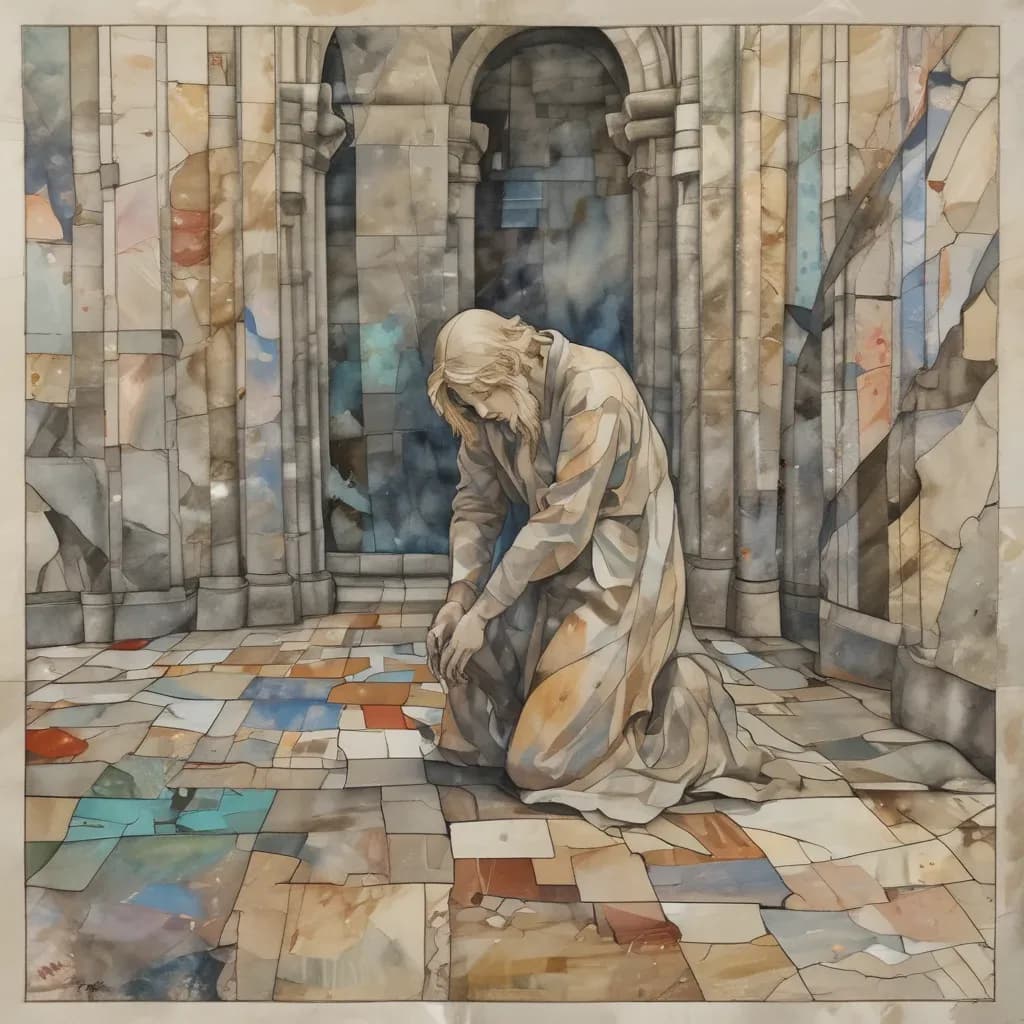
To understand "Agony Freak," it helps to sit with a phrase Jordan used to describe herself in a 2026 interview with The Line of Best Fit. She called herself a "shame monster," explaining that much of her personality had been shaped by guilt and shame accumulated over years.[4] She grew up Catholic, and the tradition built guilt into her early self before she had the framework to examine it. The song appears to externalize exactly that kind of internalized torment: the narrator's relationship with suffering is given the character of a creature, something swamp-like and campy, grotesque but also a bit ridiculous.[4]
That campiness is deliberate and meaningful. It is a tonal strategy for survival. By treating psychological agony as a B-movie monster rather than a sacred wound, Jordan creates distance between herself and the suffering she is examining. She had already been explicit in press about this shift: she is "not bathing in my own agony anymore."[4] "Agony Freak" dramatizes the act of stepping back. It renders the wallowing figure, the one who returns to misery as a home, with affectionate mockery rather than endorsement. The creature is recognizable because it is her. The mockery is possible because she is no longer entirely inside it.
The word "freak" itself carries two meanings the title holds in productive tension. In one sense, a freak is a monster, an aberration, something outside the norm. In the other, more colloquial sense, a freak is an enthusiast, a devotee, someone who loves something obsessively. A "freak" for something cannot stop doing it. "Agony Freak" names both things at once: the monstrous form that results from years of devotion to one's own pain, and the almost perverse pleasure of that devotion. Someone who is a freak for agony has found suffering meaningful, perhaps even comforting, in ways that resist rational explanation.
For Jordan, the Catholic context shapes this with particular weight. Suffering has theological significance in that tradition: it purifies, it redeems, it draws you closer to something transcendent. A child raised inside that framework absorbs the idea that pain is meaningful before she can question whether it always is. By calling herself an agony freak, Jordan is also interrogating what that upbringing installed in her: the part that found misery significant because it had been told that misery was holy.
An Electronic Texture, an Unsettling Shape
Sonically, "Agony Freak" distinguishes itself within Ricochet by embracing a more electronic palette. Where many of the album's tracks lean on lush string arrangements and the sprawling, anthemic guitars that recall 1990s alternative rock, this song shifts between synthesized textures and quieter guitar passages, creating something that sits slightly alien inside the album's otherwise organic warmth.[5] The effect is appropriate: the song is about something that lives inside a person but does not quite belong there, something that has taken on a life of its own. The music sounds like that.
This sonic choice also sets the song apart from the cinematic sweep of the title track "Ricochet," which contemplates how everything beloved eventually escapes your grasp, how reaching for something seems to send it spinning away. "Agony Freak" is more intimate and stranger, a smaller stage for a more specific psychological drama. The electronic elements introduce a subtly uncanny quality, as though the narrator is observing herself from a remove, watching the creature she has named from a safe enough distance to describe its features.
The contrast between the electronic skeleton and the softer guitar passages mirrors the double nature of the song itself: the agony freak is both alien and familiar, both monstrous and beloved. The song does not resolve this tension. It holds both things simultaneously, which is exactly what a person learning to live with their own psychological inheritance has to do.
Breaking Out of the Box
For years, Snail Mail carried the weight of the "sad girl rock" label, a categorization convenient enough to stick and too narrow to contain what Jordan was actually doing.[3] She has been explicit about wanting to move past it. Ricochet as a whole is an album about the limits of that emotional territory: about what happens when the songwriter who rendered heartbreak with such precision turns toward bigger fears. Critics recognized the expansion. DIY Magazine called it "a record that lives in the fact that, no matter what, everything changes," awarding it four stars.[3]
"Agony Freak" is one of the album's most pointed acts of self-examination. It takes the currency of sad girl rock, emotional suffering rendered in precise detail, and subjects it to satirical pressure. The song does not dismiss suffering. It interrogates the relationship a person can form with their own suffering, the way agony can become a companion, a habit, an identity. This is a more sophisticated question than simply depicting pain, and it required a Jordan who had enough perspective to ask it.
That perspective was hard-won. The vocal surgery imposed an involuntary reset, months of silence that stripped away the performer and left only the person.[1] The move out of New York City removed her from the industry cycles that can make an artist feel like their identity is the music they have already made. The music-first compositional process for Ricochet gave her sounds to respond to rather than emotions to exorcise.[2] "Agony Freak" could not have been written by the person who wrote "Pristine" or "Valentine." It required someone who had lived through enough to see the creature clearly and still feel a certain rueful affection for it.
This matters for the song's broader cultural resonance. There is a generation of listeners who found Snail Mail through the particular loneliness of those earlier records, who heard in Jordan's voice something that matched their own unruly emotional states. "Agony Freak" offers those listeners a different kind of recognition: an artist far enough from her own pain to find it faintly absurd. That is a kind of maturation worth marking, and Jordan marks it with characteristic honesty.
Other Ways to Hear It
Not everyone will read the agony freak as self-portrait. Snail Mail's work has always kept space open for the other person in the room, and the song can sustain a reading in which the creature is an external figure: a former lover who seemed to need suffering the way other people need air, someone who could not let a wound close because they had built too much of their personality around it. On this reading, the narrator is the one watching the monster rather than being it.
There is also the possibility that the song is doing both things at once. Jordan has always been interested in the collapse of the boundary between self and other that happens in intense relationships. To love someone drowning in their own agony is, eventually, to start drowning alongside them. The agony freak might be a merged figure: a portrait of what two people become when suffering becomes the glue between them.
The campiness of the imagery also allows for a quality of humor that is rare in Jordan's catalog. She has said in interviews that she fears being seen as someone who only knows how to be sad.[4] "Agony Freak" has the quality of someone who has decided to make the creature wear a funny hat. That is not dismissal. It is a different kind of honesty, one that requires more confidence than pure pathos, because it risks being seen as not taking one's own experience seriously. Jordan takes it seriously. She just takes it seriously enough to laugh.
Seeing the Creature Clearly
The title track of Ricochet contemplates how everything beloved eventually escapes your grasp, how the very act of reaching for something seems to send it spinning away. "Agony Freak," positioned near the album's center, operates as a different kind of reckoning: rather than grief over what is lost, it turns toward what has been carried too long. The monster at the center of the song is not something that happened to the narrator. It is something the narrator made.
That distinction matters enormously. Songs about loss have a long, honored tradition in indie rock, and Snail Mail has contributed some of its finest specimens. But songs about the relationship a person develops with their own pain, about the strange comfort agony can become, are rarer. They require the narrator to implicate herself rather than just document her wounds. They require a certain kind of courage that is different from emotional vulnerability, closer to self-awareness, and harder in its way.
In making the creature visible, campy, and a little bit funny, Jordan begins the work of becoming something other than it. You cannot free yourself from a monster you cannot name. By naming it, she starts. By making it absurd, she makes it smaller. It is still there, still recognizable, still hers. But it has a face now, and the face has a certain charm. That suggests she is no longer entirely at its mercy.[4]
References
- Snail Mail details vocal cord surgery and recovery, delays tour — NME report on Jordan's vocal surgery, recovery, and the impact on her voice and career
- On Ricochet, Snail Mail lost her voice and found her footing — Major FADER profile covering the music-first compositional process, recording in North Carolina, and the emotional landscape of Ricochet
- Snail Mail: Ricochet review — DIY Magazine four-star review calling the album 'a record that lives in the fact that, no matter what, everything changes'
- Snail Mail: 'I feel scared of the greater universe, of losing the things I love' — Line of Best Fit interview where Jordan describes herself as a 'shame monster,' discusses Catholic guilt, campiness of Agony Freak, and her rejection of romanticizing agony
- Snail Mail's Ricochet Embraces Growth — Review describing the electronic soundscape of Agony Freak and noting the album's overall maturation