American Cars
Something small can contain everything. A glimpse of a license plate, the brand on a steering wheel, the particular make of a domestic vehicle in a familiar driveway: these are the details we absorb without thinking, the background noise of ordinary life. But when you have drifted far enough from someone, it is exactly those unremarkable details that reveal how far the drift has gone. Noah Kahan's "American Cars," the third track on his fourth studio album The Great Divide, begins with a moment of recognition that is also a moment of estrangement: a narrator notices something small and specific about someone he once knew intimately, and the smallness of the thing is precisely what undoes him.
A Gap Growing
When The Great Divide was announced in January 2026 and released April 24 of that year, Kahan arrived at it from a very particular vantage point. His 2022 album Stick Season had turned him from a modestly successful indie folk act into one of the most talked-about singer-songwriters of his generation, a transformation as disorienting as it was gratifying. He sold out Fenway Park. He earned a Grammy nomination for Best New Artist. He watched his intimate Vermont-inflected songs travel far beyond the back roads and overcast skies that had inspired them.
And in the middle of all that ascent, something else was happening. The gap between who he was and who he had become was widening. Old friendships, which had always been the emotional center of his songwriting, were harder to maintain. His art, which had always drawn directly from life, began to feel like it was consuming the life it drew from.
Kahan described this in the album's press materials with unusual directness, writing about staring across a divide and seeing old friends, family, and younger versions of himself on the other side, aware that his voice had grown hoarse from the effort of climbing toward a dream that had actually materialized.[1] It is an artist admitting, with rare candor, that success is its own kind of grief.
The album was written in fragments across multiple locations: beside a piano in Nashville, next to a pond in Guilford, Vermont, in studios in upstate New York, and on a farm with a fire tower in Only, Tennessee.[2] It was co-produced with Aaron Dessner (of The National, and the force behind Taylor Swift's folklore and evermore) and Gabe Simon, who had worked with Kahan on previous records. Kahan, who arrived at those sessions feeling burnt out and emotionally raw, said of Dessner: "He's really, really human, and he's been through it all before. He really knows how to talk to artists and knows how to connect with artists and bring them to the moment they're in and make music from it."[3]
"American Cars" sits third in the album's sequence, arriving early enough that the listener is still orienting to the record's emotional landscape. Kahan has described it as probably his favorite song he has made in five years,[4] a significant distinction on an album that clearly represents the most personal and refined work of his career. That the distinction comes from Kahan himself, rather than from critics, matters: he knows what cost went into making it.
The Object at the Center
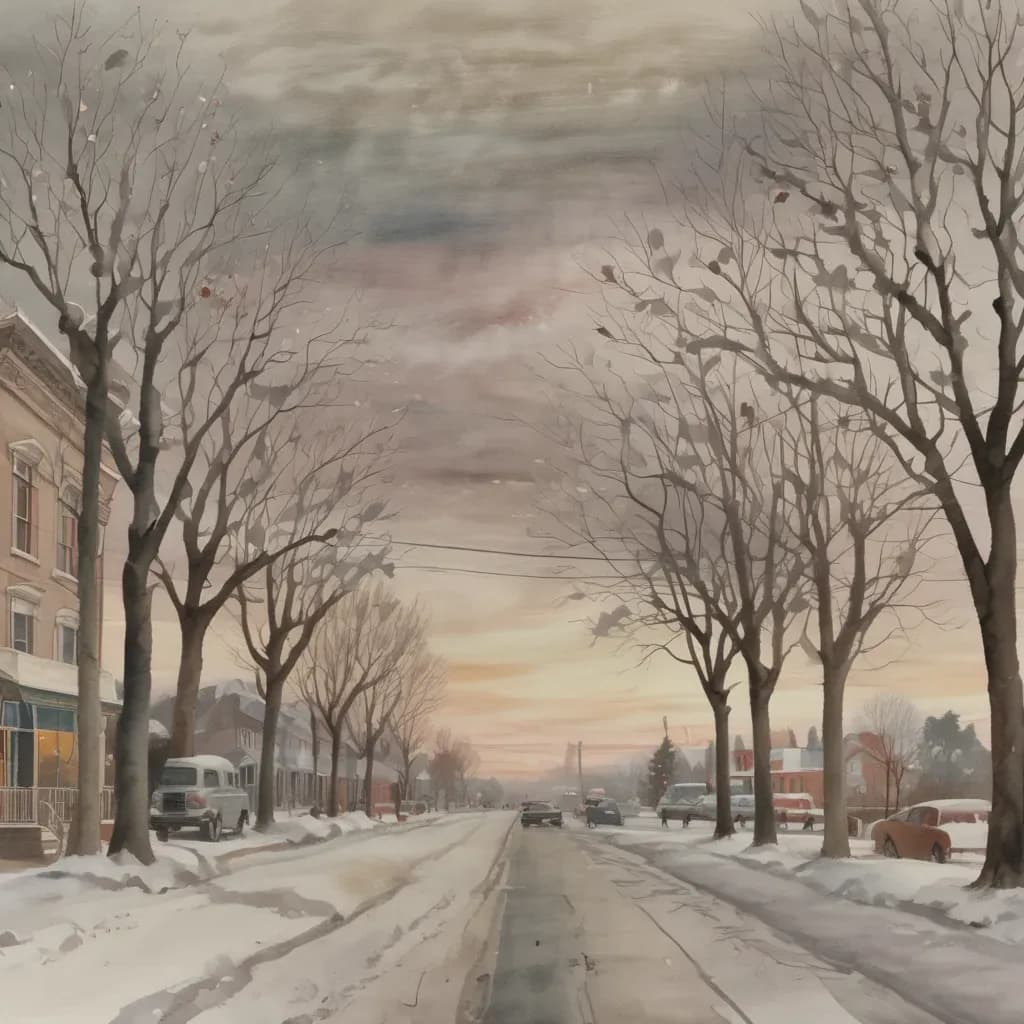
The detail at the heart of the song is extraordinary in its ordinariness. In New England, where Kahan grew up on a tree farm in Strafford, Vermont, and attended high school in Hanover, New Hampshire, cars are neither status symbols nor aesthetic statements. They are tools. They carry you through mud season. The distinction between an American car and a foreign one is often a distinction between two kinds of working-class identity rather than two kinds of wealth.[5]
When the narrator discovers, with genuine surprise, that someone he knew drives American cars, the implication is layered. Perhaps he expected something different, having assumed, from old familiarity, that he knew this person's habits and choices down to the marrow. Or perhaps the detail speaks to the narrator's own changed circumstances: he himself no longer belongs to the same economic or geographic world, and the American car is a reminder of a life he has moved on from and possibly mourns.
Kahan previewed this lyrical image on social media ahead of the album's release, teasing the moment in a single post that generated immediate discussion among fans.[6] The image reads as the kind of thing you would notice only if you were paying very close attention to someone, or only if you had stopped paying attention long enough that ordinary things had become surprising again. Both readings are devastating in different ways.
Estrangement in Small Details
One of Kahan's most consistent gifts as a songwriter is his ability to find the specific detail that makes an emotion legible. Stick Season was full of these: the particular quality of October light, the sound of a furnace kicking on, the way a small town closes in during winter. "American Cars" works in the same mode, taking the grammar of the ordinary and making it carry the full weight of grief.
The song seems to occupy a moment of encounter, or perhaps near-encounter, with someone from the narrator's past. The discovery of the car is not incidental. It is the hinge on which the entire song turns. That kind of estrangement, the kind where you realize you no longer know the texture of someone's daily life, is different from the drama of a falling-out. There is no argument here, no clean break. There is just the accumulation of distance, measured in small facts you didn't know you had stopped knowing.
This fits squarely within the album's overarching concern. Kahan described The Great Divide as "a balancing act of trying to go back in time and move forward in the same moment,"[1] and about the disorientation of finding yourself in a life that is undeniably the one you wanted but that feels foreign all the same. "American Cars" sounds like a specific instance of that disorientation: not the sweeping ache of a dramatic loss, but the quieter, stranger experience of realizing you have already lost someone without noticing when it happened. It fits the album's thematic companion, "The Great Divide" (which similarly traces the moment a close bond quietly fractures), but approaches that loss from a more intimate, street-level angle.
Class, Roots, and American Identity
There is something genuinely American, in the broadest sense, about what the song is doing. Cars are deeply embedded in American mythology: they represent freedom, independence, and, especially in rural New England, a kind of scrappy self-reliance. The foreign-versus-domestic car distinction has carried real class connotations in the American imagination for decades, and Kahan, who grew up in a state more associated with truck beds and dirt roads than with cosmopolitan taste, would be acutely aware of this.
If Kahan's career has taken him to a world of international touring, Grammy ceremonies, and Netflix documentaries, the American car becomes a quietly potent symbol of the world he came from. It stands for a kind of groundedness, a staying put, that his own life no longer permits. Discovering that someone he knew drives American cars might carry the same emotional charge as discovering they still shop at the same grocery store, still live in the same apartment, still inhabit the life you grew up inside: that life continuing on, without you in it.
This is one of the album's most recurring preoccupations. Kahan has spoken about watching Vermont flood catastrophically in the summer of 2023 while he was on tour, raising money from the stage while watching his home state suffer from a distance. That experience of being elsewhere while home needed him inflects everything on The Great Divide. The American car is, in that context, both a specific object and a symbol of a whole life left behind, a reminder that some things stayed where you left them.
Why It Resonates
What makes "American Cars" likely to resonate so widely is precisely the smallness of its central image. Kahan's best work achieves universality through specificity: he writes about a particular creek, a particular exit off a particular highway, and listeners worldwide hear their own versions of those places. This song works the same way. The car you notice in a driveway, the detail about someone you knew that catches you off guard, the realization that a chapter has closed and you missed the moment it happened: all of these are available to anyone.
The song also speaks to a generational experience of mobility and its costs. Kahan's audience skews young, and many of them are living through their own versions of the divide he describes: leaving home for college or work, watching childhood friendships calcify into something more formal and less intimate, learning to hold the strange combination of accomplishment and loss that comes from building a life far from where you started.
The Netflix documentary Noah Kahan: Out of Body, which premiered at SXSW in March 2026 just weeks before the album's release, explores this terrain directly, chronicling Kahan's rapid ascent and the mental health battles and relational costs that accompanied it.[2] "American Cars" sounds like one of those costs examined up close, one small specific loss itemized with devastating precision.
Other Ways to Hear It
The song's central conceit is open enough to sustain multiple readings. In a romantic interpretation, the narrator is discovering something about a former partner, someone he thought he knew entirely, and the car is the first of many revelations about how much that person has grown or changed in his absence. The gap is then not between artist and community but between two people who once shared a life.
In a more autobiographical reading, the car could gesture toward Kahan's relationship with Vermont itself, the state as a kind of former intimate who has changed while he was away, or who has stayed the same while he changed, which amounts to the same kind of distance. Kahan has been thoughtful and articulate about his complicated love for his home state throughout his career, and it is not a stretch to hear "American Cars" as a song addressed to a place as much as to a person.
The visual language of the album's music video for the title track gestures toward this reading: an Easter egg of a car for sale at a service station suggests that automotive imagery was intentional and multi-valenced across the album as a whole.[7] Cars in this album's world are objects of transition: bought and sold, noticed and overlooked, tied up in the question of whether you are the kind of person who stays or the kind who leaves.
There is a particular quality to the grief of no longer knowing someone. It is not the sharp pain of a rupture but something more diffuse and harder to name. You don't know the exact moment it happened. You only know that you are standing in the parking lot of your old life and something has changed, and the specifics of what changed are so small as to feel almost embarrassing to mourn.
Noah Kahan has spent his career finding language for things that typically resist language: the texture of small-town restlessness, the ambivalence of leaving, the longing for a past that wasn't even that simple when you were living it. "American Cars" is among his most distilled expressions of this project. It takes a mundane object and uses it to map an entire emotional geography, a whole landscape of drift and recognition.
On an album about divides, this song is the one that shows you what a divide actually looks like from the inside. Not a canyon, not a clean break. Just a car in a driveway. A detail you should have known and didn't. The space where a whole life used to be.
References
- Noah Kahan Shares Inspiration Behind The Great Divide - Holler Country — Kahan describing the album as a balancing act between past and present, looking across a divide at old friends and family
- The Great Divide (Noah Kahan album) - Wikipedia — Overview including recording locations, production credits, track listing, and chart performance
- Noah Kahan on working with Aaron Dessner - Yahoo Entertainment — Kahan discussing his collaboration with Aaron Dessner and his emotional state during recording sessions
- Noah Kahan Archive on X - American Cars track announcement — Fan archive account confirming 'American Cars' as Track 3 and noting Kahan called it his favorite song in five years
- Noah Kahan Reflects on Stick Season and New England - Vermont Public — Kahan discussing his Vermont upbringing, rural New England culture, and its role in shaping his songwriting
- Noah Kahan on X - lyric teaser for American Cars — Noah Kahan's official social media post teasing the central lyrical image of the song ahead of the album's release
- All the Easter Eggs in Noah Kahan's The Great Divide Music Video - Holler Country — Analysis of visual references in the title track's music video, including the for-sale car at the service station