and the whole world is the Ville
There is something unusual about a rapper returning to his hometown not out of necessity but out of devotion. Most origin-story verses visit the past to explain the present. and the whole world is the Ville does something more ambitious: it takes a single zip code and stretches it across the entirety of human experience, arguing that everywhere is, in some essential way, the place that made you.
Fayettenam
J. Cole, born Jermaine Lamarr Cole on January 28, 1985, spent his first months on a U.S. military base in Frankfurt, Germany, and was raised in Fayetteville, North Carolina, a mid-sized Southern city anchored by what was then called Fort Bragg, one of the largest military installations in the United States.[1] Fayetteville earned the grim nickname "Fayettenam" for its crime rates and the particular brand of economic hardship that settled over portions of the city when defense spending contracted.[2] It was not, by any conventional measure, a place the hip-hop world was waiting to hear from.
Cole has spent his entire career making the case that it should have been. Across six studio albums before this one, he returned again and again to Fayetteville as both setting and moral compass, a place whose difficulty he has never romanticized and whose people he has never abandoned.
"The Fall Off" was released on February 6, 2026. The date was chosen deliberately: "2-6" is a numerical shorthand Cole has long used to identify his city.[1] The album is structured as a double disc. Disc 29 imagines Cole at age 29, navigating competing loyalties between his woman, his city, and his craft. Disc 39 revisits that homecoming from the vantage of a 39-year-old man who is married, a father, and closing out a completed discography.[1][3] "and the whole world is the Ville" belongs to that second disc: the elder's reckoning.
Cole has spoken about this album as a project meant to bring full circle the concept behind The Come Up, his 2007 debut mixtape. He described his mission as: to do on his last what he was unable to do on his first, a debt owed first to himself and secondly to hip-hop.[4] That framework positions and the whole world is the Ville not merely as a late-album highlight but as one answer to a question Cole has been asking since the beginning of his career.
The song was produced by AzizTheShake and built on a soulful sample from The Isley Brothers' 1972 recording "Love Put Me on the Corner."[5] That choice of source material signals the song's emotional register before a single word arrives. The Isley Brothers carried a particular kind of Black American warmth into their music: church-trained, family-rooted, neighborhood-anchored. Drawing on that tradition places the song inside a longer continuum of Black artistic expression about place, belonging, and the love that holds you to both.
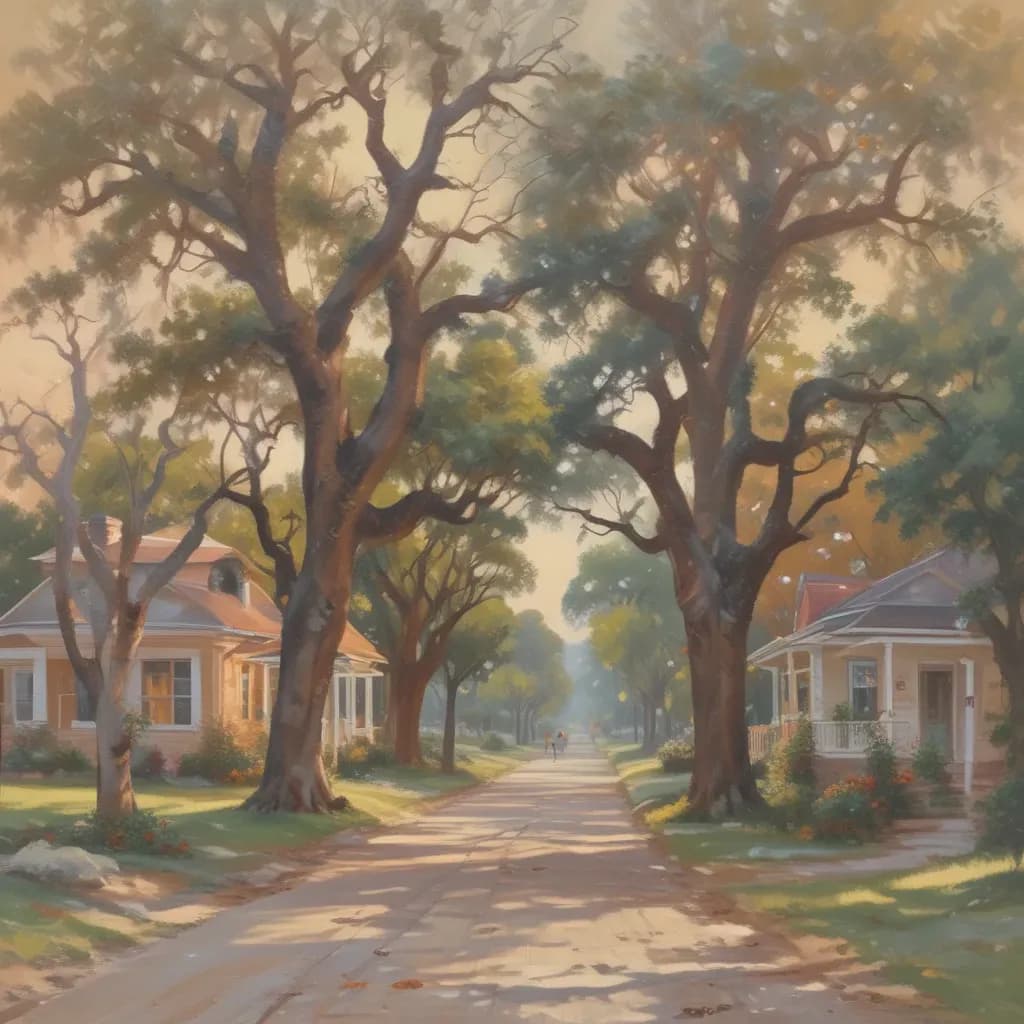
The World That Fits in One City
The song's title sets up a philosophical proposition. It does not say "Fayetteville is my world." It says the whole world is the Ville. That inversion matters. Cole is not claiming the city as personal property. He is arguing that the experiences available in that city, the lessons about perseverance under neglect, about loyalty when resources are scarce, about building identity without external validation, are not provincial experiences at all. They are universal ones, available in every place the mainstream did not come to celebrate.
The hook, in which Cole spells out the full word "Fayetteville," functions as something between an incantation and a declaration.[5] Spelling out a city's name the way a child might do so for a school assignment returns the act of naming to something deliberate and reverent. It strips away the casual shorthand. It forces each syllable into focus. It is, in its quiet way, a refusal to let the place remain abbreviated.
Because the song sits on Disc 39, it carries a particular weight. The younger Cole of Disc 29 was rapping from inside the ambition: everything still uncertain, the shape of success still unclear, the promise of return still a promise rather than a fact. The Cole of Disc 39 has the distance that comes from having made it and then having the clarity to understand what "making it" actually cost and what it gave. From that vantage, the Ville is not a limitation he overcame. It is the entire foundation of what he built.
This is a particular kind of pride, one that does not require boasting or cataloguing material success. The song is not about what Cole has accumulated. It is about what he has understood. The Ville taught him to see the world in a certain way: to recognize injustice without collapsing under it, to find community worth protecting, to understand that proximity to cultural centers has nothing to do with the depth of what a place produces. Those lessons generalize. They travel. They are, in Cole's framing, the world.
An Old Soul Sound for a New Reckoning
The Isley Brothers' 1972 recording from which this song draws its soulful foundation carried a message about love as a force that corners you, that catches you and holds you in place before you even recognize what has happened. Cole takes that emotional framework and reorients it. Being "cornered" by Fayetteville, in his telling, is not a trap or a failure to escape. It is belonging. It is the experience of having a place claim you so completely that you carry it everywhere, that even in the middle of success you remain, in some essential sense, from there.
This reframe of constraint as devotion connects to the broader argument Cole has been building across the album. He has spoken about The Fall Off as a meditation on what it means to give everything to an artistic identity and then, having given it, to step back with some measure of peace.[6] The willingness to let the Isley Brothers' warm, slightly melancholy soul texture carry a song about hometown love is consistent with that posture. It is the sound of someone who is not trying to prove anything anymore, only to say something true.
The soul sample also does something structurally important: it refuses the album's potential drift into pure introspection. By grounding the song in a 1972 recording, AzizTheShake and Cole are placing this personal reckoning inside a tradition of communal Black musical expression. The love this song describes is not just autobiographical. It has antecedents. It fits into a longer story of artists from overlooked places finding ways to speak about where they came from.
A Farewell Framed as a Homecoming
Cole has been explicit that The Fall Off is intended as his final album under the J. Cole identity. In interviews, he described having "no interest in making more J. Cole albums" and framed the project as a deliberate closing of the circle.[6] That framing makes "and the whole world is the Ville" something more than a hometown anthem. It becomes a concluding argument.
The cultural implications are worth sitting with. Cole grew up in a city that the hip-hop world largely passed over. The genre's centers of gravity were New York, Los Angeles, Atlanta, and Houston. Fayetteville appeared in rap conversations mostly as a footnote to Cole's biography. But across seven albums, he made Fayetteville's concerns, the invisibility of working-class Black Southern life, the ambivalence of leaving home, the complexity of remaining loyal to a place that the economy had partly abandoned, into subjects that resonated far beyond North Carolina.[2][7]
This song arrives after a period of public reckoning. In 2024, Cole released a diss track aimed at Kendrick Lamar during a heated rap feud, then withdrew it and issued a public apology, describing the experience as a moment of clarity about who he is and what he values.[6] The album, expanded and reconceived after those events, carries that accountability into its fabric. Returning to the Ville in this song is also, implicitly, a return to a self that existed before the noise of industry competition had a chance to pull him off course.
Critics noted the album's unusual emotional terrain. NPR described Cole as returning "a new man, old man and everyman."[8] The Harvard Crimson observed that the project, in its more cautious moments, "mistakes adulthood for depth and discipline for risk."[9] But whatever one makes of the album's overall shape, "and the whole world is the Ville" seems to operate outside those debates. It is not trying to demonstrate sophistication. It is trying to love something in public, clearly and without ambiguity.
More Than One Reading
The simplest reading of this song is hometown pride: a local-boy-makes-good sentiment aimed at the people Cole grew up with. And that reading is not wrong. The song clearly speaks to anyone from Fayetteville who heard their city treated as an afterthought, who watched the cultural world organize itself around other places.
But the title's philosophical reach suggests another frame. If the whole world is the Ville, then the Ville is not unique. Or rather, what is unique about it, the feeling of being overlooked, of building meaning without external validation, of forming identity in a community the mainstream has not come to celebrate, is not exceptional. It is common. Cole is drawing a line from his particular geography to a universal condition, suggesting that the lessons of Fayetteville are available to anyone who has ever grown up somewhere that did not get a feature in a culture magazine.
There is also a reading rooted in closure. Cole's career began with a young man trying to escape Fayetteville's gravitational pull by making it to New York and then to the top of the industry. This song, arriving near the end of that arc, suggests the escape was never really the point. The Ville was the destination all along: the place you circle back to once you understand what you were carrying.
The Thesis
"and the whole world is the Ville" arrives near the end of a career Cole built on a specific ambition: to make Fayetteville's particular gravity legible to the world. He made that case album by album, refusing the industry's pressure to relocate his frame of reference to somewhere more glamorous or strategically useful.
This song is not a final verse so much as a final thesis. Having spent nearly two decades making the case that a mid-sized North Carolina city contained everything worth saying about ambition, loyalty, love, and survival, Cole closes by making the argument explicit. The Ville was never just a place. It was always a way of seeing.[4]
And now, stepping back, he leaves that vision with whoever was listening.
References
- The Fall-Off (Wikipedia) — Album structure, release date, and the '2-6' Fayetteville connection
- Before Chiraq, There Was Fayettenam: J. Cole Takes Us Back To His Hometown (Vice) — Fayetteville background, the 'Fayettenam' nickname, and Cole's upbringing
- J. Cole Reveals 'The Fall-Off' Tracklist, Explains The Album's Concept (HipHopDX) — Album disc structure and the two homecoming concept at ages 29 and 39
- J. Cole Explains the Meaning Behind The Fall Off as a Double Album (The Source) — Cole's stated mission to bring The Come Up full circle on his final album
- J. Cole 'and the whole world is the Ville' Meaning and Review (StayFreeRadioIP) — Song-specific analysis including the Isley Brothers sample and the spelled-out hook
- J. Cole's 'The Fall-Off,' Intended to Be His Last Album, Is Here (Complex) — Cole's statements about The Fall Off being his final J. Cole album and post-Kendrick context
- J. Cole's Final Album 'The Fall-Off': All 24 Tracks Ranked (Billboard) — Critical ranking and reception of the album's individual tracks
- On his long-awaited 'Fall-Off,' J. Cole returns a new man, old man and everyman (NPR) — NPR's critical review of The Fall Off
- 'The Fall-Off' Album Review: The Weight of Potential (Harvard Crimson) — Critical assessment noting the album's self-awareness and caution