Big Yellow Taxi
Somewhere between a protest song and a pop melody, "Big Yellow Taxi" occupies territory that very few environmental anthems have managed to reach. It is simultaneously furious and breezy, politically pointed and emotionally universal. In fewer than three minutes, Joni Mitchell captured something that academic papers and policy reports had been struggling to articulate for years: that the cost of modern development is not abstract but visceral, not distant but intimate.[1]
A Song Born from a Hotel Window
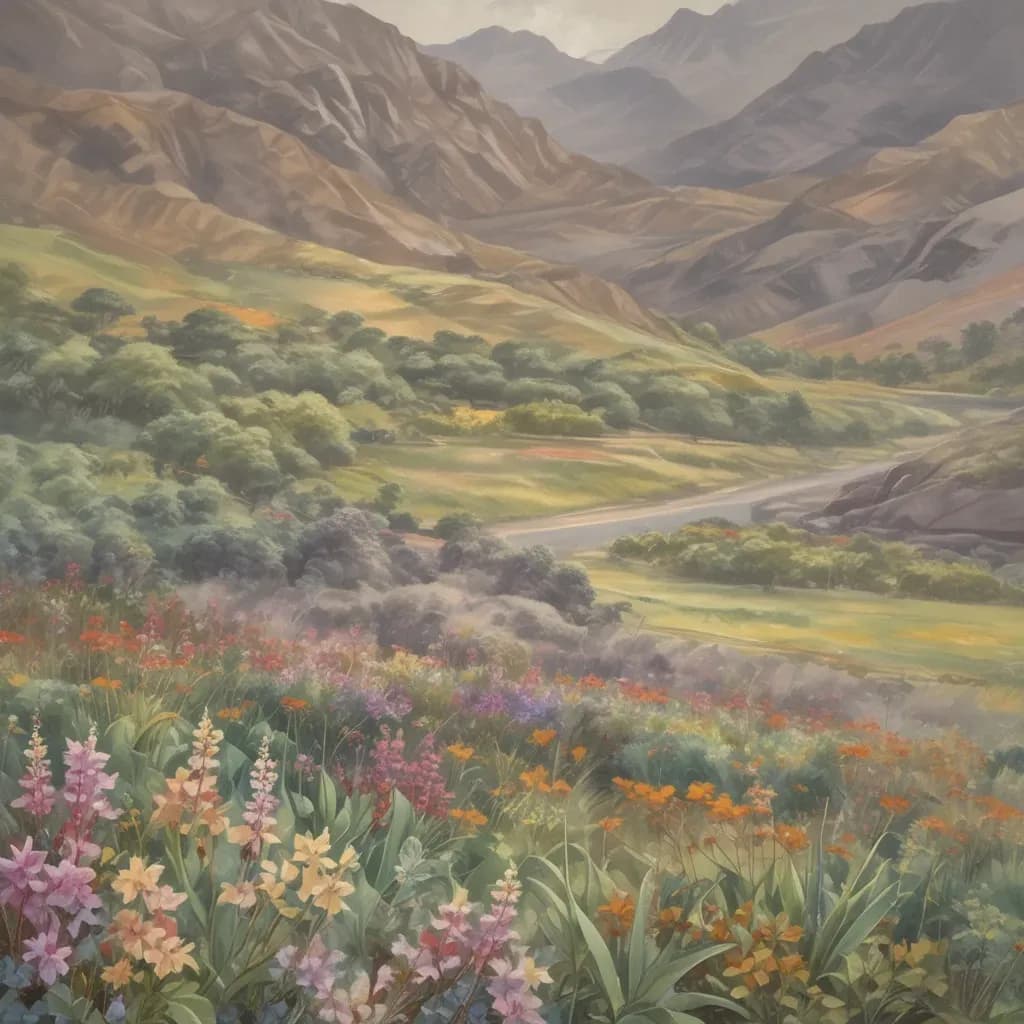
Mitchell wrote the song in 1969 during her first visit to Hawaii, traveling with Graham Nash.[2] She arrived in Honolulu in the middle of the night and went straight to the hotel. When she drew back the curtains the following morning, she was confronted with a view that cut two ways at once: lush green mountains in the distance, and an enormous parking lot directly below her window. The contradiction between paradise intact in the background and paradise destroyed in the foreground generated the song in a matter of hours.[2]
Mitchell identified the Foster Botanical Garden in Honolulu as the direct inspiration for one of the song's sharpest images: a garden where rare tropical plants are displayed behind an admission fee.[1] The irony that trees had been removed from the living landscape only to be enclosed and monetized as a spectacle was precisely the kind of double absurdity the song was built to expose.
The track appeared on Mitchell's third studio album, Ladies of the Canyon, released in April 1970. It was the first album she produced entirely on her own, recorded over approximately three weeks in January 1970 at A&M Studios in Hollywood.[3][4] Mitchell was 26 years old and at the center of the Laurel Canyon creative community in Los Angeles. Her house at 8217 Lookout Mountain Avenue had become a gathering place for the era's most gifted musicians, including the meeting of David Crosby, Stephen Stills, and Graham Nash that effectively created Crosby, Stills and Nash.[4] Her 1969 album Clouds had just won the Grammy Award for Best Folk Performance weeks before Ladies of the Canyon arrived in stores.[3]
Three Critiques and a Universal Regret
The song works by stacking three distinct critiques before opening into something larger.
The first is the most direct: commercial development destroys natural landscapes. The image of a bulldozed paradise giving way to a parking lot is Mitchell's synecdoche for a postwar American pattern in which urban and suburban expansion leveled forests, wetlands, and open land with few questions asked.[5]
The second critique is sharper and stranger. In the song's botanical garden verse, trees removed from their living context are placed on display for tourists behind a ticket price. The same economic logic that destroyed them in the first place has found a way to profit from their memory. Nature becomes a commodity twice over, first as resource, then as spectacle. The verse captures this with compressed irony that only a poet who thought in images could produce.[6]
The third critique is the most politically specific. In the verse addressed to a farmer, Mitchell invokes the debate over pesticide use that Rachel Carson's 1962 book Silent Spring had ignited. DDT, which Carson documented was devastating bird populations and soil ecosystems, was still in widespread agricultural use when Mitchell was writing.[6][7] It would not be federally banned in the United States until 1972. The song placed itself squarely in a live political controversy, not a historical one.
All three critiques are held in a peculiar tonal tension. The melody is light and almost jaunty, the guitar figure bouncing along with the ease of a summer song. The arrangement does not signal urgency.[8] By delivering devastating content in a cheerful package, Mitchell ensured that the song would lodge itself in listeners' memories rather than bouncing off the resistance that a more overtly grave political statement might have produced.
And then comes the pivot. The refrain about not recognizing the value of something until it is no longer there belongs to a different register entirely. It is not political. It is not specific. It is simply human. In that final observation, Mitchell transforms what could have been a topical protest song into something timeless.[5][9]
An Anthem Arrives on Time
Ladies of the Canyon was released in April 1970, the same month as the first Earth Day.[1][7] The timing was not coordinated, but it could not have been more apt. The American environmental movement had spent the preceding decade building toward a critical mass: the publication of Carson's Silent Spring in 1962, the Santa Barbara oil spill of January 1969, and the burning of the Cuyahoga River in Cleveland in June 1969.[7] By spring 1970, millions of Americans were reconsidering their relationship to the natural world, and Mitchell had handed them an anthem that expressed their unease in three minutes.
The original single reached No. 67 on the US Billboard Hot 100, a modest chart performance that understated the song's cultural impact.[1] Mitchell observed that the song found its warmest initial reception in Hawaii itself, where the specificity of its imagery was immediately recognizable, and that it took years to spread to wider audiences.[2]
More than 600 artists have recorded covers of the song.[1] Bob Dylan recorded a version in 1973. Amy Grant updated the lyrics and charted with it in 1994.[8] The Counting Crows, with Vanessa Carlton, turned it into an international hit in 2002 on the Austin Powers in Goldmember soundtrack, introducing it to a generation born after Mitchell wrote it.[1] The song was inducted into the Canadian Songwriters Hall of Fame in 2007.[10]
The phrase Mitchell coined for the song's opening image has long since detached from the song and entered the English language as a standalone idiom for environmental shortsightedness.[8][9] It appears in planning documents, journalism, and policy arguments. When a phrase outlasts the conversation that produced it and becomes available for entirely new arguments, that is a different kind of durability than chart success measures.
What Else Gets Lost
The song's universalizing refrain has made it applicable far beyond environmental contexts. The observation that we fail to value things until they are gone has been read as a meditation on romantic love, on childhood, on the arc of any relationship that ends. Given the biographical backdrop of the album, this reading has obvious purchase. Graham Nash later said that most of the sad songs from this period were about his relationship with Mitchell.[11] Ladies of the Canyon was recorded at the height of their time together, and the breakup that followed fed directly into the emotional rawness of Blue (1971). The line about not knowing what you have can hold both the ecological and the personal simultaneously.
There is also a reading that treats the song not as nostalgia but as a critique of inattention. Mitchell is not arguing that the world was perfect before the parking lot. She is arguing that something was destroyed without anyone stopping to notice, and that this pattern of failing to notice is the actual problem. The tree museum is not just an economic absurdity; it is evidence of a culture that has lost the habit of looking at what it already has.[12]
The song's Hawaiian setting also carries historical layers that the lyric itself, written quickly and compressed into two and a half minutes, does not fully unpack.[13] Development in Hawaii after statehood in 1959 was a particular economic and political process with specific beneficiaries and consequences, and Mitchell's observation captures its visible results without claiming to analyze its causes. The song's compression is both its limitation and its enduring strength.
A Small Song With a Long Reach
"Big Yellow Taxi" is, on its surface, a modest song. It was written in a hotel room in a matter of hours, performed on guitar with a simple melody, and ran for barely two and a half minutes. Everything about its origin is unassuming.
What has given it its extraordinary reach is a combination of clarity and emotional precision. The environmental argument is not obscured by complexity. The musical setting does not burden the listener with gravity. And at the end, Mitchell offers a phrase that speaks to everyone who has ever let something valuable slip away before noticing what it was worth.
More than fifty years on, the song sounds less historical than it should. The parking lots are still being built. The mountains are still there, for now, in the distance.
References
- Big Yellow Taxi - Wikipedia — Chart history, cover versions, cultural impact, and Foster Botanical Garden connection
- Big Yellow Taxi - Songfacts — Mitchell's account of writing the song in Hawaii and early reception
- Joni Mitchell - Wikipedia — Biographical context, Grammy win for Clouds, career timeline
- How Joni Mitchell Made Ladies of the Canyon - Louder Sound — Recording sessions, Laurel Canyon house, and how the album came together
- Big Yellow Taxi: Joni Mitchell's Anthem of Loss and Realization - Music News and Views — Thematic analysis including the song's movement from political to personal
- Big Yellow Taxi - Climate in Arts and History, Smith College — DDT context, Rachel Carson's Silent Spring, environmental movement connections
- Big Yellow Taxi - Environmental Humanities Center, UCSB — Environmental movement context including Santa Barbara oil spill and Cuyahoga River fire
- Joni Mitchell at Eighty: The Historic and Modern Relevance of Big Yellow Taxi - Music Musings & Such — Analysis of musical tone, cover versions, and phrase entering common language
- Big Yellow Taxi - Joni Mitchell Library (Jenna Carlson, 2006) — In-depth analysis of the song's lasting relevance and Mitchell's stated intentions
- Big Yellow Taxi - Canadian Songwriters Hall of Fame — Hall of Fame induction details and legacy
- Songs Joni Mitchell and Graham Nash Wrote About Each Other - Far Out Magazine — Nash's comments on the emotional content of their relationship and mutual songwriting
- Big Yellow Taxi: A Musical Commentary on Environmental Consciousness - History of Music — Analysis of the song as a critique of inattention and consumer culture
- What Joni Mitchell's Big Yellow Taxi Can Teach Us About Preserving the Land - Agrarian Trust — The song's Hawaiian geographic context and development history after statehood