Blood Creepin'
Swallowed Whole: The Violent Catharsis of "Blood Creepin'"
The closer to Exmilitary is the album's most unhinged moment, and that is saying something for a record that opens with a Charles Manson speech. By the time "Blood Creepin'" arrives as track thirteen, Death Grips have already spent roughly forty minutes constructing a portrait of Sacramento as a carceral landscape, a city shaped by surveillance, violence, and economic exclusion. What they save for the end is not a resolution but an acceleration: a final sprint toward a horizon that offers no sanctuary and no exit.[1]
Released as a free download on April 25, 2011, through the Grindcore Karaoke netlabel, Exmilitary was a record that announced itself on its own terms, outside the machinery of conventional music industry promotion.[1] "Blood Creepin'" carried extra weight even within that context: it had existed in an earlier form, under a slightly different title, on the band's self-titled EP just six weeks before.[2] The fact that Death Grips chose to refine it, rename it, and anchor it at the album's end speaks to how central this piece was to their original vision. This was not an afterthought; it was a destination.
A Mixtape Born from Concrete and Static
Death Grips formed in Sacramento in December 2010, cohering almost immediately into the configuration that would define their early work: MC Ride (Stefan Burnett) on vocals, Zach Hill on drums and production, and Andy Morin on keyboards and sampling.[3] Before Death Grips, Ride had worked at local restaurants and pursued painting; Hill had co-founded the math-rock duo Hella; Morin came in as the group's sonic architect.[3] Their debut EP arrived in March 2011, only weeks before Exmilitary, making the first several months of the band's existence an unusually dense period of creative output.
Sacramento's character as a city shaped the album's worldview in ways that Morin described in an early interview with The Quietus as a "heavily regulated environment."[4] As the state capital of California, the city houses the administrative and legal apparatus of one of the largest carceral systems in the world, and Exmilitary consistently renders it as a compressed pressure chamber where institutional power is felt at the level of daily life. The Drowned in Sound review described the album as depicting Sacramento as "both a fenced-in complex and a psycho-geographical battleground," with the production capturing "the cold, raw and tense climes" of the ghetto as "a sleek totalitarian police state."[5]
The album arrived three years after the 2008 financial crisis and in the same year as the early stirrings of the Occupy movement. Whatever was rotting beneath American civic life was becoming harder to ignore, and Death Grips made a record that refused to ignore it. Where much of contemporary rap sought aspirational comfort or aggressive positivity, Exmilitary chose to describe conditions as they were, stripped of consolation.[6]
A Car, a Body, and Nowhere to Go
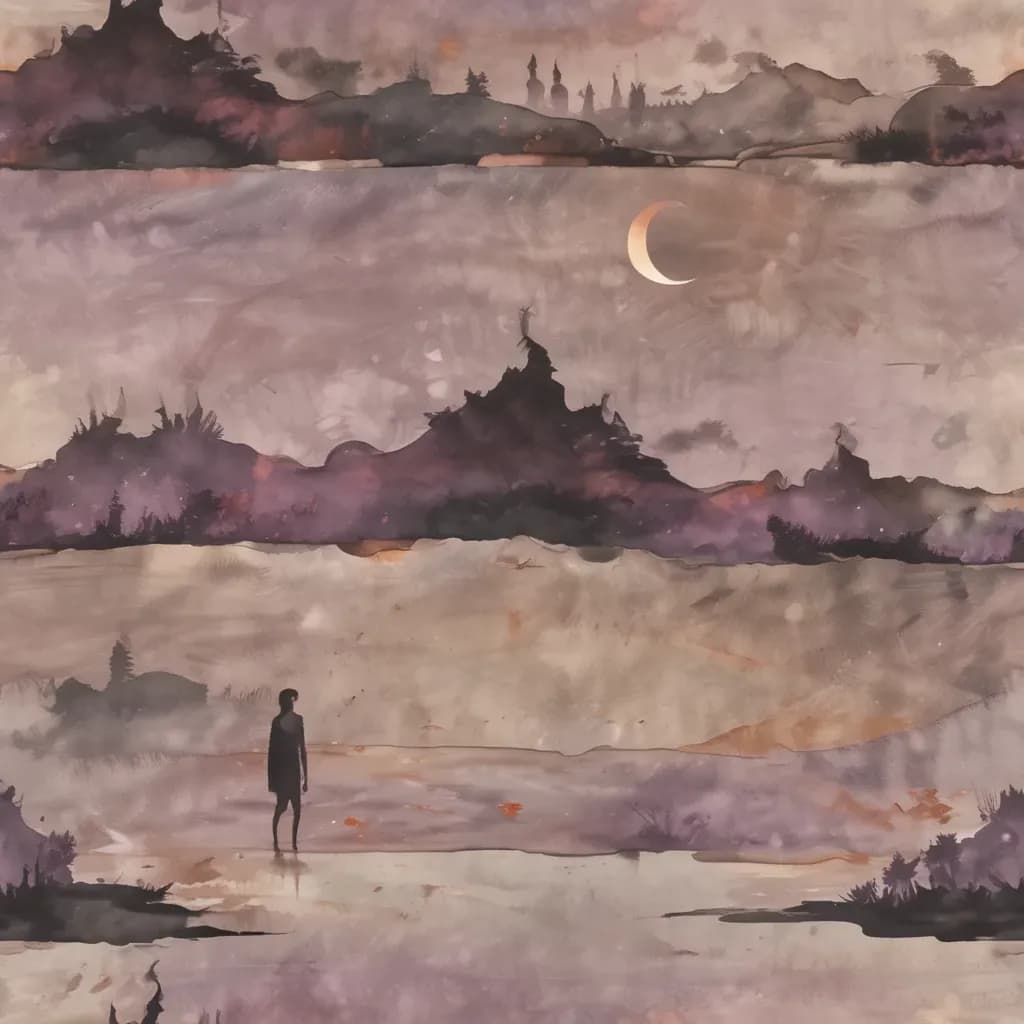
The song's narrative takes place inside a moving vehicle. Two figures are driving, hard and without apparent destination, in the wake of a violent incident that is never fully named. The lyrics convey a sense of criminal flight: the ongoing consumption of drugs, the presence of evidence that must be disposed of, the police as an approaching certainty rather than a distant abstraction. Listeners have consistently noted that the scenario implies the abandonment of a body somewhere along a stretch of highway.
What is striking about the track's treatment of this material is its refusal to provide context or consequence. There is no backstory offered for how the situation began, and the song ends without resolution. The violence exists not as an event with a before and after but as an environment, a condition that the narrator inhabits continuously. This is the album's recurring formal strategy: treating extreme circumstances as baseline reality rather than dramatic exception.
MC Ride's vocal performance is the track's most overwhelming element. Critics have noted that across "Blood Creepin'" he produces a layered wail, not quite a scream and not quite a yell, something animal and cycled that hovers over the verses like a fever breaking in real time.[7] The peanutbutterpope music blog, reviewing Exmilitary at length, identified this as one of the most insane vocal performances in the Death Grips catalog, noting the way Ride's wordless shouts layer against the synthesizers to create an effect closer to texture than to melody.[7] Multiple reviewers positioned "Blood Creepin'" as containing his most extreme work across the entire record. That is a significant claim given the competition.
The production provides a strange counterweight. Wobbly, unstable synthesizers create a backdrop that seems to bend under its own weight, while bass drops carry an almost 8-bit quality that deepens rather than deflates the sense of menace.[7] The beat is not aggressive in any conventional sense. It is alien and wrong, and the mismatch between this eerily drifting instrumental and the violence of Ride's delivery generates a friction that never resolves. The song does not build toward catharsis. It maintains a state of maximum tension until it runs out of time.
The Album's Closing Argument
To understand why "Blood Creepin'" lands with the force it does, it helps to understand what Exmilitary has argued across its preceding twelve tracks. The album is not a collection of songs so much as a sustained atmospheric statement: a world in which institutional power has made escape impossible, and the only available responses are paranoia, violence, and the compulsive seeking of sensation.
Within this framework, the flight at the center of "Blood Creepin'" becomes something more than a crime story. It is the endpoint of a logic that the album has been building toward from the opening Manson sample: when every conventional exit is blocked, what remains is momentum without direction, movement that knows it cannot stop but has nowhere to go. The narrator's wail is not simply rage. It is the sound of someone for whom no register of human feeling has proven adequate for a very long time.
The Drowned in Sound retrospective on the album described its closing moments as delivering "a flurry of fists" that left listeners "gasping for breath."[5] This physical metaphor is apt. "Blood Creepin'" does not resolve; it runs out. The car does not stop at a destination. The momentum simply ceases. And in that termination, without conclusion or comfort, the album makes its final, irreducible statement: this is what it sounds like when there is no way out.
Between Horror and Complicity
Part of what has made Death Grips so persistently compelling is their refusal to separate the horror of their subject matter from a genuine, visceral pleasure in sound. The synthesizers in "Blood Creepin'" squeal and lurch in ways that are arresting even on repeated listening. The wailing vocal layer creates a texture closer to noise music or industrial than to anything in hip-hop's mainstream, and the song's commitment to its own internal logic, violent, accelerating, never relenting, gives it an integrity that more polished and cautious music seldom achieves.
This raises a genuine question about listener complicity. Death Grips are not offering moral guidance about the scenarios they depict. They are not condemning or excusing; they are rendering. The drug use, the violence, the disposal of a body: these arrive as facts of the narrator's world, not as objects of judgment. The listener is placed inside the car, not outside it looking in. This refusal of comfortable critical distance is part of what has distinguished the band from peers who approach similar subject matter with more conventional narrative framing.[6]
Fans who discovered Death Grips through their subsequent major-label work on The Money Store or No Love Deep Web often return to Exmilitary as a rougher and more confrontational precursor. Within the arc of the band's catalog, "Blood Creepin'" occupies the position of an origin point: this is where they demonstrated they understood not just how to open an album but how to end one.[3]
Alternative Readings and Inherited Blood
The song's title invites a reading that extends beyond the literal. Something that creeps arrives slowly and inevitably, which stands in productive tension with the track's breakneck energy. One interpretation treats the "blood" not as evidence of violence but as lineage: something inherited that cannot be outrun regardless of how fast or how far one drives. Under this reading, the flight in the song becomes less a response to a specific incident and more a lifelong condition. The narrator has always been running. The car and the highway simply make visible what was already structurally true.
There is also the matter of a reference embedded in the song's lyrics to Sonic Youth, one of the foundational acts of American noise rock and avant-garde guitar experimentation. Death Grips have cited noise rock and punk as formative influences alongside hip-hop,[3] and the Sonic Youth allusion positions "Blood Creepin'" within a lineage of American underground music that stretches back decades. It suggests that the song's extremity is not aberrant but ancestral: a continuation of a tradition of dissonance rooted in the American margins, updated for a post-9/11, post-financial-crisis moment when that dissonance had more material than ever to work with.
A third interpretation focuses on the song as a document of dissociation. The narrator observes events, including extreme and violent ones, from a position of strange detachment. The drugs, the movement, the physical momentum of the car: all of these become mechanisms for staying in a state of uncritical sensation, refusing to process what has happened. The wail in MC Ride's voice is, in this reading, not rage at all but the sound of consciousness trying to avoid itself.
The Only Possible Ending
A record as relentless as Exmilitary could only close this way. A quieter or more reflective ending would have been a lie, a concession to convention that the album spent thirteen tracks refusing. "Blood Creepin'" earns its position as the closer precisely because it offers no comfort, no resolution, and no catharsis in any conventional sense. It just keeps going until it stops, like the ride itself.
Death Grips would go on to refine, expand, and complicate their sound across a decade of subsequent releases. The Money Store brought them to a major label; No Love Deep Web saw them burn that relationship down from the inside; Government Plates, Bottomless Pit, and Year of the Snitch each pushed the project into new territory.[3] But the ferocity of this closing track established something that no later development has fully erased: this is a band for whom the song does not end because the problem is solved, but because the tape runs out.
"Blood Creepin'" is not a comfortable listen, but it is an undeniably alive one. It is the sound of a group that had figured out, very early, exactly what they wanted to say and had no interest in making it easier to hear. For listeners willing to ride along, that is not a flaw but the entire point.
References
- Exmilitary - Wikipedia — Release details, album overview, critical reception, and sample information
- Death Grips (EP) - Wikipedia — Details on the earlier EP version of Blood Creepin' as Grave Grips
- Death Grips - Wikipedia — Band biography, discography, and career arc
- Death Grips - The Quietus Interview — Early 2011 interview with Andy Morin on Sacramento, influences, and methodology
- Exmilitary Review - Drowned in Sound — 9/10 review describing Sacramento as carceral landscape and the album as 100 percent anguish
- Exmilitary Album Review - Consequence of Sound — Critical review of Exmilitary upon release
- Exmilitary (Special Review) - peanutbutterpope — Detailed track-by-track analysis noting Blood Creepin's extreme vocal performance and synthesizer work
- Genius Lyrics - Blood Creepin' by Death Grips — Official lyrics page