Born to Run
A Song Built for the Edge
There are songs that entertain, and there are songs that feel like they were written for a specific moment in your life you had not yet lived. "Born to Run" is the second kind. It arrives at full speed, roaring with guitars and saxophone, and it does not stop to explain itself. It simply insists: leave. Escape. Feel something. The urgency in the music is not performance. It is desperation.
What makes this song so durable, fifty years after its release, is that it captures a feeling most people recognize even if they have never stood on a New Jersey street at 2 AM with nowhere to go. It is the feeling of a life that is too small for the person inside it.
Career on the Line
Bruce Springsteen wrote "Born to Run" between 1973 and 1974, at a point when his career was in genuine jeopardy. His first two albums, both released in 1973, had earned strong reviews but almost no commercial traction. Columbia Records was seriously weighing whether to drop him. Springsteen was twenty-four years old, broke, and acutely aware that a third failure would likely end his recording career.[1]
He grew up in Freehold, New Jersey, the son of a factory worker who cycled through jobs at a rug mill, as a bus driver, and as a jail guard. His mother was a legal secretary. Money was tight; the future felt like something that happened to other families. These were not abstract themes for Springsteen. They were the air he breathed, and they became the emotional fuel for everything on the record.[2]
He later described waking up one morning with the phrase "born to run" already lodged in his head, and from that starting point set out to write what he called the greatest rock and roll song ever recorded. The title track alone consumed roughly six months of studio time.[1] The sessions began at 914 Sound Studios in Blauvelt, New York, plagued by faulty equipment and Springsteen's relentless perfectionism, before moving to the superior Record Plant in Manhattan in 1975.[3]
The move to the Record Plant coincided with the arrival of rock critic Jon Landau as co-producer alongside manager Mike Appel. Landau was the writer who had famously declared Springsteen the future of rock and roll, and his production instincts helped focus the sprawling sessions.[4] Engineer Jimmy Iovine later recalled surviving on almost no sleep during marathon eighteen-hour blocks, with band members sometimes driving straight from all-night recording to live tour dates.[4]
The Road, the Woman, and the Wall of Sound
The song takes the form of a plea addressed to a woman named Wendy, a name Springsteen chose partly because he had a Peter Pan poster featuring Wendy on his wall, giving the name a subliminal resonance with the idea of a world that refuses to grow old.[5] The narrator, riding through the streets at night, urges her to leave with him. Not toward anything specific. Away from a town he describes in terms of physical and spiritual entrapment, a place that crushes rather than shapes.
Yet for all its velocity and volume, "Born to Run" is at its core a love song. The narrator does not want to escape alone. He wants a partner in the leap. Near the song's climax, he asks whether love is real, a moment of extraordinary vulnerability embedded inside all that sonic thunder. Springsteen himself described the album as driven by "enormous longing, tremendous longing."[6] The road is not the point. The relationship is.
The production choices amplify this duality. Springsteen conceived the sound as Roy Orbison singing Bob Dylan, produced by Phil Spector, layering guitars, piano, brass, and the full E Street Band into something almost overwhelming.[1] The sheer scale of the music is itself a statement. There is no irony here. No restraint. The production insists that these feelings, the longing, the fear, the urgent need to matter, deserve to be heard at maximum volume.
Central to the album's architecture are the contributions of new band members Roy Bittan, whose orchestral piano arrangements defined the sonic palette, and drummer Max Weinberg. Clarence Clemons' saxophone provides the song's emotional center, a voice that is simultaneously mournful and euphoric.[3] The band's performance is not accompaniment. It is the argument.
The narrator himself is not triumphant. The song does not promise that the road leads anywhere better. It only insists that staying would be worse. This is a crucial distinction. "Born to Run" is not optimistic. It is desperate in the most human sense: a person who does not know what is coming but knows they cannot remain where they are.
The Moment It Hit
The album arrived on August 25, 1975, and the critical response was immediate and overwhelming. Greil Marcus in Rolling Stone called it "a magnificent album that pays off on every bet ever placed on him," comparing its sound to a '57 Chevy running on melted-down Crystals records.[7] Critics from across the country converged on the same verdict: Springsteen had delivered something extraordinary.
On October 27, 1975, he appeared simultaneously on the covers of both Time and Newsweek, a dual milestone almost no rock artist had achieved before or since.[2] The single "Born to Run" became his first Top 40 hit, reaching No. 23 on the Billboard Hot 100.[8]
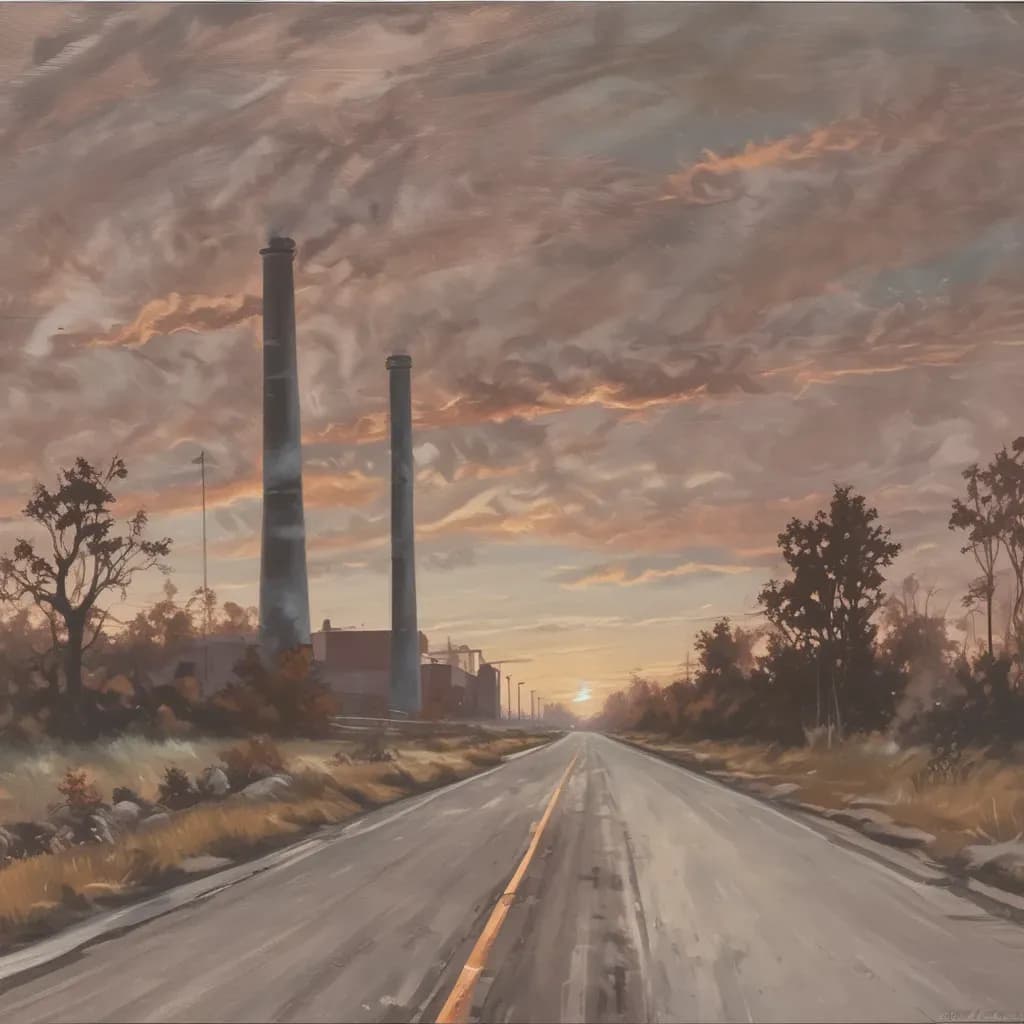
The timing mattered enormously. The United States in 1975 was deep in a crisis of confidence. Vietnam had ended in defeat. Watergate had shattered faith in government. Deindustrialization was quietly dismantling the factory towns of the Northeast, including places just like Freehold. "Born to Run" arrived not as a political statement but as an emotional one, and that turned out to be far more powerful. It did not analyze the moment. It gave it a voice.[9]
The song and album were inducted into the Library of Congress National Recording Registry in 2004, recognized as works of cultural, historical, and aesthetic significance.[10] Rolling Stone has ranked the album No. 8 on its list of the greatest albums of all time.[3]
The song's relationship to New Jersey identity became one of rock history's great paradoxes. In 1980, a state assemblywoman proposed making "Born to Run" New Jersey's unofficial rock anthem for its youth, a song explicitly about wanting to flee the state nearly becoming the state's official symbol. The Assembly passed it by voice vote. The Senate eventually rejected it.[11] The episode crystallizes something essential about the song: it became an emblem of New Jersey identity precisely because it named what so many residents felt but could not say about the places they loved and also needed to leave.
The Man Who Never Left
The most striking reinterpretation of the song has come from Springsteen himself. Despite spending decades performing an anthem about escape, he has lived in New Jersey virtually his entire adult life, just miles from his Freehold hometown. The man who wrote the definitive escape anthem never escaped.[7]
By the time of his 1988 Tunnel of Love Express tour, Springsteen had developed an explicit counter-reading of the song's meaning. He began prefacing performances with remarks about how individual freedom, when it is disconnected from community, can become empty. The running, reframed this way, is not a destination. It is a symptom of disconnection, a young man's response to isolation rather than a prescription for how to live.[12]
Some critics have pushed this reading further, arguing that the "death trap" the narrator describes is not really a town but a life, the closing down of possibility that comes with accepting the life you were handed. On this reading, "born to run" is a statement of existential refusal: the assertion that the life assigned at birth need not be the one lived.
These interpretations are not mutually exclusive. The song's power comes partly from the fact that it supports all of them. It is simultaneously a literal escape narrative, a love song, a working-class protest, and an existential declaration. Each listener finds what they need in it.
Fifty Years and Running
"Born to Run" is fifty years old, and it has not aged. Not because it is timeless in some abstract sense, but because the feeling it captures does not expire. The terror and exhilaration of standing at the edge of your known world and deciding whether to jump is not a historical emotion. Every generation finds its version of Highway 9, its own suffocating town, its own Wendy.
Springsteen has said that the song meant one thing when he wrote it at twenty-four and something different at every decade since. He once described hearing it now and finding in it the voices of his friends, his hopes, and his sense of what his life might have been.[8] That is the hallmark of a great song: it grows with the listener. It is still there at seventeen, still there at forty, still asking whether love is real and whether the road ahead is worth taking.
What he built in those marathon sessions, with an exhausted band and an absurdly ambitious sonic vision, was not just a rock song. It was a monument to the feeling that your life should mean something more than it currently does. That is a feeling that does not go away. Neither does the song.
References
- Born to Run (song) - Wikipedia — Overview of the song's history, recording, and cultural impact
- Springsteen's Born to Run Spoke for Working-Class Youth - HISTORY — Historical context of Springsteen's upbringing and the album's era
- Born to Run (album) - Wikipedia — Album recording history, personnel, and critical reception
- Bruce Springsteen on Making of Born to Run - Rolling Stone — Detailed account of the album's recording sessions
- Born to Run - Songfacts — Background facts including the origin of the name Wendy
- The Meaning Behind Born to Run - American Songwriter — Thematic analysis including Springsteen's own statements about longing
- How Bruce Springsteen Finally Became a Star - Ultimate Classic Rock — Account of the album's release, Greil Marcus review, and Springsteen's return to NJ
- 45 Years of Born to Run - Grammy.com — Anniversary retrospective including chart performance and Springsteen quotes
- Fifty Years Later, Born to Run Still Speaks to Young People - America Magazine — 50th anniversary essay on cultural resonance amid 1975 American disillusionment
- Born to Run - Library of Congress National Recording Registry — Library of Congress essay on the song's cultural and historical significance
- Born to Run Almost Became New Jersey State Song - Ultimate Classic Rock — History of the 1980 New Jersey state anthem proposal
- Curatorial Corner: Born to Run at 50 - Bruce Springsteen Center — Academic perspective on Springsteen's later reframings of the song's meaning