Bubbles Buried in This Jungle
The Paradox in the Title
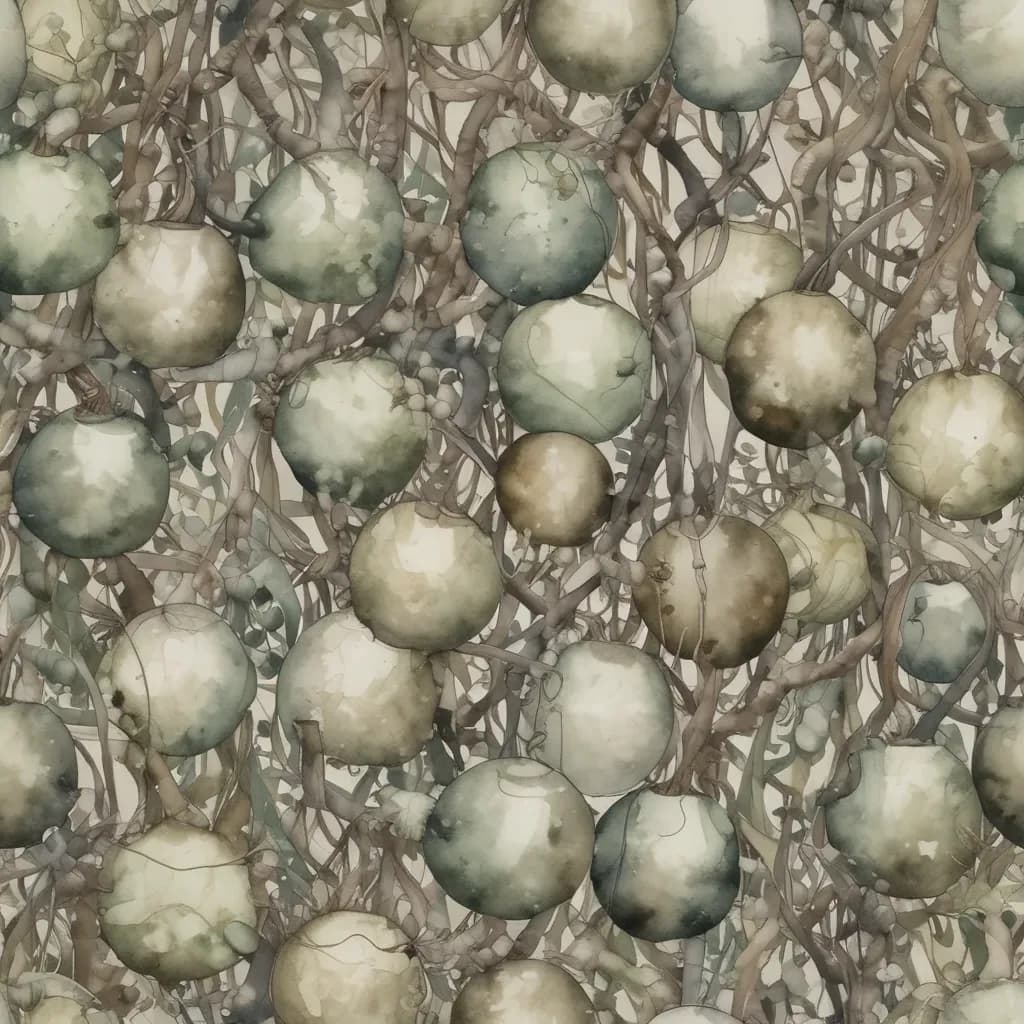
Consider the image embedded in the title: fragile, translucent spheres of air buried somewhere inside an impenetrable wilderness. Bubbles are ephemeral, delicate, and self-contained. A jungle is overwhelming, consuming, alive with the violence of competition. To bury something as fragile as a bubble in a place as hostile as a jungle should be impossible. And yet the title insists it has happened. That productive tension, something precious surviving inside something that should destroy it, is the emotional and thematic core of one of Death Grips' most viscerally immediate songs.
The title does not offer resolution. It is a statement of condition, not of outcome. The bubbles are buried. They have not escaped. They persist, somehow, in a space that should have erased them. This is not a triumphant image. It is a stubborn one, and stubbornness is closer to the emotional register of Death Grips than triumph has ever been.
A Reunion Built on Controlled Chaos
Death Grips had not been a functioning band for long before they announced, in a note written on a paper napkin in July 2014, that they were finished. The group had just released The Powers That B, a sprawling double album, and walked away from the stage and from further commitments.[1] When they returned in 2015 and began recording what would become Bottomless Pit, the hiatus had done nothing to soften their approach.
Released on May 6, 2016 on Third Worlds/Harvest Records, Bottomless Pit was recorded at Sunset Sound Recorders in Los Angeles and featured guitarist Nick Reinhart, whose contributions gave the album a muscular, riff-driven architecture that distinguished it from earlier work.[2] Pitchfork awarded it an 8.1 and described the group as 'the most talented, impactful culture jammers of the streaming age,' praising MC Ride's most athletic vocal performance yet.[3] Rolling Stone called it music that 'sounds like no punk on earth,' and later placed it at number 50 on their Best Albums of 2016 list.[4]
The band's promotional approach to the album was characteristically opaque. They released a 32-minute video titled 'Interview 2016' in which an actor ostensibly interviews the band, but the audio of the actual conversation was replaced entirely with the album's instrumental music. They also published the complete lyrics for all 13 tracks as a downloadable text file with no accompanying commentary, making the words available and the interpretive frame deliberately absent.[5]
'Bubbles Buried in This Jungle' sits at track six, the precise center of the album's thirteen-song sequence. That positioning is apt. It functions as a kind of pressure release at the core of an already pressurized listening experience, crystallizing the album's central tensions in under three minutes.
The Jungle as System
Death Grips have always understood that modern life is an ecosystem of interlocking pressures: media environments, financial coercion, institutional authority, and the constant noise of a world that never stops demanding attention and compliance. Pitchfork's Zoe Camp argued that this constitutes a form of culture jamming, described as 'an awareness of how the media environment we occupy affects and directs our inner life.'[3] That framing is nowhere more concentrated than on this track.
In 'Bubbles Buried in This Jungle,' the jungle is that system. Dense, recursive, and impossible to exit once entered. The song opens with a sonic intensity that mirrors this condition: there is no gentle introduction, no moment to acclimate before the pressure arrives. You are dropped into the middle of something already underway, which is also the condition of being alive in the contemporary world. The production, built around Zach Hill's throttling rhythms and Andy Morin's layered industrial textures, transforms the song itself into a jungle, a wall of competing forces with no obvious exit point.
MC Ride's vocal delivery operates as a body navigating this space. He does not describe the jungle from a distance or observe it analytically. He is inside it, pressed against its walls, and every syllable communicates that physical sensation of being overwhelmed while refusing to yield. The velocity of the track rarely lets up. Even the momentary drops in intensity feel less like relief and more like the particular silence before the next impact.
The 'Cease and Desist' Imperative
The song's most arresting recurring element is drawn directly from legal language: a command to stop, to stand down, to withdraw. In the context of Death Grips' history with institutional music infrastructure, this choice is precise. The band spent years in active confrontation with the industry, most memorably when they leaked their own major label record without permission and were subsequently dropped from Epic Records.[1] 'Cease and desist' is the language of that world, the instrument used to suppress, silence, and contain creative and political expression that threatens institutional interests.
By turning that phrase into the song's central rhythmic element, Death Grips perform a kind of appropriation. The command to stop becomes an act of continuing. A demand for silence is converted into a chant. Every repetition of the phrase simultaneously acknowledges that the order exists and demonstrates that it is not being followed. This is the structural logic of defiance: not ignoring the demand, but absorbing it into the act of resistance itself.
Rolling Stone noted the album 'sounds like no punk on earth,'[4] and this dynamic is exactly what that claim points toward. The song operates with punk's structural logic (confrontation with authority, refusal of institutional framing) while operating at a register and sonic density that conventional punk never approached. The legal vocabulary of the refrain is not incidental. It locates the confrontation in a specific contemporary arena where power is exercised through formal language rather than overt force.
Buried Things
If the jungle is the system, what are the bubbles? The quieter word in the title, the one that tends to get overshadowed by the aggression of the music, is also the most philosophically interesting element.
Bubbles are liminal objects. They exist at the boundary between interior and exterior. They are made of tension, the surface film holding one atmosphere apart from another, and they persist only as long as that tension holds. They are simultaneously transparent and reflective, showing the world around them while also showing the observer a distorted version of themselves. They accumulate in unexpected places. They resist the environments that should eliminate them.
Buried in the jungle, these bubbles represent something genuine, fragile, and perhaps unconscious that has managed to survive within a system designed to consume it. Critics and commentators have read this differently depending on where they are standing. Some hear it as a statement about artistic integrity persisting inside a commercial music industry that would rather absorb and commodify than preserve. Others hear it as a description of personal identity: the parts of a self that remain intact despite everything pressing against them, not triumphant but simply enduring.
Death Grips themselves have never explained the song. They published the lyrics without accompanying commentary, in keeping with their consistent practice of releasing work without interpretive guidance.[5] What remains is the image itself: something fragile and self-contained, buried but not destroyed, persisting in a space that should have erased it long ago.
Death Grips and the Dystopia They Mapped
When the creative team behind HBO's Westworld chose to open Season 3 in 2020 with 'Bubbles Buried in This Jungle,' they were making a precise curatorial statement. Season 3 moved the show's action out of the park and into a world where human behavior is entirely monitored and predicted by a vast algorithm. The show's visual grammar for this surveillance-capitalist future was slick, clean, and subtly suffocating. Against that backdrop, the song's opening seconds functioned as an announcement: this world is also a jungle. The humans walking through it are also following loops they did not choose.[6]
The placement marked a notable departure from the show's established musical identity. Where previous seasons had built their sound around minimalist piano covers of recognizable pop songs, Season 3's use of Death Grips was a blunt signal that something fundamental had shifted in the show's world and in its aesthetic ambitions.[6] The song's capacity to evoke systemic pressure through pure sonic texture was exactly what the new setting required.
This usage illuminated something latent in the track. Death Grips were writing about contemporary alienation in 2016, and four years later that analysis looked more accurate, not less. The jungle had grown denser. The cease-and-desist orders had multiplied. The bubbles were still buried.
Alternative Interpretations
No Death Grips song resolves into a single interpretation, and this one is no exception. Alongside the political and systemic readings described above, the track supports several other approaches that deepen rather than displace the central analysis.
One reading focuses on the internal dynamics of the band itself. Death Grips made no secret of the frictions that produced their 2014 dissolution, and a return to recording could not have been entirely frictionless. The image of something delicate persisting inside something overwhelming maps convincingly onto the question of how a creative partnership survives its own contradictions. The cease-and-desist imperative, read this way, could describe the demands that each member makes on the others: stop, pull back, give way. And the bubbles could be the collaborative work itself, surviving where perhaps it should not.
Another reading focuses on the physiological register of the performance. MC Ride's vocals on this track function less as communication and more as a physical event, a body under stress producing sound as a byproduct of that stress. In this reading, the bubbles are physiological: the pockets of air produced by someone underwater, looking up, holding on. The jungle is not metaphorical. It is the condition of existing in a body that a world was not designed to accommodate.
Both readings are compatible with the systemic interpretation above. Death Grips have always insisted that social conditions are not abstract. They are felt in the body, in the lungs, in the throat. The song works on all of these levels at once because the conditions it describes operate on all of them simultaneously.
The Case for Persistence
'Bubbles Buried in This Jungle' is two minutes and forty seconds of controlled crisis. It arrives at the exact center of Death Grips' most disciplined album and does what the band does better than almost anyone: it makes the conditions of contemporary existence feel like a physical experience rather than an intellectual observation.
The song does not offer escape from the jungle. It does not map an exit. What it offers instead is evidence that something can survive inside it, fragile and transparent and improbable, holding its shape against the pressure of everything surrounding it.
The bubbles are still buried. They have not risen to the surface, and the song offers no guarantee they ever will. But the fact of their persistence, surviving in a space that should have eliminated them, is the argument the song is making. Something fragile can endure inside something hostile. That endurance does not look like peace or victory or comfort. It looks exactly like this song: angular, relentless, and refusing to stop.
References
- Death Grips - Wikipedia — Band history, breakup and reunion, relationship with Epic Records
- Bottomless Pit - Wikipedia — Album history, production details, personnel, and critical reception
- Death Grips: Bottomless Pit Review - Pitchfork — Pitchfork 8.1/10 review by Zoe Camp; source of culture jamming framing
- Death Grips: Bottomless Pit - Rolling Stone — Rolling Stone 4/5 stars review by Christopher R. Weingarten
- Death Grips Reveal Bottomless Pit Release Date and Lyrics - Stereogum — Coverage of the band releasing lyrics without commentary alongside release date announcement
- Westworld Season 3 Episode 1 Analysis - Signal Horizon — Analysis of the song's use in the Westworld Season 3 premiere and its thematic resonance