Busy Woman
The Busiest Defense Mechanism in Pop
The "busy woman" is a performance. It is a declaration made to someone who does not deserve the full truth, which is that you are not actually that busy at all. Sabrina Carpenter understood this contradiction precisely when she wrote the song, and she built a pop track that holds both realities at once: the bravado of someone with better things to do, and the quiet hope that they will be asked to cancel their plans anyway.
What makes "Busy Woman" work is not just its hook, but its psychological honesty. The narrator is not delusional. She knows what she wants. She simply refuses to advertise it to someone who has not yet decided whether he wants it too. That refusal, dressed in uptempo disco-pop and delivered with Carpenter's characteristic deadpan warmth, is the engine of the whole song.
A Song Born Too Late for the Album
"Busy Woman" did not make the original cut of Short n' Sweet, not because it was weak, but because it arrived too late. Carpenter wrote it with producer Jack Antonoff and songwriter Amy Allen in the summer of 2024, after the album was already finalized and delivered to her label.[1] On Instagram, she described it as one of her personal favorites and framed its release explicitly as a gift of gratitude to the fans who had poured love into the album.[1]
The song was released on February 14, 2025, as part of the Short n' Sweet deluxe edition, alongside four other bonus tracks.[2] The timing was deliberate: twelve days earlier, on February 2, Carpenter had won Grammy Awards for Best Pop Vocal Album and Best Pop Solo Performance, and been nominated in all four General Field categories, one of only fifteen artists in Grammy history to receive that distinction in a single ceremony.[3] Releasing a love song on Valentine's Day, days after that industry coronation, was a characteristically Carpenter move: affectionate, a little cheeky, and perfectly calibrated.
Before the formal release, the song appeared in Carpenter's live setlist during select Short n' Sweet Tour dates, where song choices were partially determined by a spin-the-bottle game with her dancers. Audience response was immediately enthusiastic, which likely informed her decision to include it on the deluxe release.[2]
The Album It Extends
To understand "Busy Woman," you need to understand the album it extends. Short n' Sweet debuted at number one on the Billboard 200 in August 2024, arriving after the viral global success of "Espresso" and "Please Please Please."[4] Critics described it as the raunchiest and wittiest pop album of the year. Pitchfork called it refreshing escapism with diamond-sharp humor; Variety titled their review "Masterful, NSFW."[5]
The album's central emotional territory is what critics described as romantic nihilism: modern dating surveyed through a self-aware, deadpan lens, where desire is acknowledged but rarely sentimentalized. Carpenter's persona across its twelve tracks is someone who understands the rules of attraction and chooses to play by them on her own terms, with humor as both shield and invitation.
"Busy Woman" is a natural extension of this sensibility. Musically, it incorporates the genre-blending approach that defines the album: dance-pop and synth-pop structures with disco and even country inflections, produced by Antonoff at Sharp Sonics in Los Angeles and Electric Lady Studios in New York.[2] The result is a song that sounds breezy and effortless while carrying more psychological weight than a first listen might suggest.
The Performance of Not Caring
The narrator's central posture in "Busy Woman" is the performance of displacement. She is occupied, professional, and self-sufficient. She does not need to wait for him because she has things to do, places to be, and a life fully in motion. The song presents this persona with just enough comedic exaggeration that the listener understands it is, at least partially, a construction.
But the song's architecture undermines this posture on purpose. The narrator concedes, with offhand warmth, that she would rearrange her entire schedule if he showed up and asked. The busyness is not a wall. It is a screen door: the person on the other side can see right through it.
Screen Rant's analysis of the track identified this tension between projected confidence and underlying vulnerability as its defining emotional texture.[6] The same pattern runs through much of Short n' Sweet: Carpenter repeatedly presents bravado as the front end of something more tender. What makes it land is that she never pretends the bravado is not there. She is performing, she knows it, and so does the listener.
The Joke That Does Real Work
The song's most discussed moment is a joke so absurd that it disarms the logic of rejection entirely. When imagining why the man in question might not pursue her, the narrator offers an explanation that is deliberately silly: she would simply classify him as gay and move on, placing the obstacle entirely outside anything to do with her own desirability.[7]
Capital FM noted that the line generated considerable listener conversation about whether it was sharp wordplay or an edgier provocation, but in context, it functions clearly as emotional self-defense.[7] If he does not want her, the problem must lie elsewhere, in some category she cannot account for and therefore cannot be hurt by. The joke lands not as cruelty but as the kind of private reasoning people actually use when they need to sidestep hurt before it can fully arrive.
This is Carpenter at her most characteristic. Atwood Magazine described the song as irresistibly catchy with "signature Sabrina Carpenter lyrics you probably should not play around your mother."[8] The humor and the feeling coexist without one canceling the other. The joke is the feeling, just in different clothes. This is the trick Carpenter has perfected across Short n' Sweet: wit as a delivery system for real emotion.
Situationships and a Vintage Archetype
"Busy Woman" arrives in a cultural moment saturated with language about situationships, soft launches, and the anxiety of romantic interest that cannot quite resolve into certainty. The narrator's predicament is contemporary and familiar: she knows what she wants, he is ambiguous, and she chooses to narrate her waiting as productivity rather than longing.
Screen Rant connected the "busy woman" archetype to a longer cultural history, specifically the emergence of the professional career woman as women entered the workforce in greater numbers, a figure who reclaimed busyness as identity and value rather than as the absence of something else.[6] Carpenter deploys this archetype with deliberate retro aesthetic sensibility. The production's disco and synth-pop textures place the narrator inside a long tradition of women who had better things to do than wait, even when they were, in fact, waiting.
This historical layering gives the song a resonance beyond its immediate comedic surface. When the narrator declares herself a busy woman, she aligns with every woman who has ever had to insist that her time mattered, even if (especially if) she was really just hoping for a text.
Commercial Success and Cultural Debate
"Busy Woman" debuted at number 27 on the Billboard Hot 100 and reached number 10 on the UK Singles Chart, becoming Carpenter's fifth UK top-ten single.[2] It reached number 1 on Israeli International Airplay and achieved platinum certification in the United States, United Kingdom, and Canada.[2]
Her Campus described it as "the girl power anthem we all needed," and its resonance with that framing was immediate.[9] Atwood Magazine's reviewer positioned Carpenter, at 25 and a decade into her career, as an icon in the making, with "Busy Woman" offered as evidence.[10]
The more searching cultural conversation came from critics who looked harder at what kind of empowerment the song actually offered. A piece in UC Irvine's New University argued that Carpenter's persona, across the album and this song in particular, does not so much challenge the dynamics of heterosexual desire as redirect them back toward men.[11] The narrator performs self-sufficiency inside a frame still structured around waiting for a man's decision. That is not necessarily a flaw. It may be an honest account of where many people actually find themselves. But the tension between the song's anthemic energy and its underlying premise gives it more complexity than a straightforward empowerment reading allows.
What the Song Claims, and What It Does Not
Some listeners have received "Busy Woman" as pure comedy, a lightweight confection not asking to be taken too seriously. Carpenter's framing of its release as a thank-you gift to fans supports this reading. The song arrives with a wink, not a manifesto.[1]
Others find in it a genuine confrontation with the discomfort of modern romantic ambiguity. The song refuses to make ambivalence the woman's problem alone. If he cannot decide, she will stay busy. That refusal is small, but it is real, and real enough that it connects.
Nylon, reviewing Carpenter's live performance of the song at Barclays Center during the Short n' Sweet Tour, noted that it landed exactly as it reads on record: punchy, confident, and funny in a way that feels genuine rather than calculated.[12]
A Song for the Right Moment
"Busy Woman" found Carpenter at the peak of her cultural moment. She released a song she loved too much to leave unheard, on the most romantically charged day of the calendar year, days after the music industry had honored her with its highest recognitions.[3] The gesture is characteristic: generous, self-aware, a little audacious, and completely in on the joke.
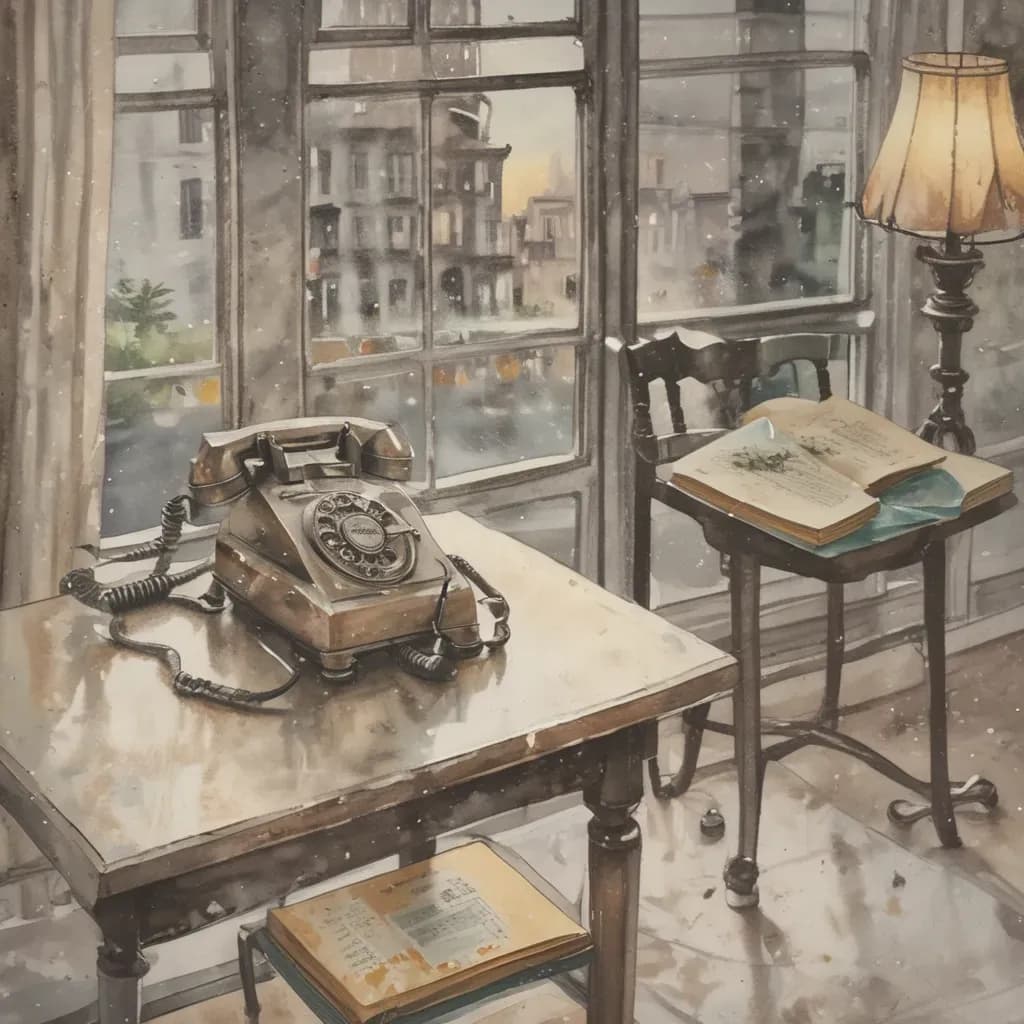
What the song captures, beneath its effervescent production and its very good joke, is something true about the experience of wanting without showing it. The busy woman is a role that many people recognize, not because it is dishonest, but because it is often the most dignified available option when the alternative is sitting by the phone.
Carpenter does not resolve that tension. She dances in it. And that, as much as any technical accomplishment, is why the song works.
References
- Sabrina Carpenter Instagram post announcing Busy Woman — Carpenter's statement about writing the song after the album was delivered and releasing it as a fan thank-you
- Busy Woman - Wikipedia — Chart positions, certifications, production credits, and release timeline
- Sabrina Carpenter: Greatest Pop Stars of 2025 - Billboard — Coverage of Carpenter's Grammy wins and her position at the peak of her cultural moment
- Short n' Sweet - Wikipedia — Album context, chart performance, critical reception, and thematic overview
- Short n' Sweet Album Review - Variety — Critical reception of the album including its wit and raunchy humor
- Busy Woman Lyrics Meaning Explainer - Screen Rant — Thematic analysis including the busy woman archetype and defense-mechanism reading of the comedy
- Sabrina Carpenter Busy Woman Lyrics Meaning: The Gay Line Explained - Capital FM — Audience and critical response to the song's most discussed lyric
- Sabrina Carpenter Busy Woman Song Review - Atwood Magazine — Critical review describing the song as irresistibly catchy with signature Carpenter wit
- Busy Woman Lyrics Explained: The Girl Power Anthem We Needed - Her Campus — Reading the song as a feminist empowerment anthem
- Short n' Sweet (Deluxe) Album Review - Atwood Magazine — Review of the deluxe edition positioning Carpenter as an icon in the making at 25
- Sabrina Carpenter Isn't Dismantling Patriarchy, She's Utilizing It - New University (UC Irvine) — Critical feminist analysis arguing Carpenter redirects rather than challenges patriarchal romantic dynamics
- Sabrina Carpenter at Barclays Center Review - Nylon — Live performance review describing how Busy Woman landed in concert