Butterfly
The Most Beautiful Trap
There is something almost clinical about pinning a butterfly. The creature that emerges from its chrysalis, that embodies the very concept of transformation, ends up motionless behind glass. Beautiful, yes. But also fixed, categorized, and dead. Lindsey Jordan chose that image for the most celebrated track on her third album as Snail Mail, and the choice illuminates everything Ricochet is trying to say about what happens when the world gets its hands on something living.
"Butterfly" arrives as the emotional peak of an album already dense with dread. Critics singled it out immediately: Glide Magazine called it "easily the best track" on the record[1], pointing to the way its construction seems to enact the very disorientation it describes. For a song that clocks in at under five minutes, it covers remarkable ground: music industry cynicism, the strange comfort of self-destruction, and the existential vertigo of becoming someone the world wants to watch.
A Different Voice, A Different Place
To understand what Jordan is working through on "Butterfly," it helps to know the landscape she crossed to get there. By late 2021, touring in support of Valentine, she discovered that the rasp audiences had associated with Snail Mail from the beginning was not a stylistic choice but a symptom. She had been singing through undiagnosed vocal polyps for years. Surgery removed them. A month of enforced silence followed. Speech therapy came next, and what emerged on the other side was a voice transformed: cleaner, fuller, capable of a falsetto that simply had not existed before.[2]
But the transformation was more than physical. Jordan relocated from New York City to Greensboro, North Carolina, where she wrote Ricochet at Mitch Easter's studio. Away from the city's social density, she found herself confronting something she had been too busy to sit with: a mounting terror of death she traced partly to watching Charlie Kaufman's Synecdoche, New York, a film about a theater director whose obsessive attempt to control his own legacy consumes his actual life. That fear ran through the writing of Ricochet like a current, shaping every song on it in some way.[2]
Jordan told The Line of Best Fit that she felt "scared of the greater universe, of losing the things I love."[3] Her Catholic upbringing, which had once given her the framework of heaven and hell, no longer provided the same comfort. She found herself confronting existential uncertainty without that scaffolding, and the disorientation found its way into the album's music. "Butterfly" is where that disorientation takes its most compressed, most urgent form.
Transformation Under Glass
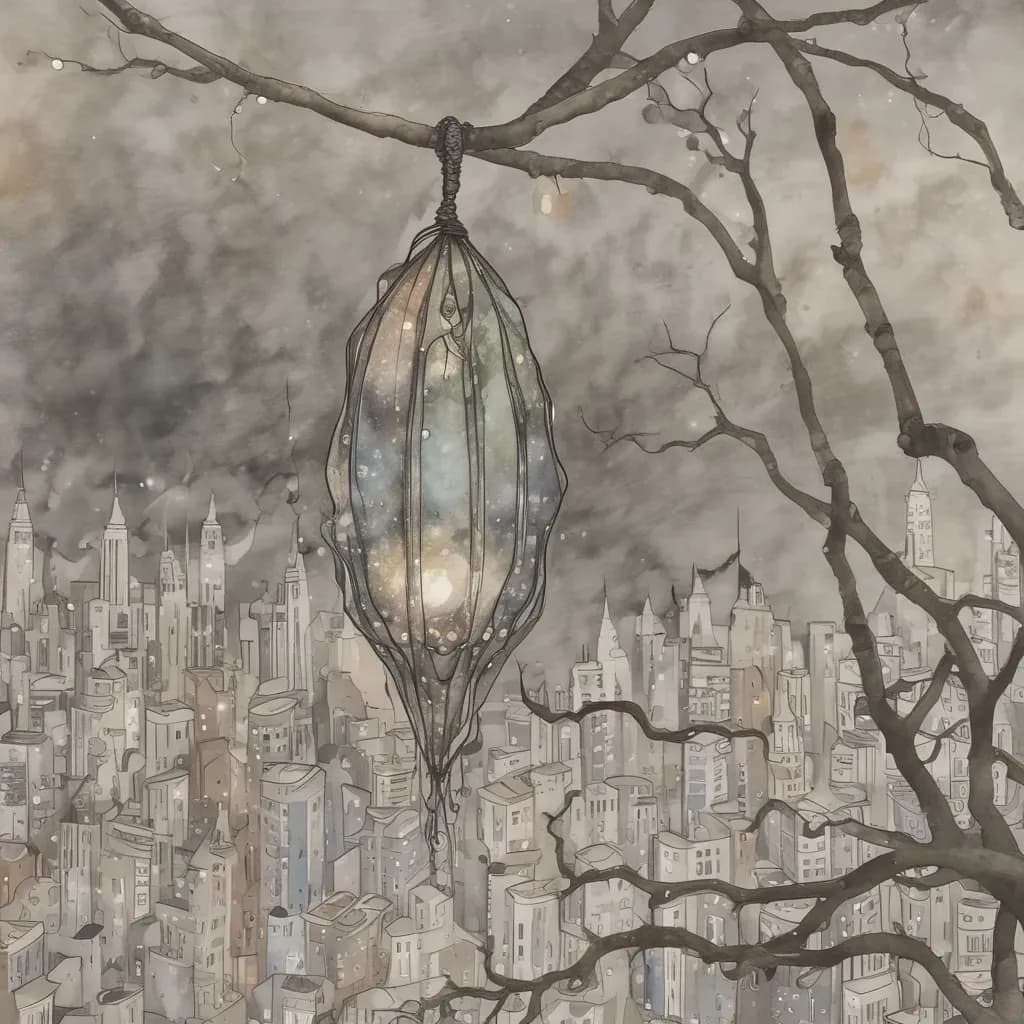
The title sets up the album's central tension immediately. A butterfly is supposed to be free: the universal shorthand for emergence and becoming. But Jordan complicates that image. The butterfly of the song is also a display object, something captured, observed, and studied. In the context of a young artist navigating the music industry's systems of attention, that double meaning lands with precision.[4]
The song addresses the presence of industry figures directly: people with business cards and promises who arrive to watch an artist's emergence with commercial rather than artistic interest. The lyrical portrait of these figures is unflattering, characterizing them as grifters rather than stewards of talent.[5] Critics noted with some pleasure that Jordan performed this material for the very people it describes during her promotional campaign. It is the kind of critique that only works when delivered with earned confidence, and Jordan on Ricochet has that confidence in abundance.
But the song does not stop at industry critique. It moves into territory that is harder and more personal: the way certain substances offer the sensation of feeling alive, of cutting through the numbness that accumulates when you spend years performing yourself for audiences both real and professional. Jordan has spoken openly about her rehabilitation stay in 2020, a period that informed Valentine's rawness. On "Butterfly," that autobiographical thread appears transformed, at a greater philosophical distance, processed through the same cool and appraising gaze the album turns on almost everything.[6]
The Panic Attack Architecture
What distinguishes "Butterfly" from the rest of Ricochet is not just its thematic concentration but its construction. The song moves with urgent energy through its first half, driven by guitars that rank among the most prominent in a record not especially known for guitar showmanship, with a crunchy solo that cuts against the cleaner production surrounding it.[5] Then, roughly halfway through, it drops to half-time. The rhythm slows. The world changes pace. And the song never quite re-settles.
A reviewer for New Noise Magazine described the structural shift as resembling the period immediately following a panic attack: the acute event has passed, but calm has not arrived.[7] You are somewhere between the emergency and its aftermath, unable to locate your footing. The parallel to the album's broader preoccupation with existential dread is unmistakable. Jordan built that unresolved feeling directly into the architecture of the song.
It is worth noting how rare this kind of structural honesty is in pop songwriting. Songs typically resolve. They build to release, to catharsis, to the return of the verse. "Butterfly" refuses that resolution. It enacts the ongoing unsettledness it describes, leaving the listener in the same liminal space its narrator occupies. Glide Magazine identified the choice as one of those "simple but effective songcraft decisions that add up to a next-level moment" for Jordan as an artist.[1]
Why This One Lands
Ricochet was released in March 2026, arriving in a moment when the romantic confessional, the mode that defined Jordan's first two albums, had become almost a genre convention in indie music. Jordan pivoted hard: this record is about death, about time, about what the music industry does to people, about the gap between who you are and who you are expected to perform being. "Butterfly" is where all those threads converge most completely.[8]
There is a generation of listeners who encountered Snail Mail during the Lush and Valentine era, who know Jordan as a chronicler of romantic intensity. "Butterfly" asks something different of them. It asks them to sit with the discomfort of metamorphosis that does not deliver the promise of flight. The butterfly emerges, yes. But in this song, something is waiting on the other side with a display case and a pin.
The song also connects to the broader arc of Ricochet as a whole. The album's title track, also available on this site, explores the record's gravitational themes from a different angle, examining trajectories and collisions rather than containment. Where "Ricochet" is about motion, "Butterfly" is about arrest: the moment transformation stops and display begins.
Other Readings
The butterfly image also permits a reading in which the narrator is not the specimen but the observer: someone watching another person get pinned down by industry, by dependency, by the machinery of being seen. In that reading, the song becomes a kind of elegy for what gets lost when talent is commodified, sung from outside the glass rather than within it.
A third interpretation leans into the album's broader preoccupation with mortality. A butterfly's lifespan is measured in weeks. Its beauty is inseparable from its brevity. If "Butterfly" is also a meditation on how briefly anything that matters gets to exist before it is classified and filed away, the substance abuse imagery takes on a different valence: the reach for altered states becomes a way of insisting on the aliveness of the present moment against the certainty of its ending.[3]
The Best Track
Critics were quick to place "Butterfly" at the top of Ricochet's hierarchy of achievements, and the designation holds up to scrutiny. The song does what all great album peaks do: it collects the record's scattered themes and focuses them into something that feels simultaneously larger and more intimate than what surrounds it.[1]
Jordan has built a career on songs that describe states rather than events, feelings more than stories. "Butterfly" is perhaps her most complete achievement in that mode: a track that gets the shape of transformation exactly right, not as liberation, not as flight, but as the moment after emergence when you realize that something with wings can still be pinned to a board. Beats Per Minute's verdict on the album overall captures the spirit of what the song achieves: a record of "restraint, realisation, and poetic maturity."[8]
References
- Snail Mail Grows Up and Breaks Through On Ambitious 'Ricochet' — Called Butterfly 'easily the best track' and cited its half-time structural shift as a defining songcraft decision
- Snail Mail's 'Ricochet' Album Review — Covers Jordan's vocal surgery, relocation to North Carolina, and the music-first compositional approach on Ricochet
- Snail Mail: 'I feel scared of the greater universe, of losing the things I love' — Interview covering Jordan's fear of death, her Catholic upbringing, and how existential anxiety shaped Ricochet
- Snail Mail: Ricochet album review — Noted the butterfly as symbol of trapped beauty and the album's themes of fading friendships and mortality
- Album Review: Snail Mail - 'Ricochet' — Detailed track-by-track review noting Butterfly's guitar work, the crunchy solo, and the anti-industry lyrical content
- Snail Mail: 'A lot of the new album is trying actively to keep myself human and unjaded' — NME interview contextualizing Jordan's rehabilitation history and its relationship to the substance themes in Ricochet
- Album Review: Snail Mail - Ricochet — Described Butterfly's mid-song structural collapse as resembling a post-panic-attack state; praised Jordan's expanded vocal range post-surgery
- Album Review: Snail Mail - Ricochet — Awarded 80%; called Ricochet 'a masterful record of restraint, realisation, and poetic maturity'