Come Back Home
Some songs arrive as a plea, and some arrive as a promise. "Come Back Home" manages to be both at once, in a voice that never rises above a murmur. For a band whose name is shorthand for sharp edges, New York attitude and glossy disco, it is a startlingly gentle piece of music.
Released on 20 November 2026 as the second single from Blondie's album High Noon[1][2], the song sits at an odd and moving crossroads. It was written by two members of another band, it is sung by one of rock's most recognisable voices, and it is about a problem nearly every touring musician knows: what happens to love when you are never there.
Where the song came from
"Come Back Home" was not written for Blondie. Jess Wolfe and Holly Laessig of the indie pop group Lucius wrote it while they were out on the road[4]. They have described it as a reflection of being away for too long, and have said that distance and the road can mess with your mind and your relationships[5].
Lucius formed in Brooklyn after Wolfe and Laessig met at Berklee College of Music, and the band is known for tightly interlocked harmonies[8]. The two have also spent years as sought-after guest vocalists, including on large tours, which gives them an unusually intimate view of what constant travel does to a home life[8]. That vantage point shapes the song.
They have said they never dreamed a song of theirs would become part of the Blondie story[1]. The sentence hints at a quiet generational handoff: two younger songwriters, writing from inside the fatigue of the road, giving a piece of their private experience to a band that has been on the road, on and off, for roughly fifty years.
A band with a long road behind it
Blondie formed in New York City in 1974, founded by Debbie Harry and Chris Stein[7]. They rose out of the downtown scene to become one of the defining acts of the late 1970s, split in 1982, and reunited in 1997[7]. Their 2017 album Pollinator showed a willingness to hand their sound to outside songwriters, with contributions from figures such as Johnny Marr and Sia[7].
High Noon is their twelfth studio album and their first since Pollinator, due on 26 February 2027 through BMG[5][7]. It was produced by John Congleton, who also worked on Pollinator, and it features guests including Johnny Marr and Glen Matlock[1][5]. Its lead single, "Spectral Eyes," was written by Marr[2].
The album also carries a shadow. It includes the final recordings of drummer Clem Burke, who died of cancer in April 2025, and his bandmates have said his playing is on every minute of it[2][7]. A record made in the presence of loss gives a song about absence an extra layer, whether or not anyone intended it.
The sound of waiting
Reviewers have reached for the same few words: tender, wistful, melancholic, haunting[2][3][4][6]. The arrangement begins melodic and understated, then swells into a soaring, layered chorus and a powerful bridge[5]. It is a quiet-then-loud shape, but the loudness is emotional rather than aggressive.
Chris Stein offered a revealing comparison. He likened the song to a famous gospel-tinged bluegrass performance from the film O Brother, Where Art Thou?, saying it has the same haunting, almost spiritual quality and a sense of simplicity and restraint[1][6]. That is a useful key. The song is closer to a hymn or a lullaby than to anything in the band's disco or new wave catalogue.
Rolling Stone described the track as buoyant and evocative even as it deals with forlorn feelings and a longing for a place to settle down[6]. That tension is the song's engine. The music lifts while the words stay with the ache, so the listener feels hope and loneliness together.
Consequence points to the contribution of Lucius's folk-leaning indie sensibility and harmonies, which meet Harry's cool, slightly weathered delivery[3]. The writers also sing on the track, so the voices of the song's authors literally surround the voice of the singer who inherited it[1].
Who is speaking, and to whom
The central theme is separation caused by work. Paste reads the song as a lament about being a touring artist, and about how life on the road wears on the relationships with the people left behind[2]. In this reading the narrator is the traveler, doubtful and unsettled, saying they have been gone a long time and have things to figure out.
Consequence hears something slightly different. It describes the lyric as a reassurance offered to someone who is returning, telling them that coming home is easier than they fear[3]. In that version the speaker is the one who stayed, and the song is an open door.
Both readings can hold at once, and the best songs of this kind often let them. The title is an imperative, an invitation, and it could be sung by either side of a long absence. The traveler wants to be called home. The person at home wants to call them. The song does not settle whose voice we are hearing, and that ambiguity is part of its warmth.
The cost of a life spent leaving
Songs about the road have a long history, and many of them celebrate it as freedom. This one looks at the invoice. It treats time away as something that accumulates quietly: missed days, drifting confidence, the sense that returning will require a kind of explanation.
The song's refusal to blame anyone is notable. There is no villain, only distance. The doubts belong to the person who left, and the tenderness belongs to the person who waits, and neither is treated as wrong. The emotional logic is forgiveness before it is even requested.
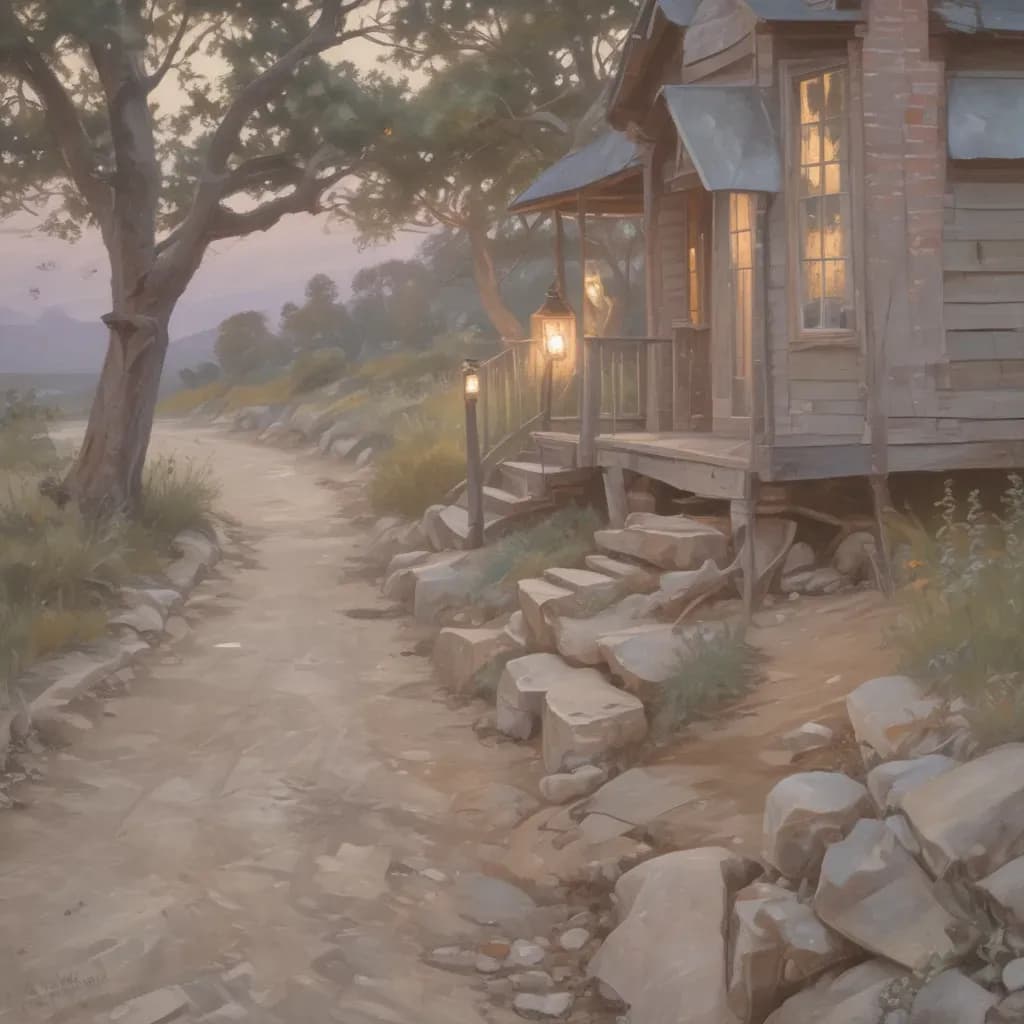
There is also a quiet argument here about what home is. The song never describes a grand house or a specific town. Home is a person, or a feeling of being expected. That makes it portable, which suits a band that has spent its life in hotels, tour buses and dressing rooms, and it makes the song easy for any listener to claim, whether they are the one who left or the one who stayed.
Listeners who have never toured can still hear their own lives in it. Anyone who has worked abroad, served in the military, nursed a relative in another city or simply let a friendship go quiet knows the awkward arithmetic of lost time, and the fear that the gap has become too wide to cross. The song answers that fear with the simplest possible reply.
That gentleness gives the song its dignity. A more dramatic composition might have staged a confrontation or a breakup. Instead it imagines reconciliation as a plain, daily thing: a person walking in, a place that is still theirs.
Why it suits Blondie now
Harry has said she got chills the first time she heard the song[1][3]. It is easy to see why it spoke to her. Blondie are a band whose members have lived the consequences of a career measured in decades, and whose audience has aged alongside them. A song about the pull between public life and private belonging lands differently in the voice of someone who has spent half a century doing both.
Harry has also said that the album is classic Blondie, an amalgamation of their influences and eras into something new, and that the music feels grounded in the present, shaped by who they are and how they are living now[4][6]. "Come Back Home" is the clearest example of that grounding. It does not try to recreate 1978. It sounds like people who have been through a great deal and want to say something plain.
Stein, for his part, has described the album as a long, strange ride, and has said he is grateful that fans have stayed with the band[1][4]. Read beside that, a song about coming home feels like a message to listeners as much as to a lover. After this many years, the invitation runs in both directions.
Sequencing adds to the effect. The song appears third on a thirteen-song album, after the lead single and a track written by Stein with a nod to the band's downtown roots, so it lands early, as a softening, before the record moves on to more percussive and eccentric material[5].
An open ending
It is worth being candid about what is known. Blondie have given no detailed account of how they came to record the song, and the press material around it is largely shared across outlets, so much of the interpretation here rests on how reviewers have heard it and on the writers' own brief description[1][5]. The song's deeper meaning is left, appropriately, to the listener.
What can be said is that "Come Back Home" is a rare thing: a song that finds the romance in ordinary return. It does not ask for grand gestures. It asks a person to come in from the cold, and promises that the door has been left unlocked.
There is a final irony worth noting. A song about being away too long has itself traveled a long way, from two songwriters working on the road to a band with a half-century of history, and it arrives in the world while the band is mourning its longtime drummer and still choosing to release new music. Few things say come back home, and keep going, more clearly than that.
In a catalogue full of glamour, irony and swagger, that sincerity is the surprise. It also might be the point. After fifty years of leaving, Blondie have recorded a song about arriving.
References
Keep reading
More New Wave
- 1999 Prince
- When Doves Cry Prince
- Blue Monday New Order
- The Guns of Brixton The Clash
- Roxanne The Police
- Mimesis Fontaines D.C.