Dance No More
The Dancefloor as Confessional
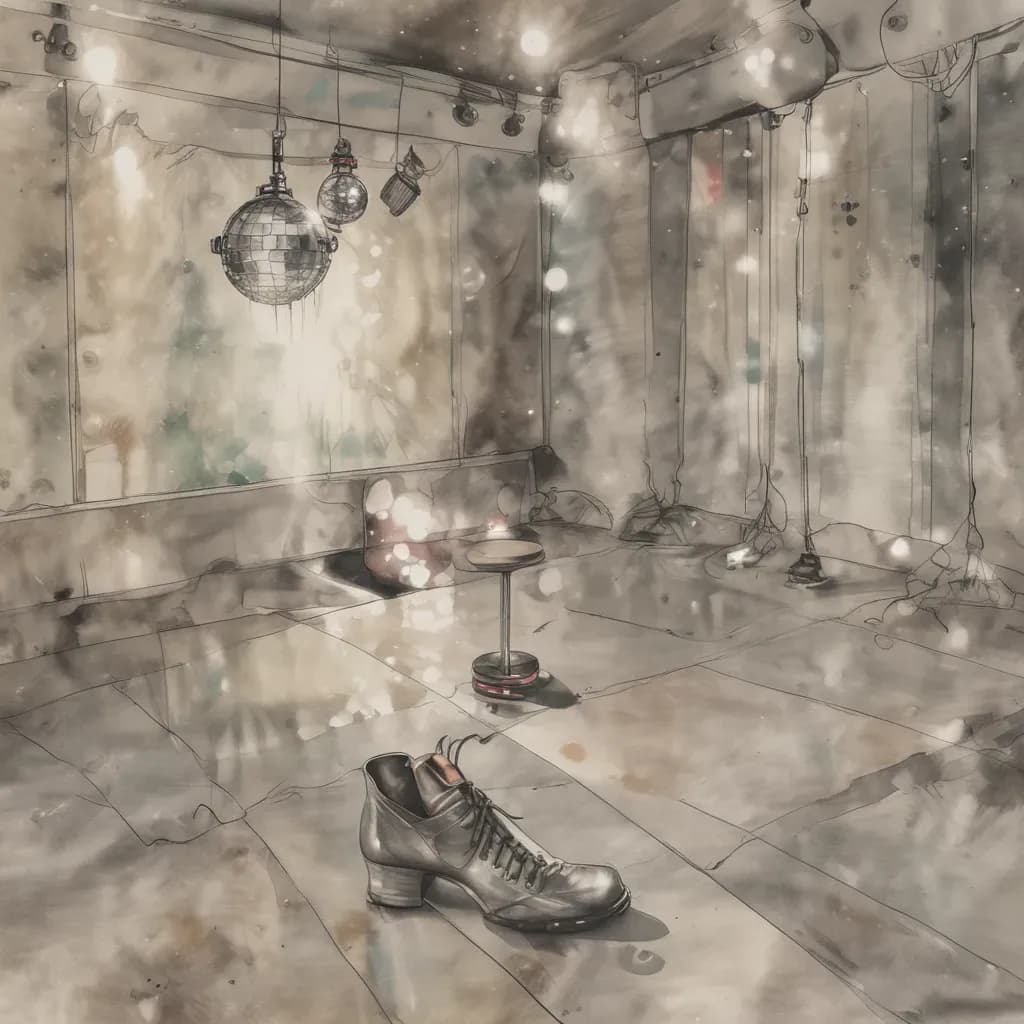
There is a particular kind of honesty that only happens when the music is loud enough and the lights are low enough. When your body moves before your mind can self-censor. When tears and sweat are indistinguishable and no one is watching and everyone is watching and somehow both things are fine.
"Dance No More," the tenth track on Harry Styles' fourth studio album Kiss All the Time. Disco, Occasionally., lives entirely inside that paradox. It is a song about what happens when performance strips away and pure presence takes over. It is also, unavoidably, a song about what it means to be Harry Styles, one of the most scrutinized performers on the planet, in a room full of people who might finally let him just exist.
Berlin, Joni Mitchell, and the Fourth Album
Released March 6, 2026, Kiss All the Time. Disco, Occasionally. arrived four years after Harry's House (2022), which won the Grammy for Album of the Year and positioned Styles as one of the most commercially dominant artists of his generation. The pressure to follow it was considerable.
But somewhere in those four years, Styles found the seed of this record in a Berlin nightclub. Standing on a dancefloor with his eyes closed and his hands in the air, he experienced what he later described as feeling "so unbelievably free and safe" while crying and sweating simultaneously.[1] The emotional specificity of that moment, the way joy and release can manifest physically in a way that makes them indistinguishable from grief, became the emotional engine of "Dance No More" in particular.
Styles has spoken about the song as his attempt to write something that captured the sentiment of Joni Mitchell's 1974 track "People's Parties," in which Mitchell observes that laughing and crying amount to the same emotional release.[2] It's a deeply literary touchstone for a song that is, sonically, built for Friday nights rather than Sunday mornings.
The song was produced by Kid Harpoon (Tom Hull) and Tyler Johnson, Styles' longtime collaborators who have shaped every one of his solo records. The production is lush and period-specific: a Chic-style bass line anchors a glittery synth arrangement that draws comparisons to Prince at his most playful.[3]
Performing vs. Feeling
At its core, "Dance No More" is about the difference between dancing to be seen and dancing to be free. The song's title is not, despite first appearances, a lament. It functions more like an instruction, or even a permission slip: there comes a point where the performer stops being a performer and becomes a participant.
Styles has explicitly said the song is "probably less about my experience, and more about life,"[4] which is itself a revealing statement from someone who spent his formative years in One Direction, a group in which members were encouraged to give a great deal of themselves away publicly. The tension between performance and authentic self-expression has threaded through Styles' solo career from the beginning, but "Dance No More" may be his most direct engagement with it.
One lyrical choice, a phrase that echoes the title of a 1970 Simon and Garfunkel track about the exhausting labor of keeping everyone satisfied, is not accidental. Styles confirmed in conversation with Apple Music's Zane Lowe that the reference is deliberate, drawing a line between mid-century folk-pop's observations about people-pleasing and the contemporary experience of an artist who knows intimately what it means to keep an audience happy at potential cost to his own joy.[5]
There is also the chorus's invocation of drag-ball culture, with language that carries deep resonance in LGBTQ+ community spaces where the dancefloor has historically been a sanctuary.[6] This is not window dressing. Styles has long navigated questions about his relationship to queer culture, and his Saturday Night Live appearance on March 15, 2026, where he performed "Dance No More" and also addressed accusations of queerbaiting, suggests he understands the weight of those references.[7]
The Fox Detail: Earnestness as Artistic Choice
One of the most telling things about "Dance No More" is a detail that could easily come across as a gimmick but lands as something genuinely warm. Kid Harpoon's young son Fox made a bet with Harry Styles: if he could hit the crossbar during a football kickaround, Harry would include his name in a song. Fox succeeded, on one of three attempts, and so Fox is in the song.[6]
It's a small thing. But it says something meaningful about how Styles and his collaborators operate. The same instinct that made "Canyon Moon," from Fine Line, a song acknowledging Kid Harpoon's late mother Jenny Hull, is at work here. The human particulars of the people around him, a child's footballing triumph, a friend's grief, a stranger's nightclub tears, are treated as material worth preserving.[5]
This is part of what separates "Dance No More" from the many 1980s revival tracks that have populated pop music since the mid-2010s. The sonic vocabulary is retro, but the emotional motivation is present-tense and personal. The song even contains a small domestic comedy: Styles' father heard the chorus entirely differently from how it was written, producing an interpretation that, when shared, became another layer of meaning in an already layered song.[6]
Cultural Resonance: The Dancefloor as Therapy
"The dance floor is where Harry Styles does his therapy, and this album is the session notes,"[8] Switched On Pop observed in their coverage of the record. It's a useful frame for understanding what "Dance No More" is doing culturally as well as personally.
The 2020s have seen a significant critical reassessment of disco's legacy, partly driven by the genre's fiftieth anniversary and partly by a cultural hunger for music that permits rather than restricts emotional release. Dance music, which spent much of the 1990s and 2000s being treated as disposable by critical institutions, has reclaimed the center of popular music with considerable authority.
"Dance No More" participates in this reclamation not just by sounding like disco but by articulating what disco was always philosophically arguing: that the body's intelligence, the knowledge that comes from moving, from sweating, from physical exhaustion in the company of others, is as valid as any more cerebral form of meaning-making.[9]
Styles' reference to Joni Mitchell is instructive here too. Mitchell's insight that laughter and crying are the same release comes from a party scene in which she feels alienated from the social performance around her. Styles seems to be arguing for a different kind of party, one where the performance gives way to something more genuine, where the DJ eventually stops performing too.
Critical Reception: A Divided Mirror
Critical response to "Dance No More" and the album it anchors has been, in the way that most responses to Styles are, something of a Rorschach test. Hope Ankney at The Alternative called it "a funkadelic, glittery mirror-ball itching to be played in any retro club," drawing comparisons to Prince and Morris Day.[3] Katelyn Benschoter at The Gustavian Weekly called it "the definition of a dance pop hit" and "pure fun."[10]
Anthony Fantano at The Needle Drop was considerably less enthused, calling it a weak 1980s-inspired funk jam and finding its group vocal sections more comical than cathartic.[11] This mirrors the broader critical divide over Styles as an artist: Alim Kheraj at Crack Magazine described the album as "fundamentally hollow," arguing that Styles functions as "a blank slate" onto whom listeners project meaning rather than an artist who generates authentic expression from the inside.[12]
Both readings have something to them. The song is expertly crafted and deliberately pleasurable. Whether that pleasurability constitutes depth or its absence depends on what you came expecting. What neither side disputes is that the song works on the dancefloor, which seems, given everything, like precisely the point.
Alternative Interpretations
The most interesting alternative reading of "Dance No More" takes the title at face value as a moment of exhaustion rather than liberation. Under this interpretation, the song's narrator has been performing so long, keeping so many people satisfied, that the dancefloor can no longer hold the weight of it. The song becomes a quiet refusal, not a celebration of release but a recognition of limits.
This reading is supported by the Joni Mitchell parallel. "People's Parties" is not, ultimately, a happy song. Mitchell's narrator is isolated at a gathering, watching people perform happiness, wondering what all this laughing and crying is for. If Styles is consciously channeling that energy, the euphoric production might be doing something more complex: packaging ambivalence in the form of joy, the same way the best disco always did.[2]
Styles has engaged with exactly this kind of interpretive ambiguity in interviews, suggesting the song can hold multiple meanings simultaneously.[13] The live performance of the song on Saturday Night Live, where he performed with visible intensity, suggested someone genuinely invested in the song's emotional contradictions rather than simply selling the groove.
Conclusion
"Dance No More" is a song about what happens when you stop trying to control how you're being received. Whether that freedom is experienced as liberation or exhaustion, as a peak moment or a quiet surrender, may say more about the listener than the song.
What Styles has created is a track with multiple entry points. You can arrive as someone who wants to hear a perfectly constructed piece of late-period Chic-adjacent funk. You can arrive as someone thinking about the gap between public selves and private feeling. You can arrive as Fox, a kid who hit the crossbar and got his name in a song, and you can hear that the world is sometimes genuinely delightful.
All of those ways of listening are correct. The dancefloor accommodates them all. That inclusivity, that refusal to demand a single response from an audience, might be the most honest thing Styles has ever put on record.
References
- Harry Styles Announces New Album 'Kiss All the Time. Disco, Occasionally.' - Variety — Variety coverage of the album announcement, release details, and promotional context including the Berlin nightclub inspiration
- Harry Styles Explains Meaning Behind a Certain Line in 'Dance No More' - Just Jared — Styles in conversation with Zane Lowe on Apple Music, connecting the song to Joni Mitchell's People's Parties and the Berlin nightclub experience
- Review: Harry Styles, 'Kiss All the Time. Disco, Occasionally.' - The Alternative — Hope Ankney describes Dance No More as a funkadelic mirror-ball track, drawing comparisons to Prince and Morris Day
- Harry Styles Discusses the Meaning Behind 'Dance No More' — Styles elaborates on the performing-versus-feeling tension at the heart of the song, saying it is less about his own experience and more about life generally
- Harry Styles Explains Every Song on 'Kiss All the Time. Disco, Occasionally.' - Billboard — Styles confirms the Simon and Garfunkel callback, the Joni Mitchell influence, and explains the Fox cameo story
- Harry Styles 'Dance No More' Lyrics Meaning: Who Is Fox? - Capital FM — Explains the Fox crossbar bet, the drag-ball culture reference in the chorus, and Styles' father mishearing the lyric
- Harry Styles Performs 'Dance No More' on SNL and Addresses Queerbaiting Accusations - NME — Styles' SNL appearance where he performed the song and responded to longstanding queerbaiting criticism
- Harry Styles: Aperture - Kiss All the Time. Disco, Occasionally. - Switched On Pop — Switched On Pop frames the album as Harry Styles doing therapy on the dancefloor, with the record as the session notes
- Harry Styles Answers Very Deep Question About the Meaning Behind 'Dance No More' - NME — NME coverage of Styles engaging with fan and press questions about the philosophical layers in the song
- Album Review: Harry Styles, 'Kiss All the Time. Disco, Occasionally.' - The Gustavian Weekly — Katelyn Benschoter calls Dance No More the definition of a dance pop hit and pure fun
- Harry Styles - 'Kiss All the Time. Disco, Occasionally.' Album Review - The Needle Drop — Anthony Fantano gives the album a 4 out of 10, calling Dance No More a weak 80s-inspired funk jam
- Harry Styles: 'Kiss All the Time. Disco, Occasionally.' - Crack Magazine — Alim Kheraj's critical review arguing the album is fundamentally hollow and that Styles operates as a blank slate for audience projection
- Watch Harry Styles Perform 'Dance No More' and 'Coming Up Roses' on SNL - Rolling Stone — Coverage of Styles' Saturday Night Live performance of the song on March 15, 2026