Days Like These
Sometimes the quietest songs make the loudest statements. "Days Like These," the closing track on Luke Combs' sprawling sixth studio album The Way I Am, arrives after twenty-one other songs with almost nothing: just his voice, an acoustic guitar, and an idea so simple it could be dismissed as a greeting card if it weren't delivered with such unguarded sincerity. It is a song about recognizing, in real time, that you have already arrived at the life you wanted.
For an artist who built his career on boisterous anthems about trucks, tailgates, and late nights, that kind of stripped-back emotional honesty could feel like a detour. Instead, it feels like a destination.
From a Single September Afternoon
The origin story matters here. Combs co-wrote the song in a single day in September 2022, alongside Brent Cobb and Aaron Raitiere, two Nashville fixtures known for their Americana roots and unadorned storytelling.[1] That timeline is significant: June 2022 marked the birth of Combs' first son, Tex, and by the time the three men sat down to write, the new father was just a few months into what would become a profound personal shift.[2]
Combs first teased the song on Instagram shortly after writing it, and what followed was one of the longer wait times any of his demos ever endured. Fans who caught the preview spent nearly three years hoping for a proper release.[3] When Combs finally posted about it on Facebook in October 2025, the self-aware tone of his announcement captured something essential about the song itself: he had not forgotten about it. He just knew when the time was right.
The song appeared first on a transitional EP before finding its permanent home as the album closer on The Way I Am in March 2026.[4]
The Arithmetic of Gratitude
The song's central argument is built around a single provocative idea: that the most valuable things in a life cannot be measured in the currency we usually use to measure value. Combs channels this through a cluster of money-related images, playing with the language of wealth, scarcity, and exchange, and then systematically dismantling each frame of reference to show how inadequate it is when applied to the moments he is trying to describe.[5]
The most striking of these images is also the most counterintuitive. The narrator imagines a hypothetical world where money itself grows on trees, and then observes that even in that scenario, something would be lost. What would be lost is the leaves themselves. The observation is small, quiet, and genuinely beautiful. It suggests that abundance, even total and magical abundance, can make us blind to the ordinary textures of the world we live in. The leaves do not need to be worth anything to be worth noticing.
This is the song's emotional core: the practice of noticing. Not grand epiphany, not crisis-born perspective, but the slow accumulation of ordinary moments that, when seen clearly, amount to something extraordinary.
Domestic Life as the Subject
"Days Like These" joins a small, distinct tradition within country music of songs that take the domestic interior as their primary subject without apologizing for its smallness. The narrator is not pining for something lost or reaching toward something future. He is sitting in the middle of his life, looking around.
The references to Combs' wife Nicole are not explicit by name, but they are unmistakable in the song's emotional texture. The couple began dating in 2016, married in August 2020, and welcomed their first son in June 2022.[2] By the time the song was written, their relationship had moved through the dislocations of touring and public attention to the quieter weight of new parenthood. The song does not describe any of that directly. It does not need to.
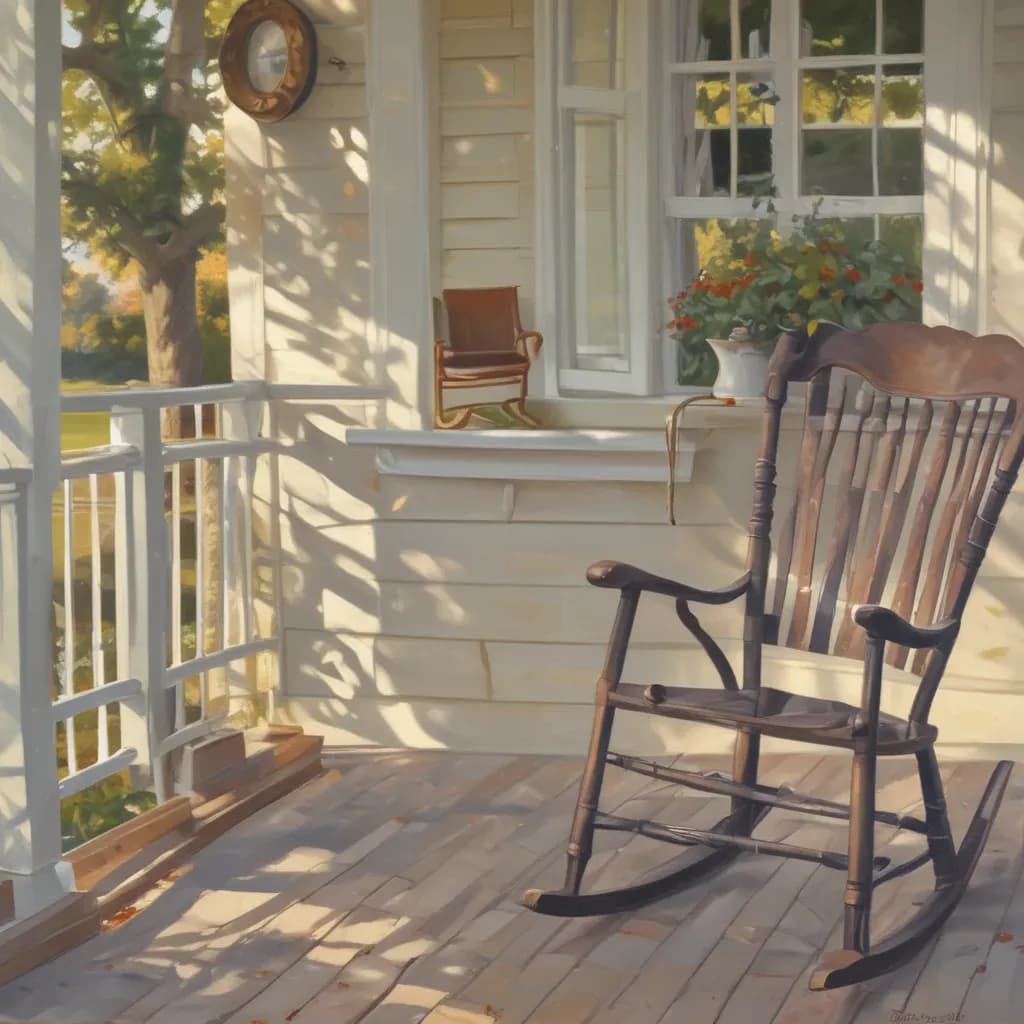
What it describes, instead, is the quality of a particular kind of afternoon: the kind where nothing exceptional is happening, where the people you love are simply present, and where the act of being present with them feels like its own form of luck.
This connects "Days Like These" thematically to other songs on The Way I Am, particularly the album's title track, which similarly explores the intersection of professional identity and personal life. Where the title track carries a note of restlessness and self-questioning, this song is its resolution: this is what all of that striving was for.
Brent Cobb, Aaron Raitiere, and the Craft of Simplicity
The co-writers are worth considering here. Brent Cobb, a Georgia native and cousin of producer Dave Cobb, built his reputation on exactly this kind of sparse, emotionally direct songwriting. His own albums consistently favor acoustic textures and plainspoken lyrical intelligence over production gloss. Aaron Raitiere similarly brings an Americana lineage to the table, with songwriting credits across country, folk, and roots music that prioritize emotional truth over commercial calculation.[6]
The combination of all three suggests a creative room where no one was trying to make a radio hit. The production on "Days Like These" is deliberately stripped to essentials. Taste of Country noted comparisons to Chris Stapleton's most intimate work, which is shorthand for a certain kind of country music that prioritizes feel over formula.[7] That comparison is instructive. Stapleton, like Combs, built his early reputation on powerful full-band performances. When either artist pulls back to something smaller and more acoustic, the contrast itself becomes expressive. The restraint signals that what follows does not need amplification.
The Album Context: Arriving at Contentment
On The Way I Am, "Days Like These" carries particular weight as a closing statement. The album is enormous by any measure: 22 tracks across 73 minutes, surveying a wide range of emotional territory.[4] There are drinking songs, breakup songs, road songs, and moments of doubt. There is a duet with Alison Krauss drawing on bluegrass tradition, and a NASCAR metaphor for romantic loss that runs several minutes. The album circles, from multiple angles and in multiple registers, around the question embedded in its title: who is Luke Combs, now that he has become exactly what he set out to become?
"Days Like These" is the answer. Not a complicated answer, not a philosophical treatise, but the kind of answer that only becomes available once you stop asking the question quite so urgently. The answer is: this. The people around you. The light in the afternoon. The fact that you noticed it.
Placed at the end of a 22-track journey, the song functions as a kind of exhale. Everything before it has been music about the effort of living. This is music about the reward.
Cultural Resonance: Against the Upgrade Mentality
The song arrives in a moment when the dominant vocabulary of success in popular music, as in popular culture broadly, tends toward maximalism. More followers, bigger tours, greater reach, the next accomplishment. "Days Like These" makes the opposite argument in a register quiet enough that you have to lean in to hear it.
Its closest cultural cousins are not chart-toppers but the kinds of songs that find their way onto playlists for rainy Sundays and early mornings: music for the margins of the day, when the noise recedes and something small becomes available to you.
The fact that fans waited nearly three years for a proper release of a song they had heard only as a brief tease suggests that something in that fragment landed deeply.[3] That kind of sustained emotional resonance, across years and before a complete recording even existed, points to something the song touches that is not easily explained by craft alone.
A Different Reading: The Possibility of Loss
Most listeners will hear "Days Like These" as a song of presence and gratitude, and that reading is fully supported by the material. But there is another emotional frequency underneath it, audible if you listen for it.
The songs on The Way I Am that address Combs' rapid rise to fame carry a low-grade anxiety about fragility: the worry that the life you are building may not survive the demands you place on it by being who you are publicly. Combs missed the birth of his second son Beau in August 2023 because he was on tour in Australia. That fact registers in this context not as a footnote but as a shadow.[2]
Through this lens, "Days Like These" reads not only as gratitude but as something closer to prayer. The narrator is not simply describing what he has. He is making a record of it. The act of naming these moments is also the act of holding them, trying to ensure they do not simply pass without being witnessed. The money metaphors then take on a different edge: these things cannot be bought back once they are gone.
That undertow does not darken the song. It deepens it.
The Song That Ends the Album and Answers the Album
Luke Combs has made his career on songs that are recognizable from their first bar, country music with the grain of authentic experience in it. "Days Like These" represents a different kind of ambition: the ambition to be still.
Written in a single September afternoon with two Americana craftsmen, gestated for years, and finally released as the closing statement on his most expansive album, the song distills everything that the preceding 21 tracks were building toward. It does not resolve every question the album raises. It does something better. It suggests that the questions might matter less than the fact of being here to ask them.[8]
The simplest things in Luke Combs' life, an ordinary afternoon, the people he loves, the light on the leaves, are the things that cannot be quantified. That, the song says, is exactly the point.
References
- Wikipedia: Days Like These (Luke Combs song) — Overview of the song including writing credits, release timeline, and background
- Wikipedia: Luke Combs — Biographical context including family timeline and career milestones
- Whiskey Riff: Luke Combs Shares Studio Teaser of Long-Awaited New Song Days Like These — Coverage of Combs' September 2025 studio teaser release and fan anticipation
- Wikipedia: The Way I Am (Luke Combs album) — Album context, track listing, and reception
- Holler Country: Days Like These Lyrics and Meaning — Lyrical breakdown and thematic context for the song
- Songfacts: Days Like These by Luke Combs — Song origin and writer information
- Taste of Country: The Way I Am Album Review and Songs Ranked — Critical reception and per-track assessment including Days Like These
- Entertainment Focus: Luke Combs The Way I Am Review — Critical review noting the album's emotional range and production