Death Grips 2.0
In July 2014, Death Grips announced they were over. Not through a press release or label statement, but via a photograph of a handwritten message on what appeared to be a cocktail napkin, posted to Facebook. The note said the band was at its best and was therefore done. They canceled tour dates. They went quiet.[1] Nine months later, on the last track of what was billed as their final album, they named it "Death Grips 2.0." In those two characters -- the period and the zero -- resided the entirety of the question the band was asking: what exactly comes after?
The Architecture of Goodbye
The Powers That B is not really a goodbye album. Or rather, it performs one while refusing to fully commit to the gesture. The double album structure itself is inherently excessive: disc one, Niggas on the Moon, dropped as a surprise free download in June 2014, two weeks before the band dissolved; disc two, Jenny Death, did not arrive officially until March 31, 2015, but leaked on 4chan's music board a couple of weeks earlier.[1]
The album was assembled with unusual care for a project that was ostensibly wrapping up a career. Niggas on the Moon features all instrumentation performed on a Roland V-Drum kit by Zach Hill, layered over chopped vocal samples from Bjork -- a collaboration the Icelandic artist did not exactly endorse publicly. Jenny Death took the opposite approach, recorded at Sunset Sound Studios in Los Angeles with guitarist Nick Reinhart of Tera Melos and organist Julian Imsdahl, pushing toward something rawer and more overtly guitar-oriented.[2]
Critically, the combined release was received as the band's most emotionally mature work. Pitchfork awarded it an 8.4/10, calling it the band's most emotionally affecting and compositionally advanced songs to that point. Jenny Death in particular earned an 8.1, with the penultimate track earning a Best New Track designation.[3] For a band that often seemed to court critical antagonism, this kind of reception was itself notable. Something in this allegedly final statement had landed differently.
The broader cultural backdrop made the album's arrival stranger still. Between the breakup announcement and The Powers That B's official release, Death Grips dropped Fashion Week in January 2015, an instrumental album whose track titles, read in sequence, spelled out "JENNY DEATH WHEN" -- a sardonic response to fans who had been pestering the band about the unreleased disc two. The period from mid-2014 through early 2015 was a masterclass in using audience frustration as a compositional element.[4]
The Voice Goes Silent
Death Grips has always been defined, in part, by what MC Ride does with his voice. Whether howling with what sounds like genuine physical distress, speaking in near-whispers between industrial beats, or dissolving into wordless noise, his vocal presence has been the band's constant anchor -- the human element that keeps even the most abstract tracks from becoming pure texture.
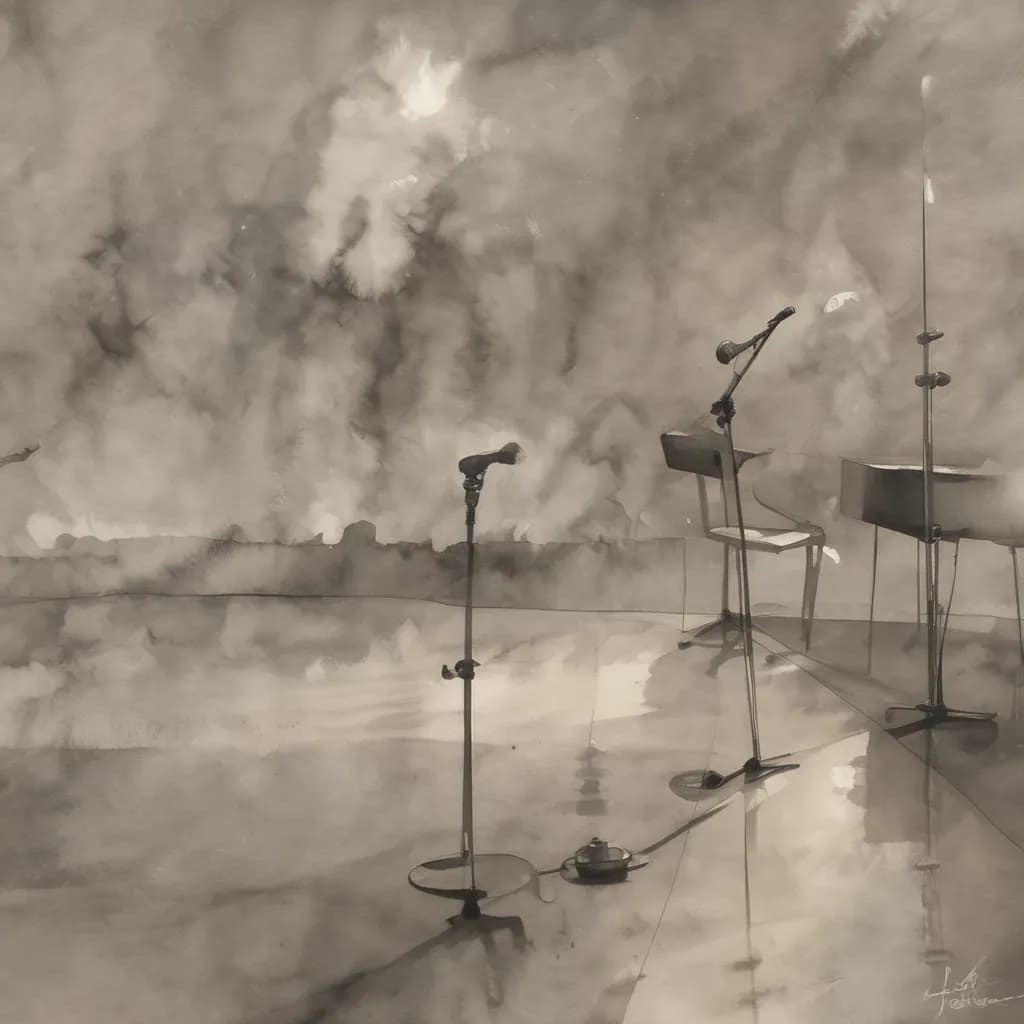
"Death Grips 2.0" removes that anchor entirely. It is purely instrumental: roughly two and a half minutes of electronic sound in which no voice ever enters. The track opens with something resembling rapid channel-flipping or a broken signal searching for a frequency, then settles into a gloomy, repetitive electronic texture that offers no resolution and no arrival.
In a catalog where the voice has functioned simultaneously as weapon, wound, and transmission from somewhere unstable, its complete absence here is significant. There is no MC Ride left to hear. Whatever is happening sonically is happening without him -- or is what remains after him. The human signal has been replaced by machinery, and the machinery does not explain itself.
What "2.0" Actually Means
The title contains the whole debate about this track, and by extension about Death Grips as an entity. Software versioning provides the most obvious interpretive frame: version 2.0 is an update, an improvement, a next iteration that retains the core while upgrading its components. Read this way, the track was a promise -- the band was not ending but transforming. The breakup was a chrysalis, not a coffin.
The problem with that reading is that Death Grips, after all the drama, simply continued being Death Grips. Bottomless Pit arrived in 2016. Year of the Snitch in 2018. The "2.0" designation turned out to describe nothing that had actually changed. This has led to a second, more sardonic interpretation: the title was the trolling.[5] The label applied to the same band continuing the same work was a commentary on how much the audience wanted transformation -- needed, even, to frame what was happening as an evolution rather than a simple refusal to stop. The band named the track what everyone wanted it to be and then delivered nothing of the sort.
A third reading goes deeper into the album's internal logic. Jenny Death has been interpreted as charting a kind of ritualized apotheosis: the systematic destruction of Death Grips 1.0 culminating in a transcendence to something post-human. Under this reading, "Death Grips 2.0" is not the band's next commercial iteration but an entity beyond the original -- something that cannot be recorded, interviewed, or understood in conventional terms. The track's total voicelessness fits this frame precisely: whatever has ascended no longer needs a mouth.[4]
The Shadow of "On GP"
Whatever else "Death Grips 2.0" may be, it cannot be entirely separated from the track that precedes it. The penultimate track on Jenny Death is one of the band's most emotionally raw compositions, widely interpreted as a direct treatment of suicidal ideation, in which the narrator engages in a sustained dialogue with death personified as an entity offering finality as a form of agency. The emotional weight of that track is unusual in the band's catalog -- less disorienting than simply devastating.
What follows it matters enormously. "Death Grips 2.0" arrives as aftermath: cold, mechanical, devoid of the human presence that made the preceding track so difficult. Whether the narrator has survived to face the machinery of continuation, or whether the machinery is what remains after the narrator is gone, is left entirely unresolved. The transition is not softened in any way. It arrives as a cut, not a fade.
This placement was a choice. Tracks on albums are sequenced with intention, and placing the band's most emotionally exposed moment directly before something this cold and voiceless constitutes a form of argument. About what exactly, the band has never elaborated. But the juxtaposition is not accidental -- it is the album's final act of withholding.
Hidden in Plain Sight
Adding to the track's peculiar status is the fact that it does not appear on any vinyl pressing of The Powers That B, either the original 2015 release or subsequent reissues. Reportedly a casualty of format time constraints, its omission from the physical medium most associated with canonical album experience gives it the quality of a secret: a track that exists, but not in a form you can hold.[2] It lives in digital and CD releases only.
The band's official SoundCloud page hosts it under the handle "dg20," available but not especially prominent. It has the feeling of something placed rather than promoted -- lodged in the catalog to be found by those who were looking. A track titled "Death Grips 2.0" that cannot fully materialize in a physical format has a certain conceptual elegance, even if the omission was a practical necessity.
Art That Devours Itself
Death Grips has consistently used its own public persona as raw material. The breakup announcement on a cocktail napkin, the canceled high-profile tour dates, the cryptic instrumental album whose track titles collectively formed a taunt directed at the fanbase -- all of it constitutes an ongoing performance in which the band's relationship to its audience is itself the medium.[1]
"Death Grips 2.0" fits this pattern. It is an artwork that positions itself as a sequel to something it claims has ended, in the closing moments of the album on which the ending was supposed to occur. The title is a promise that turns out to be irrelevant. The track fills the space after the declared silence with more sound -- but a sound that has been named, versioned, and released as a product.
The album's tenth anniversary in 2025 occasioned renewed critical attention, with retrospective writing treating The Powers That B as a landmark in experimental music that continues to shape what aggressive electronic music can accomplish.[5] Within that reassessment, "Death Grips 2.0" is a small piece but arguably the most structurally important: the hinge between what the band declared they were leaving behind and what they actually became.
A Monument to Continuation
Purely instrumental, brief, deliberately unresolved, and absent from the format that grants physical permanence -- "Death Grips 2.0" is an odd monument to continuity. As a closing statement it should not work. Perhaps that is the point. Death Grips did not need to end gracefully. They needed to end in a way that raised the question of whether ending was something they were capable of at all.
The track answers that question by refusing to answer it. The machine keeps running. The signal keeps broadcasting. Whatever Death Grips 2.0 was supposed to be -- reinvention, continuation, apotheosis, or joke -- remains, deliberately and permanently, undefined. In a career built on refusing legibility, it is a fitting final word: not a conclusion, but a version number applied to something that was never finished.
References
- The Powers That B - Wikipedia — Release timeline, recording details, chart performance, and critical reception for the album
- Jenny Death - Death Grips Wiki — Track details, recording information, and fan analysis of Jenny Death including Death Grips 2.0
- Review: Death Grips - The Powers That B - SPIN — Contemporary critical review of the album on release
- The Death of Death Grips and The Powers That B - WRVU Nashville — Critical essay on the album's thematic arc and the apotheosis reading of Jenny Death
- The Powers That B Turns 10 - Stereogum — Tenth anniversary retrospective on the album's legacy and continuing significance