Debt Collector
Most breakup songs are about the moment of leaving. This one is about the strange, undignified period afterward, when two people who are supposedly finished with each other keep ending up in the same room. Debt Collector finds its drama in a scene most of us would rather forget: standing in a crowded arena beside someone you used to belong to, pretending to be fine.
Rivkah Reyes released the song as a single in the summer of 2026[2], and it now sits fourth on her debut EP Fan Favorite, which arrived on November 6.[6] It is a small, sweet-and-sad track on a record otherwise known for brattier, louder energy, and that contrast is a big part of why it lingers.
A concert, a breakup and a month of limbo
Reyes has been unusually specific about where the song came from. A relationship had just ended, and almost immediately afterward the two of them had tickets to see Lorde at Madison Square Garden. On the day of the show, her ex texted to say she was only up for going as friends.[1]
Reyes had dressed for the night in something far more flirtatious than what she ended up wearing. She changed into a T-shirt and jeans and went anyway. By her account the evening was emotional, with plenty of crying and screaming along to the music. Dinner afterward was off the table, and the two agreed to talk after the show but then did not talk for about a month.[1] That month of silence, with nothing resolved and nothing allowed to end, is the emotional climate of the song.
The backdrop made it heavier. By her telling, the relationship was about four months of casual dating followed by about three months of serious dating, two of them long distance. During that stretch her mother died, and then her ex's mother died too.[1] The song is not only about romantic loss. It sits inside a shared and tangled grief.
Reyes did not walk out of the arena thinking she had a song. A friend at a bar told her this would make a great one, and when she got to the studio for the EP she knew she wanted to write about it. She says it more or less fell out of her, and that she often did not know what she was saying while it happened.[1]
What the title means
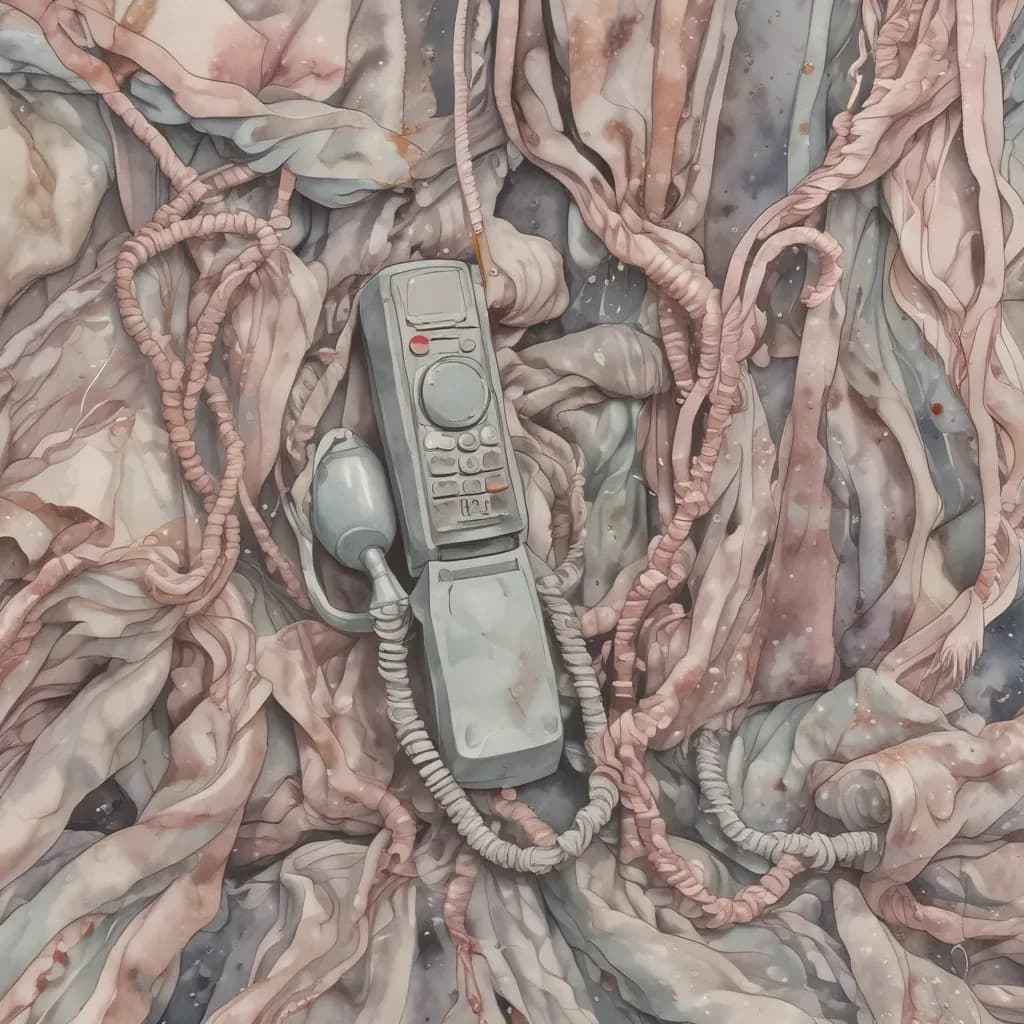
The central image is a financial one turned emotional. Reyes has described the debt collector as a metaphor for emotional leverage: the idea that she will give the other person whatever they want if it means she keeps access to them.[2] In that framing, the ex is not the one chasing. The narrator is, and she is making offers, absorbing costs and accepting terms she would never agree to in a clearer mood.
Coverage of the single adds a second layer. The ex keeps coming back around like a debt collector calling again and again, and the song asks what is owed between two people and when those emotional debts get called in.[2] Both readings are true at once, and the song never fully decides who holds the ledger. That ambiguity is the point. In a lopsided breakup, each person can feel like the creditor and the debtor in the same hour.
Reyes herself has said the song is about compulsion rather than longing. It is the pull to re-enter something she knows is unstable, paired with a quiet promise to herself that she can do it better this time.[2] Longing is wistful. Compulsion is a little frightening, and the song lets both feelings coexist without moralizing about either.
Trying to move on, still tied to the past
One reviewer called the song the EP's more bittersweet track and described its subject as the attempt to move on while remaining entangled with the past, a situation the writer found emotionally absurd.[3] Absurd is the right word. The setup of an ex-couple sharing a Lorde concert is almost a sitcom premise, and a lesser songwriter might have leaned on the joke. Reyes plays it straighter, and the humor that survives is the kind that comes from recognizing your own behavior in real time.
A second review picks up the tone. It hears the track as rawer and more DIY than the songs around it, with Reyes pushing into her higher register while harmonies stack up behind her.[4] The same writer singled out a deadpan aside about being put on a higher dose of medication and declaring herself better, a line that reads as both a joke and a confession.[4] That double edge is typical of how Reyes works. She hides the wound inside the punchline and trusts the listener to notice.
It is worth remembering where this sits in the record. The EP covers situationships, unhealthy attachment, romantic delusion and the wish to be chosen, filtered through humor.[6] A more upbeat track like "Miss Congeniality" turns that wish into a pageant routine. This one strips the costume off and shows what the longing looks like at two in the morning with the phone in your hand.
There is also a quiet structural choice worth noticing. By placing the song after the EP's ugly-crying and attachment-anxiety numbers and before the bouncier closing stretch, the sequencing lets it act as a hinge. The record moves from raw reaction to something closer to reflection here, and the listener gets a moment to breathe before the humor returns.[3][4]
That reflective stance is also what separates the song from a straightforward revenge or pining anthem. Nobody in it is a villain. Two people who recently lost their mothers and each other are trying, badly and tenderly, to stay kind while everything shifts underneath them, and the song is generous enough to let that stay complicated.
The video and the feeling of memory
The video was directed by Johanna Block and shot entirely on a vintage camcorder at Coney Island, which gives it the texture of footage already half forgotten.[2] Reyes has called the boardwalk one of the most romantic places in the world, a corny and character-filled spot with old American charm, and she has said New York makes every breakup feel cinematic.[2]
There is a gentle irony there. The song is about a messy, unglamorous limbo, and the visuals dress it in nostalgia and sea air. Together they capture how heartbreak feels from inside: ordinary and mortifying in the moment, then oddly beautiful once enough time passes to frame it.
The life behind the song
Reyes is known to many people as the young bassist from the 2003 film School of Rock, cast when she was eleven.[1] She grew up in Chicago in a musical family, took up classical guitar as a small child, and spent her teens in grunge and punk bands.[1] She has since said she is tired of being treated as a nostalgia artifact, and that fronting her own project, after years of group decision making, is both humbling and frightening.[8]
The EP also follows a rough stretch. She has said that her mother's sudden death in 2025 set off a run of chaotic relationships, and she has been open about her sobriety and recovery.[7][1] Read against that history, a breakup where two grieving people cannot quite let go of each other looks less like a quirk of modern dating and more like a very human reflex. When the person who understands your loss is the same person who just left, the debt feels impossible to settle.
The EP was produced with Constantine Anastasakis according to several credits[6], while Reyes herself has named Blonder as a co-producer who shares her references and jokes in the studio.[5] Either way, the sound stays close to her own taste: crunchy guitars, bright melodies and a willingness to let the seams show.
Alternative readings
It is possible to hear the song as a portrait of someone else entirely: the ex as the collector, arriving with small requests that keep the narrator invested. The Loud Women piece leans that way when it describes the ex returning like a repeated phone call.[2] On that reading, the narrator is less a negotiator than a person who cannot stop picking up.
Another reading treats the debt as purely internal. Anyone who has stayed too long in a doomed situation knows the feeling of having already paid too much to walk away. The sunk cost becomes its own reason to stay. Seen that way, the narrator is collecting from herself, trying to recover the time, tenderness and effort she poured into something that has already closed.
None of these readings cancels the others. Reyes has framed the EP as a place where she can finally be messy and funny and sincere in the same song, and this track is the clearest example.[8]
Why it lands
The strength of the song is how ordinary its central embarrassment is. Almost everyone has stood somewhere public beside an ex, saying the correct things and feeling something else. Reyes gives that experience a metaphor with real bite and a melody that does not look away from it.
It also refuses the tidy arc. There is no triumphant walk away, no clean lesson. The song ends, as the situation did, with feelings still unsettled and the ledger still open. That honesty is why the track stands out on an EP full of bright hooks, and why it is likely to be the one that people quietly return to after the louder songs have worn off.
References
Keep reading
More by Rivkah Reyes
More Indie Pop
- Love Letter Gracie Abrams
- Casting Call Dominic Fike
- City of Steel Dominic Fike
- War Machine Dominic Fike
- Spotlight Dominic Fike
- Mistakes Declan Welsh & The Decadent West