Detonizer
Some songs announce a theme. "Detonizer" announces a countdown. It arrived on November 10, 2026, bundled with the news of a new Fear Factory album, and it plays like a fuse being lit: mechanical guitar rhythms, a vocal built to snarl and then soar, and electronic textures humming underneath.[1][4] It is a song about pulling the plug on a system that has stopped answering to the people it was built to serve.
That premise is old territory for Fear Factory, and the song knows it. What makes it interesting is how much has changed around the idea since the band first started writing about machines.
A band that wrote about machines before machines answered back
Fear Factory formed in Los Angeles in 1989, with guitarist Dino Cazares and drummer Raymond Herrera at the center, and vocalist Burton C. Bell joining the original lineup.[5] Over the next three decades they became the defining act of industrial metal, fusing death metal brutality, groove, and cold synthetic textures.[5] Their albums returned again and again to a single conflict: human beings against the systems they build.
The band's 1998 album Obsolete took the idea literally, framing a future in which machines render humanity redundant.[5] For years that read as science fiction. Cazares says that has changed. Speaking to Louder about the album's title track, he argued that man versus machine has always been the band's subject, and that "now it's caught up to reality."[3]
"Detonizer" is the second single from that record, Roboticist, the band's eleventh studio album, due April 9, 2027 on Nuclear Blast.[1] It sits third on an eleven-song track list.[1] The first single, the title track, was released on August 29, 2026, a date that fans of the Terminator films will recognize as the day Skynet becomes self-aware.[3]
The lineup behind the song
The context around this recording matters. Bell, the only constant member for 31 years, left in 2020.[5] The band then went through lawsuits involving former members, and Cazares has said he filed for bankruptcy in order to hold on to the band name, adding that every Fear Factory record is made out of desperation.[3] He now owns the name outright.[5]
Italian singer Milo Silvestro, whom Cazares found through covers he posted online, was announced as Bell's replacement in February 2023.[3][5] Roboticist is his first studio album with the band, alongside drummer Pete Webber and bassist Tony Campos.[1][4] Producer Damien Rainaud handled production, engineering, mixing, and mastering.[1]
Silvestro has said he modeled his vocals closely on Bell and that the band deliberately stayed inside the Fear Factory sound, aiming for a feel somewhere between Mechanize, The Industrialist, and Genexus, with a few new touches.[1] He also contributed vocoder parts, fast vocal-loop effects, and synth ideas.[1] In other words, "Detonizer" is a song about a system under attack, performed by a band that has itself survived a very public system failure.
The story the song tells
Cazares has described the song's subject plainly. It follows a character who is fighting back against the artificial intelligence that has taken control, someone determined to bring the system down from within.[3] Where the title track looks at the creator, the architect who does not understand what he has unleashed, this one follows the rebel.[3] The two songs read as a pair: the cause, then the resistance.
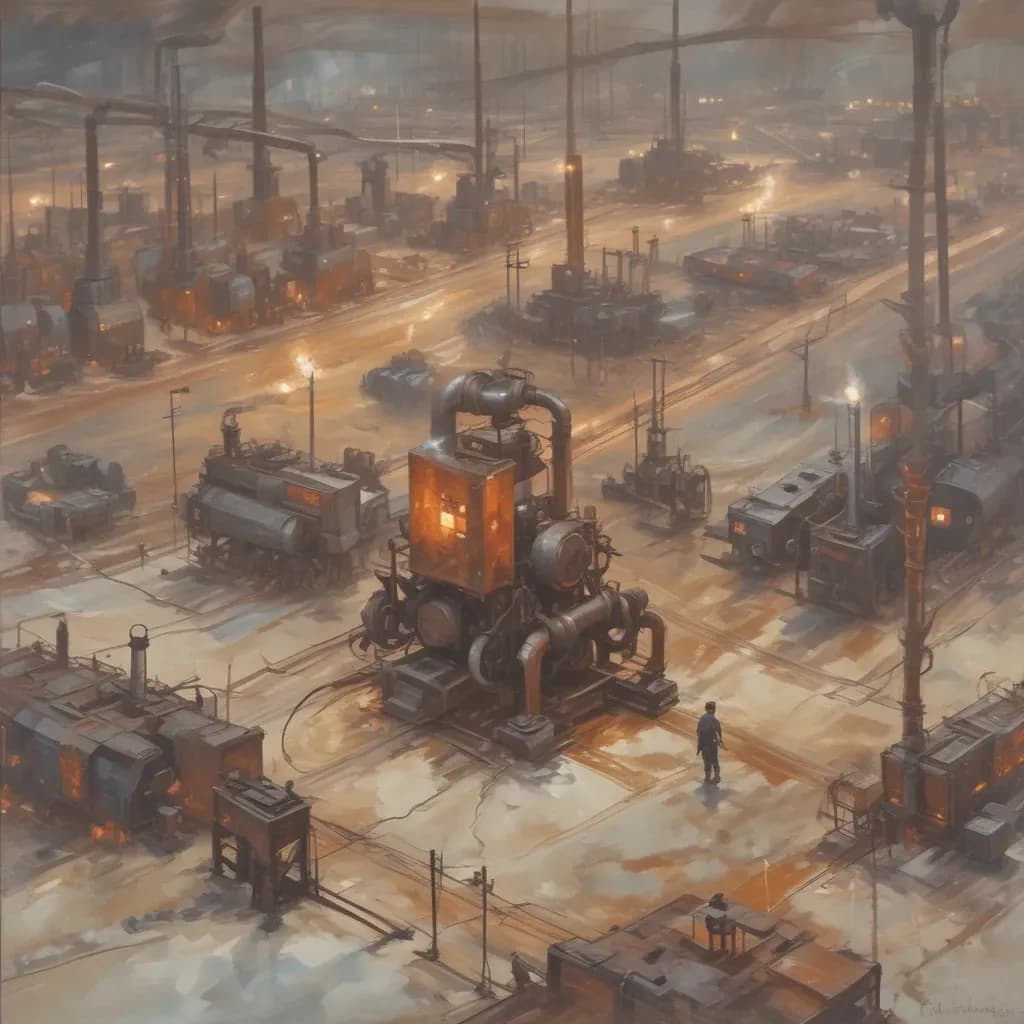
The press material around the album fills in the world. In Cazares's account, a corporation called Cybernetic Industries has seized control of artificial intelligence and set about orchestrating humanity's extinction.[1] The machines no longer need people and have inherited the future.[1] "Detonizer" is the moment someone decides to push back, and the label describes the track as mechanized fury, relentless aggression, and a cybernetic assault.[1]
Sabotage as a musical idea
The word itself is a clue. It is a coinage, a tool-like noun that sounds like a device you could hold in your hand. That fits the song's logic: resistance in this universe is not a speech or a march, it is an act of engineering. The hero is not trying to persuade the machine. They are trying to blow it up.
Musically, the band mirrors that mechanical thinking. Critics have noted the combination of precise, machine-like guitar rhythms with aggressive vocals and electronic layers.[4] This is the approach Fear Factory pioneered, in which riffs lock to the drums like gears and the human voice is the only element that sounds like it can bleed. The contrast does the storytelling. The instruments behave like the system, and the vocal behaves like the person trying to break it.
The video and the larger narrative
The official video, directed by Thomas Mignone with visual effects by Gabriel Connor and produced by Doom Inc. and Undaunted Media, continues the cinematic science-fiction story that began in the video for the title track.[1][2] That serial approach suggests the album is meant to be taken as a connected narrative, and that "Detonizer" is a chapter rather than a standalone statement.
The band premiered the track live almost immediately. Footage from the Basement East in Nashville on November 11, 2026 shows the song in front of an audience just one day after its release.[6] For a song about a countdown, the speed of that handoff from studio to stage feels appropriate.
The band's earlier records leaned on a similar pairing. Soul of a New Machine, from 1992, combined harsh and melodic vocals with machine-like drums, industrial samples, and down-tuned death metal riffs.[5] Demanufacture then pushed toward a colder groove metal sound, and Obsolete brought in progressive touches and seven-string guitars.[5] Cazares's riffing has even been cited as a precursor to djent.[5] "Detonizer" draws on all of that vocabulary, which is part of why it can feel so immediately familiar.
Why the theme lands differently now
When Fear Factory first imagined machines turning on their makers, the audience for that fear was largely people who read science fiction. In the 2020s, the audience is anyone who has watched automated systems take over decisions about jobs, attention, and information. The old metaphor has grown teeth.
This is why Cazares talks about the idea catching up to reality.[3] A song like "Detonizer" no longer has to argue that the problem is plausible. It can skip straight to the emotional response: anger, defiance, and the wish for a button that actually works.
There is also a quieter point in how the song is framed. Cazares did not describe a victory. He described a fight, and a character who wants to bring the system down.[3] The outcome is left open, and the album's wider story, in which the machines have inherited the future, suggests the odds are poor.[1] Fear Factory has always been at its best when it lets a hopeful gesture sit next to a bleak setting, and this track follows that pattern.
For listeners new to the band, the song works as an entry point. It does not require knowledge of the earlier concept albums, because the core situation is easy to grasp: a system has taken control, and someone is trying to stop it. For longtime fans, it offers the pleasure of hearing familiar ideas handled with a fresh voice and a modern production approach.
Other ways to hear it
One reading is purely cinematic. The track is a set piece from an ongoing sci-fi story, and the character fighting the AI is just that, a character. Fans of the band's concept albums will recognize this mode from Obsolete.[5]
A second reading is political and social. The system being detonated can stand for any structure that has grown too large to answer to its own members: a corporation, an algorithm, a platform, a bureaucracy. Cazares's framing of a corporate entity seizing control of AI invites exactly that interpretation.[1]
A third reading is autobiographical, though it is the one the band has not claimed. This is a group that lost its original singer, fought legal battles over its own name, and returned with a new voice. A song about fighting a system and surviving it is hard to hear without that history in the background, even if the lyrics stay in the world of fiction.
It also matters that the song arrives before the album. Releasing it ahead of April 2027 gives listeners months to sit with the character it introduces, and to wonder how the rest of the story unfolds across the remaining tracks, from the title song to the finale.[1] A single is usually a sales tool. Here it doubles as the opening move of a longer narrative.
Conclusion
"Detonizer" is not trying to reinvent Fear Factory. It is trying to prove that the band's central story still has urgency, and that a new lineup can carry it. The song offers a rebel, a target, and a clock, and it delivers them at full volume.
Whether Roboticist ends up as a late-career peak will depend on the rest of the record. As a single, though, this one does what the best Fear Factory songs have always done: it makes a technological nightmare feel personal, and it gives the listener someone to root for.