Dil Diyan Gallan
Talks of the Heart
The Punjabi phrase at the center of this song translates, simply and precisely, to "talks of the heart." Not declarations, not vows, not songs of fire or yearning, but talks. Conversations. The kind that only happen between two people who have learned, through time and trial, how to speak honestly to each other. This specificity is the key to everything "Dil Diyan Gallan" does.
Released in November 2017 as part of the blockbuster Bollywood action film Tiger Zinda Hai, the song occupies a particular moment in the film's narrative: a pause, a breath, a scene of domestic peace that stands in contrast to the espionage and danger surrounding it.[1] Salman Khan and Katrina Kaif appear as Tiger and Zoya, a spy couple long separated by circumstance, settled at last into something resembling a life together. The song is their love song, and it earns its sentiment by understanding that the most profound romantic expression is not volume but depth.
A Song Born From Conflict
The making of "Dil Diyan Gallan" carries its own dramatic backstory, one that shadows every note of the official recording. The song was originally associated with Arijit Singh, whose voice had become the dominant sound of 2010s Bollywood romance. But Singh's relationship with Salman Khan had deteriorated sharply after a 2014 awards ceremony incident, in which a casual exchange onstage between the two was interpreted as a slight.[2] The fallout was severe. Khan used his considerable influence to ensure Singh's vocals were removed from or withheld from several of his films, including Kick (2014), Bajrangi Bhaijaan (2015), and Sultan (2016).[2]
By 2017, when Tiger Zinda Hai went into production, the rift was still open. "Dil Diyan Gallan" was assigned instead to Atif Aslam, a Pakistani singer whose own participation in a Hindi film was notable in its own right: an informal industry boycott of Pakistani artists had been in place following tensions after the 2016 Uri attacks.[3] That Aslam was granted an exception for this particular song added another layer of complexity to an already layered situation.
Aslam's version is tender and restrained, his voice carrying a particular kind of melancholy that suits the song's themes of love across distance and time. The unplugged version, recorded by Neha Bhasin, strips the production further, revealing the song's folk skeleton beneath the orchestral sweep.[4] Both recordings stand on their own, but neither fully resolves the question of who should have been singing in the first place, a question that hung over the song's release and would only deepen in the months that followed.
The Yash Chopra Inheritance
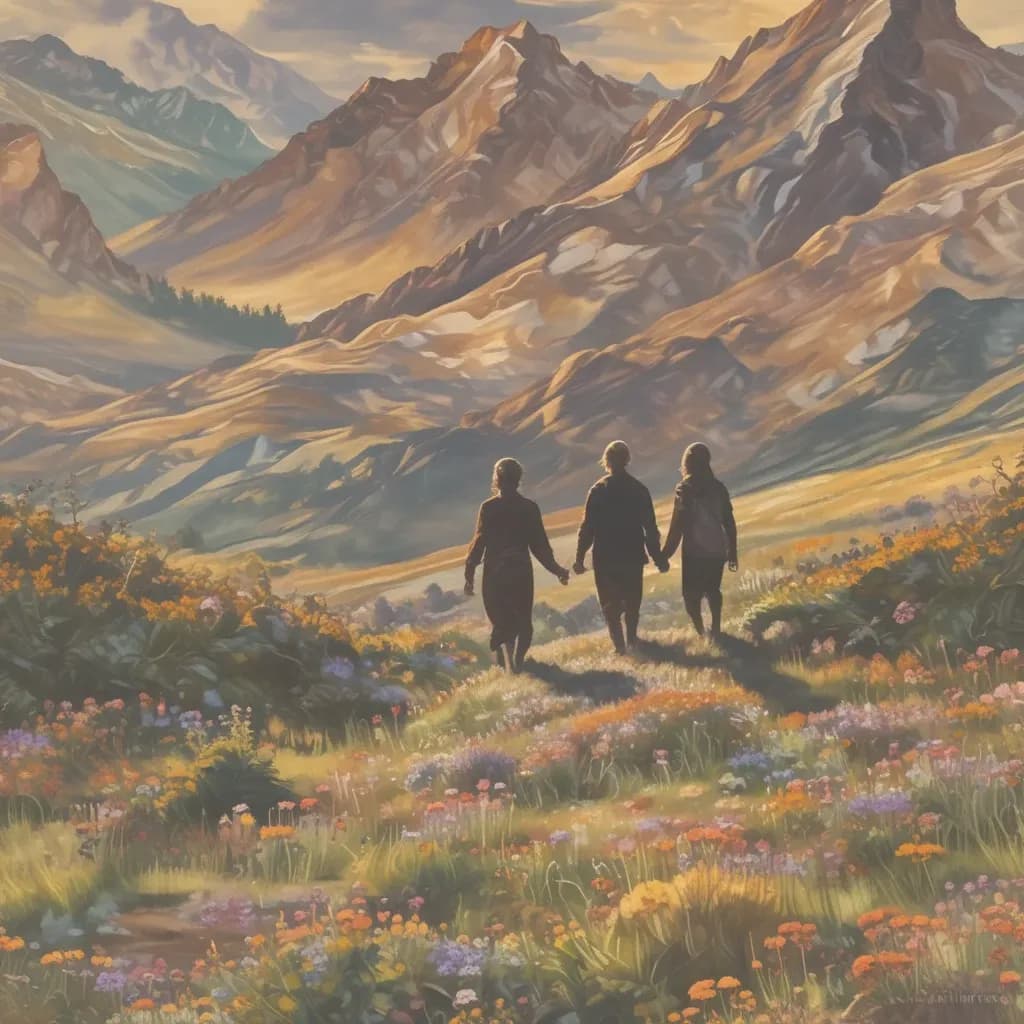
Director Ali Abbas Zafar was explicit about the song's aesthetic lineage. He framed "Dil Diyan Gallan" as a deliberate tribute to the romantic tradition of Yash Chopra, the filmmaker who defined a particular ideal of Bollywood love through the 1970s and 1980s: sweeping Alpine landscapes, pastoral innocence, the sense that romantic love exists in its own pure dimension outside ordinary time.[1] The song was shot in Austria, deliberately echoing the European locations Chopra used in films like Silsila and Chandni.
Composed by Vishal-Shekhar (Vishal Dadlani and Shekhar Ravjiani), the duo known for blending folk textures with contemporary production, "Dil Diyan Gallan" achieves something unusual in mainstream Bollywood: it feels genuinely nostalgic without feeling stale.[3] The instrumentation layers Punjabi folk motifs over orchestral strings, and lyricist Irshad Kamil writes in a register that calls back to the ghazal and nazm traditions while remaining emotionally accessible to a mass audience.
This is deliberate nostalgia used as emotional strategy. The Yash Chopra aesthetic carries an implicit promise: that love can be pure, that two people can find a space outside of history and consequence where only their connection matters. For a film about spies and terrorism and state violence, "Dil Diyan Gallan" provides necessary counterweight. It insists that the human interior has its own geography, and that it is worth mapping.
What the Song Is About
The song's central emotional territory is the love that survives. Not the love that begins with fireworks, not the love of yearning or desire unfulfilled, but the love that has been tested by time and separation and difficulty and is still present, still speaking.
Irshad Kamil's lyrics move through several registers of tenderness. There is an acknowledgment of fragility: love is rendered through images of delicate, breakable things, the kind of imagery that understands that what is precious is also vulnerable. This is not pessimism but honesty, and it gives the song a weight that simple celebration would lack. The most moving love songs are always, in some sense, aware of what they stand to lose.
A recurring thread is the idea of the beloved as friend. The Punjabi term of endearment invoked throughout gestures toward a relationship that has moved beyond attraction into genuine understanding of another person. The "talks of the heart" the title promises are only possible between people who have earned that kind of knowing through time. The song insists, quietly but firmly, that true friendship is the foundation that makes romantic love durable.
The song also returns insistently to the idea of the beloved's centrality to the narrator's own existence: this relationship is not supplementary to life but constitutive of it. This language can tip into sentimentality in lesser hands, but Kamil's Punjabi idiom roots it in something earthier, something that feels lived in rather than performed. The folk register acts as an anchor against the song's more operatic impulses.
The Live Performance and What It Meant
In March 2018, at a large outdoor concert at MMRDA grounds in Mumbai, Arijit Singh performed "Dil Diyan Gallan" live.[5] The crowd responded with extraordinary warmth. He was not the voice on the official recording. He was the voice who, in the estimation of many in that audience, should have been, and the performance carried all of that unspoken weight.
The moment was widely interpreted as either a peace gesture toward Salman Khan or a quiet assertion of artistic ownership. Perhaps it was both. Either way, it demonstrated how a song about private conversations between two people can accumulate public meaning in ways its creators never anticipated.[5]
Singh's voice has always been associated with a particular quality of longing: a melancholy timbre that makes even joyful songs feel like they know what they might lose. Hearing him perform a song about enduring love that had been withheld from him because of a breakdown in communication, a song whose entire emotional core is about keeping the conversation open between two people, created a resonance that no studio recording could have manufactured.
The reconciliation between Singh and Khan came eventually, in 2023, when Singh contributed to Tiger 3, the sequel to the very franchise from which he had been excluded at Tiger Zinda Hai. Khan later publicly acknowledged that the misunderstanding had been on his side.[6] The circle closed not with a grand gesture but with a song, as these things often do.
Why It Resonates Beyond the Film
"Dil Diyan Gallan" became one of the biggest Indian songs of its era. The Tiger Zinda Hai soundtrack accumulated approximately 1.5 billion YouTube views, placing it among the most-streamed Bollywood soundtracks of its time.[3] Bollyspice called the song "heart-stoppingly beautiful" and noted that it "makes you believe in love all over again."[7]
But commercial success and critical warmth don't fully explain the song's staying power. The song works because it honors a form of love that popular culture underrepresents: the love that exists inside ordinary life, sustained by the kind of conversations that don't make for dramatic cinema but make for a life.
The Punjabi folk roots of the melody and lyrics are important here. Music Aloud, reviewing the full soundtrack, noted the song's "charming tune with folk aspects accentuated in Punjabi lyrics" as a distinguishing quality.[4] Punjabi folk music has always carried the weight of longing and separation. "Dil Diyan Gallan" draws on that tradition while placing its subjects in a moment of reunion, transmuting the genre's characteristic longing into arrival. The ache is still there, but it is the ache of presence rather than absence.
The Austrian filming location also matters beyond its Yash Chopra reference. These landscapes are not Indian landscapes; they belong to no one's ancestral memory. They are neutral ground, outside the politics and histories that define the film's plot. Tiger and Zoya can speak their hearts here precisely because the setting places them outside the world that otherwise defines their lives. The visual grammar reinforces the song's thematic core: some conversations require a space apart from everything else.
An Alternative Reading
There is a reading of "Dil Diyan Gallan" that works entirely outside the film, through the prism of its off-screen history. A song titled "Talks of the Heart," about the conversations that sustain love through difficulty and the things that must be said between two people who matter to each other, was withheld from its first-choice singer because of a breakdown in communication between two men.
The irony is almost too neat. The song's entire emotional logic is about keeping lines of communication open, about returning again and again to the conversation even when it is difficult. The real story of the song's creation is about two people who failed to do exactly that for almost a decade.
This reading doesn't diminish the song; if anything, it deepens it. Art has a way of exceeding the intentions of the people who made it, of becoming a mirror for situations its creators did not anticipate. "Dil Diyan Gallan" is about more than Tiger and Zoya's love story. It carries the weight of everything that was unspoken between the people involved in its creation, and the eventual resolution of that silence.
The Conversation That Continues
"Dil Diyan Gallan" endures because it takes seriously something popular culture often trivializes: the sustained, unglamorous, deeply human work of staying connected to another person. Its title is not a declaration but an invitation. Not "I love you" but "let's keep talking."
The Alpine meadows and orchestral sweep give these private conversations a grandeur they rarely receive in the world outside cinema, and something about that feels correct. The small conversations are the real story. The daily acts of honesty and vulnerability are the architecture of love. Everything else, the drama and the danger and the grand gestures, is decoration.
The song found its audience. The feud eventually ended. And the talks of the heart, as they tend to do, continued.
References
- Tiger Zinda Hai - Wikipedia — Film background, director Ali Abbas Zafar's stated Yash Chopra tribute, and plot context for Dil Diyan Gallan
- Salman Khan-Arijit Singh feud explained - WION News — Detailed account of the 2014 awards ceremony incident, the feud's escalation, and removal of Singh from multiple Salman Khan films
- Tiger Zinda Hai (soundtrack) - Wikipedia — Song credits, release details, composer/lyricist info, and streaming milestones for the Tiger Zinda Hai soundtrack
- Tiger Zinda Hai Music Review - Music Aloud — Album review noting the folk aspects of Dil Diyan Gallan and comparing the two versions
- Did Arijit Singh sing Dil Diyan Gallan to make peace with Salman? - IBTimes India — Report on Arijit Singh's live performance of the song at MMRDA grounds in March 2018 and its significance
- Salman Khan ends nine-year feud with Arijit Singh - Bollywood Shaadis — Coverage of the 2023 reconciliation including Khan's public acknowledgment that the misunderstanding was on his side
- Dil Diyan Gallan: An absolutely beautiful song of love - Bollyspice — Critical review calling the song heart-stoppingly beautiful and praising its on-screen chemistry and Austrian visuals
- Arijit Singh - Wikipedia — Biographical overview of Arijit Singh's career, awards, and significance in Bollywood