Dilemma
There is something genuinely disorienting about hearing a children's film director announce a Death Grips song. When "Dilemma" begins, the listener is greeted not by noise or aggression but by the calm, accented voice of Andrew Adamson, director of the Shrek franchise, speaking about recording sessions at Sunset Sound in Hollywood. Within moments, the track detonates.[1] That juxtaposition, the documentary calm before the sonic storm, is not a novelty act or a one-time joke. It is the song's central argument.
Snitching on Themselves
Year of the Snitch was announced to the world in March 2018 via a cryptic social media post: "Someone snitched." No interviews followed, no press releases, no promotional campaigns.[2] Over the following months the band drip-fed six singles, arriving at "Dilemma" one week before the album's June 22 release date.[2] The minimalism was deliberate. Death Grips, at this point in their career, had made a philosophy out of withholding.
The album was recorded at Sunset Sound Recorders, a Hollywood studio with a history stretching back to sessions by Led Zeppelin and The Doors. The band assembled an unusual cast of collaborators: Justin Chancellor of Tool on bass, noise artist Lucas Abela contributing glass instrumentation, DJ Swamp threading through the majority of the record on turntables.[3] And then, for "Dilemma," Andrew Adamson, the New Zealand director best known for the Shrek films, contributing the spoken word introduction recorded at Sunset Sound.[1]
The "snitch" framing runs deeper than a single provocation. Critics and fans have interpreted the album title as referring to the band members themselves, turning informant on their own mythology, cannibalizing the sound and persona they had spent years constructing.[4] On this reading, Year of the Snitch is an act of calculated self-exposure, and "Dilemma" is its most theatrically honest moment: a band presenting the documentation of their own process, then immediately destroying the document.
The Studio as Theater
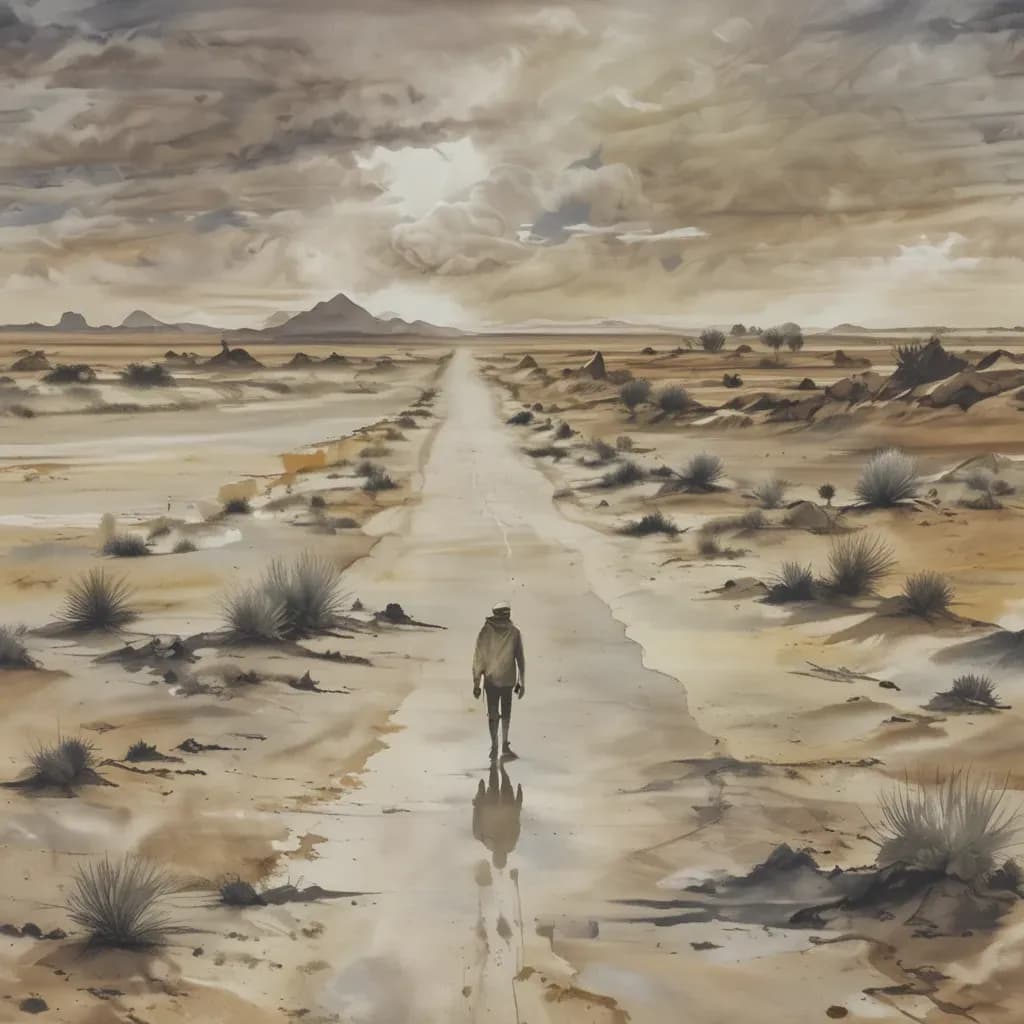
"Dilemma" opens as if it were a behind-the-scenes record. Adamson's voice, calm and conversational, evokes the tone of a documentary filmmaker setting a scene. This is not a common choice for a Death Grips track. Their music typically refuses to explain its origins or offer context for what it is.[5]
Then the frame tears. The spoken intro ends and the song erupts into something dense and kinetic, MC Ride's vocals moving over a percussive architecture that sounds simultaneously loose and precisely engineered. The contrast is the point. What seemed like transparency turns out to be another layer of theater. The documentary voice does not explain the song; it misdirects.[5]
This structure mirrors the band's relationship with their audience. Death Grips' fan communities, concentrated on Reddit and across online spaces, have built elaborate interpretive cultures around every cryptic release.[6] The band's communication strategy consistently offers the appearance of access while actually deepening the mystery. "Dilemma" replicates that pattern in miniature: it presents a frame, invites the audience to lean in, then pulls the frame away.
The Chorus and What Lives Inside the Noise
One persistent misreading of Death Grips holds that their value is purely in difficulty or aggression. Year of the Snitch challenged that assumption more directly than any prior record, incorporating krautrock rhythms, jazz textures, and progressive rock dynamics alongside the noise.[7] "Dilemma" benefits from this expanded palette.
Post-Trash's review singled out "Dilemma" for special attention, describing its chorus as among the most explosive sections of the album and noting the song's prominent, funky bass line, which the reviewer suspected was the work of Justin Chancellor.[8] musicOMH similarly called the track a standout, noting how the intensity builds from Adamson's calm spoken introduction into something surprisingly infectious for a band associated primarily with sonic assault.[4]
This infectiousness is not at odds with the song's confrontational spirit. The dilemma of the title may be precisely this: the desire to make something both uncompromising and irresistible, something that refuses comfort while being impossible to stop listening to. Death Grips has always understood that accessibility and aggression are not opposites. They are tools, and on "Dilemma," both are deployed at full force.
When the Meme Becomes the Message
The choice of Andrew Adamson as a collaborator cannot be understood outside of internet culture. By 2018, an extensive online mythology had grown up around the absurdist pairing of Death Grips and the Shrek franchise.[9] The "Shrek Grips" meme ecosystem had enough mass that when the band announced Adamson's participation in March 2018, the response was a mixture of genuine surprise and the sense that something the internet had willed into existence had actually happened.[1]
This is Death Grips operating at a level of cultural self-awareness that demands confidence most artists cannot afford. By folding the meme into the record, the band acknowledged that the internet's fantasy version of Death Grips is now inseparable from the actual band. The boundary between artifact and online afterlife had dissolved.
The music video reinforced this. Its imagery drew on the spoken-word framing of the song itself, incorporating what reviewers described as David Lynchian visuals: an interrogation scenario, surreal outdoor footage, and a superimposed spinning Hollywood sign.[10] YouTube removed the video almost immediately, citing its content as sexually provocative. Death Grips posted the takedown notice to their social media accounts.[10] The deletion became part of the song's mythology. The band had found a way to make the absence of their work as meaningful as its presence.
Paranoia, Betrayal, and the Closed System
"Dilemma" does not exist in isolation. It sits within an album saturated with themes of surveillance, betrayal, and the psychology of closed, paranoid communities. The album's release date fell one day after Linda Kasabian's 69th birthday; Kasabian was the key prosecution witness at the Manson Family murder trial, and the connection has led to speculation that the "snitch" of the title gestures toward the Manson trials and the culture of mistrust surrounding them.[2]
Within this frame, the spoken documentary voice that opens "Dilemma" takes on a new resonance. A voice speaking on the record, placing itself on the public side of a private event, is by definition a snitch. The noise that follows might be understood as the consequence of speaking: the collapse of order once a closed system is opened to the outside.
MC Ride has consistently declined to decode his lyrics in literal terms, suggesting instead that the emotional charge of a line matters more than its semantic content.[5] Within that framework, "Dilemma" functions as a felt experience of contradiction: calm and explosion, access and opacity, testimony and chaos. The dilemma is real. To document is to betray. To make a record about your own process is to snitch on yourself.
What the Song Leaves Behind
Year of the Snitch received a Metacritic score of 69 out of 100, with Pitchfork awarding it a 7.3 and Rolling Stone calling it a "cyber-noise-punk-rap disruption."[11] Critical reception was divided precisely because the album is doing several things at once, and different listeners pick up on different signals.
"Dilemma" is the album's self-commentary made audible. It performs, in real time, the band's method: the false disclosure, the provocative collaboration, the interrupted documentary, the noise that swallows explanation whole. For listeners who arrived already knowing the Death Grips mythology, it is confirmation of everything they suspected. For first-time listeners, it is a clean demonstration of what this band actually does.
The dilemma, in the end, is not theirs alone. Every listener is implicated. Every attempt to interpret the song reproduces the snitching dynamic: turning private experience into public declaration. Death Grips have always understood that making their audience into critics, analysts, and annotators is itself an artistic act. "Dilemma" makes that understanding explicit, then dissolves it into feedback.
References
- Death Grips Share New Song 'Dilemma' Featuring Shrek Director Andrew Adamson - The FADER — Release announcement confirming Adamson's recording at Sunset Sound and the March 2018 announcement timeline
- Year of the Snitch - Wikipedia — Album overview, recording context, collaborators, release history, critical reception, and Manson Family connection
- Death Grips Premiere 'Dilemma' Featuring Shrek Director Andrew Adamson - Consequence of Sound — Release announcement confirming collaborators including Justin Chancellor, Lucas Abela, and DJ Swamp
- Death Grips: Year of the Snitch Review - musicOMH — 4/5 star review calling Dilemma a standout and connecting Adamson's involvement to internet meme culture
- Death Grips: Year of the Snitch Review - RapReviews — Review describing Dilemma as self-referential and noting MC Ride's approach to lyrical meaning over literal interpretation
- Death Grips - Wikipedia — Band biography, discography, and internet fan community context
- Death Grips: Year of the Snitch Review - The Young Folks — Review noting the album's genre eclecticism including krautrock, jazz, and progressive rock influences
- Death Grips: Year of the Snitch Review - Post-Trash — Album review singling out Dilemma for its funky bass line and explosive chorus
- Death Grips - 'Dilemma' Feat. Andrew Adamson - Stereogum — News post on Dilemma covering the Shrek Grips meme ecosystem that preceded the collaboration
- Death Grips Prepare For New Album With Two New Songs 'Dilemma' and 'Shitshow' - mxdwn Music — Details of Dilemma's music video including David Lynchian visuals and subsequent YouTube removal
- Death Grips 'Year of the Snitch' Review - Rolling Stone — Rolling Stone 3-star review calling the album a cyber-noise-punk-rap disruption