Dios es un stalker
A title like this one is a joke with a door in it. Say it out loud and you smile, because the word stalker belongs to phone screens and ex-boyfriends, and the word God belongs to cathedrals. Put them in one sentence and something snags. If someone sees everything you do, follows you everywhere and never stops thinking about you, is that devotion or surveillance?
Rosalía's "Dios es un stalker" lives in that snag. It is track ten of eighteen on the physical edition of LUX and the first song of the album's third movement[4], and it is one of the few places on a very solemn record where the solemnity is allowed to wink.
A note on method before going further. Rosalía has said little in public about this particular track, and the lyrics are best read in the original Spanish, so this essay leans on what she has said about the song and the album, on the way critics and commentators have described the music, and on the record's wider design. Where a reading is an interpretation and not a confirmed intention, I say so.
A record built from saints
LUX arrived on November 7, 2025, as Rosalía's fourth studio album, and it announced itself as a change of direction. It is organised in four movements and was recorded with the London Symphony Orchestra[4]. The press themes were feminine mystique, transformation and spirituality[4].
Critics heard a concept record about female saints and mystics. Paste counted Hildegard of Bingen, Joan of Arc, Olga of Kyiv and Teresa of Ávila among the figures behind the songs[5], and The Irish Times noted that each saint comes from a different place and so sings in a different language[6]. Rosalía told the paper that if she could have fit the entire world into a room, into a record, she would have done it[6].
The spiritual seriousness is not a pose. In an interview with Rolling Stone en Español she described the album as deeply spiritual and conceived as an offering to God[8], and in another interview reported by the Spanish daily Público she said that without a music career she would probably be studying theology[7]. Anyone who takes God that seriously has earned the right to joke about him.
God, from the other side
The one concrete statement about the song's design comes secondhand. A review on the blog Stay Free Radio relays that Rosalía explained she wrote the track from God's point of view, and that she considered this a humorous and impossible exercise[1]. I could not find the original interview, so treat the phrasing with some caution. But the idea fits everything else about the song.
Most of LUX looks up. Its narrators are mystics reaching toward the divine, burning with longing, or suffering for it. This song turns the camera around. The speaker is the divine, and what the divine feels, in this telling, is not serene omniscience but something closer to an obsessive crush. Commentators describe a speaker who watches someone closely, follows every move and cannot let go[1][3].
That inversion is the whole comedy of the title. We usually say that God loves us, and we usually say it gently. Saying instead that God is a stalker takes the same facts (he sees everything, he is always there, he wants your attention) and removes the soft focus. Suddenly omnipresence sounds like a restraining order problem.
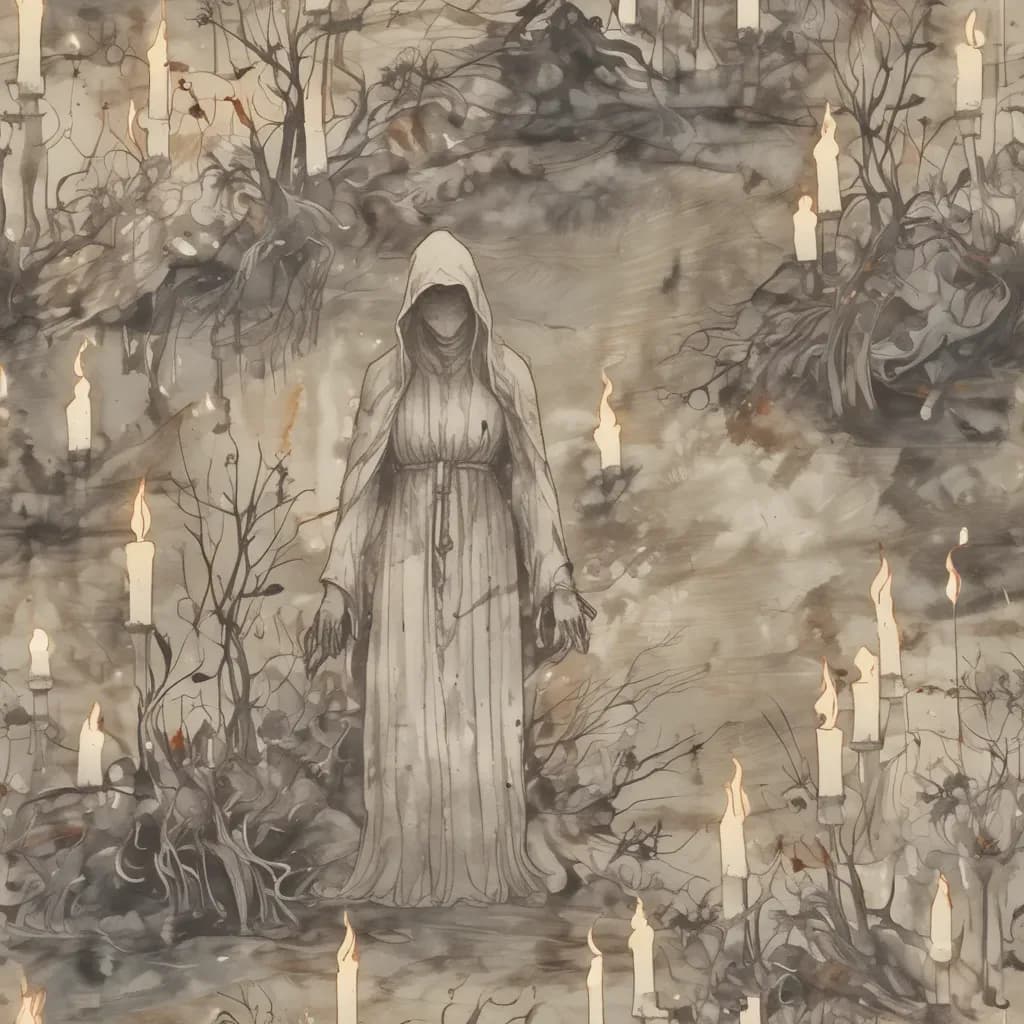
Devotion and obsession are close cousins
The joke has teeth because the mystical tradition the album studies has always used the language of passion. Saints wrote about divine love as burning, wounding and ravishing. Teresa of Ávila's famous visions are described in the vocabulary of a body overcome. Rosalía did not invent the overlap between religious ecstasy and erotic obsession. She notices it and plays it for the unsettling humour it contains.
Reviewers describe the song in exactly those terms: a playful, surreal take on obsession and desire in which divine presence, romantic fixation and plain omnipresence blur together[1]. One commentator calls it a twisted devotional anthem[3]. The phrase is apt. It sounds like a hymn, with a pursuer at the centre instead of a worshipper.
Several readings of the song also note how tired the speaker sounds toward the end, a vulnerable, worn-out note after all the surveillance and insistence[1][3]. That detail changes the picture. A stalker who is simply menacing is a horror story. A stalker who is exhausted by their own devotion is something odder and sadder, an image of a love that cannot stop even when it wants to.
The sound of a whisper with a pulse
The music supports the comic and the uncanny at once. Descriptions of the track stress minimal beats, airy textures, restrained bass and subtle electronic touches, with a flamenco-style ornament in the vocal[1][3]. That is a deliberate contrast with the lush orchestral music around it. Where much of the album swells, this song stays close and dry, like someone speaking right behind your ear.
The credited writers and producers include Noah Goldstein and Dylan Wiggins[1][3]. The electronic grain of the track connects it to the club-adjacent Rosalía of earlier records, even as the surrounding album moves toward chamber music and choirs. It suggests that she did not abandon her past so much as fold it inside the new project.
It is also worth noticing where the song sits. Coming at the start of the third movement, it works as a change of air after the more reverent material that precedes it[2][4]. A listener who has spent half an hour in awe gets a laugh, and the laugh makes the awe more believable, not less.
Alternative readings: the burden of being watched
A second interpretation hears the song as a comment on fame. Chic Magazine reads it as Rosalía facing her own godlike image, constantly observed, admired and mythologized, with humour and vulnerability about the cost of being looked at all day[2]. That is the outlet's interpretation, not an artist statement, but it has a certain logic.
Consider the structure. A pop star lives in a relationship with an audience that behaves a lot like the relationship the song describes: devoted, attentive, possessive, occasionally frightening. Fans follow, track and project. If the speaker is God, the song is a theology joke. If the speaker is the audience, it is a joke about celebrity. The two readings do not exclude each other, and the song seems happy to hold both.
A third reading is more personal. Placed inside a record about saints, a song about being unable to stop loving and watching someone could be read as the other half of the mystic's story. The saint longs for God. The song imagines God longing back. In that frame the stalker is not a threat but a reply, the idea that the pursuit goes both ways.
None of these is confirmed. What the evidence supports is a humorous, God's-eye-view song about pursuit, and the rest is a matter of which layer of the joke speaks to you.
There is a practical pleasure in this, too. Songs about faith can feel like homework, and a song that makes you laugh before it makes you think is a better teacher. The humour is the way in, and the unease that follows is what stays with you after the track ends.
It is worth remembering how unusual it is for a major pop artist to spend a whole album inside religious history and still leave room for a gag. The risk is real, since irony can cheapen sincerity. The record's wager is that the two can sit together, and this song is where that wager is most visible.
Why it stands out
Concept albums about faith tend toward gravity. They risk being so careful with their material that the listener never gets to breathe. "Dios es un stalker" is the record's pressure valve, and it is also its sharpest piece of thinking, because comedy is one of the oldest ways of testing an idea. If the notion of a loving God survives being called a stalker, it is probably sturdier than it looked.
It also shows something about Rosalía as a writer. She has always used flamenco's blend of the sacred and the earthy, in which a prayer and a curse can share a melody. Here she brings that sensibility to a modern image, the person who knows too much about you and will not look away, and finds that the old tradition has room for it.
The song asks a question that outlasts its joke. What does it mean to be known completely? For a believer, it is the promise of faith. For anyone who has been followed, watched or idolised, it is a threat. The track lets both feelings stand in the same three minutes and does not tell you which one to pick.
That refusal is the best argument for listening again. A joke that only works once is a gag. A joke that keeps changing shape depending on who you imagine singing it is closer to a parable, and "Dios es un stalker" has enough ambiguity packed into its title to keep changing for a long time.
References
Keep reading
More Art Pop
- Starman David Bowie
- Silent All These Years Tori Amos
- Ow ∞ Sylvan Esso
- You're Free To Go Anjimile
- 666 Bon Iver
- Cornflake Girl Tori Amos