Doors
The Architecture of Emotional Unavailability
There is a particular kind of loneliness that comes not from being alone, but from being unable to let someone in even when they are standing right in front of you. Noah Kahan built much of his reputation on songs that map the geography of Vermont isolation and restless anxiety. But "Doors," the second track on his fourth studio album The Great Divide, does something more uncomfortable than most. It names, without flinching, the way a person can simultaneously want closeness and undermine every attempt at it. The song is an admission, a portrait of self-sabotage rendered with the specificity that has always made Kahan's best work feel confessional rather than constructed.
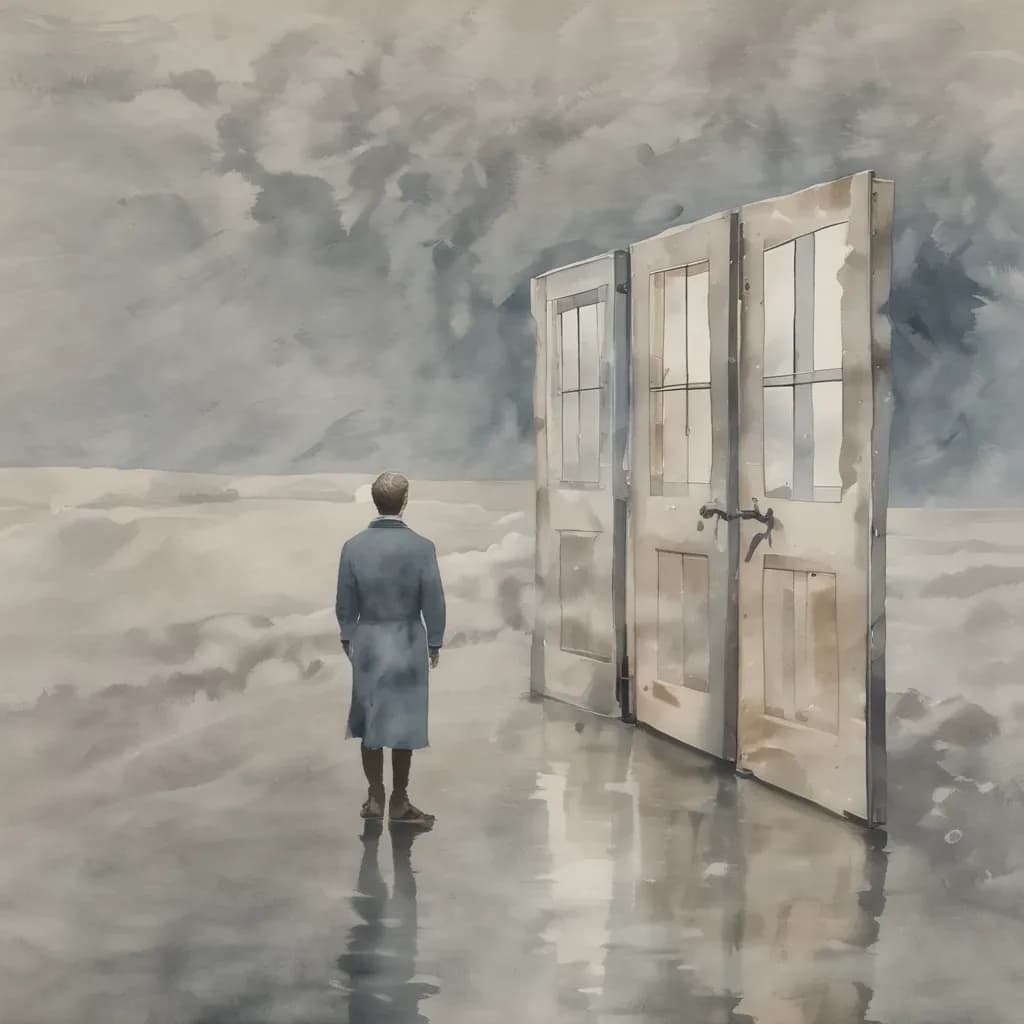
The central image is devastatingly simple: Kahan presents a version of himself as someone who gestures toward intimacy, who shows the people he loves where the doors are, but who cannot bring himself to open them. The song sits in the tension between invitation and refusal, between wanting to be known and the fear, deep-wired from childhood, that being fully known might destroy something essential about who he is.
A Song Built in the Aftermath of Becoming Famous
The Great Divide arrived on April 24, 2026, four years after Stick Season transformed Kahan from a critically admired regional singer-songwriter into a genuine mainstream phenomenon.[1] In the intervening years he had headlined Fenway Park, earned a Grammy nomination for Best New Artist, married his high school sweetheart Brenna Nolan in a private Vermont ceremony, and watched "Stick Season" climb to number nine on the Billboard Hot 100. He had also, by his own account, struggled continuously with anxiety, depression, and the disorienting experience of living inside a life that looked like everything he had wanted while feeling, from the inside, like foreign territory.
Kahan described the album's writing process as "a balancing act of trying to go back in time and move forward in the same moment."[2] The songs were written across an unusual spread of locations: beside a piano in Nashville, by a pond in Guilford, Vermont, in a legendary studio in upstate New York, and on a farm with a fire tower in Only, Tennessee. The album was co-produced with Aaron Dessner, whose work with The National and on Taylor Swift's folklore gave him a particular fluency in music that holds grief at arm's length while letting it seep through the arrangement.[1]
"Doors" had been teased publicly since early 2025, nearly a year before the album dropped. Kahan performed it at Mexico's Out of the Blue Festival in January 2025, an early full-band rendition that began with acoustic guitar before building in intensity with drums and additional musicians.[3] The response to those early performances was immediate and emotional. Audiences recognized something in it before they even had lyrics to study, which says something about the directness of the song's emotional core.
Vermont as Origin Story
What separates "Doors" from a more generic song about emotional unavailability is the way it locates that unavailability in a specific place and time. The song anchors its psychological portrait in the landscape of a Vermont winter, conjuring a formative environment of brutal cold and isolation that shaped the narrator's emotional architecture before he had any say in the matter.[3] The harsh conditions of his upbringing are not offered as an excuse, but as an explanation. A heart formed in that particular darkness and frost learns to protect itself differently from one that grew up in warmer soil.
Kahan grew up in Strafford, Vermont, a town of roughly a thousand people at the edge of a rural New England community that he has returned to, again and again, as both subject and grounding force.[1] The Vermont of his songs is not romanticized. It is cold, small, and sometimes suffocating, a place that instills loyalty and stifles growth in roughly equal measure. In "Doors," those conditions become a kind of origin myth for the narrator's emotional patterns. The isolation of the landscape becomes the isolation of a person who learned, early, that the world does not always reward openness.
This is territory Kahan has been circling throughout The Great Divide. The album's title track, which debuted at number six on the Billboard Hot 100 and reached number one on Hot Rock and Alternative Songs, describes looking across a widening emotional distance at the people who shaped him: old friends, parents, siblings, a younger version of himself.[1] "Doors" asks a more intimate version of the same question. It is not about the divide between Kahan and the people he left behind. It is about the divide inside him, the gap between the person he wants to be in a relationship and the person he actually becomes when someone gets close enough to matter.
The Mechanics of Self-Sabotage
The song's portrait of self-sabotage is unusually specific. Kahan is not describing a vague anxiety about relationships. He is cataloguing behaviors: the way he bets against himself, the way he keeps people at a threshold without letting them cross it, the way he is still fighting internal battles while the people who love him sleep undisturbed.[4] The imagery of looking directly into the sun recurs as a kind of test of tolerance for intensity, for the unbearable brightness of being truly seen.
What makes this more than a confession is that Kahan extends some awareness of what he is doing to the other person. The song addresses a specific listener, someone who is presumably close to him, and warns them that the pattern they are experiencing is not accidental and not aimed at them personally. The doors being shown but not opened are a feature of his emotional architecture, not a judgment of the person on the other side.[3] There is something both tender and tragic about this: the narrator understands his own dysfunction clearly enough to describe it, but not clearly enough to dissolve it.
This is the album's broader emotional terrain as well. Kahan told interviewers that The Great Divide is about "nostalgia, guilt, and the feelings we try desperately to hide."[2] "Doors" fits precisely within that framework, examining the guilt of someone who knows he is withholding something essential from the people who love him, and the nostalgia for a version of himself that might have been formed differently if the winters had been less brutal.
A Record of Public Honesty About Private Suffering
Kahan has been one of his generation's most candid voices about mental health. He founded The Busyhead Project, a nonprofit focused on making therapy accessible, which has raised over six million dollars since its inception.[2] He has spoken publicly and repeatedly about his own struggles with anxiety, depression, body dysmorphia, and disordered eating. He has even noted the uncomfortable irony of being a mental health advocate while still feeling, as he put it, "shitty most of the time." That tension gives "Doors" its particular weight.
The song is not the work of someone who has figured things out and is now dispensing wisdom. It is the work of someone actively inside the problem, describing it with the precision that comes from long and painful familiarity. The Atwood Magazine review of The Great Divide noted that Kahan's new album feels "sonically bigger, emotionally bolder, and thematically expansive, without losing the intimacy that has always defined his work."[5] "Doors" is perhaps the most intimate track on the record, for exactly that reason. The production is carefully built around acoustic detail rather than spectacle, which forces the listener into close proximity with the admission being made.
The Netflix documentary Noah Kahan: Out of Body, which premiered at SXSW in March 2026 alongside the album announcement, provides additional context for the record's emotional register. The documentary chronicles his rise from pre-pandemic club shows to headlining Fenway Park, but it also documents the psychological cost of that trajectory in some detail.[1] "Doors" sounds like a song written in the middle of that reckoning, trying to understand what the cost has been specifically to the people closest to him.
Who Is on the Other Side of the Door?
The song is addressed to a specific "you," but the identity of that person is deliberately open. The most obvious reading is romantic, and the biographical context supports it. Kahan married Brenna Nolan, his partner since high school, in a private ceremony in Vermont in August 2025, and the album's thematic concern with the emotional costs of fame on close relationships runs through most of its songs.[2] A song about showing doors while being unable to open them would fit naturally into the experience of a relationship sustained across years of accelerating public exposure.
But the Vermont childhood imagery complicates this reading usefully. The song grounds his emotional patterns in a period well before any romantic relationship, suggesting that the "you" might also be his family, the friends he left behind when he moved toward a career in music, or even a version of himself he has never quite been able to access. The Harvard Crimson described The Great Divide as a "heartwrenching return," and "Doors" operates on that register: it feels like Kahan trying to come back to something while acknowledging that some walls were built too early and too well to dismantle quickly.[6]
There is also a reading that positions the song as a statement about his relationship with his audience. An artist who has built a following through radical personal disclosure while simultaneously maintaining that he still feels profoundly isolated lives a particular kind of contradiction. "Doors" might be addressed, in some partial sense, to every listener who feels they know him from his songs and is being gently told: you have seen the doors, but that is not the same thing as having entered.
Why the Song Stays With You
Songs about being emotionally unavailable tend to fail in one of two ways. They either excuse the behavior, turning it into a romantic attribute, or they wallow in it without any sense of accountability. Kahan avoids both. "Doors" holds the pattern up to the light clearly enough to see its damage while also locating its origins in something real and formative.
The Off the Record Press review noted that The Great Divide sees Kahan exploring "youthful ignorance, guilt, and trauma" with a maturity and directness that his earlier work was still building toward.[7] "Doors" is where that maturity is perhaps most evident. The song does not resolve. The narrator does not discover a key or find a way to open what he has spent a lifetime keeping shut. Instead, it sits inside the recognition, which is itself a kind of progress.
For a generation that has grown up talking about therapy, attachment styles, and intergenerational trauma with a fluency that previous generations never had, the song offers something more valuable than a resolution. It offers a precise and honest description of a pattern that many people live inside and struggle to articulate. The gift of the song is that it names something specific enough to be recognized, and does so without shame, without self-flattery, and without easy comfort. The doors are there. They have always been there. Learning to see them clearly is the necessary first step toward something better.
References
- The Great Divide (Noah Kahan album) - Wikipedia — Full album overview including tracklist, production credits, and release details
- Noah Kahan Shares the Inspiration Behind His New Album, 'The Great Divide' - Holler — Kahan describing the album as a balancing act of going back in time and moving forward, and looking across a divide at old friends and family
- Noah Kahan Performs 'Doors' at Out of the Blue Festival 2025 - Holler — Live performance coverage at Out of the Blue Festival in Cancun, January 2025, with thematic detail about attachment issues rooted in Vermont upbringing
- Noah Kahan Shares New Snippet of Unreleased Song, 'Doors' - Holler — Coverage of the studio snippet release, noting themes of relationship insecurity and vulnerability
- Noah Kahan Bridges 'The Great Divide' With a Raw Reckoning - Atwood Magazine — Critical analysis of the album describing it as sonically bigger, emotionally bolder, and thematically expansive
- 'The Great Divide' Single Review: Noah Kahan's Heartwrenching Return - The Harvard Crimson — Review noting the album's exploration of distance, regret, and the costs of fame
- Noah Kahan Explores Youthful Ignorance, Guilt, and Trauma in New Single - Off the Record Press — Early critical reception of The Great Divide as a vivid re-entry into Kahan's emotional universe