Dracula
Some songs are about a person. This one is about an hour of the day. "Dracula" belongs to the stretch between sunset and sunrise, when the world loosens its rules and a certain kind of person feels most like themselves. Everything in it leans toward the dark, and everything in it quietly dreads the morning.
That tension made it unusually durable. The original Tame Impala single arrived in September 2025, and a duet version with JENNIE of BLACKPINK followed in February 2026. Between them, the song became Kevin Parker's biggest hit.[1]
From a rough sketch to a pop song
Parker released "Dracula" on September 26, 2025, as the third single from his fifth album, Deadbeat, which followed on October 17.[1] He produced it and co-wrote it with Sarah Aarons, making it his first single with an outside co-writer since "Elephant" over a decade earlier.[2]
It was among the first pieces he started for the album. He has said it began as a raw, minimal sketch and slowly grew into something closer to pop.[2] Songfacts adds that the track was built from two separate ideas, one about running from the sun in the manner of the vampire legend, and another built around a hope for a particular kind of closeness. Parker merged them after his wife told him she loved the vampire concept.[2]
The writing was piecemeal and stretched across years, with Parker calling Aarons in London from Australia to rework verses and melodies. Aarons has said she pushed him to be more direct, since his instinct leans toward vagueness.[2] That push is audible. For a Tame Impala song, the emotional situation is stated plainly.
The recording took place between 2021 and 2025 at Parker's home studio in Fremantle and at Wave House in Injidup, both in Western Australia, with further work in New York.[1]
The vampire as a way of being
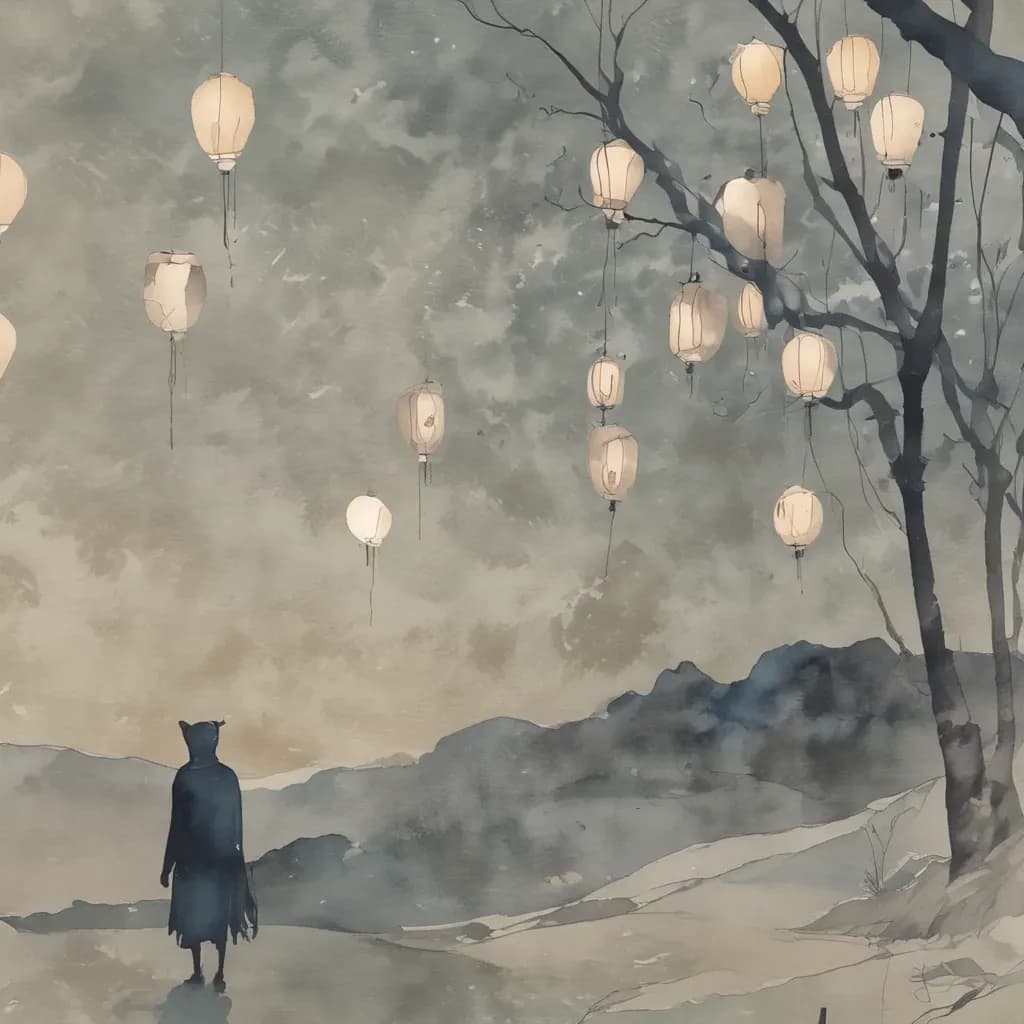
The title promises horror, but the song is not a monster story. Songfacts reads it as a party that daylight threatens to end, with the vampire's fear of sunrise standing in for the dread of the night running out.[2] Wikipedia summarizes the lyrics as the portrait of a recluse who finds comfort in darkness and compares himself to the famous count.[1]
RouteNote offers a related reading: the vampire is someone whose confidence, creativity and sense of identity appear only after dark and dissolve by morning.[3] That interpretation is an explainer's gloss rather than a confirmed statement from Parker, but it fits the song. Anyone who has felt more charming at 2 a.m. than at 2 p.m. will recognize the figure.
There is humor in this. The song casts a famously gloomy archetype as a person hoping a crush will join him in a car and take him somewhere. The self-awareness is consistent with the rest of the album, which Parker has described as mostly about himself and often self-deprecating, something he finds therapeutic and calls a celebration of being a deadbeat.[4]
Two kinds of hunger
Under the nocturnal imagery sits a love song. The second idea Parker folded in was a wish for closeness with one specific person, and the vampire framing turns that wish into something more hungry and possessive than a typical romance.[2] Dracula is a figure defined by appetite, by needing something from other people that he cannot get on his own.
RouteNote claims Parker, in an interview around the album, tied the Dracula mythology to heartbreak, love and becoming monstrous, though it does not name the interview, so that link should be treated with caution.[3] Even so, the pairing makes sense. Obsession and isolation are two sides of the same coin here. The narrator withdraws from daylight life because he is shy or tired or ashamed, and the same withdrawal makes the one person who comes into his night feel enormous.
That is the song's emotional engine. It is a dance track about the pleasure of being drawn out of yourself and the fear of what happens when the sun comes up and you have to be yourself again.
A dance record from a rock musician
The sound carries this meaning as much as the words do. Parker has said that he came from a rock world where music not built on guitars was considered lesser, and that dance music was a guilty pleasure for a long time before he decided to stop caring.[5] In the Dork interview he talks about his love of techno and psy-trance, and how he uses the Australian bush doof, an outdoor rave, as a way of picturing the atmosphere he wants.[4]
"Dracula" is the most direct fruit of that decision. Wikipedia classifies it as disco and electropop, and describes the production as deliberately nocturnal and club oriented.[1] Parker has compared his approach to giving the song what it wants, in the manner of a Max Martin record.[2] The hook is placed up front, the groove is steady, and the melody leaps around enough that Parker has said it is hard to sing live.[2]
The video, directed by Julian Klincewicz, reinforces the setting. Partiers dance outside a portable house hauled by a semi truck in the outback, while Parker drifts in and out of the scene looking resigned.[1] The expression is the key. He is at the party, and also not quite of it, which is exactly the position the song describes.
Critical reception: a divided room
Reaction to both the song and the album split sharply. AllMusic called the track the immediate standout, Rolling Stone called it sleek synth-bop, and several outlets compared its mood to Michael Jackson's "Thriller."[1] Others were less kind. Clash named it the album's weakest song, and Pitchfork found it catchy but insubstantial.[1]
The album as a whole drew a similar spread. Hot Press gave it 8 out of 10, the Harvard Crimson three and a half stars with the verdict of a trippy, tentative return, and Riff gave it 4 out of 10.[6][7][8] The recurring complaints concern repetition and a perceived loss of the psychedelic depth that made Tame Impala's earlier records distinctive. The recurring praise concerns the album's vulnerability and its nerve.
Listeners, for their part, were less divided. The song reached the top ten of Triple J's Hottest 100 of 2025, landing at number three, and became Tame Impala's first entry on the Billboard Hot 100.[1]
The JENNIE remix
On February 6, 2026, Parker released a version featuring JENNIE, with the two credited as writers alongside Aarons and Carly Gibert.[1][9] The instrumental stays close to the original. JENNIE's vocals arrive around the midpoint, bring a new rap verse, and change some of the lines to refer to her rather than to Parker.[1]
That small change shifts the song's balance. In the original, the narrator is alone with his own nocturnal habits. In the remix, the object of desire gets a voice, and the dynamic becomes a conversation between two night creatures rather than one confession. Songfacts notes that JENNIE's new lines tie romance and obsession to nighttime, secrecy and avoiding sunlight.[2]
The remix also took on a life of its own online. Songfacts reports a TikTok trend built on a spoken line from JENNIE's section, used for lip-syncs and fashion transitions, and JENNIE joined in with her own clip during Paris Fashion Week.[2] The collaboration pushed the song to number two on the Billboard Global 200 and number three on the Hot 100, the first top-ten hit on that chart for either artist.[1]
Live performance extended the story. JENNIE first performed the remix at ComplexCon Hong Kong in March 2026 and later joined Tame Impala onstage in Boston on July 29, 2026.[1]
Why it resonates
The song captures a feeling that is rarely described well: the loneliness inside a crowd, and the relief of being pulled into someone else's orbit. It does this while remaining easy to dance to. The darker meaning is available to anyone who listens for it, and invisible to anyone who does not.
It also reflects where Parker is in his life. The Dork interview notes that the album's artwork uses personal black-and-white photographs, including some of his children, and that his daughter Peach was born in 2021 with another child arriving in 2025.[4] A father with young children who is writing about a night-owl persona is writing, in part, about a self he is leaving behind. The party is a memory as much as a plan.
Other ways to hear it
One reading takes the song at face value as a crush song with a gothic costume. Another sees it as a portrait of social anxiety, in which the night is easier because nobody is looking closely. A third hears a quiet comment on fame and exhaustion, since a performer who works by night and sleeps by day lives something like a vampire's life.
The remix adds a fourth reading. With two voices, the song can be heard as mutual recognition, two people who are both better in the dark finding each other there. Whether that is a hopeful ending or a shared trap is left open.
Conclusion
"Dracula" works because it takes an old, theatrical image and uses it for a small human truth. Some people come alive at night, and every night ends. The song gives that truth a groove, a joke and a little tenderness.
That mix explains both the critical argument and the commercial triumph. To some listeners it is slight. To many more it is exactly the right size, a three-and-a-half-minute escape that knows it is an escape. The sun is always coming up. The song's answer is to keep dancing until it does.
References
Keep reading
More Electropop
- From Healer to Dealer Charlotte Adigéry & Bolis Pupul
- Lucky (Hymn) Shygirl
- Different Religion Miley Cyrus
- Out Loud Peach PRC
- Love Triangle Angèle
- Sweet Like Candy Camila Cabello