Eleanor Rigby
Most pop songs in 1966 trafficked in the currencies of romance: longing, heartbreak, the electric thrill of connection. "Eleanor Rigby" arrived as something else entirely. It is a song about the people on the margins of all that human drama. A woman who picks up rice after someone else's wedding and goes home alone. A priest who rehearses sermons in an empty room. In two minutes and seven seconds, The Beatles made an argument that the loneliest lives deserve music too.
For a band at the absolute peak of their commercial powers, this was a peculiar choice. That peculiarity is precisely what has kept the song resonating for nearly sixty years.
A Band at a Crossroads
By early 1966, The Beatles were caught between two worlds. They remained the most famous musicians on the planet, but the concerts they still gave had become hollow exercises: the screaming of crowds was so overwhelming that the musicians could rarely hear their own instruments.[1] The gap between what they were creating in the studio and what they could present on stage had grown impossible to bridge.
When the Revolver sessions began in April 1966 at EMI Studios in London, the band and producer George Martin treated the studio as a laboratory.[2] Engineer Geoff Emerick pushed technical boundaries at every turn, using reversed tapes, varispeed recordings, and unconventional microphone placements to construct sounds with no precedent in pop music.[3] Against this backdrop of experimentation, "Eleanor Rigby" stood apart from the album's more psychedelic explorations. It was something quieter and, in its way, more radical.
The band's frustration with touring would become decisive. On 29 August 1966, they played their final paid public concert at Candlestick Park in San Francisco. The freedom that followed made albums like Revolver and Sgt. Pepper's Lonely Hearts Club Band possible.[1]
Writing Eleanor Rigby
Paul McCartney composed the song largely alone, finding the melody at the upright piano in the London home of his then-girlfriend Jane Asher's family.[4] He had been nurturing it for some time before bringing it to the wider group at John Lennon's home in Weybridge. There, in a collaborative session that McCartney recalled fondly, the other Beatles offered contributions that helped complete the song. George Harrison is credited with suggesting the recurring vocal refrain about lonely people. Ringo Starr proposed a detail about the priest's domestic habits that McCartney redirected and sharpened.[3] The song emerged from collective imagination even if the majority of its architecture was McCartney's own.
One significant revision came in the naming of the priest. McCartney had originally called him Father McCartney, but decided this was too self-referential. He opened a telephone directory, spotted "McKenzie" nearby, and adopted it.[4] It is a small detail that illuminates the kind of care the song was given: every choice was deliberate, including the ones that appeared spontaneous.
The question of authorship later became a minor controversy. In 1972, Lennon claimed he had written a significant portion of the lyrics. McCartney has consistently maintained the song was predominantly his work. Pete Shotton, Lennon's closest childhood friend and a witness to the Weybridge session, stated that Lennon's lyrical contribution was negligible.[5] The debate has never been fully resolved, which may itself say something about how completely the song transcended individual authorship: it felt so whole, so inevitable, that multiple people felt it belonged to them.
The Grave in Woolton
McCartney has maintained that Eleanor Rigby is a fictional character, drawn from his empathy for elderly isolated people he had known in Liverpool, including a woman he would visit regularly to help with shopping and conversation.[6] He has said the name "Eleanor" came partly from actress Eleanor Bron, who appeared in the Beatles' 1965 film Help!, while "Rigby" came from the name of a Bristol wine shop.[4]
What makes the story richer is what lies in a Liverpool churchyard. In the graveyard of St. Peter's Parish Church in Woolton, there is a headstone marking the grave of a real Eleanor Rigby, who lived from 1895 to 1939. The coincidence would be merely interesting except for one further fact: this is the same church where John Lennon and Paul McCartney first met.[4][7] On 6 July 1957, Lennon's skiffle group the Quarrymen performed at the Woolton village fete, and McCartney attended. The two teenagers would later pass through the churchyard together. McCartney has acknowledged that he may have absorbed the name subliminally from the gravestone during those visits, though he insists the song's character owes nothing to the real woman buried there.
The real Eleanor Rigby, records show, worked as a scullery maid, later married, and died in 1939.[7] Whether her story of quiet labor and modest life unconsciously informed McCartney's imagination or not, the coincidence feels like something beyond chance. The song and its unknowing subject are connected across decades by a name on a stone in the churchyard where one of history's great songwriting partnerships was born.
Loneliness Without Romance
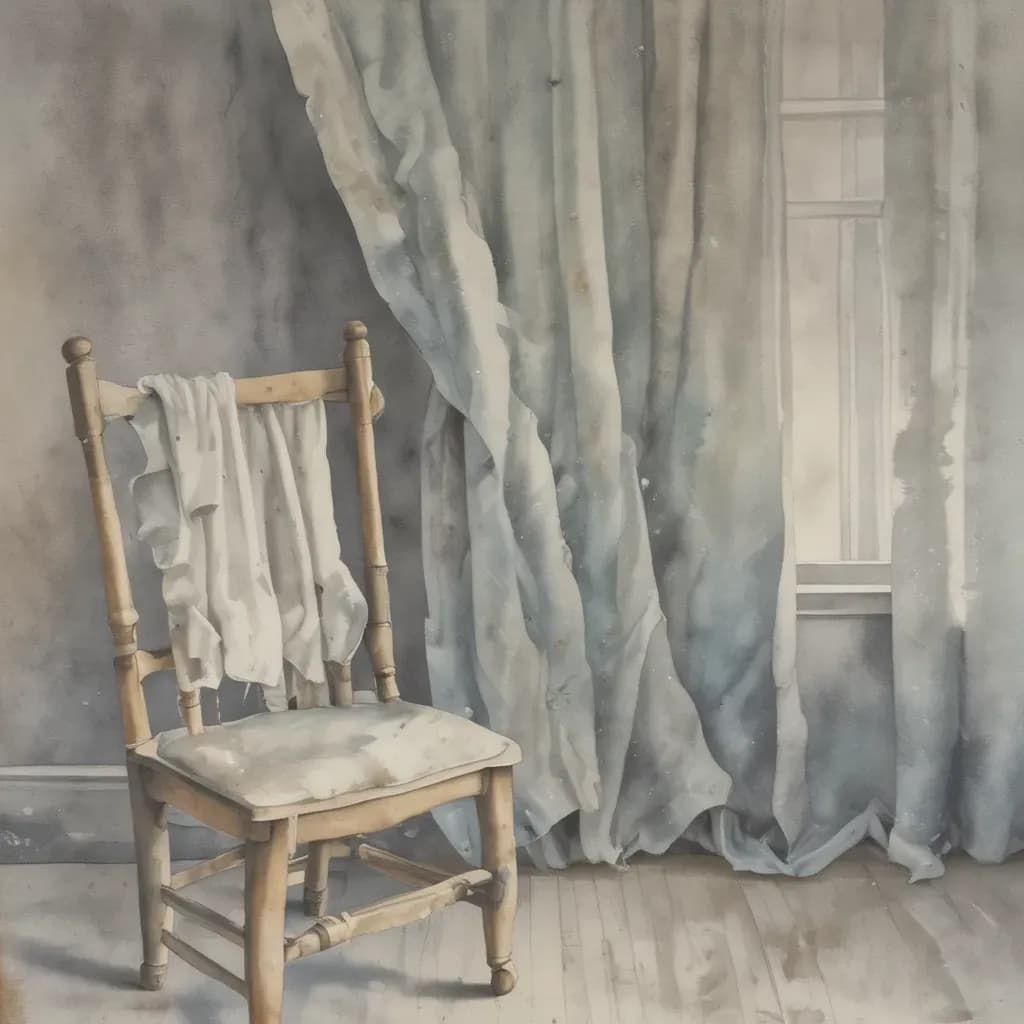
At the center of "Eleanor Rigby" is a kind of loneliness that pop music had essentially never addressed.[8] The loneliness in most songs is temporary, romantic, or located within a narrative of hope. The loneliness here is structural and permanent. Eleanor Rigby and Father McKenzie do not have bad luck or failed relationships. They have lives that are simply invisible to the world around them.[9]
The song's two central figures are presented in precise, almost clinical images. Eleanor attends celebrations that are not hers, maintains a performance of herself for the benefit of no one, and dies without anyone present who truly knows her. Father McKenzie toils over words no one will hear, performs rituals for empty pews, and conducts her burial with no one left to mourn. The song asks us to notice what the world routinely looks away from: the entire architecture of a life, lived fully and privately, that leaves almost no trace.
What gives the song its particular power is the refusal of sentimentality. McCartney does not ask us to pity these characters or to feel guilty on their behalf. The images are presented with the exactness of reportage. The question posed in the recurring refrain about where all the lonely people belong and where they come from is genuinely open. It is not answered. The song does not resolve into comfort.[5]
Literary figures recognized this quality immediately. Poet Thom Gunn compared the song to W.H. Auden's poem "Miss Gee." Critic George Melly likened it to James Joyce's treatment of ordinary Dublin lives in Dubliners. Novelist A.S. Byatt found in it the minimalist precision of Samuel Beckett.[4] These are not casual comparisons. They locate "Eleanor Rigby" in a tradition of art that finds tragedy in the ordinary and dignity in the unwitnessed life.
The Sound of Desolation
The music is as uncompromising as the words. "Eleanor Rigby" features none of The Beatles playing any instrument. The entire backing is a string octet: four violins, two violas, and two cellos, arranged by George Martin.[10] It is one of the most distinctive musical decisions of an album already full of distinctive musical decisions.
McCartney came to Martin with a specific requirement: he did not want the strings to sound warm or consoling, as they had on "Yesterday" a year earlier. He wanted something harder and more unsettling. Martin drew inspiration from Bernard Herrmann's score for Alfred Hitchcock's Psycho, producing an arrangement that is staccato and angular rather than flowing or legato.[3][11]
Emerick's recording technique amplified the effect. He placed microphones almost directly against the strings, a technique that scandalized the session musicians but produced a dry, biting, percussive sound unlike anything previously heard on a pop record.[3] The result is music that does not comfort. It pulses like a heartbeat, insistent and mechanical, refusing to soften the story being told over it.
McCartney sang lead, with Lennon and Harrison providing harmonies. Ringo Starr, like the other three Beatles, played no instrument on the track.[4] A band that had defined the guitar-bass-drums template of rock and roll produced one of their most celebrated recordings without touching those instruments at all. The first recording session took place on 28 April 1966, with fourteen takes of the string parts recorded before a final version was settled.[11]
Release and Reception
"Eleanor Rigby" was released as a double A-side single alongside "Yellow Submarine" on 5 August 1966, the same day as Revolver.[12] The pairing was inspired: a children's fantasy adventure alongside a meditation on isolation and death. It reached number one in the UK and spent four consecutive weeks at the top of the charts.[13]
What it did not do was fit neatly into any existing category. Radio programmers classified it with some confusion. It had no drums, no guitars, no electric instruments of any kind. It was closer in construction to a chamber music composition than to rock and roll, yet it came from a band that had defined rock and roll's possibilities for a generation. It won the Grammy for Best Contemporary Vocal Performance at the ceremony the following year.[4]
Critics and musicians across genres cited it as a turning point. Songwriter Jerry Leiber, who co-wrote "Hound Dog," called it among the finest songs ever written.[8] Rolling Stone placed it among the greatest recordings ever made.[14] Allen Ginsberg praised the lyrics. David Crosby said nobody else in popular music had the heart to write about the kinds of people it describes.[9]
Alternative Readings
The theological dimension of the song has attracted sustained commentary. Father McKenzie performs his duties to empty rooms and empty graves, raising questions about faith, community, and the gap between religious ritual and genuine human connection. Some readers have found in the song a critique of organized religion's failure to address real loneliness. Others have read it more gently, as an observation that even those whose vocation is to serve a community can be as isolated as anyone else.[9]
The question of the song's two characters and their relationship has also been examined closely. Eleanor is presented through outward performance: the face she prepares, the rice she gathers, the wedding she attends without being truly part of it. Father McKenzie is presented through private action: writing alone, walking away alone. Together they form a pair of portraits about how social ritual can leave people more stranded than connected.
Some commentators have noted that the song can be read as an elegy not just for specific individuals but for a whole mode of life disappearing in 1960s Britain: the working-class parish community, the obligations and rhythms of the church, the network of small duties and small dignities that once gave shape to lives that otherwise left no record.
An Enduring Question
"Eleanor Rigby" remains one of the clearest demonstrations of what popular music can do when it decides to look at the world without flinching. In under three minutes, with no guitars, no drums, and no chorus that offers relief, McCartney and his collaborators wrote a song about people who are never written about, set to music that refuses to make them comfortable to contemplate.
The real Eleanor Rigby lies in a Liverpool churchyard where two teenagers met in 1957 and changed music forever. Whether or not she is the source of the name in the song, she has become one of its most resonant presences: a person whose life passed largely unrecorded, now remembered by name in every language in the world. That is a strange and moving kind of immortality, and the song confers something similar on every solitary figure it describes.[7]
Almost sixty years after its release, "Eleanor Rigby" still poses its question about where all the lonely people belong. It still does not answer it. That refusal is part of what makes it one of the most honest things ever recorded.
References
- The Beatles' Decision to Stop Touring - Ultimate Classic Rock — Context on the Beatles' touring exhaustion and their final concert in August 1966
- Revolver - Wikipedia — Background on the album's recording context, release, and critical reception
- Eleanor Rigby - The Beatles Bible — Detailed account of the song's creation, contributions from band members, and musical details
- Eleanor Rigby - Wikipedia — Comprehensive overview of the song's history, composition, and reception
- On Eleanor Rigby as a Product of Combined Genius - Literary Hub — Analysis of the Lennon-McCartney authorship dispute and the song's literary qualities
- Paul McCartney Reveals the True Story Behind Eleanor Rigby - Far Out Magazine — McCartney's statements about the song's inspiration and the fictional character
- Eleanor Rigby's Grave - Atlas Obscura — Details about the real Eleanor Rigby buried at St. Peter's Church, Woolton
- The Meaning Behind Eleanor Rigby - American Songwriter — Analysis of the song's themes including quotes from McCartney, Leiber, and other musicians
- Eleanor Rigby - The Pop History Dig — Cultural context and reception of the song, including David Crosby's quote
- Who Played the String Instruments on Eleanor Rigby? - Far Out Magazine — Details of the string octet arrangement and George Martin's compositional choices
- 28 April 1966: Recording Eleanor Rigby - The Beatles Bible — Session notes including Emerick's microphone technique and string arrangement details
- 5 August 1966: UK Single Release - The Beatles Bible — Details of the double A-side single release with Yellow Submarine
- Yellow Submarine / Eleanor Rigby - Official Charts — UK chart performance and chart history of the double A-side single
- Rolling Stone 500 Greatest Songs of All Time - Wikipedia — Eleanor Rigby's placement in Rolling Stone's definitive rankings