Everybody's Leaving
Most songs about leaving are about the person who goes. "Everybody's Leaving" is about the person who stays, and about the small, giddy gamble of asking someone to stay with you. It is a party song with a hushed center, and it arrives from a band that is itself in the middle of a first departure from the script it was handed.
A Seven-Piece Band With a Birthday for a Name
December 10 are a seven-piece British group (Nicolas Alves, Danny Bretherton, Hendrik Christoffersen, Josh Olliver, John Fadare, Seán Hayden and Cruz Lee-Ojo) who were assembled on camera for the Netflix series Simon Cowell: The Next Act, which premiered worldwide on 10 December 2025.[3][4] The name is simply that date, a birthday stamped on the group before most of its members had met.
The speed of what followed was unusual. A debut single, "Run My Way," arrived in January 2026, followed by the romantic ballad "Angel" in March and the club-leaning "Infinity (123)" in May.[1][2] The debut EP, On Your Side, landed in the UK Official Albums Chart Top 5 over the summer, which the Official Charts team described as the highest-charting British boyband debut in six years.[1][5]
"Everybody's Leaving" was released on 20 November 2026 through Syco Records and EMI.[1][2][6] It is the first single in the band's catalogue to carry songwriting credits from inside the group. Josh and Seán wrote it with the production duo Captain Cuts and the writer Boy Matthews during a writing camp in Los Angeles.[1][2] Captain Cuts have credits alongside acts such as Blink-182, Carly Rae Jepsen and Halsey, which tells you something about the lane the song is aiming for.[4][5]
Why the Writing Credit Matters
A group formed through a television format is always asked the same question: whose voice is this? Early material for any such act is typically assembled by outside writers and delivered to the singers. By the band's own account, the earlier sessions leading up to this single were scattered, with one member pushing toward R&B, another toward a ballad and another toward a rock song.[1] The Los Angeles camp gave those instincts somewhere to meet.
The members describe the result in terms of focus and unity. One said that performing the track feels like themselves, and another described the group as more unified, with individual tastes now pulling in the same direction.[1] In their release statement they say it is the first time they have put out something they co-wrote, that they are grateful for the chance to express themselves, and that the song came together with surprising ease.[2][3][5]
That ease is audible. The track is a guitar-driven, rock-tinged indie-pop anthem with live-feeling percussion and a slightly lo-fi texture, and Official Charts heard echoes of sombr, Wallows and Inhaler in its hook.[1] CelebMix reached for the phrase "euphoric pop-rock."[5] Even the visual presentation backs up the claim of authorship: the performance visualiser shows the members playing the instruments themselves, with keys, bass, two electric guitars, acoustic guitar and drums split among them.[1] The group collectively plays around fourteen instruments, and the song seems designed to show that off.[4]
The Story Inside the Song
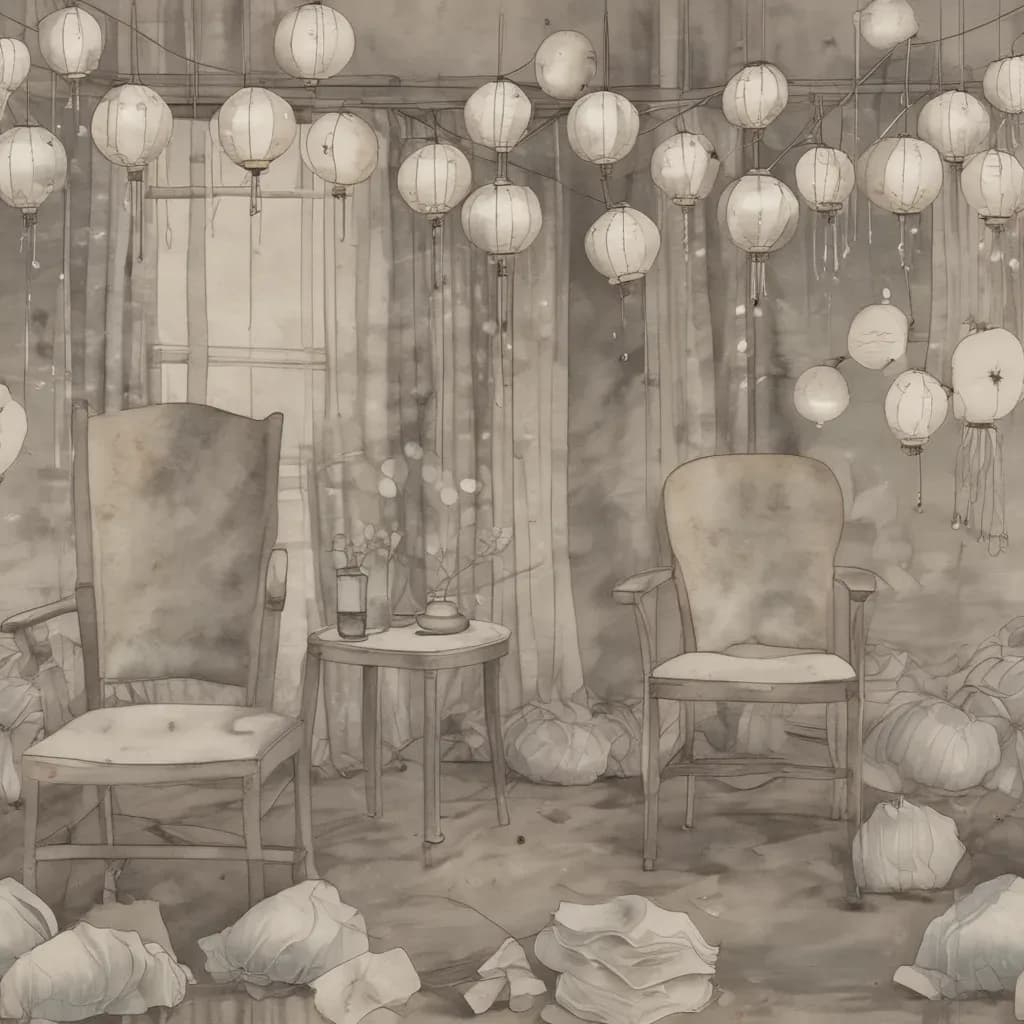
The band describe the song as inspired by young love, by being cheeky, and by having fun.[2][3][5] The narrative that Official Charts draws out is intimate and specific. Two people who grew up in the same town, and who have barely spoken, finally connect at a house party that stretches toward dawn.[1] Around them the crowd thins out and the night winds down.
This is the engine of the title. Leaving is the ambient condition of the evening, and it is happening to everyone except the two people at the center. The narrator's attitude to the exodus is almost cheerful: the departures cost nothing as long as the one person who matters stays put. Departure becomes a kind of clearing, and the emptier the house gets, the more private the conversation becomes.
There is a pleasing reversal in that. Pop music usually treats someone walking out the door as the dramatic event. Here the drama is in the opposite gesture, a quiet request to remain, made in a room that has run out of audience.
Small-Town Closeness and the Late-Night Spell
The setting does a lot of work. Two people from the same town have shared streets, schools and friends for years without ever really talking, and a party is one of the few places where that long familiarity can suddenly tip into something else. The song sits in that moment of tipping. It is less about a romance than about the instant before one, when attention narrows and everything around it becomes background.
The hour matters too. A party that lasts until the small hours has its own logic. The loud, social part is over, the people who came for the noise have gone, and what remains is honest in a way that earlier hours rarely allow. The arrangement mirrors this. The guitars and drums carry the communal energy of the night, while the song's emotional core is a smaller, more confessional gesture that the production lets breathe inside the chorus.
The Cheeky Register
It would be easy to read the song as purely tender, but the band's own word is cheeky, and that matters. The tone is playful rather than yearning. The narrator is not pleading with someone who is already halfway out the door. This is flirtation with a wink in it, a proposal made with enough lightness that it can be laughed off if it fails.
That lightness is a deliberate stance for a group whose first singles leaned on ballads and club textures. A breezy, confident guitar-pop song about wanting someone to stay behind is a way of announcing a different personality: easygoing, a little mischievous, and comfortable being heard in a crowd.
Cultural Moment: Boy Bands and Their Instruments
The boyband format has long carried an unspoken hierarchy, with singers up front and professionals behind the glass. A song that foregrounds band members as players and writers belongs to a broader shift in which pop groups want to be understood as musicians. Seán called the track an anthem, and the group says they played it on speakers all day in the studio.[1] That detail points to a band excited by its own work, which is a quality fans can sense.
The influences the members list are wide: Fela Kuti, Daft Punk, Brent Faiyaz, Steve Lacy, Pearl Jam, Freddie Mercury, The Notorious B.I.G., Sabrina Carpenter, Usher, and the Brazilian acts Legião Urbana and Cazuza.[4] Their heritage spans Irish, Brazilian, Indian, Nigerian and Jamaican roots.[4] A guitar-led indie-pop anthem is only one corner of that map, which suggests the song is a starting point and not a settled identity.
The timing also feels purposeful. The band marked the release with radio appearances, the Capital FM Jingle Bell Ball on 5 December, and two headline nights at London's Eventim Apollo on 10 and 11 December, which fall on their first birthday.[1] A song about lingering at a party after the crowd has gone is well suited to a run of shows built around celebration. The members said they want those nights to be a communal release, and one urged the audience simply to go wild.[1]
Alternative Readings
There is more than one way to hear the title. The most direct reading is the one above, a romantic invitation to stay. A second reading looks at it through the band's own situation. Reality television and a streaming series sorted these seven people into a group, and the wider industry is a place where everybody eventually moves on. Singing about indifference to a departing crowd could be a gentle statement of confidence: whatever happens around us, we are staying here together.
A third reading is more bittersweet. Parties end, towns empty out, and people who grew up together drift apart. The narrator's insistence on staying could be an attempt to hold on to one moment before the ordinary pull of adult life sends everyone elsewhere. The upbeat arrangement does not rule this out. Much of the best pop works by laying a wistful idea beneath a bright surface, and listeners can choose how much of the shadow they hear.
These readings are interpretation, and the band has said little beyond the themes of young love and fun. Because the song is brand new, there is not yet a body of interviews or critical retrospectives to test any of them against. What we have is the release statement, a first-listen conversation and the song itself.
Why It Resonates
The appeal is easy to explain. Nearly everyone has been at the tail end of a night when the room empties and one particular person is still there. The feeling is small, specific and instantly recognizable, and a chorus built around it gives a large crowd something to sing together that is actually about intimacy.
It also carries the satisfaction of a group finding its own handwriting. For fans who have followed December 10 from a streaming-series premiere through singles, an EP and a first headline run, "Everybody's Leaving" is the point where the band start to sound like authors and not only performers. Whether or not it becomes their signature, it is the clearest signal yet of who they might become.
Conclusion
"Everybody's Leaving" takes the ordinary exit of a party crowd and turns it into an opening. It is a song about choosing one person over a room, delivered with a grin and a wall of guitars, and it doubles as a statement of intent from a band writing its own story for the first time. It is young, bright and a little cheeky, and it understands that the best part of a long night is sometimes what is left after everyone else has gone home.
References
Keep reading
More Pop
- Raspberry Beret Prince
- When Doves Cry Prince
- Happy Xmas (War Is Over) Alanis Morissette
- Think About You Samira
- Best Heartbreak Take That
- Someone That I Never Knew Kerr Mercer