Feels Like Loneliness
The Loneliness Inside Love
Some songs earn their titles through irony, others through brutal literalism. "Feels Like Loneliness" operates in a stranger register: the title is both a confession and a puzzle, an admission that the experience of love and the experience of isolation can become so entangled that they are functionally indistinguishable. That is the emotional territory Sabrina Carpenter staked out at seventeen, and the fact that she did so with such clarity, wry intelligence, and sonic sophistication makes this album track one of the early signals of the songwriter she was becoming.
A Seventeen-Year-Old's Second Album
By October 2016, Carpenter had every reason to play it safe. She was still appearing weekly as Maya Hart on Disney Channel's Girl Meets World, which aired its final episode just three months later in January 2017. Her debut album, Eyes Wide Open (2015), had established her as a competent folk-pop talent in the expected mold of a Disney recording artist. The pressures to remain palatable to that audience were real and commercially enforced.
EVOLution, released October 14, 2016, on Hollywood Records, was her answer to those pressures[1]. The title's typographic conceit told you everything: spell "EVOL" in capitals, and you get "LOVE" written backward, embedding the album's central subject inside its very name. This was not a record about moving past love. It was a record about turning love over and examining what you found on the other side.
"Feels Like Loneliness" occupies the second track position on the album, immediately following the lead single "On Purpose," and was co-written with Israeli-American producer Ido Zmishlany[2]. By most accounts the song was composed in roughly two hours, in the same creative session that produced the album track "No Words"[2]. That sprint is audible in the song's intimacy: it feels discovered rather than constructed, like something pulled from a specific emotional moment rather than assembled from components.
Carpenter herself praised Zmishlany's collaborative intelligence in terms that reveal something about how she approached the material. She noted that he possessed "one of those genius minds that allowed us to always take something and make it better, to really pop it"[2]. The word "pop" is telling. The song does not simply rest in its emotional space. It reaches for something amplified and visible, something that can be felt across a room full of people.
Love That Holds You at a Distance
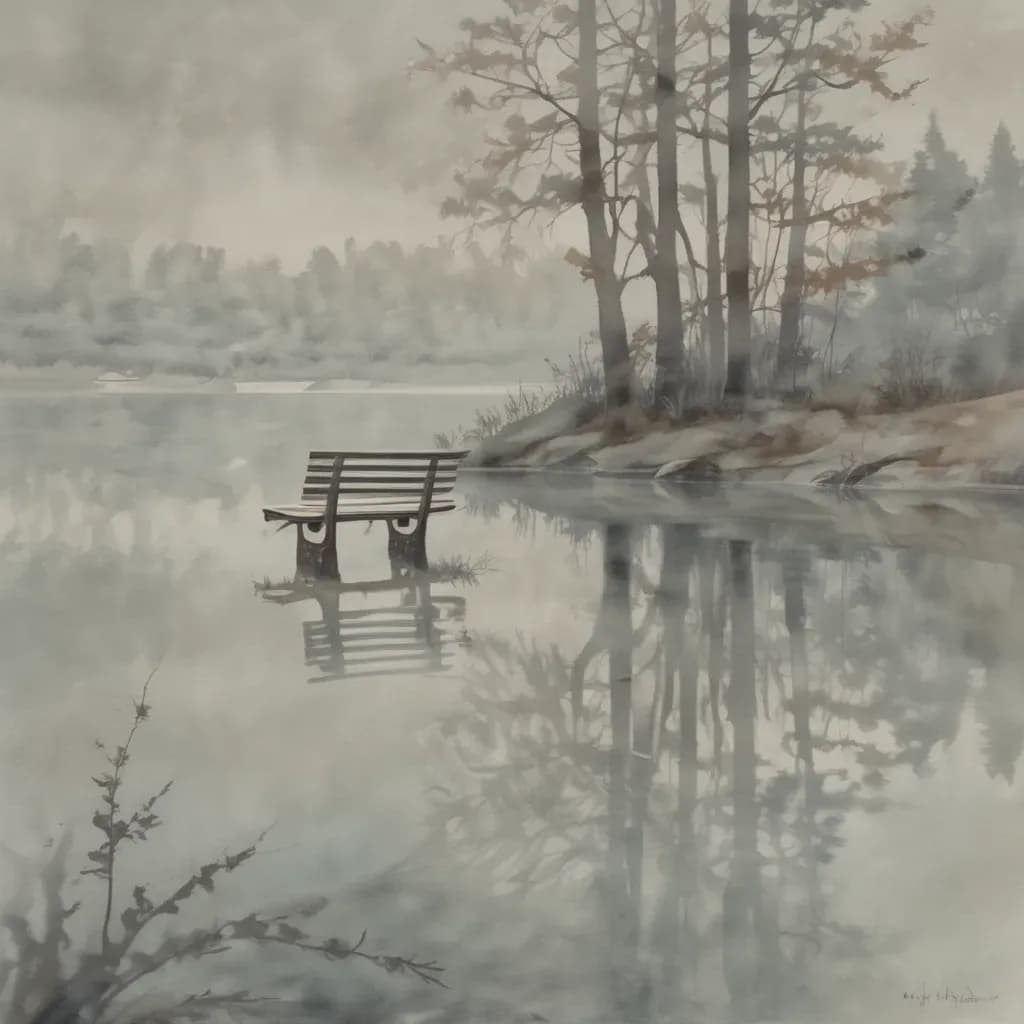
The central paradox the song explores is one that most love songs actively avoid: what if love, properly experienced, feels no different from being alone? The narrator does not arrive at this conclusion from the outside, looking back after a relationship ends. The loneliness is present-tense, alive inside the relationship itself. This is not a breakup song. It is a song about what happens when two people are technically together but emotionally unreachable to each other.
What gives the song its texture is the narrator's self-awareness about their own role in creating this situation. The song does not position its speaker as an innocent bystander to someone else's emotional unavailability. Instead, the narrator acknowledges, with rueful honesty, that they have been sending contradictory signals: projecting closeness while simultaneously holding back, giving something while withholding something else. The result is a relational dynamic where both people are stranded in a kind of no-man's-land, neither fully connected nor cleanly separated.
Critics noted in particular one lyrical observation where the narrator reflects on the other person's emotional needs in a way that is simultaneously sympathetic and deflective[3]. The remark, in essence, acknowledges that what the other person is asking for is not objectively unreasonable, yet still feels overwhelming. This kind of dry, self-aware humor prevents the song from collapsing into melodrama. It is the voice of someone who can see their own contradictions clearly and has not yet found a way to resolve them.
The musical arrangement reinforces this emotional ambiguity in ways that are more deliberate than they might first appear. Where much of EVOLution pulses with upfront electronic production and dance-pop urgency, "Feels Like Loneliness" moves at a cooler temperature. Jazz-influenced rhythmic elements, including a restrained snapping pulse in the verses, give the song an adult, lounge-like quality[4]. Reviewers observed that the blend of jazz and dance elements in the song was the kind of combination that might not always work, but that Carpenter managed to pull off with notable success[4]. The production is itself an enactment of the song's theme: composed on the surface, conflicted underneath.
An Early Signal, Recognized Late
"Feels Like Loneliness" was never released as a single. It did not chart. Its cultural footprint in 2016 was modest by design: the song existed inside an album that, while commercially respectable (peaking at number 28 on the Billboard 200)[1], was not positioned for mainstream radio conquest. The album's eventual single "Thumbs" was the track that reached number one on the Bubbling Under Hot 100 and became the enduring commercial touchstone of the EVOLution era.
But the song proved its weight in the places that matter for a track of its kind. Carpenter included it in the setlist for the EVOLution Tour, her first headlining concert run, which stretched from October to December 2016. In 2017, she performed it again as part of the Pandora Sessions, an intimate recorded performance series released on Pandora and Spotify[2]. That second life in an intimate format suggests the song held particular personal significance: it is the kind of track an artist returns to when they want to show something honest about themselves.
When Carpenter's commercial profile exploded in 2024 with Short n' Sweet, critics and listeners began methodically excavating her back catalog, and EVOLution attracted renewed attention. Retrospective assessments noted that "Feels Like Loneliness" demonstrated, as far back as 2016, the same capacity for wry emotional intelligence that would later define tracks like "Espresso" and "Please Please Please"[3]. The wry detachment, the emotional precision, the willingness to implicate herself in her own narrative: these were not suddenly acquired qualities. They were present here, waiting.
One early review compared the song's sonic identity to a blend of Ariana Grande's Dangerous Woman and Selena Gomez's "Hands to Myself"[5], which positioned it within a cohort of mid-2010s pop that was becoming more self-aware and emotionally sophisticated. The comparison pointed to something real: "Feels Like Loneliness" was part of a generational shift in what teenage pop artists were permitted, or chose, to do with their voices.
Who Is the Narrator Talking To?
The most immediate question the song raises is deceptively simple: is the narrator addressing another person, or themselves? The song supports both readings simultaneously. If the other person in the relationship is the audience, then the song is a kind of apology, or at least an explanation: here is why I could not show up fully, here is what you were dealing with inside me. If the narrator is addressing themselves, then the song becomes something more uncomfortable: an internal reckoning with their own emotional unavailability, a self-examination that has not yet arrived at a resolution.
A second interpretation emerges from Carpenter's specific biographical position in 2016. She was seventeen, publicly visible as a Disney performer, navigating the gap between the version of herself she presented on screen and the emotional life she was actually living. She later described the particular difficulty of this position to Complex, noting that growing up as a public figure made the expectation that she would never change or evolve feel especially constraining[6]. Within that context, "Feels Like Loneliness" can be heard as a song about the isolation of performing a public self: the loneliness that comes from being seen without being known.
There is also a more generous, less psychologizing reading available. The song can simply be understood as an honest document of adolescent emotional experience: the specific confusion that comes when you want someone but do not fully know how to be with them, when your feelings outpace your capacity to act on them wisely. In this reading, the paradox the song describes is not a character flaw but a developmental reality, something close to universal in the experience of learning to love.
The Love That EVOLves
What "Feels Like Loneliness" reveals, years after its release, is how early Sabrina Carpenter had already worked out the fundamental artistic posture that would eventually make her a household name. She understood, at seventeen, that emotional honesty and self-implication are more interesting than either victimhood or triumph. She understood that production choices carry meaning. She understood that a touch of wry humor could make an unbearable feeling bearable enough to examine.
The song does not resolve its central paradox. Love still feels like loneliness by the end of it. But it has done something arguably more valuable: it has articulated the feeling precisely enough that the listener recognizes it, names it, and no longer feels quite so alone inside it. That is the oldest trick in songwriting, and "Feels Like Loneliness" pulls it off with a sophistication that belied its creator's age.
References
- EVOLution (Sabrina Carpenter album) - Wikipedia — Album release date, chart performance, track listing, and critical reception
- Feels Like Loneliness - Sabrina Carpenter Wiki (Fandom) — Song writing credits, composition details, Carpenter quotes, and performance history including Pandora Sessions
- Sabrina Carpenter: Each Album Ranked - Clash Magazine — Retrospective ranking noting the wry humor in Feels Like Loneliness and EVOLution's place in Carpenter's catalog
- EVOLution Album Review - LSU Media — Critical review praising the jazz and dance blend in Feels Like Loneliness
- EVOLution Album Review - Bleached Is the Word — Contemporary review comparing Feels Like Loneliness to Ariana Grande and Selena Gomez aesthetics
- Sabrina Carpenter on Evolving Past Disney - Complex — Carpenter discusses the pressures of being a childhood figure and her determination to evolve as an artist