Fight the Power
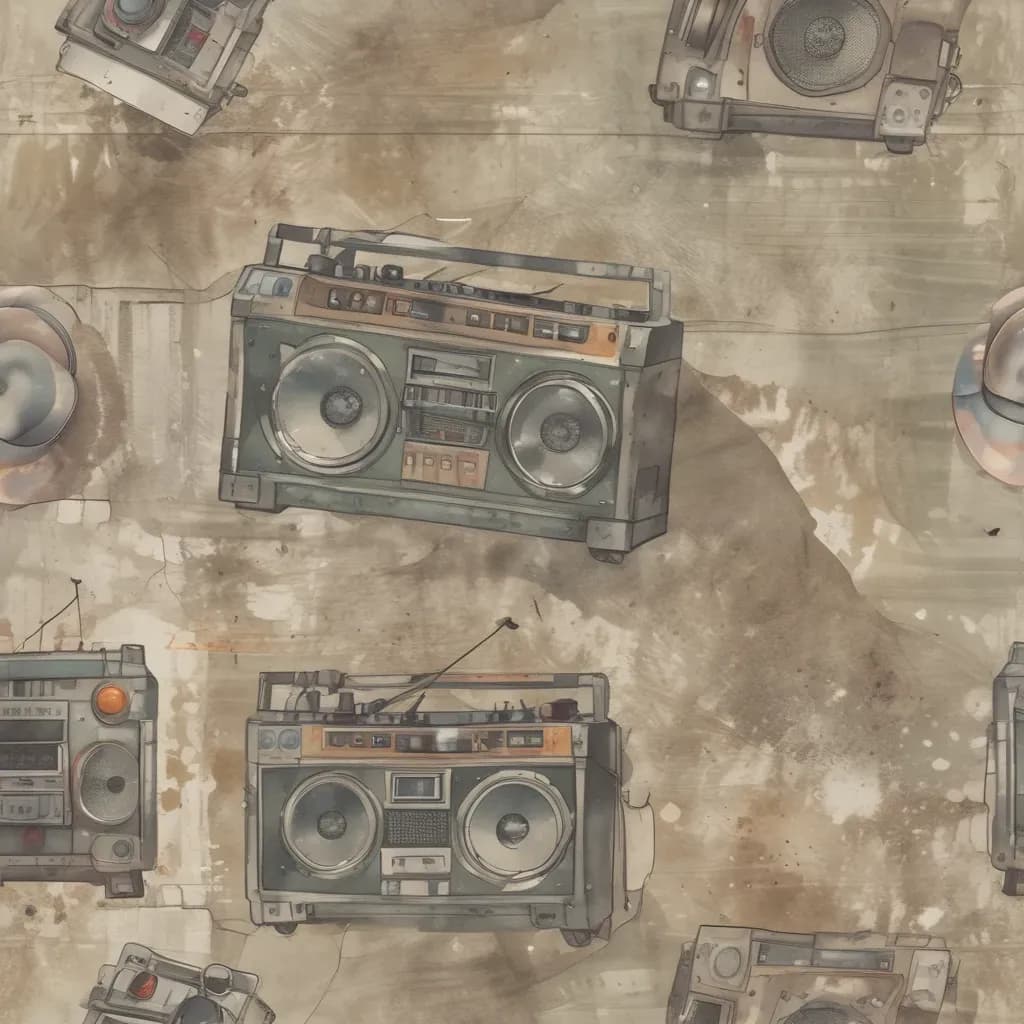
In the summer of 1989, a song arrived that functioned less like music and more like a detonation. "Fight the Power" opened Spike Lee's Do the Right Thing and refused to leave, playing from a boombox that moved through the film like a living character, rising with the summer heat and the neighborhood's gathering tension. Before the credits rolled, before a single word of dialogue was spoken, the song had already declared its terms: Black America would no longer wait to be heard.
Chuck D and Public Enemy did not stumble into that moment. They were commissioned for it, and what they delivered in response changed both music and political culture. Three decades later, Rolling Stone ranked "Fight the Power" No. 2 on its 500 Greatest Songs of All Time list[1], behind only Aretha Franklin's "Respect." The ranking is less a critical verdict than a confirmation of something listeners already knew: this song matters in a way few recordings ever have.
Born from a Commission
The song's origin begins in a meeting between Spike Lee and Public Enemy's creative team: Chuck D, producer Hank Shocklee, and executive producer Bill Stephney.[2] Lee was preparing his third feature film, set against the volatile racial atmosphere of late-1980s New York City, and he needed an anthem. He had initially envisioned a jazz treatment of "Lift Every Voice and Sing." Shocklee pushed back, arguing that Public Enemy's audience demanded something harder.
Chuck D took the challenge and wrote much of the song while crossing the Atlantic on a tour with Run-D.M.C.[3] He channeled the fury and tension of New York City into verse somewhere over Italy, drawing on memories of Howard Beach, Bensonhurst, and the daily indignities of navigating a city where racial violence was a constant presence.
The title itself was an act of homage and transformation. The Isley Brothers had released a funk protest track called "Fight the Power" in 1975. Chuck D deliberately invoked that lineage while building something entirely new: a harsher, more urgent statement for a generation navigating crack cocaine epidemics, an indifferent White House, and a city convulsed by racial conflict.[2] He later said he challenged himself to create "something entirely different that said the same thing in another genre."
The track was recorded at Greene Street Studio in New York City and released in summer 1989 as the lead single from the Do the Right Thing soundtrack.[4] An extended version appeared the following year on Fear of a Black Planet (1990), where it became the album's de facto manifesto.
The Album's Turbulent Birth
The album that eventually housed "Fight the Power" was itself born from crisis. In 1989, Public Enemy's Minister of Information, Professor Griff, made widely reported anti-Semitic remarks in a newspaper interview. The resulting firestorm led to his dismissal and a period when the group effectively disbanded.[5] When they reconvened, that embattled energy and sense of cultural siege became Fear of a Black Planet's raw material.
Released on April 10, 1990, the album was a statement of defiance from a group that had just survived an attempt to silence them.[5] Rolling Stone praised it as "a deeper, more focused version of the careening rage of Nation of Millions,"[6] and AllMusic called it "a remarkable piece of modern art." The Library of Congress later selected it for preservation in the National Recording Registry as culturally, historically, and aesthetically significant. In retrospect, the crisis that nearly destroyed the group gave them their most powerful record.
The Sonic Architecture of Confrontation
The production on "Fight the Power" is as radical as its politics. The Bomb Squad (Hank Shocklee, Keith Shocklee, Eric "Vietnam" Sadler, and Chuck D) constructed the track from more than 20 distinct samples drawn from James Brown, Sly and the Family Stone, the original Isley Brothers recording, and numerous other funk and soul sources.[7] Processed through Akai and E-mu samplers and deliberately degraded in quality for textural effect, the samples were stacked into a sonic collision that was simultaneously celebratory and confrontational.
Hank Shocklee described the production goal with stark clarity: the drums had to feel like African war drums, but the war was already being won.[8] Branford Marsalis contributed three saxophone solos -- funky, jazzy, and avant-garde -- and all three were layered into the final mix, creating what Marsalis called a "Wall of Sound."[8] Terminator X's scratching provides constant disruption throughout.
The song does not sound assembled. It sounds like it erupted. That distinction matters: where much politically conscious music sounds considered and composed, "Fight the Power" sounds like something that could not be contained. The production was making an argument even before Chuck D opened his mouth.
Themes: Power, Memory, and Cultural Legitimacy
The core argument of "Fight the Power" is a refusal to accept the cultural narratives that white America had constructed around itself. The song does not target individuals in isolation; it targets a system of meaning: who gets to be celebrated, whose history is honored, whose voice is allowed to set the tone.
The most controversial lyrical moment involves direct challenges to two icons of white American popular culture: Elvis Presley and John Wayne. Chuck D later clarified to Newsday that his target was not Elvis himself but the mythology built around him[2]: the coronation of a white performer as the "King" of a genre created by Black artists, while those artists were systematically denied credit and compensation. He noted that the controversy made "Fight the Power" "the first time that every word in a rap song was being scrutinized word for word, and line for line"[9] -- an inadvertent acknowledgment that the song had forced America to take rap seriously as political speech.
The challenge to John Wayne extended this critique to film and national identity. Wayne had become shorthand for a certain vision of American heroism, rooted in Western mythology and, by extension, in the historical violence of settler colonialism against non-white peoples. To name him as an adversary was to reject that mythology entire.
The song positions rap itself as a continuation of Black political oratory traditions. Chuck D had famously described rap as "Black America's CNN,"[10] and in "Fight the Power" that claim is made most forcefully. The lyrics invoke a lineage of Black revolutionary thought without apology, asserting that political music is not a novelty but a centuries-long inheritance.
There is also a generational urgency throughout. The narrator positions himself as speaking for a generation tired of waiting for change to arrive through sanctioned channels. The song's central declaration functions less as a request than as a statement of fact: this is what is happening now, whether or not the establishment is ready.
Spike Lee, the Music Video, and Visual Language
Spike Lee's integration of "Fight the Power" into Do the Right Thing went far beyond a typical film-song pairing. The track does not merely appear over the credits; it functions as a character and narrative engine.[11] It opens the film, plays from Radio Raheem's boombox throughout, and its volume rises and falls with the racial temperature of the story. When Radio Raheem is killed by police and the riot erupts, the music stops. That silence, following the song's relentless presence, is devastating.
Lee directed the music video himself, filming it on April 22, 1989, on the same Brooklyn street used for the film.[12] Rather than a conventional performance video, he constructed it as a political rally: the "Young People's March to End Racial Violence." Participants carried signs featuring Paul Robeson, Marcus Garvey, Angela Davis, Frederick Douglass, and Muhammad Ali. Lee deliberately kept camera equipment and boom mics visible in the frame, demystifying the filmmaking process and inviting viewer participation.
The video aired on MTV and brought these political images to a predominantly white audience. Many viewers encountered figures like Garvey and Robeson for the first time through this footage.[11] This cross-audience exposure was exactly what Lee and Public Enemy intended: the song's political education extended beyond its immediate community, reaching households that had never engaged with Black political thought.
Cultural Significance and Legacy
The immediate critical reception was emphatic. The Village Voice Pazz & Jop Critics' Poll named it the best single of 1989.[9] The American Film Institute ranked it No. 40 among the greatest songs in American cinema. The Grammy nomination for Best Rap Performance in 1990 brought a different kind of recognition: when Young MC won the award instead, Flavor Flav leapt onstage uninvited during the acceptance speech, a gesture of protest and irony that became its own cultural moment.
Its afterlife in protest movements has been remarkable. When the Los Angeles uprising followed the Rodney King verdict in 1992, the song became the uprising's soundtrack.[13] When the Black Lives Matter movement emerged in the 2010s, it circulated again. A 2020 BET Awards performance reunited Chuck D and Flavor Flav with Nas, Rapsody, and Black Thought to address criminal justice reform, demonstrating the song's continued relevance across three decades of racial struggle.[9]
Chuck D compared the song's role to Pete Seeger singing "We Shall Overcome,"[14] identifying it as part of a tradition of music that does not merely describe political struggle but actively participates in it. That tradition is real, and "Fight the Power" now occupies an undisputed place within it.
Hip-hop as a genre owes an enormous structural debt to the song. It established that a rap record could be a political manifesto without sacrificing commercial or aesthetic appeal. It opened a space that subsequent artists from KRS-One to Kendrick Lamar have occupied. And it changed how critics listened to rap: after "Fight the Power," the argument that hip-hop was disposable entertainment became untenable.
Alternative Readings
Some critics have noted that the song's politics, while broadly radical, remain somewhat undefined at the structural level. The targets are primarily cultural (Elvis, John Wayne, mainstream media) rather than institutional. This has led some scholars to argue that the song operates more as cultural confrontation than as programmatic political action, better at expressing rage than directing it toward specific change.
Others find significance in precisely this openness. The absence of specific demands means successive generations can adopt the song and fill in their own content. Each era of protest has brought its own context to the lyrics, which is a large part of why the song remains in active use. A more specific song might have aged into a historical artifact; "Fight the Power" remains a working tool.
There is also a reading of the song as performance rather than prescription. The Bomb Squad's maximalism, the theatrical imagery of the video, the sheer spectacle of Public Enemy as a live act all suggest a group deeply aware of the importance of theater in political struggle. Seen this way, the song is less a strategy document and more an act of conjuring: it creates the emotional conditions in which resistance becomes possible. It tells listeners not what to do but how to feel, and trusts that the rest will follow.
Conclusion
"Fight the Power" endures because it resolved a challenge that defeats most political art: it is as thrilling as it is serious. It carries the propulsive energy of a party record and the intellectual weight of a manifesto. It is angry and celebratory at the same time, a combination that most artists spend careers trying to achieve.
Thirty-five years after its creation, it continues to surface whenever American racial tensions reach a boiling point, not because it offers solutions, but because it names the problem with a clarity and fury that time has not diminished. The production still sounds futuristic. The argument still sounds urgent. The refusal at its core, the refusal to accept a version of America that excludes and diminishes Black lives, remains as relevant as the day Chuck D wrote it somewhere over the Atlantic, looking down at a world that needed to change.
He came back with something that felt, to many listeners, like looking up.
References
- Rolling Stone - 500 Greatest Songs of All Time (#2) — Rolling Stone's critical assessment ranking the song No. 2 of all time
- Fight the Power - Wikipedia — Comprehensive history of the song's origins, recording, and legacy
- uDiscover Music - The Story Behind Fight the Power — Detailed account of the song's creation and Spike Lee commission
- Do the Right Thing - Wikipedia — Context on Spike Lee's film and the song's role within it
- Fear of a Black Planet - Wikipedia — Album history, recording context, critical reception and commercial performance
- Rolling Stone - Fear of a Black Planet History Feature — Rolling Stone's retrospective on the album's creation and impact
- WhoSampled - Fight the Power — Database of samples used in the song's production
- Mix Online - Classic Tracks: Public Enemy's Fight the Power — Technical breakdown of the Bomb Squad's production process including Branford Marsalis and sample details
- Grammy.com - 7 Facts Behind Public Enemy's Anthem — Grammy Hall of Fame recognition and key facts about the song's cultural impact
- Chuck D on NPR - Fight the Power Documentary — Chuck D discussing rap as Black America's CNN and the song's documentary legacy
- Bright Wall/Dark Room - Still Fighting the Power: 35 Years of Spike Lee and Public Enemy — 35th anniversary analysis of the song's role in Do the Right Thing and its enduring legacy
- AAIHS - Spike Lee, Public Enemy and the Message in the Music — Academic analysis of the Spike Lee collaboration and music video context
- Hip Hop Golden Age - Fight the Power: A Revolutionary Anthem — Analysis of the song's role in hip-hop history and 1992 LA uprising usage
- SPIN - The Why & The How: Chuck D on Fight the Power — Chuck D discussing the Pete Seeger comparison and the song's political legacy
- Chuck D Interview - Consequence — Chuck D on the Spike Lee commission and the creative context of the song
- Public Enemy - Wikipedia — Group biography, formation, members, and career overview