Floette
There is something quietly radical about closing an album of nightlife-fueled electronic music with a song named after a fairy-type Pokémon. Then again, subtly radical gestures are something Arlo Parks does better than almost anyone working in contemporary British music.
"Floette" arrives as the final track on Parks' third studio album Ambiguous Desire (2026), and despite the record's club-oriented architecture of breakbeats and modular synthesizers, this closing piece pulls back into something more intimate, more uncertain, and ultimately more revealing. It is the sound of someone taking stock in the small hours, having moved through euphoria and emerged, not quite resolved, but more fully themselves.
A First Song, A Closing Statement
"Floette" holds a distinction that places it close to the album's conceptual heart: Parks has identified it as the first song she wrote for Ambiguous Desire.[1] That origin matters. When a songwriter begins with a particular piece, they are often articulating something like a thesis, a statement of intent that the rest of the album orbits without fully inhabiting. In this case, the thesis was about transformation and queerness, about learning to bloom.
The personal context that informed the album is significant. After the end of her relationship with singer Ashnikko in late 2024, Parks relocated to Los Angeles and began a period of intensive self-examination and creative immersion.[2] She spent 2024 and 2025 moving through nocturnal spaces across LA, Brooklyn, and London, finding in the anonymity of club floors a permission to become whoever she needed to be on any given night.[3] The album that emerged from that period is partly a document of euphoric release, but "Floette" captures the quieter reckoning that follows.
Parks has spoken about the dual character of those late-night spaces: the club as site of freedom and performance, but also as site of encounter with the self.[4][5] "Floette" feels like the aftermath of that encounter, the walk home in the grey-blue pre-dawn when the music has stopped and the only voice left is your own.
The Pokémon as Metaphor
The song's title refers to a Fairy-type Pokémon, part of an evolution chain that begins with Flabébé and ends with the more fully formed Florges. The evolutionary arc, from something small and tender to a creature capable of larger expression, is transparently analogous to Parks' lyrical concerns.[1] The choice of Pokémon as metaphor is neither incidental nor ironic.
For a generation that grew up with the franchise's language of potential and transformation baked into their vocabulary, naming a song about personal growth after a Pokémon carries immediate emotional precision. Parks belongs to that generation. Born in 2000, she came of age during the years when Pokémon evolution was a genuine developmental metaphor rather than mere retro reference.
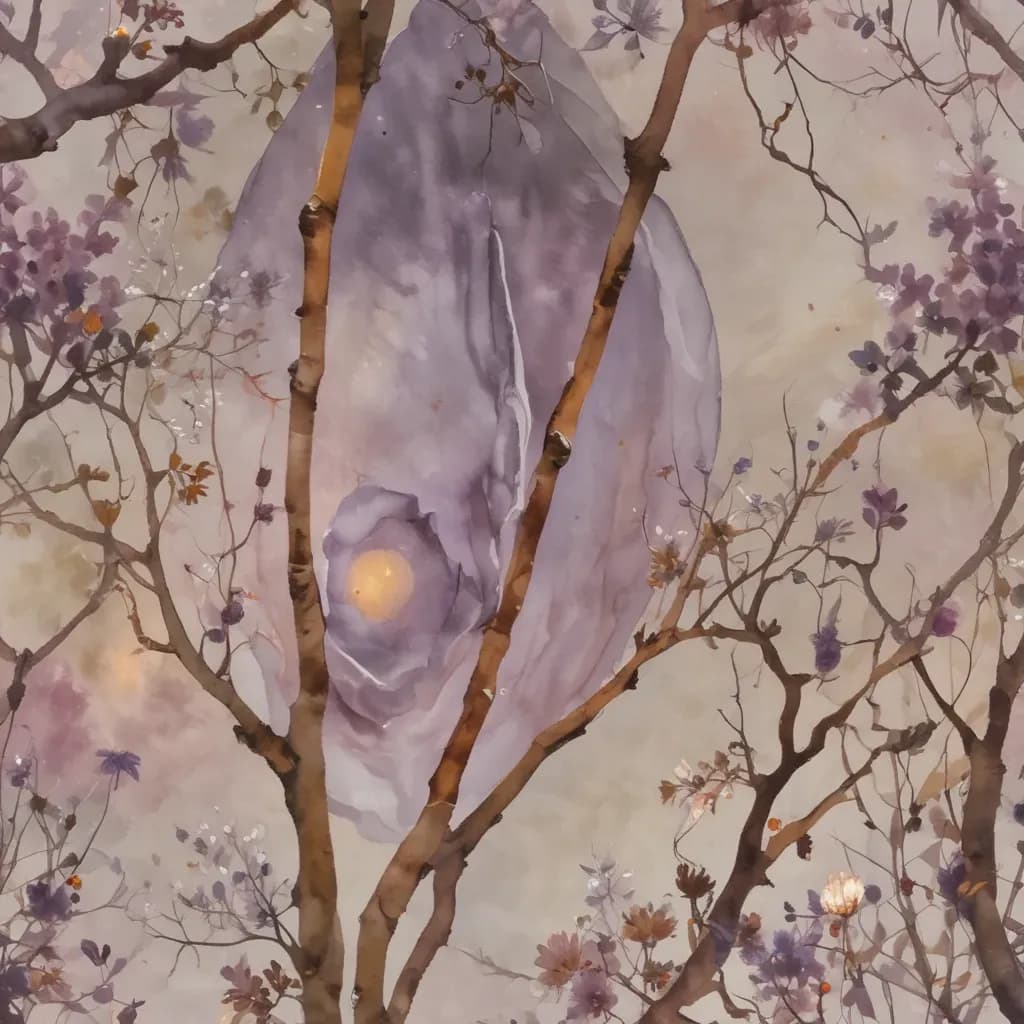
The name "Floette" also carries floral resonance. Its roots in the French word for flower and its partial echo of the verb meaning to float or drift suit a song described in multiple reviews as weightless and dreamlike.[1] The imagery reinforces Parks' recurring interest in nature as emotional metaphor, a tendency visible across all three of her albums.
Queerness as Joy
Parks has explicitly described "Floette" as a joyful testament to queerness and blossoming into oneself.[4] This framing is worth pausing on. Much of the critical discourse around queer music emphasizes suffering, survival, and the hard-won nature of self-acceptance. Parks is not dismissing that tradition, but she is insisting on something that often goes underrepresented: the simple, startling joy of becoming who you are.
The song's language of blossoming treats queerness not as a wound to be healed but as a capacity to be cultivated. Parks captures the giddiness of that process, the way desire and identity can feel new even when you have been living with them for years. The recurring phrase running through the song, something approximating a shared declaration of growth, functions less as a statement than as a collective exhale.
This framing carries particular weight given who Parks is. As a Black queer artist navigating a mainstream music industry that has not historically been generous with either of those identities, the decision to locate joy at the center of a song about queer experience is a meaningful act of resistance.[2]
Fear and the Unresolved
For all its warmth, "Floette" is not uncomplicated. Parks threads through the song a frank account of the emotional ambivalence that attends desire. The narrator describes a state familiar to anyone who has been drawn to something they are also afraid of: simultaneously wanting to commit and terrified of commitment, simultaneously wanting to leave and terrified of leaving. The song puts these contradictions side by side without resolving them.
There is also a moment in the song where Parks reaches for the sensation of feeling fourteen again, evoking a kind of double-edged nostalgia. Being fourteen is, for many queer people, both the age of first awakening and the age of first concealment. Parks seems aware of both dimensions. The reference evokes raw openness, standing at the beginning of something you do not yet have the language for, and it lands with the ache of recognition.
This is part of what distinguishes "Floette" from the more euphoric tracks on the album. Where the record's club-derived material offers release and momentum, "Floette" offers suspension. It closes the album not with arrival but with an open question, in keeping with the ambivalence the album announces in its title.[6]
Cultural Significance
Critics have consistently reached for the word "intimacy" when describing Parks' work, even as the production on this album pushes toward club volume and dancefloor energy. The intimacy does not come from the sonic texture but from the quality of attention she brings to the experiences she describes.[6]
For younger listeners, and particularly young queer listeners, Parks occupies a distinctive position in contemporary British music. She emerged in the early 2020s with an unusually direct line to the interior lives of her audience, partly through lyrical specificity and partly through a biographical legibility that allowed listeners to feel their own experiences reflected back. "Floette" extends that tradition. The Pokémon reference, the language of blossoming, the frank acknowledgment of ambivalence: these are idioms that speak to a generation formed in the spaces between digital culture and embodied emotion.
The song also fits into a broader conversation happening across contemporary queer music about the right to represent desire as complex and joyful at the same time, neither tragic nor uncomplicated. Parks is part of a cohort of artists working to expand the emotional register available to queer pop, and "Floette" is among her most direct contributions to that project.[5]
Alternative Interpretations
The most available alternative reading of "Floette" is autobiographical in a more pointed way. Parks' relationship with Ashnikko ended in late 2024, and the song's direct engagement with the fear of commitment could be read as an examination of a specific chapter rather than a general meditation on desire.[2] Under that reading, the reference to feeling fourteen becomes more pointed: the particular exposure of loving someone in public, of having private life become public text.
It is also possible to hear "Floette" as a song about creative self-definition as much as romantic desire. The album represents a significant departure from Parks' earlier sound, and the anxiety of transformation is as applicable to artistic evolution as to personal relationships. For Parks, these threads are rarely separable. The blossoming in the song may be the artist's own emergence into a new mode of working as much as a statement about love.
A Song Still Becoming
"Floette" does something unusual. It closes an album about the night not with exhaustion or dawn, but with an open question. The Pokémon in its title has not yet finished evolving. The narrator remains caught between commitment and departure. The blossoming is still happening.
For Arlo Parks, who began her career writing confessional songs in her bedroom and has spent the subsequent years translating those impulses onto increasingly expansive sonic canvases, this ongoing becoming seems less like a limitation and more like a method. You do not arrive at yourself. You keep becoming, and the songs you write along the way are the evidence.
"Floette" is one of those songs: small in scale but large in implication, joyful in its identification with transformation, honest about the costs of change, and alive to the particular beauty of not yet knowing exactly who you are becoming.
References
- Arlo Parks's Sound Blossoms in New Album - The Brown Daily Herald — Review describing 'Floette' as the first song written for the album; discusses the Pokemon evolution metaphor and the track's weightless, dreamlike quality as the album's closing statement
- Ambiguous Desire - Wikipedia — Biographical context including Parks' breakup with Ashnikko in 2024, relocation to LA, and significance of Parks as a Black queer artist
- On Ambiguous Desire, Arlo Parks Turns Nocturnal Moments Into Lasting Songs - NME — In-depth interview covering club culture immersion across LA, Brooklyn, and London during 2024-2025
- Arlo Parks on New Album Ambiguous Desire - Rolling Stone — Parks describes 'Floette' as a joyful testament to queerness and blossoming into yourself; discusses the club as site of freedom and self-encounter
- Arlo Parks is Taking Her Storytelling to the Dancefloor - Dork Magazine — Interview on album themes, the dancefloor as space for queer self-expression, and Parks' expanded emotional register on Ambiguous Desire
- Arlo Parks - Ambiguous Desire Review - DIY Magazine — Critical review noting Parks' sustained intimacy across the album's shifting production and the unresolved quality of the closing track