Good Times // End Times
The title does its work before a note plays. Two phrases, joined by a pair of slashes, each pulling the other in the opposite direction. Good times, end times. Is that a choice, a timeline, or a single moment seen from two angles? Goose never settles the question, and the song is better for it.
"Good Times // End Times" is the thirteenth track on Big Modern!, the band's sixth studio album, and it runs a compact three and a half minutes.[3] It was also released as a single with an official video.[2][7] The press framing called it an anthem for an apocalypse that never quite arrives.[2] That phrase is a good place to begin, because it describes a particular modern mood: the sense that everything is ending, and that the ending keeps being postponed while the party continues.
A jam band steps into the pop world
To hear why this song sounds the way it does, it helps to know where Goose comes from. The band formed in 2014 in Connecticut, built around guitarist and singer Rick Mitarotonda, and spent years playing basements and bars before growing into a touring act that filled Madison Square Garden in 2025.[5] Their reputation rests on long, improvised live performances. Mitarotonda has said plainly that the group is a jam band, though they describe their own sound as indie groove.[5]
Big Modern!, released on June 12, 2026 on the band's own No Coincidence Records, pulls in the opposite direction from the sprawl.[3] It follows two albums from 2025, Everything Must Go and Chain Yer Dragon, which means it was the band's third studio record in just over a year.[2][6] It is slick, synthesizer-heavy and tightly arranged. Reviewers heard echoes of Talking Heads and Steely Dan, and Relix placed "Good Times // End Times" among a handful of radio-ready songs that could sit comfortably beside The War on Drugs or LCD Soundsystem.[4] The Flood review went further, calling the record Goose's answer to Remain in Light, a turn toward 1980s-flavored dance music.[1]
That context matters for the song. A band famous for stretching a groove across twenty minutes here compresses its energy into a pop single. The compression itself becomes part of the message, because a song about a world that moves too fast has little room to wander.
The world of Big Modern!
The album is best described as a pseudo-concept record. Live for Live Music used exactly that phrase, pointing to its focus on hyper-connected, hyper-convenient modern life.[2] The band's own description calls it an ode to the overwhelming, high-definition experience of now.[6] Wikipedia quotes the press language about moving through an overstimulated, hyperconnected society.[3] Relix, for its part, heard dystopian fears, disconnected social networks and doomscrolling.[4]
Mitarotonda has been careful about how he frames this. He described the album as a dispatch from interesting times, offered without judgement or superiority.[2] He also said it centers on the occasional state of flow amidst absurdity.[2][3] Those two remarks are the key to the whole record, and they are especially useful for a track like this one. The narrator is not a prophet standing above the crowd. He is inside the crowd, noticing the strangeness while still moving to the beat.
He has also said that there was originally no plan to build the album around a throughline, and that the ideas kept unraveling in real time while the band followed the thread.[2] The apocalyptic mood, in other words, seems to have emerged from the material rather than being imposed on it. That is how the most convincing dread usually arrives: as a side effect of paying attention.
Dancing at the edge of the cliff
The central tension of the song is audible even without parsing a single line of text. Flood singled out the album's lyrics as decidedly and unrelentingly apocalyptic, naming this track among the examples, and then observed that the doom is belied by tightened, danceable improvisations.[1] The groove says one thing and the subject matter says another.
That contradiction is the oldest trick in the pop songbook, and it has a distinguished lineage. Think of the dance-floor anxiety of the Talking Heads records that Goose is so often compared with.[1][4] Think of the way a bright synthesizer line can make a worry feel almost pleasant. Pop music has long used celebration as a kind of camouflage for fear, and the double title makes the strategy explicit. The slashes do not separate two ideas so much as stack them, so that every good time carries an end time inside it.
There is also something specific to this generation of listeners in the way the song handles doom. The end of the world, as presented by the news cycle and the feed, is not a single dramatic event. It is a rolling series of alarms that never quite resolve. The phrase "an apocalypse that never quite arrives" captures that precisely.[2] You keep waiting for the curtain to fall, and meanwhile the evening goes on, the drinks get poured and the chorus comes around again.
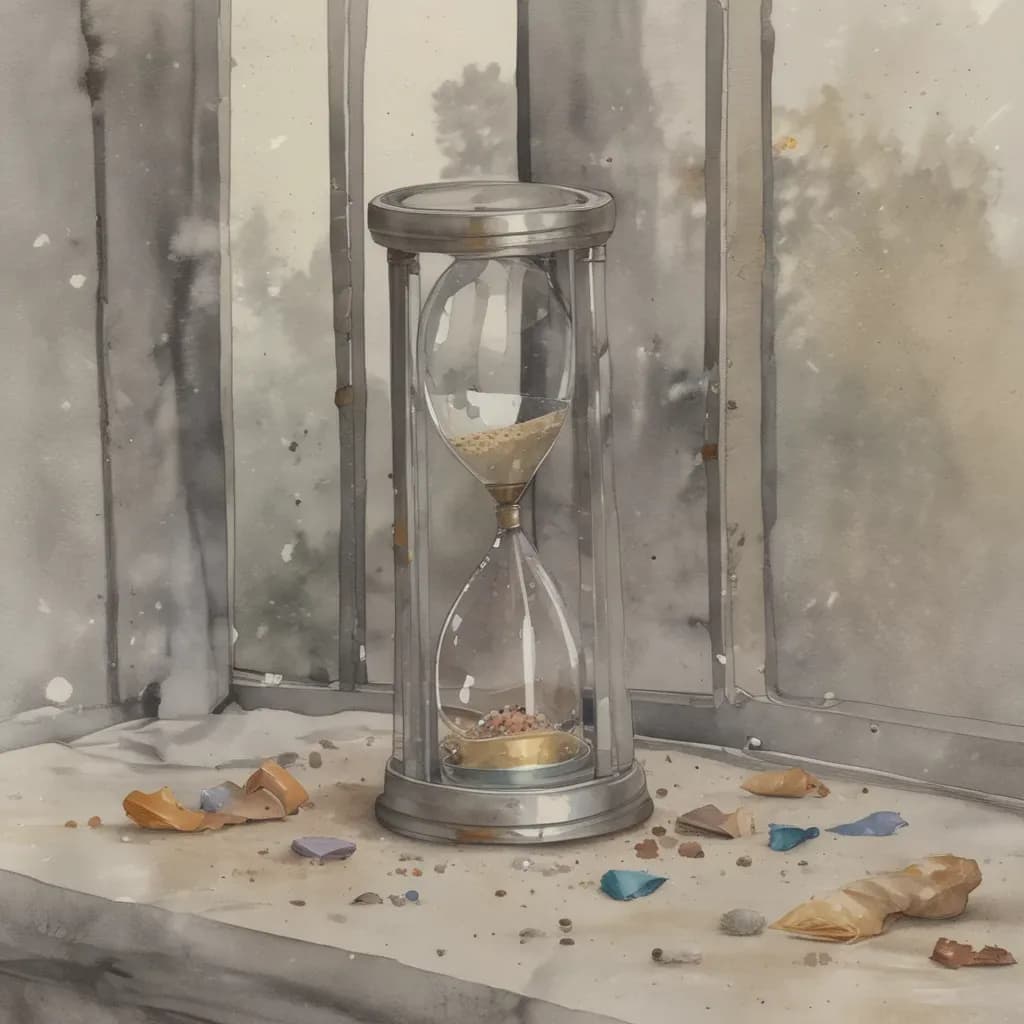
Optimism and dread in the same breath
One reading of the song treats it as a toast. Good times are worth honoring precisely because they are finite, and the awareness of an ending sharpens the pleasure rather than spoiling it. This is a very old idea, found in everything from carpe diem poetry to the funeral parties of New Orleans. Under that reading, the song is not despairing at all. It is a call to be fully present, which fits Mitarotonda's talk of flow.[2]
A second reading is more skeptical. Here the cheerful surface is the problem. The song's polish and momentum mirror the way modern life numbs us, packaging anxiety into something smooth enough to consume without discomfort. Relix noted the album's glossy, heavily produced quality, calling it AI-perfect.[4] If that sheen is deliberate, then the song is a trap laid for the listener: you enjoy it, and in enjoying it you act out the very behavior it describes.
A third reading takes the title at face value as a diagnosis of timing. Perhaps good times and end times are not opposites but neighbors, and the uncomfortable truth of the present is that they are happening together. Concerts sell out while the planet warms. People share their best moments online while feeling more disconnected than ever. For a band at the height of its commercial success, playing to the largest crowds of its career, the observation has an added edge of self-awareness.[5][6]
Where critics landed
The reception to the album was mixed, and the song sits in the middle of that debate. Flood admired the ambition and the danceable turn, though it also faulted a few moments as pretentious, saccharine or retro pastiche.[1] Relix was blunter, calling the radio-ready songs sterilized and the record's sound AI-perfect.[4] On the radio itself, the song did find an audience. According to Wikipedia, it reached the Billboard Adult Alternative Airplay chart and the Alternative Airplay chart in the autumn of 2026.[5]
That split is revealing. A song about the tension between pleasure and unease is bound to produce an argument about whether its pleasures are genuine. Listeners who love the live Goose experience may hear the studio polish as a loss. Listeners who arrive through the radio may simply hear a catchy, anxious, well-built song. Both groups are responding to the same thing the track is about.
Why it resonates
The song works because it declines to pick a side. It does not scold the listener for enjoying themselves, and it does not pretend that enjoyment is enough. It holds both feelings at once, which is how most people actually live right now. We check the news, feel the weight of it, and then go to dinner with friends and laugh. Neither response cancels the other.
It also arrives at a point in the album where the listener has already been immersed in a long stretch of overstimulation. Placed third from the end of a fifteen-track album, it functions as a last burst of energy before the record winds down.[3] The party has been going for a while, and this is the moment someone finally says out loud what everyone has been thinking.
A closing thought
"Good Times // End Times" is not a song that offers a solution, and it would be a weaker song if it did. What it offers instead is recognition. The feeling of living through a long, ambiguous, brightly lit moment, where celebration and alarm share a room, is hard to name and easy to feel. Goose gives it a groove and a title with a double slash in the middle, and lets the listener decide which half to believe.
In the end, that may be the most honest thing a pop song can do in a period like this one. It does not promise that the good times will last, and it does not insist that the end is near. It simply keeps the music playing and asks what we plan to do while it does.