Hacker
The Last Door
By the time "Hacker" arrives, thirteen tracks into The Money Store, something fundamental has changed in the atmosphere. The album has spent 37 minutes coiling tighter and tighter, and now the final track kicks the door off its hinges. It is a closer in the way a pressure valve releasing is a closer. The tension does not resolve so much as detonate.
"Hacker" occupies a strange position in Death Grips' catalog: it is simultaneously their most accessible and their most conceptually dense song. Its propulsive groove and melodic hook make it one of the few tracks in their discography that even casual listeners can locate a handhold in, yet the ideas layered beneath that surface touch something genuinely original about what this band was doing and why it mattered.
Background: Infiltrators at the Gate
Death Grips signed to Epic Records in February 2012, an arrangement that was unusual enough to become part of the band's mythology: full creative control, no interference, major distribution.[1] From the outside, it looked like a subversive force walking through the front door of the industry rather than breaking in through a back window. "Hacker" captures exactly that paradox.
The track is believed to have originated during the sessions for Exmilitary, the 2011 mixtape that announced Death Grips to the underground before they had a label deal or a formal debut record.[2] Its sonic fingerprints are consistent with that theory: the military-inflected percussion in the foundation samples the Blue Devils Drum and Bugle Corps, a competitive marching ensemble whose mechanical precision becomes something menacing and anarchic in Death Grips' hands.[2] Zach Hill's production approach throughout The Money Store involved what he described as "a lot of recycling and destruction" -- lifting source material and then stripping away any recognizable trace of the original until only the energy remains.[3] "Hacker" is perhaps the most vivid expression of that philosophy on the album.
The song was placed last on The Money Store despite being among the oldest material, a sequencing choice that speaks to how the band understood their own arc. Thirteen tracks of escalating intensity build toward this moment, and the climactic placement gives it an almost ceremonial weight.
Themes: The Virus in the System
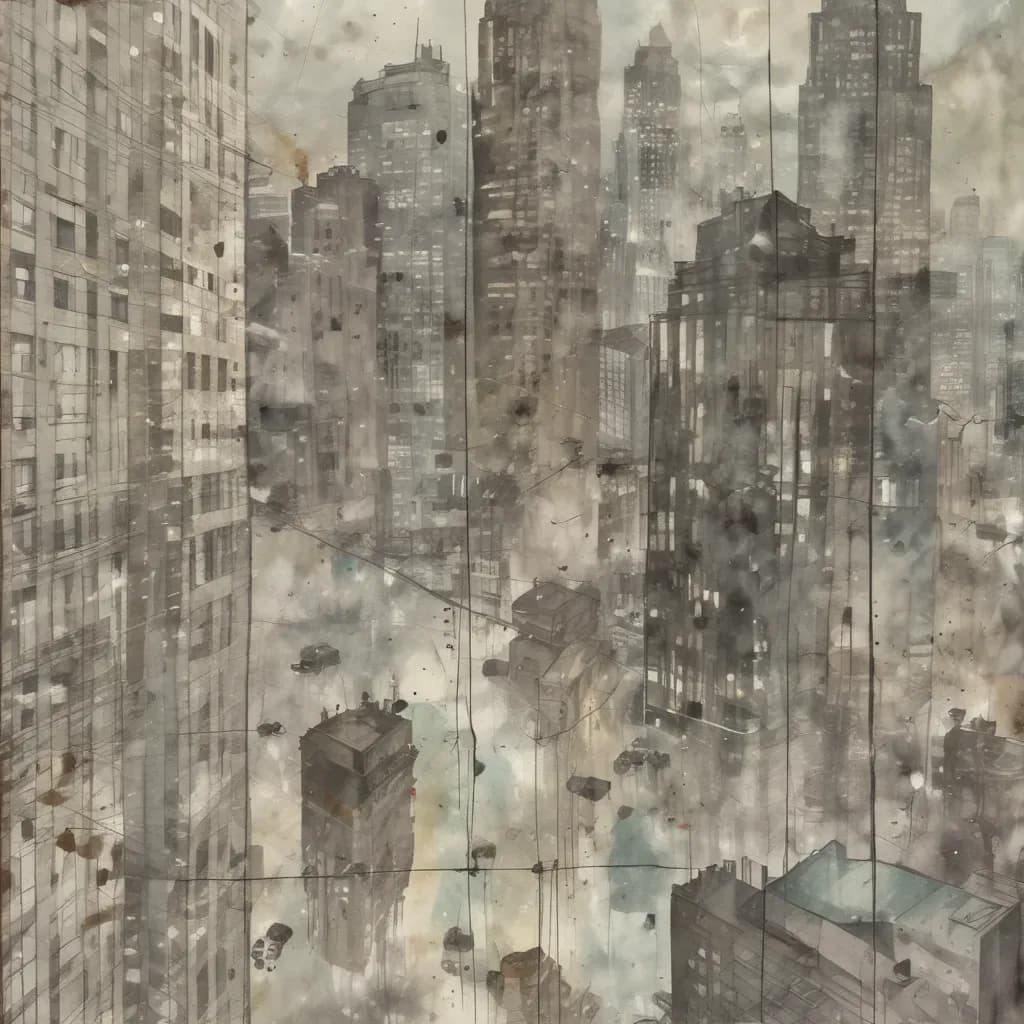
The dominant reading of "Hacker" is also the most elegant one: the song is a self-portrait of Death Grips as a piece of rogue code inside a system it was never designed to inhabit. Just as a computer intrusion depends on exploiting gaps the architects did not anticipate, Death Grips entered the commercial music infrastructure through a door that was never meant to swing open for a group making music this confrontational and uncommercial.[4]
MC Ride's lyrics scatter pop-culture references across the track -- Apple, Lady Gaga, and Sammy Davis Jr. appear in quick succession -- but these are not deployed as criticism or irony.[4] They are proof-of-purchase. Naming these icons is a way of demonstrating access: if you can invoke them, you are already inside the perimeter. The hacker does not hack the system because they hate it; they hack it because they can, and because the act of intrusion is its own argument about who actually controls the architecture.
Woven throughout the verses is a persistent thread of surveillance and proximity: imagery of knowing location, knowing partial identifying information, being already present in someone's immediate environment before they realize it.[4] This is the grammar of digital intrusion applied to personal space. The song conflates the technical procedure of unauthorized access with the social experience of being watched and tracking others in return. In 2012, this felt prescient. The Snowden revelations were still a year away, but smartphones had already introduced a generation to the ambient awareness that someone, somewhere, probably had access to information about them that they had not consciously shared.
In a rare instance of Death Grips providing a direct key to their own material, Zach Hill cited U.S. Maple, the Chicago noise-rock band, as a significant influence around the time of The Money Store's release. U.S. Maple is directly referenced in "Hacker"'s lyrics, a nod that functions as both musical genealogy and a signal to anyone paying close attention that the song's seemingly chaotic surface is threaded with deliberate choices.[5][3]
The Vocal Performance: Two Riders
MC Ride's performance on "Hacker" is among the most formally interesting of his career. The verses deliver his signature assault -- clipped, staccato, pitched at the frequency of controlled emergency -- but the hook is something else entirely. There, his voice opens into a kind of melodic half-chant, hovering between aggression and something almost euphoric, a tone that critics have compared to the sprechgesang tradition in German art music and to the call-and-response structures of revival preaching.[6]
This duality is not accidental. The verse mode is intrusion: the voice as instrument of infiltration, fast and low and designed to slip through gaps. The hook mode is announcement: the intrusion has succeeded, and now it broadcasts its presence at full volume. Together, the two modes map the full arc of a breach, from the silent entry to the moment the alarm sounds and the intruder lets it ring.
Cultural Context: 2012 and What Came After
Hip-hop in 2012 was fragmenting productively. A$AP Rocky's LiveLoveA$AP had just arrived, Danny Brown was complicating the genre's emotional register, and the internet had not yet calcified into the algorithmic monoculture it would become within five years. Into this environment, Death Grips dropped The Money Store and "Hacker" specifically, and the reception was something between bewilderment and reverence.[7]
Anthony Fantano awarded The Money Store a perfect 10, his first ever, a score that introduced the album to a generation of listeners who might not have found it otherwise.[7] He later named "Hacker" the best song of the entire 2010s decade. Pitchfork gave the track individual Best New Music status, a rare honor for a closing album track rather than a proper single.
The song arrived approximately twelve months before Kanye West released Yeezus, an album whose industrial production and confrontational energy critics immediately traced back to Death Grips.[6] Whether the direct influence is documentable or not, the timeline is clear: "Hacker" and The Money Store showed that the vocabulary of noise music and industrial production could coexist with hip-hop's rhythmic logic and still move people. The album's influence extends further outward to clipping., JPEGMAFIA, Ho99o9, and elements of the hyperpop movement -- anywhere contemporary music deploys distortion and confrontation as primary aesthetic tools.
In 2015, "Hacker" appeared in the soundtrack to the video game Battlefield Hardline, a placement that illustrated the track's strange cultural range.[2] A song about infiltration and systemic breach ended up soundtracking a military shooter franchise -- either a sharp irony or a perfect fit, depending on how you read it.
The Ghost in the Shell Connection
Though Death Grips did not commission an official music video for "Hacker," a fan-assembled video using footage from Mamoru Oshii's 1995 anime film Ghost in the Shell became the definitive visual companion to the track.[8] The pairing is so instinctively correct that it is hard to imagine the song without it now: Ghost in the Shell centers on a future in which human consciousness can be hacked and duplicated, where the boundary between identity and data is the central philosophical problem. Its protagonist is a being assembled from parts, neither purely human nor purely machine, whose sense of self is a kind of running question the film never fully answers.
That tension maps almost too cleanly onto what "Hacker" is doing sonically and lyrically. Death Grips is a group assembled from disparate sources -- noise rock, hip-hop, electronic body music, marching percussion -- that coalesces into something that belongs to none of its parts. The fan editor's choice of Ghost in the Shell was an act of interpretation as much as illustration.[8] The video itself was made through unauthorized use of copyrighted footage, a small-scale enactment of the song's own logic.
Alternative Readings
There is a reading of "Hacker" that is less about the band's self-mythologizing and more about a generalized digital ethics. In the early 2010s, "hacker" carried a still-contested valence: the term straddled criminal intrusion and something closer to liberation, the free-information ethos of Aaron Swartz and the cypherpunk movement, the idea that access to systems was a form of political power and that unauthorized access was sometimes the only available form of democratic action.
Through this lens, the song is less a self-portrait than an identification -- with anyone who had found themselves locked out of systems that controlled their information, their money, their reputation, their identity as constituted by data. The surveillance imagery in the lyrics cuts both ways: the song's narrator is at once the watcher and the watched, which places it squarely in the paranoid reciprocity of life online.
A third interpretation takes the song at its most elemental, as a pure statement of arrival. The album title The Money Store refers to a type of predatory lending institution common in low-income American neighborhoods, and the entire record can be read as a document of what it feels like to grow up poor and locked out and then, suddenly, to be inside something that previously refused you.[5] "Hacker" is the closing statement of that document: not a request or an aspiration but a declaration that the intrusion has already occurred.
Why It Endures
What makes "Hacker" remarkable more than a decade after its release is how completely it escapes the period that produced it. Songs about the internet tend to age badly -- they get trapped in the specific platform, the specific anxiety, the specific slang of the moment. "Hacker" avoids this because it is ultimately less about technology than about power: who has it, how they got it, and what the people outside the wall do when they figure out that the wall is just code.
The song also endures because it is genuinely, viscerally exciting. Beyond all the conceptual scaffolding, it is one of the most purely propulsive pieces of music Death Grips ever recorded -- the groove rolls like a military advance, the hook lands with the force of something that has been held back too long, and MC Ride sounds like a person transmitting on frequencies that most human voices cannot reach.[5]
As the final track on The Money Store, "Hacker" does what the best album closers do: it makes everything before it feel necessary. The twelve tracks that precede it were not building to a resolution -- they were building pressure. "Hacker" is what that pressure sounds like when it finally finds a place to go.
References
- Death Grips - Wikipedia — Biographical and discographical context
- Hacker - Death Grips Wiki (Fandom) — Track-specific details: samples, origin from Exmilitary sessions, Battlefield Hardline placement
- Death Grips interview: Zach Hill on The Money Store - The Skinny — Zach Hill discusses the production philosophy of recycling and destruction, and cites U.S. Maple as a key influence
- The Meaning Behind The Song: Hacker by Death Grips - Musician Wages — Thematic analysis covering industry infiltration, digital paranoia, and rebellion readings
- Album Breakdown: Death Grips - The Money Store - Boiler Rhapsody — Track-by-track analysis including Hacker and confirmed U.S. Maple reference via Zach Hill interview
- With The Money Store, Death Grips blew up a splintering alternative rap landscape - Crack Magazine — Retrospective analysis of the album and Hacker's place in it
- The Money Store - Wikipedia — Album release details, chart positions, recording and label context
- Death Grips - Hacker (Optimistic Underground review) — Early critical reception and discussion of the Ghost in the Shell fan video