Heard a Song
There is a particular agony in hearing something that moves you without knowing what it is. A melody rises from a car radio at a red light, three seconds that reach through the glass and rearrange something inside you, and then the moment evaporates. You caught it, but not quite enough of it. You go home and hum the fragment to everyone who will listen. Nobody knows it. This is the scenario at the center of "Heard a Song," the second track on Kero Kero Bonito's 2016 debut album Bonito Generation, and it is not as simple as it sounds.
The Band Behind the Tune
Kero Kero Bonito emerged from a peculiar origin story. Producers Gus Lobban and Jamie Bulled, childhood friends from Bromley in south London, posted an advertisement on MixB, an online bulletin board for Japanese expatriates living in the UK, seeking a bilingual vocalist[1]. Sarah Midori Perry responded. She had grown up in Hokkaido, Japan until her early teens, was fully fluent in Japanese and English, and had no formal singing background. The three clicked immediately, and KKB began building an online audience before they had played a single live show.
By 2016, the band had released the mixtape Intro Bonito (2014) and made a notable U.S. debut at SXSW in 2015 alongside acts from the PC Music collective[1]. But Bonito Generation, released October 21, 2016 on Double Denim Records, was their first proper studio album[2]. It took over a year to complete. Lobban described the compositional process as analogous to solving a tiling puzzle, with every element needing to lock into precisely the right position before the whole could work[1].
"Heard a Song" is track two on the record, written solely by Lobban[3]. It follows the opening exuberance of "Trampoline" and arrives when the listener's guard is still down. This placement is deliberate. Where "Trampoline" is pure giddy physicality, "Heard a Song" pivots immediately into something more reflective, signaling that the album's bright surfaces contain more complexity than they first suggest.
The Radio Song as Subject and Object
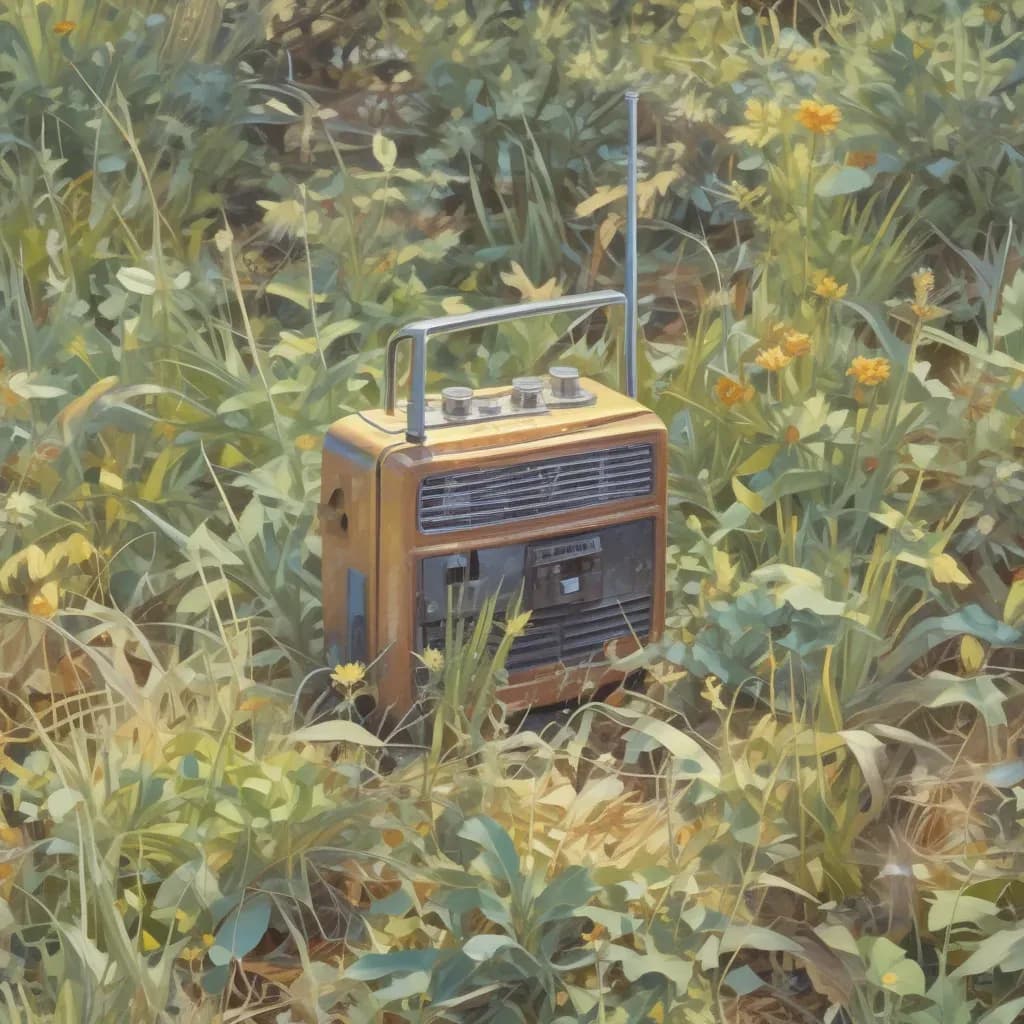
What makes "Heard a Song" unusual is that it performs a quiet sleight of hand. The narrator describes being captivated by a song she cannot identify, something she caught on the radio or in passing. It was catchy enough to stay lodged in memory and distinctive enough to cause genuine frustration at its anonymity, but just elusive enough that she cannot pin it down. She describes the experience: the searching, the asking around, the mounting obsession with a tune she cannot name.
The trick is that "Heard a Song" is itself, in every measurable way, exactly the kind of song it describes. It is a tight, dancehall-inflected electropop track, relentlessly hooky, built to stick[4]. Lobban has spoken directly about the gap he finds fascinating in popular music: "The gap between pop as admired by connoisseurs and by the public is huge"[1]. "Heard a Song" inhabits both sides of that gap simultaneously. It is a connoisseur's analysis of anonymous pop wrapped in the sonic form of the very thing it analyzes. The song does not observe the phenomenon from a distance. It recreates the phenomenon and then watches you have it.
This self-referentiality is not merely clever. It is the song's argument made in musical form: that the track which gets lodged in your head without you even knowing its name is not a lesser form of art. It is a legitimate and surprisingly powerful experience, and it deserves to be taken seriously.
The Experience of Anonymous Influence
Most writing about musical influence focuses on known quantities: a musician names their influences, traces a lineage, cites the records that shaped them. But a great deal of actual musical formation happens through encounters that cannot be attributed. A fragment overheard at a bus stop. A song playing in a shop that you never thought to identify. A hook caught through a wall.
By 2016, apps like Shazam and the abundance of streaming services had technically made song identification trivially easy. The pre-digital experience of being forever haunted by an unidentifiable tune was supposed to be extinct. And yet the frustration the narrator of "Heard a Song" describes remains completely familiar. This suggests the feeling is not really about technology or access at all. It is about attention, about the moments when music catches you before you can reach for your phone, about the slightly melancholy sense of knowing a song existed but not quite knowing where to find it again[5].
Choosing this scenario for a song released in 2016 therefore involves a kind of deliberate temporal displacement. KKB is evoking a pre-streaming experience of music discovery and framing it in a very contemporary sonic palette. There is something quietly elegiac in this: a sense of mourning for the way music once arrived unannounced and then disappeared, for the friction that made an encounter feel like chance and chance feel like a gift.
Radical Positivity and the 2016 Backdrop
The album arrived in October 2016, at a moment of considerable collective anxiety. Brexit had passed in the UK just months earlier. A divisive U.S. presidential election was weeks away. Lobban has spoken about the generation KKB speaks to: young people navigating a shrinking job market, rising housing costs, and an increasingly polarized political landscape[1]. KKB's response was what they explicitly called "radical positivity," a philosophical stance that Bulled articulated with some feeling: in music, he observed, sounding sad or offensive marks you as serious, while sounding positive makes listeners assume you must be joking[1]. The band argued that genuine positivity is as legitimate, and as countercultural, as punk rebellion.
"Heard a Song" sits at an interesting angle to this philosophy. It is not a song about hardship or crisis. But neither is it a song without anxiety. The restlessness the narrator feels, the nagging pursuit of something just out of reach, the inability to let go of an incomplete experience: these are not trivial feelings. They are miniaturized versions of larger emotional states. The sense that something meaningful has slipped past you, that you are always slightly behind the thing you're chasing.
This is what KKB means by a "childlike perspective upon day-to-day existential crises," the phrase that Wikipedia's article on the album uses to describe its overarching theme[2]. The crises are small. The feelings they provoke are not. "Heard a Song" captures this ratio precisely.
Earnestness in a Sea of Irony
By 2016, much of the music adjacent to KKB, the PC Music stable in particular, deployed cuteness and pop brightness as a form of detachment. The hyperreal, the artifice-foregrounded, the knowingly fake: these were the hallmarks of that scene. KKB was frequently grouped with PC Music, and there is genuine sonic overlap. But their relationship to pop was categorically different.
Where PC Music artists approached their sources with varying degrees of ironic distance, KKB began from a position of what Lobban described as devout adoration for mainstream chart pop[1]. This is not a subtle distinction. It changes everything about how the music lands. When "Heard a Song" celebrates an anonymous radio hit, it does not do so with a wink. The delight is genuine. The frustration is genuine. The hook is not a parody of a hook. It is a hook.
AllMusic described Bonito Generation as "a winning mix of subversive art and genuine heart"[6]. That phrase captures something important: the subversion here is not achieved through irony but through sincerity. In a critical environment where sounding earnest about pop was seen as either naive or knowing, KKB insisted it was neither. Clash Magazine, giving the album 9 out of 10, noted that KKB's "easy-stick pop simplicity" was deceptively designed, appearing childlike while actually operating with considerable craft[7].
Alternative Readings
The song supports at least two distinct readings that coexist without canceling each other out.
One reading treats it as a straightforward piece of pop nostalgia: a warm, affectionate portrait of a universal listening experience, played completely straight. On this account, the song is a small, precise pleasure, like a well-drawn illustration of something everyone has felt. There is nothing wrong with this reading. The song works beautifully at this level.
A second reading sees it as a meditation on the strange anonymity of cultural influence. The narrator cannot name the song that changed her mood and lodged in her brain. Neither, perhaps, can we name all the music that has shaped us. Much of what forms us passes through without asking permission and without leaving a label. "Heard a Song" makes that invisible process audible, turning it into a subject without making it heavy[5].
A third angle, more structural than thematic, reads the song as a provocation directed at the listener: can you tell whether this is the song the narrator is looking for? Is "Heard a Song" the thing it's describing, or just another song about a song? By refusing to resolve the question, KKB leave the loop open, which means the song keeps running.
Reception and Legacy
Bonito Generation received strong reviews on release. Clash Magazine called it "likely to be the most fun album you'll hear all year"[7]. DIY Magazine gave it 4 out of 5 stars, noting the band had "perfected the quick fix formula" and packed the record with "a dozen giant would-be singles"[8]. Metacritic aggregated a score of 81 out of 100[2].
The album is now recognized as a foundational text in what became hyperpop: a fusion of maximalist production, earnest affect, and cross-cultural identity that anticipated a broad set of aesthetic choices that would define internet-native pop music through the late 2010s and beyond[1]. KKB's Anglo-Japanese identity, anchored by Sarah Perry's genuine bilingualism and her upbringing in Japan, gave the band access to J-pop melodic and cultural traditions that most Western acts could not authentically draw upon. This gave Bonito Generation a dimension that its sonic contemporaries simply did not have.
Within that legacy, "Heard a Song" tends to be underrated, discussed less often than the more obviously conceptual or sonically distinctive tracks. But that relative invisibility is almost the point. It is the album's most self-aware song about how pop works, and it makes its case by working exactly the way it describes.
The Loop That Doesn't Close
"Heard a Song" is about a song you cannot name. It is also, quietly, a song you cannot escape, built to do precisely what the song inside it does. Kero Kero Bonito have always been interested in the way pop sincerity is underestimated, in the ease with which a bright melody gets dismissed as simple when it is actually doing real emotional work.
This track makes that case not through argument but through experience. You hear it. Then you carry it around, half-humming, not quite sure where you picked it up. And then you realize you have been caught.
References
- Kero Kero Bonito's Radical Positivity Pop (Stereogum Interview) — Interview with Gus Lobban discussing the band's philosophy, the gap between connoisseur and public pop, and the making of Bonito Generation
- Bonito Generation (Wikipedia) — Album overview, tracklist, themes (childlike perspective on existential crises), and critical reception
- Bonito Generation (Discogs / Track Credits) — Track credits confirming Heard a Song was written solely by Gus Lobban
- Heard a Song: Lyrics Meaning (Song Meanings and Facts) — Thematic analysis of Heard a Song, including its dancehall electropop production and the theme of unidentifiable radio songs
- Kero Kero Bonito (Wikipedia) — Biographical information on the band members and their formation
- Bonito Generation (AllMusic Review) — Heather Phares review describing the album as a winning mix of subversive art and genuine heart
- Bonito Generation Review (Clash Magazine) — Joe Rivers 9/10 review noting KKB's deceptive pop craft and disarming joyousness
- Bonito Generation Review (DIY Magazine) — 4/5 star review noting KKB perfected the quick fix formula with a dozen giant would-be singles