Heaven Without You
Most love songs about eternity are built on grand promises made in moments of passion. "Heaven Without You," the sixth track on Alex Warren's debut Chapter 1 EP, inverts that template. It begins in quiet domesticity -- morning light, coffee, the small rituals of a shared life -- before the real stakes come into view. The singer is already imagining death. Not with dread, but with a kind of fierce, deliberate calm. He is working out what he would do if he had to leave first.
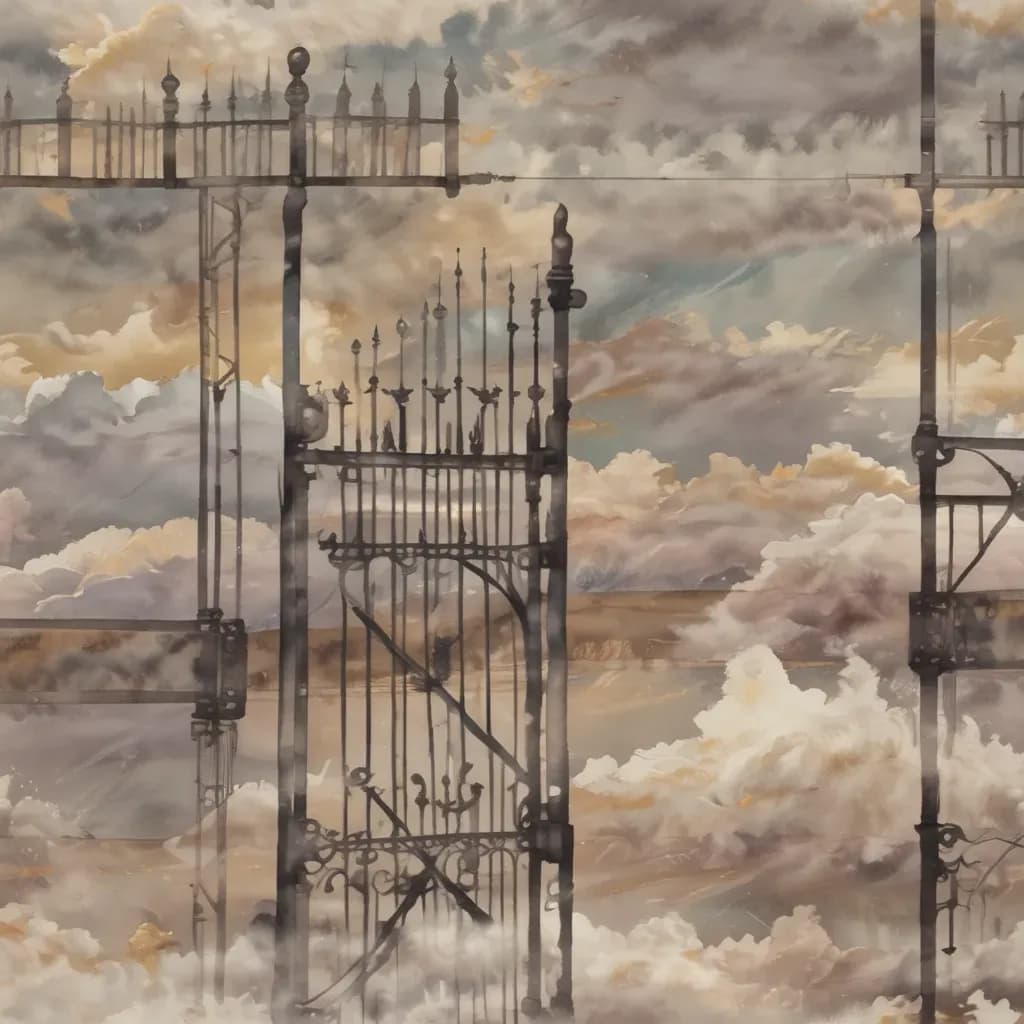
What emerges is a vow rather than a lament. The narrator pictures himself arriving at the gates of heaven and simply refusing to enter without the person he loves. The song operates on the logic that an eternity without this specific person is not worth entering. It reframes grief in reverse: not mourning someone already lost, but confronting the unbearable image of arrival without them, and responding with a love stubborn enough to wait.
A Songwriter Shaped by Loss
Alex Warren (born Alexander Warren Hughes, September 18, 2000, in Carlsbad, California) began writing songs about death when he was thirteen years old. His father, who died of kidney cancer when Warren was nine, had introduced him to Coldplay, Linkin Park, and Train, and had given him his first Fender guitar. Those musical foundations and the void left by his father's death became the twin engines of Warren's songwriting from the beginning.[1] His debut single, "One More I Love You," began as a letter to his father written over the years following his death -- a song about speaking to someone who can no longer hear you.
The biography that shaped this song extends beyond that first loss. Warren's mother struggled with alcoholism and effectively forced him from the family home at eighteen. He spent a period sleeping in friends' cars.[2] It was during this period that he met Kouvr Annon through Snapchat. She relocated from Hawaii to be with him, and their relationship became the subject of several songs as Warren found, for the first time, something that felt like stability. His mother died in late 2021, just months after the two of them had begun a tentative reconciliation -- roughly three months of sobriety, of cautious hope, before it ended.[3] Warren has described grieving not only the person but the future that vanished with her, and the closure he never received.
By the time "Heaven Without You" was written, Warren had been living with compounding loss for most of his life, and had finally found something worth protecting. He married Annon on June 22, 2024, in Escondido, California.[1] Chapter 1 of "You'll Be Alright, Kid" followed on September 27, 2024, three months into that marriage.[4] The song belongs entirely to that post-wedding emotional register: a man who has finally arrived somewhere good, and who now understands exactly what he stands to lose.
Grief as the Shadow of Love
The central premise of "Heaven Without You" belongs to a long tradition of devotional love poetry: the afterlife as an extension of earthly love rather than a break from it. But Warren situates this idea within the specific emotional grammar he has built across his career. Grief, in his work, is not something that arrives after loss. It coexists with love from the moment love becomes serious.
The song opens with a scene of simple domestic contentment. In Warren's emotional vocabulary, such moments carry extraordinary weight precisely because he knows how quickly they can vanish. His father did not survive to see his wedding. His mother's reconciliation lasted three months. The ordinary intimacies of a shared morning are not background noise in Warren's world; they are the substance of what gets taken away. By beginning the song in that ordinary space, Warren signals that he already understands the stakes.
The turn toward mortality is not a pivot so much as a continuation. Anyone who has loved someone after surviving significant loss knows they are always seeing that person through a frame of possible absence. The narrator's decision to imagine his own death first -- to think through what he would do, how he would wait, what promises he would carry -- is a form of care rather than morbidity. It is the mental labor of someone who takes love seriously enough to rehearse for the worst.
The heaven imagery is where Warren's Christian faith enters the song quietly and without insistence. Warren has spoken about his beliefs as a stabilizing force, and has noted his intention to frame that faith accessibly rather than devotionally.[2] In "Heaven Without You," heaven is not a theological argument. It is a poetic space -- a destination that has meaning only in relation to the specific person being addressed. The narrator's willingness to stand outside, to wait, to refuse entry until she arrives, transforms heaven from a reward into a meeting point. The afterlife becomes irrelevant without the person who makes it worth reaching.
This theme connects to broader concerns running through Warren's debut record. "Save You a Seat," another Chapter 1 track, confronts the grief of celebrating milestones without the parents who died before they could witness them. Warren described writing that song in the weeks before his wedding, reckoning with what it meant to take such a significant step while the two people most formative to his life were absent.[5] "Heaven Without You" approaches this territory from the opposite direction. Rather than looking backward at those who were not there, it looks forward, asserting that love at its deepest can bridge the gap in both directions. He will not leave anyone behind. He will wait.
Where the Song Sits in Its Moment
"Heaven Without You" arrives at a moment when emotionally direct, grief-inflected pop has found significant commercial traction. Warren has been placed by some critics within a post-Hozier wave of male singer-songwriters who engage seriously with loss and spiritual yearning.[6] Pitchfork gave Chapter 1 a 5.0 and described its sound as occupying familiar sad-pop territory; Rolling Stone awarded three stars and noted the record's "2010-esque" qualities. Neither review fully reckoned with the biographical stakes underwriting the emotional architecture.
What Warren brings that assessments focused on sonic familiarity tend to underestimate is the specificity of the source material. His fan connection is not primarily aesthetic; it is communal. He has spoken about listeners who recognized their own losses in his songs -- people who had lost parents, who would not have them at their weddings, who needed a song that named the empty seat.[5] "Heaven Without You" extends that offer to a slightly different audience: people who are currently in the relationships they most fear losing.
The song's resonance among newlyweds and long-term partners reflects something genuine about how people use music to say what they cannot say plainly. A direct declaration of this kind of devotion can feel too large for ordinary conversation. Warren makes it singable, and therefore, in some sense, speakable. That function -- allowing listeners to inhabit a feeling that resists direct expression -- is what separates popular music's most durable love songs from merely pretty ones.[7]
Other Possible Readings
The most emotionally resonant alternative reading is that the narrator is not solely addressing his living wife. Given Warren's biography, the vow to wait could equally be understood as a message to his father and his mother -- an assertion that the love cut short by early death is not finished, that he will find them on the other side, that wherever they are, they are already waiting.
This reading allows the song to function simultaneously as a marriage vow and a reunion fantasy. The heaven Warren refuses to enter without his wife is also, in this frame, the heaven where his father has been for over a decade and his mother for several years. The song becomes a statement about the persistence of love across every kind of absence -- not just the absence that comes at the end of a long life shared together, but the early, unfinished kinds as well.
A more secular interpretation removes the theological scaffolding entirely. In this reading, heaven is simply a name for completeness -- for whatever state of existence is supposed to follow this one, whether or not it involves anything supernatural. The narrator's refusal to enter without her becomes a statement about identity: she is so thoroughly his definition of home that any existence without her is not worth inhabiting, regardless of what it is called. All three readings coexist without canceling each other out, which is part of what gives the song its unusual durability.
A Vow in Both Directions
In a catalog built almost entirely on reckoning with absence, "Heaven Without You" stands as Alex Warren's most fully resolved emotional statement. The songs before it tend to dwell in aftermath: absence as a wound that has not closed, love as something that survived a loss but bears the marks of it. This song looks at the person who is still here and asks what it would mean to love someone so completely that even death becomes a logistics problem rather than an ending.
Warren has converted more than two decades of accumulated loss into a form of emotional intelligence about impermanence. What he offers in "Heaven Without You" is not a denial of death but a renegotiation of its terms. He will not go in without her. He will stand at the gate and wait. For a songwriter who began making music at thirteen as a way of speaking to a father who could no longer hear him, that refusal to accept finality is not sentimentality. It is, recognizably, the same thing he has always been doing: finding language for love that the ordinary channels cannot hold.
References
- Alex Warren - Wikipedia — Primary biographical reference for Warren's life, career, and personal history
- Get To Know Alex Warren - Grammy.com — Career overview including Warren's statements about faith, homelessness, and the album
- Alex Warren on Turning Pain into Purpose - Grief.com — Warren on his mother's death, the brief reconciliation, and grieving an incomplete future
- You'll Be Alright, Kid - Wikipedia — Album overview including Chapter 1 release date and tracklist context
- Q+A: Alex Warren - Variance Magazine — Warren on connecting with fans through shared grief and the emotional function of his music
- Alex Warren Rises to Stardom - Melodic Magazine — Critical reception of Chapter 1 and analysis of Warren's place in contemporary pop
- Heaven Without You Lyrics Meaning - The Musical Safari — Song-specific analysis of themes and lyrical content