Hoochie Coochie Man
Some songs ask to be believed. This one asks to be feared a little, and then applauded. Over a lurching, stop-and-start guitar figure, a man announces that his arrival was foretold, that the universe arranged itself around him before he drew breath, and that everyone in the room should take note. It is the most gloriously immodest boast in the blues, and it is delivered with a perfectly straight face.
"Hoochie Coochie Man" works because the boast is so large that it loops back around into theater. Listeners have been arguing for seventy years about whether Muddy Waters means it, and the best answer is that he does and he doesn't, at the same time. That double vision is where the song lives.
A song handed across a nightclub
The song was written by Willie Dixon, the bassist, arranger and talent scout who had joined Chess Records in 1948[1]. Dixon had grown up in Vicksburg, Mississippi, and had boxed as a heavyweight before settling into music[1]. By late 1953 he had already tested the territory with an earlier Waters single called "Mad Love," which some writers treat as a rehearsal for this one[2].
The story of how the song reached Muddy is told in several versions. Leonard Chess reportedly told Dixon that if Muddy liked it, he should give it to him[2]. Dixon said he showed it to Waters during a break at a Chicago club, and that Waters had it ready to play that night. Guitarist Jimmy Rogers remembered it differently, as a piece that took shape over time, with Dixon humming it and writing out words while Muddy reworked them and tried licks on stage[2].
The recording session took place in Chicago on January 7, 1954[1]. The band was the classic Waters lineup: Rogers on second guitar, Little Walter on harmonica, Otis Spann on piano, a drummer, and Dixon himself on upright bass, which was his first time in that role on a Waters session[2]. Two takes were made, and they differ in length by only a few seconds[2]. The band knew exactly what it was doing.
The sound of a swagger
Before any words arrive, the music has made its argument. The song is a sixteen-bar blues rather than the usual twelve, and Dixon explained that he stretched the form because amplified instruments sustain longer and needed room to breathe[2]. The first eight bars are played in stop-time, with the band hitting a short riff and then dropping out, leaving space for the voice to answer. The last eight settle into a rolling shuffle[2].
That stop-time structure is the song's secret engine. Every pause is a held breath, and every voice entry is a man stepping into the silence to claim it. Little Walter's overdriven harmonica doubles the guitar line with a reedy, saxophone-like bite[2], so the riff sounds both rural and electric, a Delta figure that has been plugged into the city.
It was a hit as well as a statement. The record reached number three on the Billboard R&B jukebox chart and stayed on the charts for thirteen weeks, Waters' longest run up to that point[2]. It became his best-known American hit and marked Dixon as a songwriter to watch[1].
Prophecy, power, and the folk magic of the South
The lyrics are built as a kind of three-part biography: a time before the narrator was born, the present, and a promised future. In the first section, signs and omens gather around the birth of someone destined for greatness. In the second, the narrator is a full-grown figure of confidence and charm. In the third, the prophecy points forward, and the number seven, long associated with luck in Southern folklore, does a lot of quiet work[2].
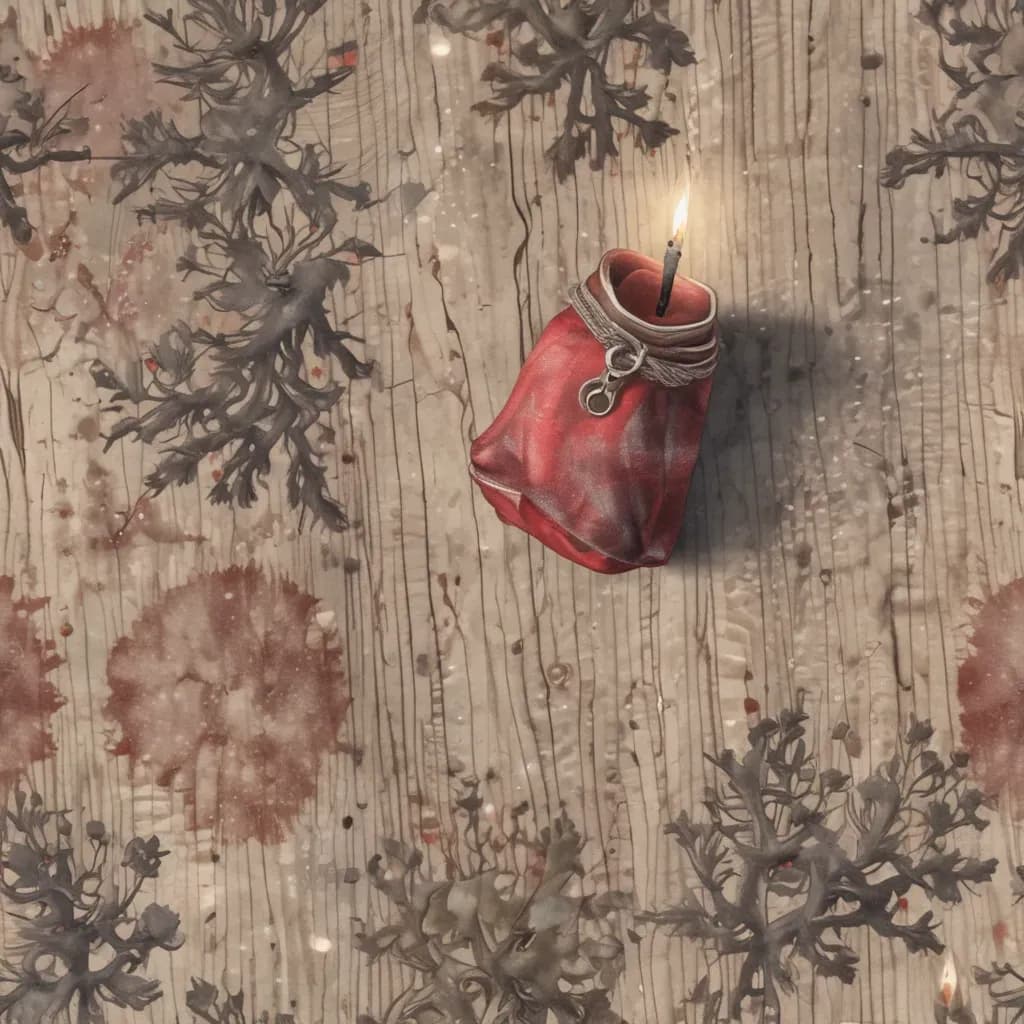
The imagery comes from hoodoo, the African American folk magic tradition of the South. The narrator carries a set of charms, including a root, a small animal bone and a mojo bag, that were once taken seriously as practical tools for luck and love[1][2]. Waters himself explained the choice in plain terms, saying that the mojo material belonged in these songs because it reflected what Black people really believed at the time[2].
Waters had been working this vein for years. His earlier recordings "Gypsy Woman" and "Louisiana Blues" already trafficked in fortune-tellers and charms[2]. What Dixon added was scale. The older songs hint at mystical power. This one claims it outright.
Sex, status, and the audience's own appetite
The phrase in the title has a tangled history. "Hoochie coochie" began as the name of a risque dance popularized around the 1890s and tied to the era of the Chicago World's Fair, and it also drifted into African American slang for drinking and sex[1][2]. Marshall Chess later boiled the song's appeal down to three words: it was about sex[2].
There is also a social dimension. The critic Ted Gioia has read the song's sexual bravado as a challenge to the anxieties of the segregation era, when a confident Black man was treated as a threat in the white imagination[2]. Heard that way, the boast is more than a pose. It is a claim to a kind of power that the surrounding world worked hard to deny.
Dixon had his own account of what he was doing. He said the idea of the seer came from history and the Bible, and that the words expressed the audience's own unfulfilled urge to brag[2]. That is a sharp observation. The song works as a vehicle because the listener gets to be the hero too. A room full of working people, many of them recent migrants from the South, could sing along to a verse about being destined for greatness and feel the weight of their own lives lift for a few minutes.
Is it a joke?
Here the alternative readings come in. Critics have called the lyrics a self-mythologizing testament[2], and the musicologist Robert Palmer heard in them a flamboyant, macho posturing that Dixon supplied and Waters embodied[2]. Waters, for his part, later said the words were meant to be funny[2].
Both can be true. The blues has a long tradition of the tall tale and the playful brag, and Waters delivered the song with a gravity so complete that the humor only shows at the edges. The comedy is in the scale of the claim. The seriousness is in the voice that makes it. A performer who winked would have ruined it, and a performer who believed every word without any irony would have been tiresome. Waters occupies the narrow space between, and that is a large part of why the record has outlasted so many more earnest ones.
The riff that escaped
The song's musical figure did not stay put. Bo Diddley reshaped it into the four-note lick of "I'm a Man" in 1955, and Waters answered within months with "Mannish Boy." He later recalled that Diddley had been tracking him with his own beat[2]. Songwriters Jerry Leiber and Mike Stoller borrowed the riff for "Riot in Cell Block No. 9"[1], and it turned up in a film score as well[2].
The covers read like a map of postwar popular music: Alexis Korner's Blues Incorporated, Manfred Mann, the Graham Bond Organisation, Jimi Hendrix on the BBC, the Allman Brothers Band, Buddy Guy, Motorhead, and Eric Clapton[1]. Hip-hop producers sampled it as well[1]. Waters himself kept returning to the piece, re-recording it for a psychedelic experiment in 1968, an unplugged session in 1972, and a Grammy-winning album in 1977[2]. It sits in the Library of Congress National Recording Registry, entered in 2004[2].
Where it sits on the album
"The Best of Muddy Waters" came out on Chess in April 1958 and was Waters' first album, as well as only the third LP the label had issued[3]. It was a compilation of twelve singles recorded between 1948 and 1954, most of which had been R&B hits[3]. Studs Terkel wrote the liner notes[3]. The Blues Foundation later inducted it as a Classic of Blues Recording in 1983[3].
On that record the song appears under the shortened title "Hoochie Coochie," and it is a useful pivot. The earlier tracks, like "I Can't Be Satisfied" and "Rollin' Stone," come from a man who sounds like a Delta traveler adjusting to Chicago. By 1954 the narrator has become a presence rather than a wanderer. The album, heard in order, tells a small story of a Mississippi sharecropper's son turning into a bandleader with an arsenal of swagger.
The man behind the boast
That trajectory was real. Muddy Waters was born McKinley Morganfield, in either 1913 or 1915 depending on whom you ask, in Mississippi[4][5]. He was raised by his grandmother on the Stovall Plantation near Clarksdale and got his nickname from playing in muddy creek water as a child[4][5]. He bought a guitar as a teenager and studied Son House and Robert Johnson[4].
In 1941, folklorist Alan Lomax recorded him for the Library of Congress. Waters later described the thrill of hearing his own voice played back and deciding he could do this for a living[4]. In 1943 he moved to Chicago, and the next year he bought an electric guitar, reasoning that no one could hear an acoustic one in the city[4]. By the time he reached Chess he had spent a decade turning a rural idiom into something loud enough for the clubs of the South Side.
Seen against that life, the song's boast about destiny lands differently. A man who left a plantation and became the center of a new sound had every reason to feel that fate had been paying attention.
Why it still works
Fashions in blues have come and gone, but this piece keeps its hold because it is both simple and strange. The riff can be taught in a minute. The persona it carries cannot be imitated by just anyone. Many have tried, and the good ones, like Hendrix, found a way to push the mythology further rather than merely repeat it[1].
Underneath the swagger there is something tender. The song is a fantasy of being seen, of being the person the world was waiting for. For listeners who spent most of their days unseen, that fantasy was a form of dignity. For everyone since, it remains a pleasure to hear a man claim the room, and a sly reminder that every claim of greatness is also a story we tell ourselves. Waters tells it better than anyone.
References
Keep reading
More Blues
- Gloomy Sunday Billie Holiday
- Dust My Broom Elmore James
- Got My Mojo Working Muddy Waters
- Boom Boom John Lee Hooker
- Smokestack Lightning Howlin' Wolf
- I'd Rather Go Blind Etta James