I Amnesia
The title is the first clue. Not "I Have Amnesia" or "My Amnesia" but simply "I Amnesia" -- subject and condition fused into one. Grammar bends to psychological reality, and in that grammatical fracture, the song announces its whole project: the dissolution of a self into its own disorder.
This is Gnarls Barkley doing what they have always done best: dressing existential dread in irresistible clothes. "I Amnesia" is one of the standout tracks on "Atlanta," the duo's third and final studio album released on March 6, 2026, and it arrives like a companion piece to their most famous creation. Where "Crazy" asked the world whether feeling mad might actually be a form of clarity, "I Amnesia" explores the opposite: what happens when the self simply stops keeping records.[1]
Coming Home After Eighteen Years
By the time "Atlanta" arrived, Gnarls Barkley had been dormant for nearly two decades. CeeLo Green (born Thomas DeCarlo Callaway in Atlanta, Georgia) and Danger Mouse (Brian Joseph Burton of White Plains, New York) had last released music together with "The Odd Couple" in 2008, before their creative partnership went quiet.[2]
Those eighteen years were not quiet for either man. CeeLo found massive commercial success with "The Lady Killer" (2010) and its anthemic lead single, served as a coach on NBC's "The Voice," and weathered serious personal controversies that dented his public standing. Danger Mouse became one of the most acclaimed producers of his generation, working with Beck, The Black Keys, Adele, U2, Red Hot Chili Peppers, and ASAP Rocky, collecting six Grammy wins along the way.[2]
When the duo finally announced their return in February 2026, they did so with a pointed declaration: "Atlanta" would also be their last album. The frame was immediately elegiac. They described the project as a love letter to the city that raised them, to the younger versions of themselves who first found each other there, and to the partnership itself.[3] CeeLo told the Atlanta Journal-Constitution that completing the album left him feeling "relieved," and described Gnarls Barkley's animating spirit as "always self-discovery. The sweet, the sad, and the strange."[3]
"I Amnesia" fits perfectly into this context. This is a song written by two artists who have had years to accumulate loss, doubt, and the particular anxiety of wondering whether the work they leave behind will be remembered.
Becoming the Condition
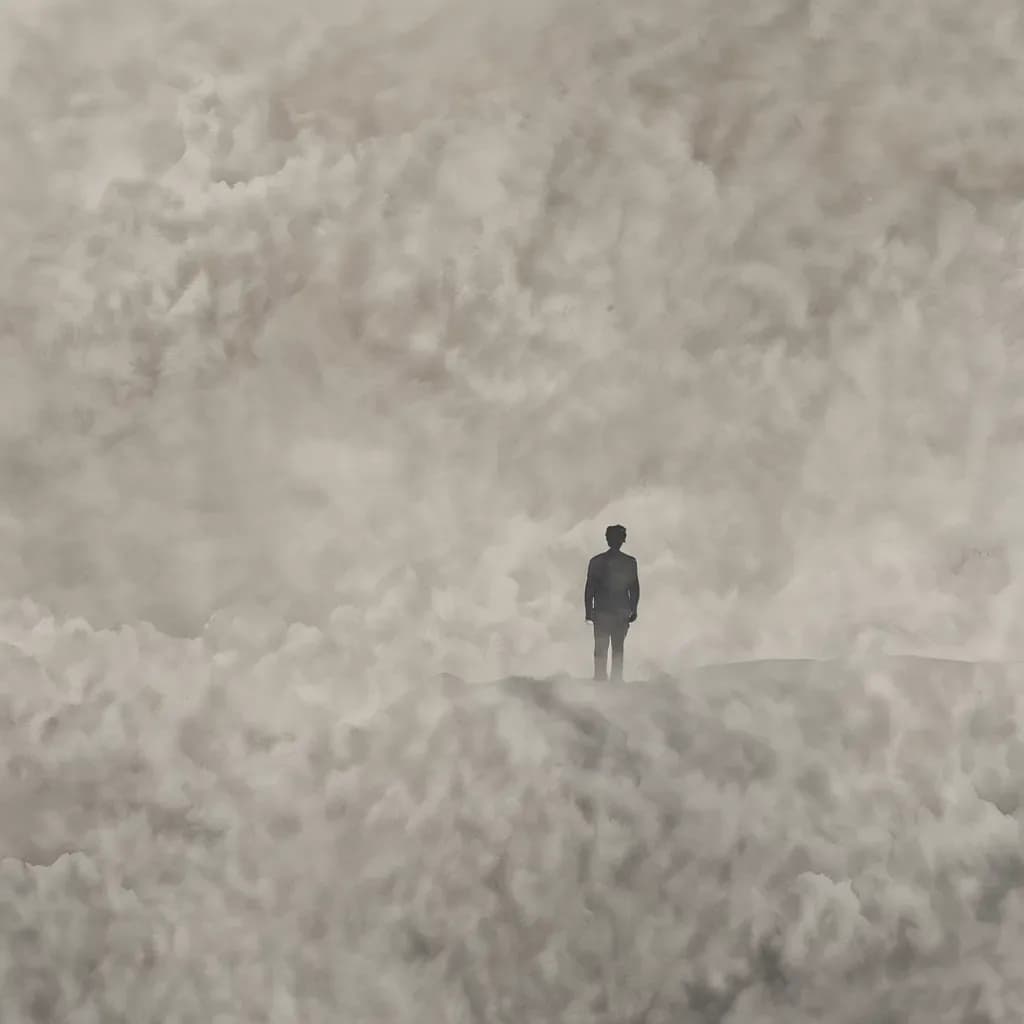
At the heart of the song is the title's grammatical trick, and it is no accident. By collapsing the narrator's "I" directly into the word "amnesia," the lyric refuses to let the condition remain an outside affliction. This is not someone who suffers from amnesia. This is someone who has become it.[1]
The opening stacks crisis upon crisis, pairing the image of a breakdown with a seizure, yoking psychological fragmentation to physical collapse. The effect is one of total systemic failure, mind and body refusing to function together. But the song refuses to dwell in pure suffering.[1] What makes it strange and affecting is the seductive quality layered into the breakdown. The lyrics describe a state of suspension in blankness that has come to feel like a companion, a comfort the narrator cannot bring themselves to leave.
This is dissociation described not with clinical detachment but with intimacy. The void has become a friend. That is a more honest account of how depression and dissociation actually work than most pop songs dare to offer. It is comfortable, until it isn't.
The Fear of Being Forgotten
The emotional pivot of the song arrives in a question the narrator asks while lying immobile, suspended between something like living and something like death. The question is essentially this: if I survived this, would anyone even remember I existed?[1]
That question transforms the song from a meditation on personal mental crisis into something larger. Legacy, relevance, erasure -- these are not just the preoccupations of someone in a depressive episode. They are the preoccupations of aging artists, of communities that have been overlooked, of anyone who suspects that their presence in the world might go unnoticed.
On a final album explicitly framed as a farewell, this question carries additional weight. Gnarls Barkley is, in some sense, choosing to remember itself through "Atlanta" before it disappears. "I Amnesia" voices the anxiety underneath that act of remembering: what if even the remembering fails? What if the whole archive just blanks?
Gospel Light and Refusing Easy Resolution
The production reinforces the thematic arc in ways that feel completely intentional. Danger Mouse builds the track on a churchy foundation, with funk and soul layered over a gospel-inflected rhythm structure.[4] Critics noted the song feels almost spiritual, a description that makes sense: the language of the track borrows from Black church tradition without being devotional in any conventional sense.[1]
The narrator's eventual awakening is triggered by light, specifically sunlight breaking through. In gospel tradition, light carries obvious spiritual freight: it signals resurrection, the return from darkness, the divine arriving to restore the fallen. The song uses that imagery, but obliquely. The narrator does not receive grace. They simply wake up because it got bright.
And crucially, the resolution the song offers is not recovery. It is persistence in the face of contradiction. The narrator declares a belief that coexists with breakdown, with seizure, with the void that has become a friend. This is not the triumphant testimony of someone who was healed. It is the quieter declaration of someone who is still here, still a believer, even though nothing has necessarily improved.[1]
Continuing a Conversation Started With "Crazy"
Gnarls Barkley built their entire reputation on the idea that mental and emotional suffering could be rendered as something other than darkness. "Crazy" (2006) was their definitive statement: a song about the edges of sanity delivered as something you could dance to, something that felt like liberation even when the lyrics described a kind of collapse.[5] It became, almost accidentally, one of the most significant pop songs about mental experience of its era.
"I Amnesia" is the same conversation, twenty years later. Where "Crazy" had the defiant energy of a young man discovering that his otherness might actually be a form of freedom, "I Amnesia" has the exhausted honesty of someone who has lived long enough to know the loops don't necessarily end. The breakdown comes back. The void returns. You wake up again. You keep being a believer.
This is not a step backward in the conversation. It is a deepening of it.[6]
Alternative Readings: Addiction, Grief, and the Creative Block
The deliberate vagueness of the song's central crisis opens it to multiple readings. The comfortable blankness that has become a companion can be interpreted as depression, certainly. But it can equally be read as addiction, in which the substance or behavior that numbs pain gradually becomes more appealing than feeling anything at all.
CeeLo's personal history, which includes a 2014 no-contest plea on a drug-related charge, makes this reading something more than abstract speculation. Without claiming to know the song's biographical source, there is room to hear in its imagery of comfortable blankness and subsequent awakening a meditation on the cycle of self-medication and return.[2]
A third reading focuses on the eighteen-year gap between Gnarls Barkley albums. The amnesia in this interpretation is creative, not medical. The partnership went quiet. The duo forgot, in some sense, to be Gnarls Barkley. The void was comfortable enough. And then, eventually, light: an awakening back to the collaboration that made them both more interesting than they are separately.[7]
All three readings coexist. The song, like the best Gnarls Barkley work, holds them without arbitrating between them.
A Farewell That Refuses to Say Goodbye
"I Amnesia" lands differently knowing it appears on a final album. Most farewell records try to tie things up, to offer resolution or gratitude or some sense of earned completion. "Atlanta" mostly refuses that impulse, and "I Amnesia" is the most honest refusal on the record.[4]
Here is what it says: breakdown and belief live in the same body. The void is seductive and the sunlight still comes. Nobody may remember, and you keep being a believer anyway. This is not resolution. This is just what continuing to exist actually feels like.
For a duo making their last record together, after twenty years apart and a career defined by the strange beauty of psychological extremity, that honesty is exactly right. "I Amnesia" does not ask to be remembered. It just insists on being here, which is something different, and something more.[3]
References
- I Amnesia Gnarls Barkley Deep Lyric Meaning — In-depth analysis of the song's lyrical themes, imagery, and emotional arc
- Gnarls Barkley - Wikipedia — Duo biography, formation history, hiatus, and career milestones
- Atlanta native CeeLo Green dishes on Gnarls Barkley's third and final album — CeeLo Green interview discussing the album's spirit and his feelings upon completion
- Gnarls Barkley Craft One Last Gospel-Tinted Sonic Carnival on Third & Final LP 'Atlanta' — Glide Magazine review noting gospel production and the album's mesmerizing quality
- How Gnarls Barkley Went Crazy — Atlanta Magazine account of the duo's origin, the cultural significance of 'Crazy,' and their Atlanta roots
- Gnarls Barkley :: Atlanta — RapReviews assessment discussing the duo's legacy and how the album deepens earlier themes
- Gnarls Barkley Returns With Quiet, Uneven Farewell on 'Atlanta' — Riff Magazine review offering critical perspective on the album's reception