I Could Get Used To This
The title of this song is a small act of surrender. It does not announce that the narrator has found paradise, or that she deserves it, or that she has earned it. It says she could get used to it, which is the language of someone testing the water, noticing that something good is happening and quietly wondering whether she is allowed to relax into it. That tentative, delighted, slightly disbelieving feeling is the territory Jessie Ware stakes out in the first real statement of her sixth album.
It is also a song with a very particular job to do, and understanding that job is the best way into its meaning.
An invitation, not a confession
Ware released the track on 23 January 2026, her first new music in almost three years, since the album That! Feels Good![1]. She did not frame it as a diary entry. In the press statement that accompanied it, she called it an invitation into the world of the album, a scene-setting piece meant to paint a place filled with romance, real love, performance, celebration and pleasure, all of it in a garden full of gods and goddesses[1].
That phrasing matters. The song is less a single story than a doorway. When a listener hears it, they are not being told about one night or one person. They are being walked into a room where desire and devotion are treated as grand, theatrical, and worth dressing up for.
On the finished album, the track sits second in a thirteen-song sequence, right after a short prelude and right before the title track[5]. That placement makes it function like the moment a curtain rises. The prelude clears its throat, and then this song steps onto the stage.
Where Ware was when she made it
Superbloom is the sixth album from a singer who has spent more than a decade moving from cool, restrained art-pop toward unapologetic dance music. After 2020's What's Your Pleasure? and 2023's That! Feels Good!, the new record has been described as the third chapter of a trilogy[4]. Ware herself has said she has been trying out a fantasy world and a taste for escapism since What's Your Pleasure?, playing with dress-up, glamour and fun even though she does not consider herself a by-the-book pop star[3].
But she also said she wanted to dig deeper this time, connecting with real relationships and appreciating the love she has, as well as the fears she has of losing it[3]. That second half of the quote is the key to the whole album, and it colours this opening single more than its shimmering surface suggests.
Ware has been open about the rest of her life as well. She has been married since 2014 to her childhood friend Sam Burrows, and the couple have three children[6]. She co-hosts the hit food podcast Table Manners with her mother, and she has described wanting to be able to speak about those small domestic moments with her children while still being a sensual, confident pop star, because it does not have to be one or the other[4]. A woman in her forties, in a long relationship, with a busy household, singing about being swept off her feet is not naive. It is a deliberate choice about what pleasure looks like when it has to compete with school runs and real responsibility.
Pleasure as something you learn to accept
The most interesting reading of the song starts with the verb in its title. To get used to something implies that it was not always normal, that there was a time before it when this kind of joy was not part of the routine. The phrase carries a quiet history inside it.
Many pop songs about love treat the feeling as a lightning strike. This one treats it as a process of acclimatisation. The narrator is encountering tenderness, attention and abundance, and she is allowing herself to imagine how it would feel if it were simply her life. There is a faint note of wonder in that, and a faint note of caution too.
This is where the song connects to Ware's remarks about empowerment. In conversation about the album, she has spoken of taking back ownership of her sexual identity and her wants and needs[4]. Read against that, the song's willingness to say yes to pleasure, to say it openly and without apology, becomes a small act of self-possession. Wanting more, and admitting you could grow accustomed to receiving it, is its own kind of confidence.
The sound of arrival
You do not need to follow the words closely to feel what the song is doing, because the arrangement tells most of the story. Critics have reached for similar language when describing it. Stereogum called it a swirly, theatrical soul-dance track with lush strings and sighing backing vocals, and said it sounded like something written for 1970s Broadway[1]. The album's reference page describes it as lush disco-R&B, funky and drenched in strings[5].
The press materials went further, saying the song channels the grandeur of classic diva pop and takes subtle inspiration from Grace Jones, Whitney Houston and Barbra Streisand[2]. Those three names are a useful map. Jones brings cool, sculptural glamour. Houston brings emotional scale and a sense that the chorus is a destination. Streisand brings the stage, the belief that a song can be a full dramatic production.
And then there is the key change. Ware pointed out, with obvious glee, that this was the first key change she had ever done, as far as she could remember[1]. A key change is pop's oldest trick for communicating lift. The music climbs, the ground moves, and the listener feels an old, almost childlike thrill. For a singer who built her reputation on poise, choosing to include one is itself a statement about the song's meaning. The narrator is allowing herself to be carried up higher than she expected, and the song lets the audience feel that rise physically.
A garden full of gods and goddesses
The garden is the album's governing image, and it is worth taking seriously. A garden is cultivated, planted, tended and made beautiful on purpose. It is nature with a design behind it. That is a good metaphor for the kind of love Ware is describing, which is not a chance meeting on a dancefloor but a thing that gets watered and looked after.
The mythological language in her statement, the gods and goddesses, adds a different layer. It lifts ordinary affection into the realm of the grand and the ritual. Surrendering to romance becomes something close to a ceremony.
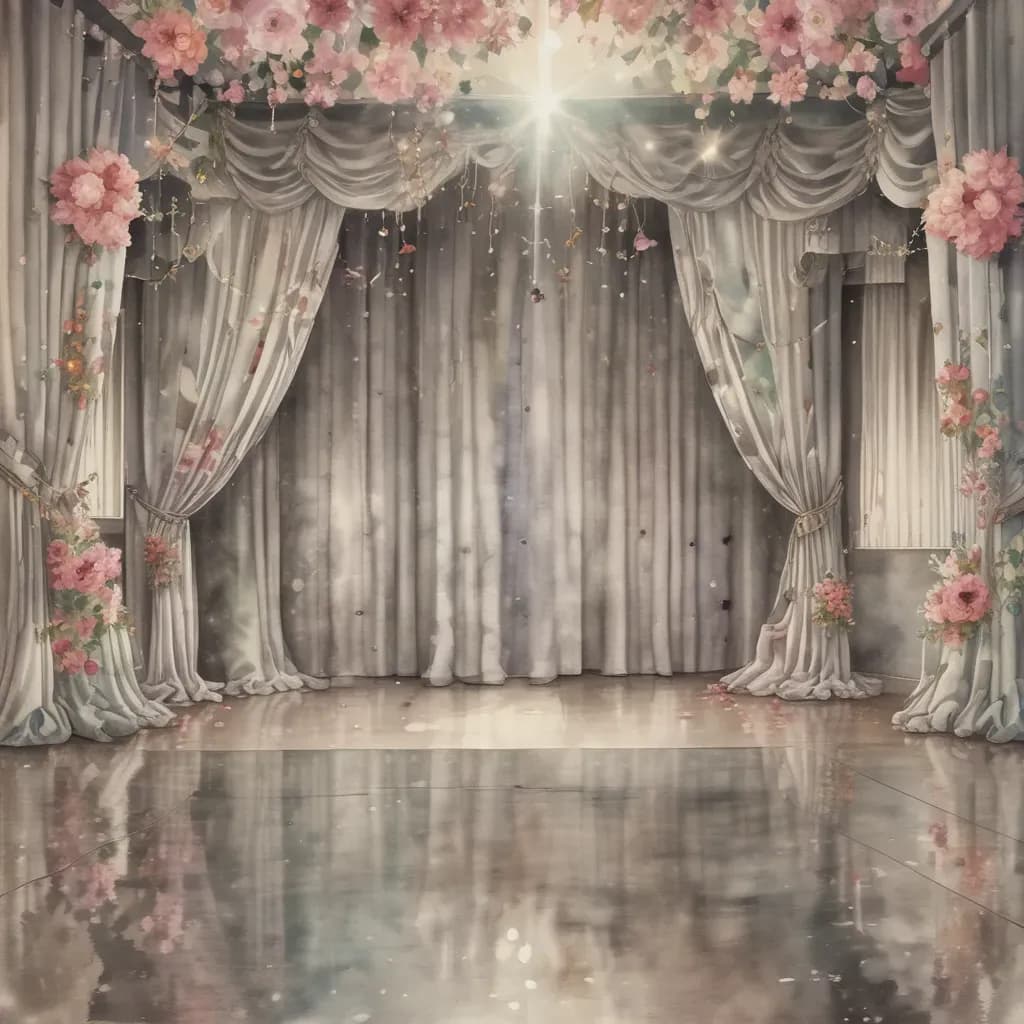
The video, directed by the duo Fa & Fon, leans into exactly this. Stereogum described it as basically a fantastical dance sequence[1], and DIY said it turns Ware into an IRL goddess[3]. The song is therefore not shy about performance. Ware has long loved costume and spectacle, and here the artifice is not a mask that hides emotion. It is the frame that makes emotion large enough to be seen from the back of a theatre.
On the album, she has even talked about a glamorous alter ego called Shirley Bloom, and about the books that inspired the record[4]. The character gives her permission to be bigger than everyday life, in the way that a stage costume gives a nervous performer permission to commit completely.
Alternative readings
Because the song works as a scene-setter, there is room for more than one interpretation.
One reading is purely celebratory. In this version, the song is a joyous toast to a relationship or a moment that feels like a gift, and the key change is simply what happiness sounds like. Nothing needs to be hidden beneath it.
A second reading is more anxious, and it draws on Ware's own description of the album as an effort to appreciate love while confronting the fear of losing it[3]. Seen this way, the title sounds slightly different. To say you could get used to something is also to admit how much you would miss it. The grandeur of the arrangement then reads as a kind of defiance, a determination to enjoy the glow while it lasts. That tension between abundance and fragility is what stops the song from feeling like pure escapism.
A third reading is more about the artist than the narrator. Following a trilogy of dance records, the song can be heard as Ware reassuring her audience that the party is still on while quietly inviting them somewhere with more emotional depth. DIY's album announcement pointed out that she had A&R'd the record herself, her third time doing so[3], which suggests a high degree of control over exactly how this opening statement was framed. Some critics have since said that the album leans on the sound of her earlier records, while others have praised it as her most evocative yet. Whichever view you take, this track is the clearest example of the strategy at work.
Why it resonates
The song arrived at a moment when a lot of pop was either ironic or exhausted, and its sincerity feels almost radical. It asks for nothing except a willingness to enjoy. There is no cynicism to decode.
It also speaks to a particular kind of listener: people who have stopped expecting to be treated to something extravagant, whether by a partner, a friend, a night out, or their own imagination. For them, the title is a very relatable fantasy. It is the idea that if good things kept arriving, you might adapt faster than you think.
The record was a commercial success as well. Superbloom debuted at number two on the UK Albums Chart, the highest peak of Ware's career there, and its aggregate critical score sat at 76 out of 100 on Metacritic[5]. For a song designed to open a door, it opened a wide one.
Conclusion
"I Could Get Used To This" is a short piece of theatre that works on several levels at once. On the surface it is a lush, strings-heavy disco-soul number with a thrilling modulation. Underneath, it is a statement of intent for an album about pleasure, glamour, and the fragile, precious business of holding on to love.
Its real subject is permission. Ware gives herself permission to play, to dress up, to be sensual and maternal and glamorous in the same breath, and she gives the listener the same permission. The title, with its conditional and its hint of disbelief, keeps the whole thing human. She does not claim that happiness is permanent. She only suggests that it would be easy to become used to it, and that this may be reason enough to say yes.
References
Keep reading
More Disco
- Best Heartbreak Take That
- You're a Superstar Take That
- Middle Of The Night Jessie Ware
- Aperture (Extended) Harry Styles
- Ride Jessie Ware
- Crisco Miranda Lambert