I'd Rather Sleep
Most debut mixtapes announce themselves loudly. Intro Bonito does the opposite: it closes quietly. The final track, running under two minutes, strips away the cheerful energy that had carried fifteen songs and arrives at something unsettled. A narrator who would simply rather not be awake. That preference, stated plainly and without apparent irony, hits harder coming at the end of an album so full of brightness and play. By the time "I'd Rather Sleep" arrives, the listener realizes all that bubblegum was always sitting next to something more complicated.
A Record Built from Toy Keys and Genuine Feeling
Kero Kero Bonito formed in London in 2011 under circumstances that might have produced a novelty act. Producers Gus Lobban and Jamie Bulled, friends since their teenage years in Bromley, wanted a bilingual vocalist for a project drawing on J-pop and video game music. They posted an advertisement on MixB, an online forum for Japanese expatriates living in Britain, and received a response from Sarah Midori Perry, a visual artist of mixed Japanese and British heritage who had spent the first thirteen years of her life in Otaru, Japan before relocating to the UK[1]. Perry had no formal singing training; she just wanted to try something new. The three clicked immediately.
The result was a debut mixtape assembled largely on a Casio SA-46 mini-keyboard, a toy instrument that produced sounds usually associated with children's electronics and video game menus[2]. Intro Bonito arrived on Bandcamp and SoundCloud on September 30, 2013, a self-funded, self-distributed record that asked nothing from the music industry and received very little in return at first.
What it did receive, eventually, was recognition as a founding document of hyperpop. Gorilla vs. Bear listed it as the 46th best album of the 2010s[3], and a 2023 Polyvinyl Records reissue brought the record to a new audience, charting at #42 on Billboard's Top Album Sales nearly a decade after its initial release[4]. Sputnikmusic praised the record's wider range of topics, zestier lyrics, and more Nintendo-oriented sound[5]. The music was deceptively simple, and the simplicity was the point.
"I'd Rather Sleep" arrives at the very end of this record, as the final track. It is the shortest song on the album.
The World Stopped Talking
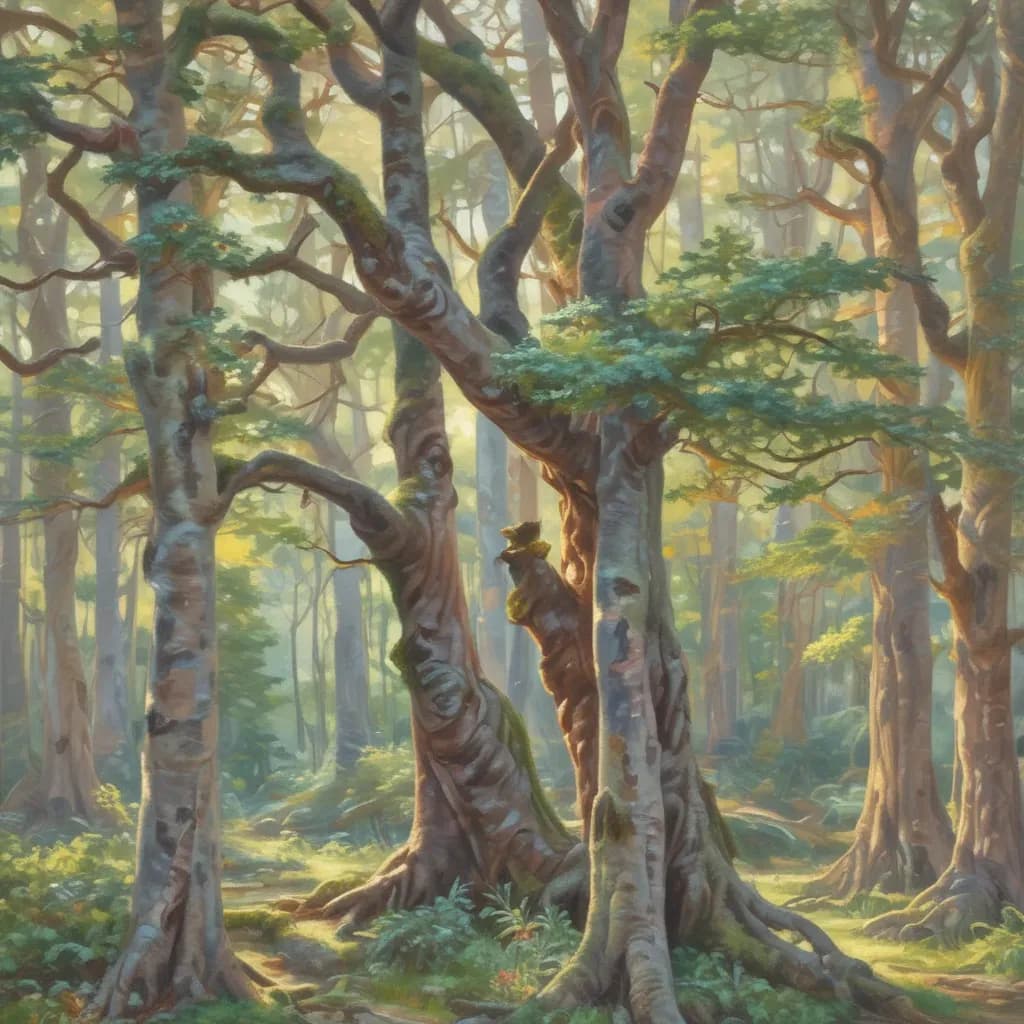
The narrator of "I'd Rather Sleep" occupies a very specific emotional position: someone old enough to know that the world is not magical, and who finds that knowledge unbearable. The central image involves the memory of trees that once seemed to speak, a childhood perception of nature as animate and communicative. In adulthood, that perception is gone. The narrator now understands what is real and what is not, and the understanding offers no comfort. It is not enlightenment; it is loss.
Perry has described her lyrical sensibility as rooted in finding magical things in the world, and treating music and visual art as different languages for externalizing interior experience[6]. Her visual art returns repeatedly to themes of light and dark, and to circles as symbols of continuity and eternity. These preoccupations align naturally with a song about the tension between a circular, ever-renewing childhood perception and the flat linearity of adult knowledge.
The choice of trees as the site of lost communication is not arbitrary. Trees in Japanese folklore and animist tradition are frequently understood as inhabited by spirits, as nodes of the natural world that carry genuine presence. Perry, who grew up in Japan until her early teenage years, would have absorbed this cultural coding long before she began writing pop songs. The loss described in the song is not generic nostalgia; it has a specific cultural texture rooted in a worldview where the division between animate and inanimate is far more porous than in Western secular thought.
The question posed toward the end of the song deepens this sense of dislocation. The narrator wonders whether humans are really from outer space, whether this world is the right place to be at all. It is an alienation that goes beyond ordinary melancholy. This is not someone who feels temporarily sad. This is someone who experiences ordinary reality as fundamentally wrong, as a place they were never meant to inhabit.
The Politics of Withdrawal
The song's central desire, sleeping rather than staying awake, sits at a crossroads between several very different interpretations.
The most literal reading is the simplest: being awake is exhausting, and sleep is relief. This is a feeling most adults recognize. The world is loud and demanding, and closing your eyes is a reasonable response.
A more pointed reading connects the song to depression and dissociation. The flattening of the world, the loss of the childhood capacity to find things enchanting, the preference for unconsciousness over engagement: these are recognizable markers of depressive experience[7]. The song does not dramatize this or make it clinical; it renders it in the plainest possible language, which is more disarming than any theatrical expression of suffering would be.
A third reading treats sleep as a euphemism for something darker. The preference for not being awake can shade, under certain emotional conditions, into a preference for not existing at all. The song does not go there explicitly, and it would be wrong to collapse it entirely into that reading. But the possibility hovers at the edges. The childlike directness of the language, far from canceling this reading, actually amplifies it: the most devastating things are sometimes said in the simplest words.
What keeps the song from feeling merely bleak is its musical framing. It is quiet, a little dreamy, almost comfortable. The production wraps the lyrical content in something that feels like genuine rest, like the moment before sleep when the world actually does go soft and distant. The song does not perform anguish. It performs release.
From Bandcamp to the Backrooms
"I'd Rather Sleep" found a second life, and a much larger audience, when it went viral on TikTok in 2020. By that point, nearly seven years had passed since the mixtape's original release. The song became closely associated with the Backrooms creepypasta aesthetic, a genre of internet content centered on liminal spaces: empty office corridors, fluorescent-lit hallways, the uncanny geometry of places that exist outside normal human occupation[7]. It also spread through dreamcore and weirdcore communities, which pair images of distorted domesticity, analog nostalgia, and unsettling familiarity with music that is slightly off, slightly too innocent, slightly sad.
The song fit this context almost too well. Its toy-keyboard production sounds like something remembered rather than heard. Its runtime of under two minutes means it ends before the listener has fully processed what it was. Its themes of a world that no longer makes sense, of a reality that does not feel like the right place, aligned exactly with what these internet communities were trying to articulate: the sensation of being slightly displaced from the present, of experiencing contemporary life as if through a screen door or a fogged window.
This late cultural moment contributed directly to renewed interest in Intro Bonito as a whole, and informed the decision by Polyvinyl Records to reissue the album a decade after its original release[4]. What had been a cult document became, briefly, a viral one.
What the Closer Does to the Album
Understanding "I'd Rather Sleep" requires understanding its position. It is the last song on Intro Bonito, and that placement transforms it.
The album that precedes it is, on its surface, relentlessly cheerful. Songs about homework, parties, pets, boredom, tropical fruit. The Casio keyboard gives everything a festive, even euphoric quality. But the closer recontextualizes all of that. Retrospectively, the cheerfulness reads not as naive but as determined: the sustained effort of someone who is working very hard to find the world delightful because the alternative is finding it overwhelming.
This is a recognizable emotional strategy, particularly among people who have grown up navigating multiple cultural contexts, as Perry did. When belonging fully to any single place is uncertain, enthusiasm can become a form of insistence: I am present, I am here, I want to be here. "I'd Rather Sleep" is what remains when that insistence runs out.
Album closers carry interpretive weight by definition, and Kero Kero Bonito used this one carefully. The mixtape does not end with a triumphant song or a catchy send-off. It ends with quiet, honest exhaustion. In two minutes, it says something the preceding songs had been circling without naming.
A Small Song About a Large Thing
"I'd Rather Sleep" is not a grand statement. It makes no claims about society, or about the modern condition, or about the alienation of late capitalism. It is simply one person describing what it feels like to have grown up, and finding that description almost unbearable to complete.
That smallness is the source of its staying power. The song is easy to project onto. The specific images are concrete enough to be vivid but open enough to accommodate many different versions of the same loss. Every listener brings their own version of what the world used to feel like before it stopped being magical, and the song makes room for all of them.
Kero Kero Bonito would go on to develop a much more elaborate musical vocabulary on later records, moving through polished electropop on Bonito Generation and then into noise rock and distorted indie on Time 'n' Place and beyond. But something essential about the band is already present in this two-minute closer: the willingness to be small and honest when the situation calls for it, and the understanding that the most unsettling things can be said in the gentlest possible voice.
References
- Kero Kero Bonito - Wikipedia — Band biography, formation history, and discography overview
- Intro Bonito - Wikipedia — Album history, release dates, tracklist, and critical reception
- Best Albums of the 2010s - Gorilla vs. Bear — Listed Intro Bonito as the 46th best album of the 2010s
- Intro Bonito - Polyvinyl Records — 2023 expanded reissue details and commercial performance
- Kero Kero Bonito - Intro Bonito Review - Sputnikmusic — Critical review of the album, scoring 3.5/5 and citing the closer as excellent
- Sarah Midori Perry Interview - Us Blah + Me Blah — Perry on her lyrical approach, visual art practice, and finding magical things in the world
- I'd Rather Sleep - Song Meanings and Facts — Analysis of the song's themes including Backrooms and dreamcore connections