There is something radical about a pop star singing about joy. Not happiness, joy. The word carries theological weight. It implies suffering survived, morning arrived after the long night. When RAYE places a song called "Joy" as the penultimate full track on her second album, near the very end of a 17-song journey through every shade of darkness, she is not offering a generic feel-good chorus. She is delivering a promise.
The Inherited Night
Rachel Agatha Keen, known professionally as RAYE, was born on October 24, 1997, in Tooting, south London, to a family where music was inherited like a surname.[1] Her father played piano, her grandfather was a songwriter (his voice appears on the album, on the preceding track "Fields"), and she was accepted into the BRIT School at 14. The family's musical lineage was not incidental to her work. It was structural.
The years that followed her early promise were defined by a seven-year struggle with Polydor Records, which signed her as a teenager but repeatedly withheld her debut album, steering her toward chart-friendly dance tracks while suppressing the soul and R&B direction she wanted to pursue.[2] In 2021, she went public with her frustration on social media, triggering an industry-wide conversation about label control over young artists, particularly young women. She eventually secured her release.
Her independently released debut, "My 21st Century Blues" (2023), documented the trauma of those years in raw, unflinching detail. It earned her a record six BRIT Awards in a single ceremony, including British Album of the Year and Song of the Year for "Escapism."[1] By the time RAYE sat down to write its follow-up, she was not theorizing about suffering. She had lived it, documented it publicly, and come out the other side with trophies and hard-won creative freedom.
Summer at the End of the Map
"This Music May Contain Hope" is RAYE's second studio album, released March 27, 2026, on her own label Human Re Sources. It is a deliberate emotional counterpoint to its predecessor.[3] Where "My 21st Century Blues" excavated pain, this album traces a path through and beyond it. RAYE described wanting the record to feel like "a hug, bed or soft place for that person who needs it" and spoke about "this need for hope for myself and wanting that to translate to others."[3]
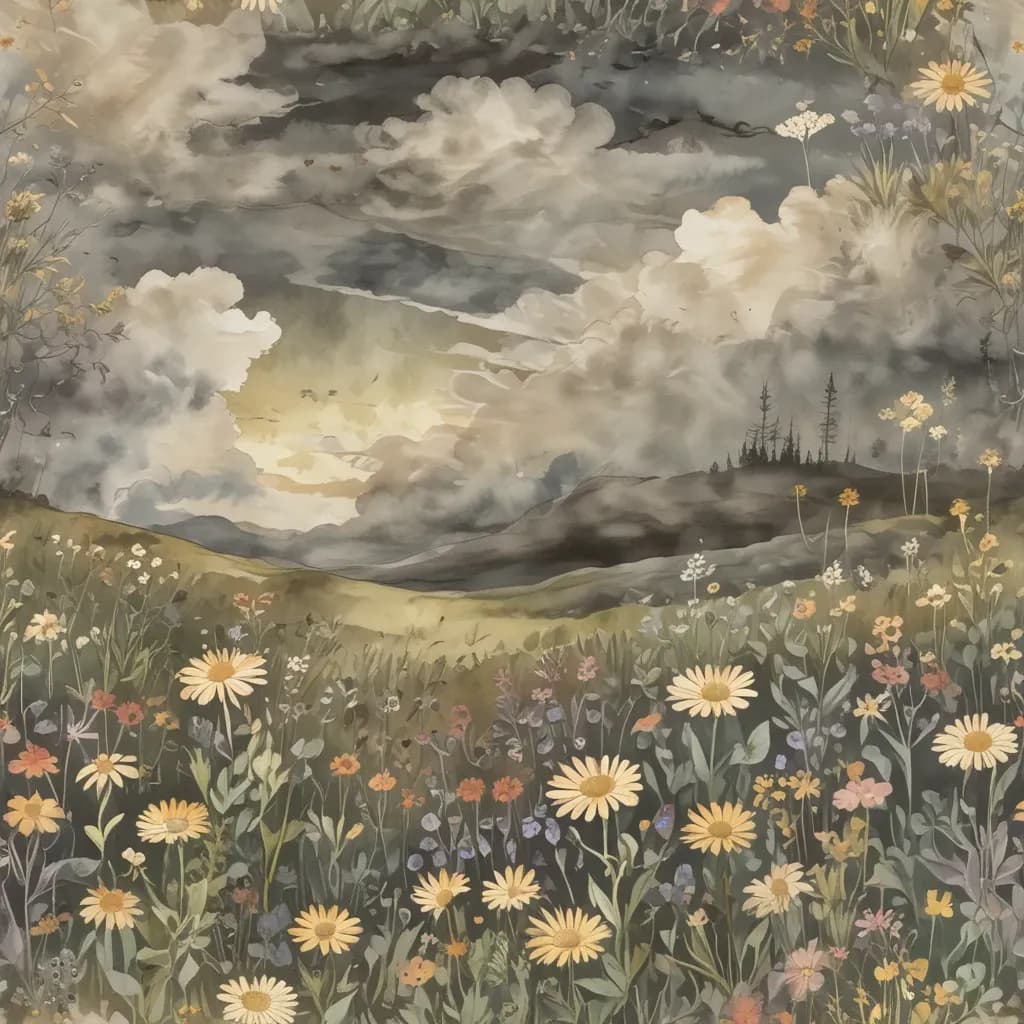
The album is a 17-track concept record structured as four acts, each named for a season: Autumn (tracks 1 to 4), Winter (tracks 5 to 8), Spring (tracks 9 to 12), and Summer (tracks 13 to 17).[4] The seasonal architecture is not decorative. It is the album's central argument: that time moves, seasons turn, and what felt frozen eventually thaws.
"Joy" sits at track 15, the penultimate full song, deep in the Summer section. To reach it, a listener has already moved through grief, longing, the dead cold of winter, and the tentative green of spring. The song lands not as a declaration but as an arrival, something that has been earned over 14 tracks of honest, difficult travel.
A Gospel at Its Core
The song's central motif reaches back to Psalm 30:5, the verse that gives Black gospel music one of its most enduring promises: that suffering has an end, that what weeps through the night will find relief by morning. RAYE does not simply assert happiness. She situates her own resilience within a centuries-old tradition of faith-driven perseverance, one that has carried generations through conditions far worse than any record label dispute.
The gospel frame is not decorative. It defines the song's emotional logic. Joy, here, is not the absence of difficulty. It is what comes after difficulty, specific, earned, time-stamped. The listener is not asked to feel good immediately. They are asked to believe that good feeling is coming, and to hold on until it does. This is fundamentally different from a pop song about being happy. It is a song about faith in the future self.
Musically, the track blends RAYE's signature R&B vulnerability with uplifting electronic production and layered vocal harmonies. The result is a sound that feels simultaneously intimate and anthemic, personal testimony wrapped in a form that begs to be sung along to in a stadium.[5]
Three Sisters, One Declaration
What lifts "Joy" beyond personal testimony is who else sings it. RAYE's two younger sisters, Amma (Lauren Keen) and Absolutely (Abby-Lynn Keen), co-wrote and performed the song with her.[6] Amma had built a songwriting career with credits for FLO, Nao, K-pop group IVE, and Sam Feldt, as well as her own debut tape "Middle Child." Absolutely had released the album "Paracosm" and toured as a support act for BANKS, with a style drawn toward jazz-influenced avant-garde pop.[7] Three different artists, three different artistic identities, one shared household.
When "Joy" received its live debut on January 22, 2026, at the Atlas Arena in Lodz, Poland, on the opening night of RAYE's 51-date sold-out arena tour, all three sisters appeared on stage together.[8] That moment, witnessed by thousands on the first night of a European run, crystallized what the song is actually about. Joy as a family event. Joy witnessed, shared, harmonized.
In a Flaunt Magazine feature on all three sisters, Amma articulated their shared artistic purpose: "people feel alone in a lot of emotions...our stories may be different, but we can feel the same emotion."[7] "Joy" is built on exactly that principle. The harmonies of three women who grew up in the same house carry a shared history outward, into rooms full of strangers who find in it something true about their own experience.
Reclamation and Roots
For RAYE specifically, the choice to ground this song in a gospel tradition carries additional weight. She has spoken about feeling pressured, during her years at Polydor, to suppress the Black side of her musical identity, to produce music that would appeal to audiences who might not engage with soul or gospel.[2] "Joy" is not that music. It is the music she wanted to make all along, and it stands near the end of the album as both resolution and reclamation.
The Keen family's multigenerational participation across the album reinforces this. Grandfather Michael, a songwriter himself, appears on "Fields." Amma and Absolutely appear on "Joy." The album places family at both the beginning (heritage) and the near-end (inheritance). Joy is not solo. It is a lineage.[4]
There is also a specific cultural weight to three Black British women invoking gospel tradition in a mainstream pop context. At a time when artists who blend genres can face commercial pressure to choose a lane, "Joy" insists on occupying multiple traditions at once: contemporary R&B, gospel, electronic pop, and something more personal and familial than any genre label captures.
Multiple Ways In
The song accommodates several different approaches depending on what the listener brings to it. Those familiar with gospel will recognize both its sonic language and its theological backbone immediately, hearing "Joy" as devotional music wearing contemporary R&B clothing. Those approaching it from a secular position may hear it as a resilience anthem: the simple, powerful promise that bad periods end.
A third reading focuses on RAYE's industry narrative. Framed through her decade-long battle for creative control, joy in the morning becomes something very specific: the morning when you own your masters. When you run your own label. When you win six BRITs in a single ceremony. When three sisters stand on a stage in Poland and sing a song they wrote together.
None of these readings cancels the others. The song is built to contain all of them at once, which is precisely what gospel tradition has always done: find language that speaks to the individual soul and the collective body simultaneously, words that mean something different to everyone in the room while still meaning the same essential thing.
The Promise Kept
"Joy" earns its position as the album's emotional climax because the album does the work of earning it. Fifteen tracks into a journey through every shade of human difficulty, the arrival of a song by this name, performed by these three women, rooted in this tradition, feels not like a cliche but like a resolution.
RAYE once said she wants music to be medicine.[9] "Joy" may be the fullest expression of that ambition in her catalog. It does not minimize what came before it. It transforms the journey into the point. The night was real. The suffering documented across an entire debut album and the first three-quarters of a second one was real.
And then three sisters stand together in summer and say: the morning is real too. It was always coming. Here it is.
References
- RAYE – Wikipedia — Biographical overview including RAYE's early life, Polydor years, BRIT Award wins, and career arc
- RAYE on her experience in the music industry – NME — Interview about label suppression, pressure to downplay her Black musical identity, and the cost of being silenced
- RAYE announces 'This Music May Contain Hope' – NME — Album announcement with RAYE quotes about wanting the album to be a soft place for those who need it
- This Music May Contain Hope – Wikipedia — Full tracklist, seasonal structure, featured artists including Amma and Absolutely on Joy
- RAYE Reveals Tracklist for 'This Music May Contain Hope' – Rolling Stone UK — Tracklist reveal with seasonal structure breakdown and critical framing of RAYE as a versatile pop star
- The Keen Sisters Build a Modern Musical Dynasty – Blurred Culture — Profile of Amma joining RAYE and Absolutely, with details on each sister's solo career and songwriting credits
- RAYE, Amma and Absolutely – Flaunt Magazine — Feature on all three Keen sisters discussing their joint tour, artistic identities, and shared purpose
- RAYE debuts new songs at opening night of 2026 tour in Poland – NME — Coverage of Joy's live debut on January 22, 2026 in Lodz, Poland with all three sisters on stage
- RAYE Announces New Album 'This Music May Contain Hope' – Variety — Album announcement with quotes from RAYE about wanting to create medicine and share hope