Legacy
There is a particular kind of grief that comes from understanding exactly what you sacrificed and why. Not the confused mourning of someone blindsided by loss, but the clear-eyed ache of someone who chose a path and only later counted the cost of the road not taken. "Legacy," J. Cole's intimate collaboration with vocalist PJ from his seventh and (by his stated intention) final studio album, lives in that grief entirely.
A Farewell Seven Years in the Making
The Fall Off arrived on February 6, 2026, a date Cole chose deliberately: 2-6 is the area code associated with Fayetteville, North Carolina, the city that shaped his artistic identity and to which he has returned in his lyrics again and again.[1] The project had been gestating since at least 2018, when Cole released a track that announced its eventual arrival.[1] By the time the finished work appeared, it had expanded into a sprawling double-disc statement spanning twenty-four tracks, organized around two imagined homecomings.
The album's architecture is built around two temporal vantage points. Disc 29 situates Cole at age 29, back in his hometown at a crossroads between his woman, his craft, and his city. Disc 39 revisits that same ground through the eyes of a 39-year-old man who has married, become a father, and is now completing what he has called his final formal album.[1] "Legacy" belongs to the older perspective, and the emotional weight that accompanies that vantage point is audible in every bar.
Cole had spoken openly about approaching this project as a farewell, though after its release he acknowledged the door to future music was not entirely closed. Speaking to interviewers in the weeks following the album's release, he said that if he found himself genuinely inspired in the future, he would not resist it.[2] But the spirit of conclusion shaped every creative decision he made on the record, and "Legacy" carries that spirit most openly.
Time's Arithmetic
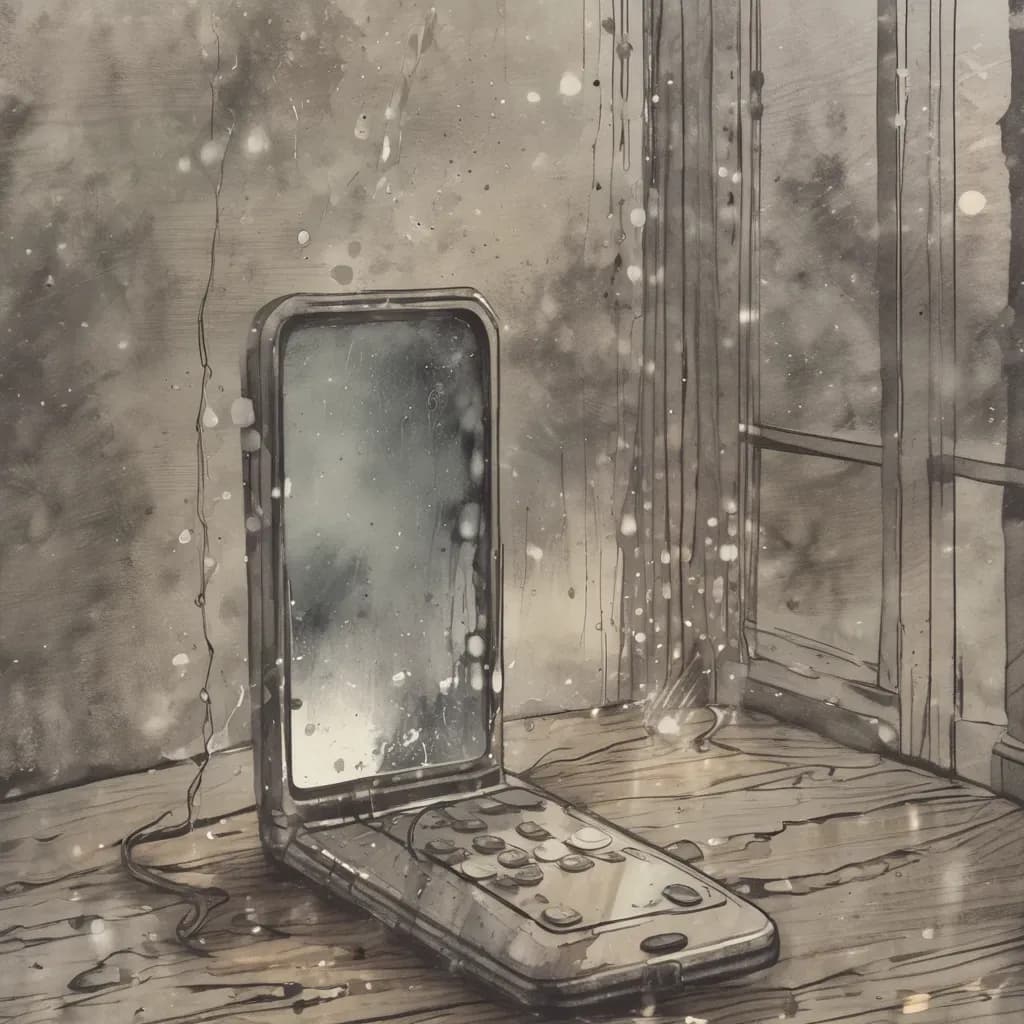
At its core, "Legacy" is a song about reckoning. Cole uses seasonal imagery throughout the track to mark the passage of time, drawing an arc from warmth to cold that functions as both literal description and emotional testimony. The progression feels less like a literary device than a confession from someone who watched a relationship change temperature while his attention was directed elsewhere.[3]
The song's title carries its full weight in these moments. A legacy is what you leave behind, but it implies someone or something to receive it. Cole seems to understand, with the rueful clarity that age can supply, that in pursuing one kind of legacy, the professional one built album by album over fifteen years, he may have forfeited another, quieter kind.
The song does not stop at romantic regret. One of its most exposed passages turns inward to Cole's artistic life: a fear that his creative peak is behind him, that the arc of his talent has already crested. This is a different category of vulnerability from heartbreak. It is the anxiety of someone who has built an entire identity around creative excellence now confronting the possibility that time works on talent the way it works on everything else.[3]
Longing in the Digital Age
One of the song's most quietly devastating choices is how Cole frames the narrator's relationship to the past. The repeated gesture of reaching out to someone through a screen, the low-grade digital persistence of someone who knows the answer but cannot stop seeking it, captures something true about how modern longing works. It is not a grand romantic gesture but a small, incremental, and ultimately futile repetition. The gap between what the narrator wants and what he is willing or able to offer emotionally is exactly where the song lives.[3]
PJ's contribution deepens the texture considerably. Her vocal presence gives the song a second emotional register, a warmth and ache that grounds Cole's more cerebral self-examination in something felt rather than only thought. The production underlines this balance: lighter and more melodic than much of Cole's catalog, it creates space for the emotional content to breathe without the conceptual density that can sometimes armor his more introspective work.
The narrator in "Legacy" is not a wronged party seeking vindication. He acknowledges his own emotional limitations and the ways they contributed to the distance between him and the person he is mourning. That combination of self-awareness and helplessness is where the song draws its specific gravity.
Critical and Cultural Context
In mainstream hip-hop, romantic failure tends to arrive in coded or aggrandized form: loss reframed as the other person's mistake, heartbreak reconfigured as a flex. "Legacy" refuses this convention. Cole allows himself to be the one who faltered, the one who reached out too late, the one who watched seasons change and kept moving anyway. That refusal to cast himself as the hero of his own romantic narrative is rare and genuinely difficult to execute with grace.[4]
The song arrives at a charged moment in Cole's public life. He had spent much of the previous year largely away from the spotlight, stepping back from a high-profile conflict in hip-hop that had dominated public conversation.[5] The long delay between albums generated enormous anticipation, but also real skepticism about whether the finished work could justify the buildup. Against that backdrop, a song this intimate and self-critical reads almost as a statement: a refusal to perform invulnerability for an audience that might have expected vindication.
NPR described Cole on this album as returning as "a new man, old man and everyman," a formulation that fits "Legacy" precisely.[6] The song synthesizes all three: the new perspective born of fatherhood and reflection, the older man's backward glance at choices already made, and the universal fear that the ledger of a life may not balance the way you hoped.
The Trunk Sale tour that Cole launched alongside the album's release gave "Legacy" a visual dimension. A music video embedded in a tour vlog showed Cole performing the song next to and inside a convertible, an image that suits the track's emotional register: movement without a clear destination, the particular freedom and loneliness of driving somewhere without knowing exactly where you are headed.[7]
Elsewhere on the album, "The Fall-Off is Inevitable" makes the philosophical case for artistic mortality as a natural law, arguing that every artist's era ends and that the reckoning with that ending is part of what gives art its urgency. "Legacy" arrives at the same conclusion through a more personal door, asking not whether the fall-off is coming but what it will mean for the things and people left behind.
A Broader Reading
It is possible to read "Legacy" as something wider than a romantic post-mortem. The word carries professional weight when used by an artist explicitly closing a chapter. When Cole wonders whether his best work is behind him, he may be asking that question about his catalog as much as his relationships. The connections most at risk in the song might include his relationship with music itself, with the audience that built its expectations of him over fifteen years, and with the version of himself that believed the work and the love could coexist without one consuming the other.
Through this lens, the narrator's repeated digital reaching-out is not only romantic persistence but artistic compulsion: the need to return to something you know you have left, even when returning cannot change what has already passed.
What Remains
J. Cole has always insisted on accountability as a core artistic value. He has applied that standard to his heroes, his peers, and the systems around him. With "Legacy," he turns it on himself, specifically on the private choices that shaped his life in ways that no platinum certification can reframe. The result is one of the most emotionally exposed performances of his career.
The uncomfortable truth the song surfaces is that legacy, in the fullest sense, is not built in the studio. It is built in the hours you are not recording, the decisions you make when no one is listening, the people who were present before the audience arrived. Cole knows this. The grief in "Legacy" is the grief of someone who learned it late enough to feel it, but not so late that he cannot put it into words.
References
- The Fall-Off (Wikipedia) — Album structure, release date, concept
- J. Cole Opens Up About Retirement Following The Fall Off (The Source) — Cole's post-release statements on retirement and future music
- J. Cole Legacy Meaning and Review (Stay Free Radio IP) — Song-specific thematic analysis
- 5 Takeaways From J. Cole's 'The Fall-Off' (Okayplayer) — Critical analysis of emotional themes
- J. Cole 'The Fall-Off' Album Review (The Needle Drop) — Critical reception and score
- On his long-awaited 'Fall-Off,' J. Cole returns a new man, old man and everyman (NPR) — NPR album review and critical framing
- J. Cole Drops 'Legacy' Music Video In Latest Trunk Sale Tour Vlog (HotNewHipHop) — Music video details, visual aesthetic