Let Down
The Weight of Weightlessness
There is a particular kind of sadness that comes not from any single devastating event, but from the slow accumulation of nothing. From passing through airports and motorways, watching thousands of lives flicker past the window of a train, all while feeling absolutely disconnected from every one of them. Radiohead's "Let Down," the fifth track on their 1997 masterpiece OK Computer, captures this feeling with an almost unbearable precision, wrapping existential dread in some of the most luminous, shimmering guitar work the band ever committed to tape.
A Ballroom at Three in the Morning
By 1996, Radiohead had outgrown the guitar-heavy anthems of The Bends and were searching for something more expansive. They decamped to St Catherine's Court, a 15th-century mansion near Bath owned by actress Jane Seymour, where the empty rooms and historic acoustics became instruments in themselves.[1] "Let Down" was recorded in the mansion's ballroom at three o'clock in the morning, a detail that explains much about the track's particular atmosphere.[2][3] There is something distinctly nocturnal about the song, a quality of consciousness suspended between waking and sleep.
The band had initially considered releasing "Let Down" as OK Computer's lead single, believing its relatively accessible melody and soaring arrangement could serve as an entry point to an otherwise challenging album.[3] They ultimately chose "Paranoid Android" instead, deciding that its fractured, multi-part structure better represented the record's ambitions. A music video was filmed for "Let Down" by director Simon Hilton, but Thom Yorke rejected the finished product, and the single release was scrapped entirely.[1]
The recording process itself was marked by a peculiar kind of frustration. Yorke later admitted that by the time the band laid down the track, he had grown bored of it, describing the vocal sessions as "a complete nightmare."[2] This is an irony worth sitting with: a song about emotional numbness was captured by a singer who had, at least temporarily, lost his connection to the material. Whether that distance ultimately served the performance is a question listeners have debated for decades.
The Transit-Zone Feeling
At its core, "Let Down" is preoccupied with the experience of moving through the world without actually being present in it. Guitarist Jonny Greenwood offered perhaps the most precise description of the song's animating idea, comparing it to Andy Warhol's claim that he enjoyed being bored. "It's about that feeling when you're in transit but not in control of it," Greenwood explained. "You just go past thousands of places and thousands of people and you're completely removed from it."[2][3]
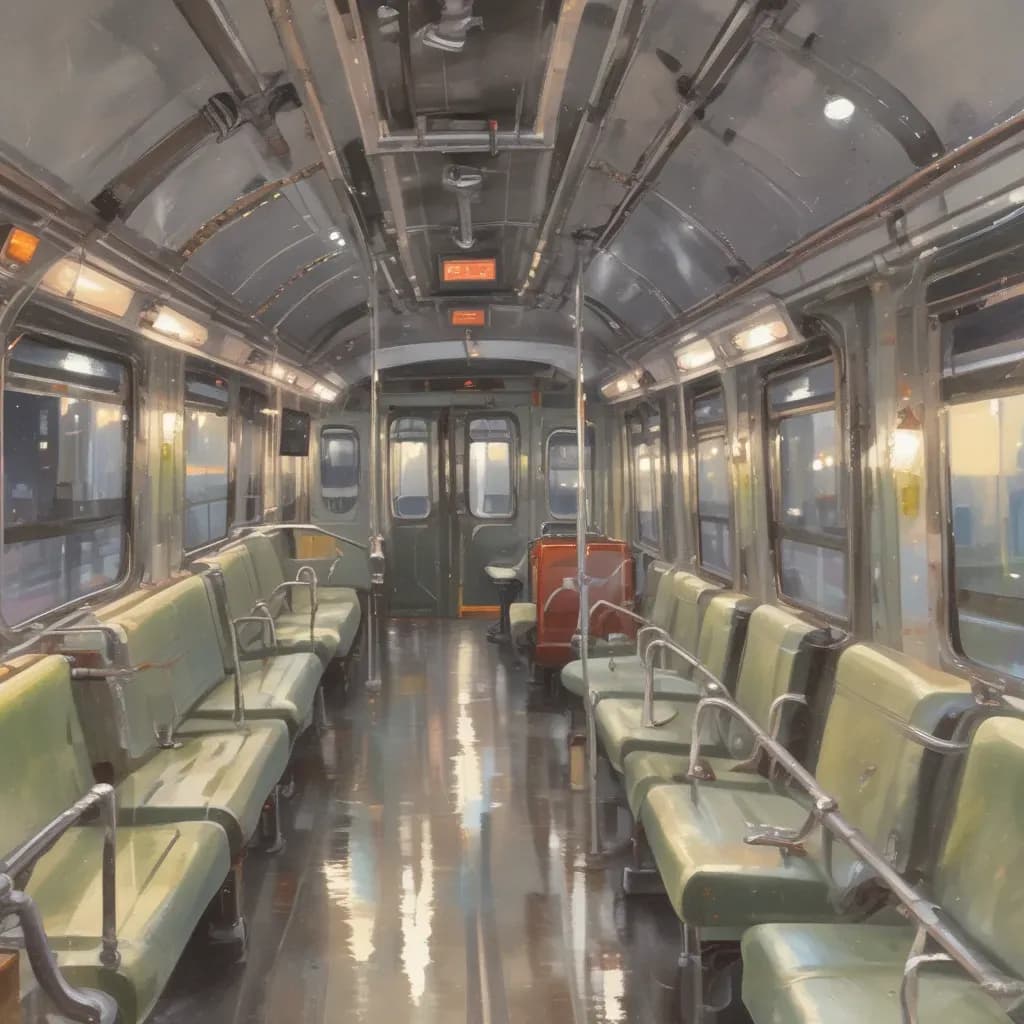
This is the transit-zone experience: airports, highways, the interiors of buses and trains, all those non-places where people exist in suspension between departure and arrival. The song sketches a world of individuals in constant motion who never quite arrive anywhere meaningful. It is a vision of modern life as an endless commute, with no destination capable of justifying the journey.
Ed O'Brien offered a complementary reading that shifts the focus inward. "Feeling let down is down to your insecurities and paranoia most of the time," he said, "which is why the song sounds sad rather than furious. It's about not being in control of the situation."[2] Where Greenwood sees the alienation as externally imposed by the structures of modern transit, O'Brien locates it in the psychology of the individual. Both readings coexist without contradiction. The song suggests that modern disconnection is simultaneously something done to us and something we do to ourselves.
Sentimentality and Its Discontents
Yorke's inspiration for the song came, in part, from a night in a pub where he observed the patrons with a mixture of sympathy and detachment. He saw people clinging to their drinks and sensed what he called "the emptiest of feelings," a pervasive disappointment that hung in the air.[2][4] He later described a more surreal vision that struck him while intoxicated at a club: an image of drinkers hanging from their bottles, suspended from the ceiling by strings, with the floor falling away beneath them.[2]
This striking image encapsulates one of the song's central tensions: the gap between genuine feeling and the performance of feeling. Yorke was deeply suspicious of sentimentality, which he defined as "being emotional for the sake of it." He saw modern culture as saturated with manufactured emotion, from advertising to pop music to the nightly news. "We're bombarded with sentiment, people emoting," he said. "That's the Let Down."[2][3]
The song, then, is partly an indictment of a culture that has cheapened emotion to the point where authentic feeling becomes nearly impossible to distinguish from its simulacrum. Every expression of tenderness, grief, or joy is filtered through layers of mediation and self-consciousness. The result is a world where even sincere emotions feel borrowed or secondhand.
The Architecture of Disorientation
What makes "Let Down" exceptional, and what separates it from a merely depressing meditation on modern ennui, is the way its musical construction embodies its themes at a structural level. The track opens with interlocking arpeggiated guitars that create a hypnotic, almost trance-like texture. Phil Selway's drumming is steady but muted, establishing a rhythmic pulse that feels like the metronomic clicking of train tracks.
The key to the song's uncanny quality lies in a deliberate act of rhythmic subversion. Jonny Greenwood's twinkling lead guitar part operates in a different time signature from the rest of the band, creating a sense of gentle but persistent misalignment.[3] The listener may not consciously register this dissonance, but it produces a subliminal feeling of being slightly out of step with one's surroundings, a musical equivalent of the transit-zone disconnection the lyrics describe. The overall effect has been compared to Phil Spector's "wall of sound" technique, but where Spector's productions aimed for a kind of overwhelming emotional directness, Radiohead's version creates a shimmering haze that keeps the listener at arm's length.[3]
The bleeping sounds that surface near the song's conclusion came from an old ZX Spectrum computer, a detail that anchors the track's sense of technological intrusion in something deliberately antiquated and slightly absurd.[2] It is a reminder that the alienation OK Computer chronicles is not specific to any single era of technology. The feeling of being displaced by machines is as old as machines themselves.
Growing Wings
For all its explorations of emotional flatness, "Let Down" contains one of the most genuinely transcendent moments on OK Computer. In the song's final movement, the instrumentation swells and Yorke's voice climbs into a fragile, trembling register, reaching toward an image of transformation and escape. It is a moment of unguarded yearning that feels almost dangerous in the context of a song so otherwise committed to emotional restraint.
This climactic passage embodies what might be called the central paradox of "Let Down": it is a song about the impossibility of authentic feeling that somehow produces authentic feeling in abundance. The listener who has spent four minutes immersed in the song's depiction of numbness and disconnection is suddenly confronted with a surge of something raw and unmistakable. Whether that surge represents genuine hope, or merely the beautiful illusion of hope, is left deliberately unresolved.
The Overlooked Masterpiece
For years, "Let Down" occupied an unusual position in Radiohead's catalog. It was widely regarded by fans as one of OK Computer's strongest tracks, yet it received comparatively little attention from the band themselves. After the OK Computer tour concluded, the song virtually disappeared from setlists. It was not performed live for a full decade, from 2006 to 2016, when its sudden reappearance at a concert was greeted as a major event by devotees.[1][3]
This neglect may have actually enhanced the song's mystique. Without the constant exposure of regular live performance or single-driven promotion, "Let Down" became something of a secret shared among listeners who had sat with OK Computer long enough to appreciate its subtleties. It was the deep cut that rewarded patience, the track that revealed new dimensions with each listen.
A Second Life on TikTok
Nearly three decades after its release, "Let Down" experienced a remarkable resurgence. In late 2024 and into 2025, the song began circulating on TikTok, where users paired it with clips capturing various melancholic and contemplative moments.[5][6] The trend accelerated during a period of uncertainty about TikTok's future in the United States, when the song became a go-to soundtrack for videos processing impermanence and loss.[6]
A new generation of listeners, encountering the track's devastating emotional sweep for the first time, found in it a precise articulation of feelings they recognized but could not name. One widely shared caption posed the question that "Let Down" has always implicitly asked: how can something be simultaneously so despairing and so hopeful?[6] In August 2025, the song debuted at number 91 on the Billboard Hot 100, becoming Radiohead's fourth charting hit and their first in seventeen years.[5][6] The album itself re-entered the Billboard 200, nearly three decades after its original release.
The TikTok revival underscores something essential about "Let Down" and about great art more generally: its meaning is not fixed at the moment of creation. Yorke wrote the song in response to the particular alienations of mid-1990s British life, but its themes of transit, disconnection, and the hunger for something real have only grown more resonant in an age of infinite scrolling and algorithmic feeds. The non-places the song describes, those liminal zones where identity dissolves, are no longer confined to airports and motorways. They are wherever we pick up our phones.
Alternative Readings
Some listeners have interpreted "Let Down" less as a critique of modern life and more as a deeply personal account of depression, reading its descriptions of emotional flatness and disconnection as symptoms of a psychological condition rather than a sociological observation.[7] Others have focused on the song's spiritual dimension, hearing in its imagery of transformation a yearning for transcendence that is almost religious in character.
There is also a reading that emphasizes the song's relationship to the rest of OK Computer's narrative arc. Positioned between "Exit Music (For a Film)" and "Karma Police," "Let Down" can be understood as the album's emotional center of gravity, the point at which the record's anxieties about technology, politics, and human connection converge into a single, crystalline expression of modern unease.
The Enduring Transit Zone
"Let Down" endures because it does something that very few songs manage: it makes numbness feel like the most intense emotion in the world. Through Yorke's lyrics, Greenwood's rhythmically dislocated guitar, and a production that transforms a ballroom recording session into something both intimate and vast, the song locates a profound beauty in the experience of feeling nothing at all. That it continues to find new audiences, nearly thirty years after five men sat in a mansion at three in the morning and played it into existence, suggests that the condition it describes is not going away any time soon. If anything, we are all deeper into the transit zone than ever.
References
- Let Down (Radiohead song) - Wikipedia — Comprehensive encyclopedia article covering the song's history, recording, reception, and 2025 TikTok resurgence
- Let Down - Citizen Insane — Detailed collection of band member quotes and interview excerpts about the song's creation and meaning
- How Radiohead Were Crushed by a 'Wall of Sound' on 'Let Down' - Ultimate Classic Rock — Analysis of the song's recording process, musical characteristics, and production techniques
- Let Down by Radiohead - Songfacts — Factual overview of the song's origins, including Thom Yorke's pub inspiration
- Radiohead's 'Let Down' Debuts on the Hot 100 After 28 Years - Billboard — Billboard report on the song's 2025 chart debut at number 91
- Radiohead's 'Let Down' Charts on Billboard Hot 100 After Going Viral on TikTok - Consequence of Sound — Coverage of the TikTok trend, Gen Z discovery, and chart performance details
- The Bliss of Disappointment: 'Let Down' by Radiohead - TV Obsessive — Critical essay exploring the song's paradoxical emotional qualities