Love Crimes
Some club tracks invite you onto the floor. This one grabs you by the collar on the way in. "Love Crimes" opens EUSEXUA Afterglow with a four-on-the-floor kick that critics have variously called snarling, assaultive and ferocious[1][2][3], and then it does something odd for a song with that much muscle: it lets a whispered, almost conspiratorial voice float above the pounding.
That tension, between the machine and the murmur, is where the song lives. It is also where an honest essay about it has to start with a caveat. twigs has not, as far as I could find, given an interview explaining this track, and the song is short and direct. What follows is built from how critics heard it, from the video that accompanies it, and from what the album around it is plainly about.
An epilogue that starts with a bang
EUSEXUA Afterglow arrived on November 14, 2025, as a companion to January's EUSEXUA, the Mercury Prize nominated album that took its name from a private word for the state of total absorption on a dance floor[6]. That first record grew out of clubbing in Prague while twigs was filming The Crow[3]. In an interview quoted by Resident Advisor she described the state as one in which you are not human anymore and are just a feeling[1].
The follow-up was conceived as a deluxe edition and grew into its own record[6]. Resident Advisor reports that twigs wrote it in six weeks, and that it sounds looser and chattier than its predecessor, with a more conversational approach to lyrics[1]. She announced it with an Instagram post staged like a pregnancy photo, saying the baby's name was Afterglow[1].
Where you might expect a sequel called Afterglow to start with a comedown, it opens with the opposite. Rolling Stone UK joked that it was as if she had stepped outside for a cigarette and returned to techno bass even harder than anything on the first album[3]. Clash heard it as the transition point between the two records[2], and Resident Advisor heard it as a neat bookend to the title track of EUSEXUA, answering that song's come-hither invitation with something more forceful[1].
Desire, stated plainly
The song's lyrics are about physical desire, and they say so without much disguise. The Quietus, the most skeptical of the reviews I read, quoted a line from it as an example of what it saw as plain, tell-don't-show writing[5]. That is a fair description of the method even if you disagree with the verdict. The narrator addresses someone she finds magnetic and says what she sees and wants, in short declarative bursts rather than extended metaphor.
Whether that is a weakness depends on what you want from the song. Dance music has always used repetition and bluntness as a feature, because a body on a dance floor responds to a command faster than to a conceit. twigs, an artist whose earlier work often wrapped desire in elaborate imagery and fragile falsetto, here chooses the club grammar of the direct statement. The shift is part of the point.
The title adds its own layer. A crime implies a victim, a witness, a rule being broken. Pairing it with love suggests that attraction on this level feels like transgression, something you could be arrested for, or at least judged for. The song does not belabor the idea, but the phrase frames the whole track as a place where wanting is a little illicit and a little thrilling.
The whisper against the thud
Hot Press singled out the contrast at the song's center, her mystical whispers and murmurs set starkly against thumping club rhythms[4]. The same review sees the track as a step from her R&B past into a digitised electronic dance era[4]. Hearing it that way helps explain why the vocal is so close and the beat so far from tender.
Think of what the two textures do to each other. A beat that hard reads as appetite, impersonal and relentless. A voice that soft reads as intimacy, one person speaking directly into your ear. Together they make a portrait of desire as both a mechanical drive and a personal secret, which is roughly how it feels when you are in the middle of it.
The Skinny placed the sound in a lineage, hearing both the imposing noughties thump of Britney Spears's "Work Bitch" and the cathedral-sized synths of Adamski's "Killer," and filing the song in the recession pop tradition[6]. That tradition is useful context. Pop built for hard times tends to be maximal and escapist, and it often treats the dance floor as a place where you can briefly stop being yourself. That is exactly the EUSEXUA idea.
A video about prey
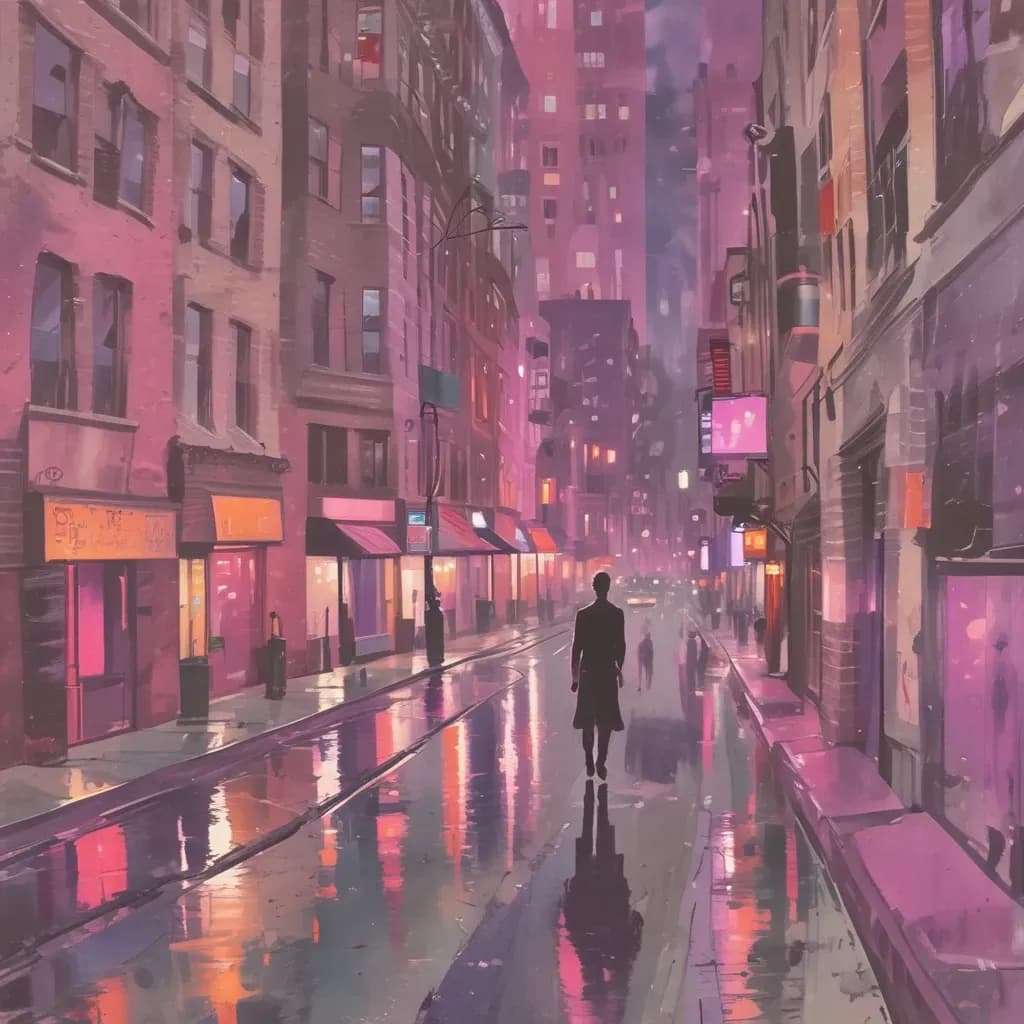
The most explicit statement of what the song means to its makers may be the video. Jordan Hemingway, a frequent twigs collaborator, directed a clip in which she glitches through Soho at night, in a surreal, staccato romp that Shots described as a glitchy, sex-fuelled outing[7]. The same writer cast her as an other-worldly alien sex tourist, with the human characters moving almost like stop-motion puppets[7].
Promonews offered a similar reading, calling her a sort of sex alien-vampire stalking prey through the city while no human can resist her[8]. Both outlets pointed to Floria Sigismondi's early video work and to the clip for Orbital's "The Box" as touchstones, and Shots added Jonathan Glazer's Under the Skin[7][8].
This is a useful key to the title. If the narrator is a predator in the video, the crimes are hers, and the song becomes a gleeful confession rather than a complaint. Desire here is not something that happens to her. It is something she hunts, with a wink. That reading flips a familiar pop script in which women are the ones pursued, and it fits an album that Hot Press says deals in womanhood, fame and self-awareness[4].
A caution applies: video concepts and song meanings are not always the same thing, and I found no statement from twigs or Hemingway tying the two together. It is an interpretation supported by the imagery, not a confirmed intention.
Fame, transformation and the body
Hot Press described the album as dealing with transformation, joy, self-awareness, fame, the music industry and womanhood[4]. A track about desire fits inside all of those. For an artist whose public image has long been shaped by other people's assumptions about her body and her relationships, writing a song in which she is plainly the one in control of the gaze is a statement of authority.
The album's physical metaphors reinforce this. The pregnancy-style announcement turned the idea of creating something new into a body joke, and the music keeps returning to flesh, motion and sensation[1]. Placed first, "Love Crimes" establishes the body as the album's main instrument before anything else has a chance to explain itself.
There is also the matter of speed. A record made in six weeks cannot afford much polish or hesitation[1]. The directness of this opener sounds like that urgency, a first thought acted on instead of edited.
Not everyone was convinced
It would be dishonest to present the song as universally loved. The Quietus argued that this track and the one after it still pulse with taut sine waves like the first album but lack its intensity, and that the pop on offer is something other artists do better[5]. That review also found the album hurried, the simplest music of her career[5].
Resident Advisor was kinder but cool, calling the album fun without finding it especially memorable[1]. Against that, Clash and Hot Press both gave it eight out of ten, Rolling Stone UK four stars out of five, and The Skinny four out of five[2][3][4][6]. The disagreement is largely about what a sequel should be. If you expect a deepening of the first album, the simplicity feels thin. If you expect a victory lap on the dance floor, it feels exactly right.
Another way to hear it
Because the lyrics are blunt, it is tempting to hear the song as only a sex song. A second reading takes the title seriously as a joke about the vocabulary of romance. Songs about love often talk about crimes (stolen hearts, partners in crime, being guilty), and a title that collapses the metaphor into the literal could be winking at that history.
A third reading hears the song as a statement about the album's own structure. As the opener of an epilogue, it argues that an afterglow is not a calm. The comedown, in this version, is just the party continuing in a different room, and the night is not over because the main event ended. Resident Advisor's note that the beat eventually fades to a patter as soft as a heartbeat[1] supports that idea, since the intensity does not vanish so much as shrink to something intimate.
Why it matters
"Love Crimes" is not a song that asks to be decoded, and that may be its virtue. It puts a hard beat, a whispered vocal and a plainly stated appetite in under three minutes and trusts the contrast to do the work. For listeners who came to twigs for the ornate and the fragile, it can feel like a change of register. For those who think of dance music as a place to feel something simple and total, it is the point.
It also marks a stage in her career in which she treats pleasure as a serious subject. After years of being discussed in terms of vulnerability and pain, she makes an album sequel that begins with unembarrassed desire and a villain-hero grin. The crime in the title is mostly the crime of enjoying yourself too much, and the song is happy to plead guilty.
References
Keep reading
More Electronic
- RHYNO Travis Scott
- Blue Monday New Order
- The Sun Comes Up Tremendous Disclosure
- This Thing We Call Love Thundercat
- Ball of Light Chrome Sparks
- SWIM (Remix) BTS