Luck Of Life
Most heartbreak songs locate their moment in the rupture itself: the confrontation, the goodbye, the door closing for the last time. "Luck Of Life" begins somewhere harder to place. It is a song about what comes after, the long, unglamorous stretch when absence has stopped being a fresh wound and become something ambient, something that stains the ordinary textures of your life. It is a song about waking up.
Arlo Parks released the track as the tenth of twelve songs on "Ambiguous Desire," her third studio album (April 3, 2026, Transgressive Records). Placement on an album is never neutral, and here it is quietly devastating. By the time a listener reaches this track, they have moved through nine songs of nocturnal energy, breakbeat rhythms, and the euphoria of rediscovering yourself. "Luck Of Life" applies the brakes. It asks a different, quieter question.
An Album Built from Nightlife
"Ambiguous Desire" emerged from two years of deep immersion in club culture across Los Angeles, London, and Brooklyn.[1] Parks had spent years touring heavily in support of her earlier records and arrived at a state of burnout severe enough to require a fundamental reset. What she found, in the nocturnal spaces she subsequently inhabited, was a kind of permission. The club offered anonymity and possibility in equal measure. In Los Angeles, she became a regular at events thrown by the Midnight Lovers Collective, where she encountered DJs, producers, and older queer ravers who had long understood these spaces as sanctuaries.[2]
The resulting album reflects these origins in its bones. Parks replaced live-band studio sessions with modular synthesizers, Ableton plugins, and samplers, constructing a sound that draws on Burial, LCD Soundsystem, The Streets, and Theo Parrish. The Mercury Prize-winning debut "Collapsed in Sunbeams" (2021) had been defined by acoustic intimacy and whispered confessionalism. "Ambiguous Desire" is muscular, danceable, and at moments disorienting in the most productive sense.[3]
But beneath all the bass weight and digital texture, a more personal thread runs through the album. Parks experienced significant personal upheaval during this period, including a breakup with fellow artist Ashnikko.[4] The nocturnal immersion was not simply hedonism or artistic research. It was, in part, a form of grief processing, a way of relearning what the world felt like before a particular person had taken root in it.
The Architecture of Longing
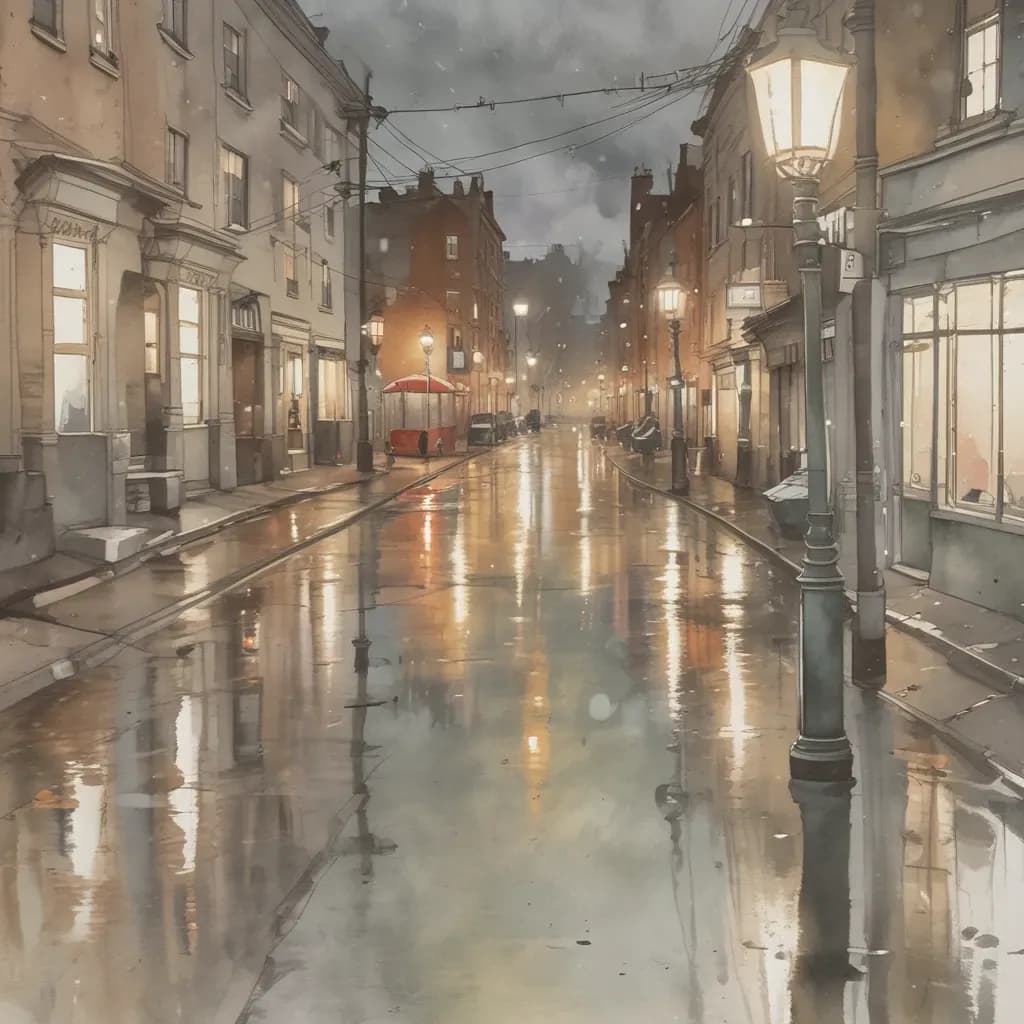
"Luck Of Life" is the album's grief made concentrated. Where much of the surrounding material channels feeling into movement, into the body and the dancefloor, this track stays still. The production builds its melancholy slowly, layering delicate instrumentation under Parks' voice until the chorus finally gives the emotion room to expand. Critics noted the song's careful balance of restraint and release as one of the record's most effective moments.[5]
The song opens inside a dream, one of those hyper-specific visions that temporarily restore what has been lost, placing the narrator in a scene of casual, unguarded intimacy with the absent person. Waking shatters it. The song then sets its reckoning in the early hours of the morning, that particular time when the mind is too unguarded for the defenses that carry you through daylight, and ordinary details, objects, and small rituals become saturated with the presence of someone who is no longer there.[5]
Parks has always understood that grief does not arrive in grand gestures. It arrives in the peripheral vision. In the song playing on shuffle that you once shared. In a mutual friend's name surfacing in conversation when you were not expecting it. The specific ache she maps in "Luck Of Life" is not the original wound but the way that wound keeps reopening, unbidden, in the minor textures of an ordinary morning.
What It Means to Believe in the Luck of Life
The song's central question concerns what happens to your capacity for faith when the person who gave you that capacity disappears. Parks maps a very specific kind of grief: not the loss of the relationship alone, but the loss of the framework of meaning and hope it provided.[6] If this person was the reason you found yourself believing the world was fundamentally generous, fundamentally worth inhabiting with joy, the question that surfaces in their absence is whether that belief was ever really yours.
"Luck Of Life," as a phrase, carries a double weight. It speaks to gratitude for the small, particular facts of existence, the fortune of simply being here. But it also speaks to the luck of finding someone who made that existence feel fortunate. Lose the person and you lose access to the feeling. The question the chorus poses, stripped to its emotional skeleton, is: how do you continue to believe in life's capacity for grace when the evidence that produced that belief is gone?
This is a distinctly different grief from anger or the shock of abandonment. It is more philosophical, and in some ways more destabilizing. The narrator is not furious. She is genuinely bewildered. She is trying to do the arithmetic of what remains when someone who changed the equation leaves, and finding the numbers no longer add up the way they did.
Parks in the Context of Her Own Evolution
"Luck Of Life" gains additional resonance heard against the arc of Parks' career. Her earliest work was defined by intimacy and close attention: she wrote songs that felt whispered directly at the listener, built for the person who needed to hear that their private, specific experience had been seen. When "Collapsed in Sunbeams" won the Mercury Prize, Parks was twenty years old. The recognition confirmed what listeners had already understood: she could make you feel less alone in a way that was direct and immediate.[4]
"Ambiguous Desire" represents a conscious effort to refuse the constraints of that earlier identity. Parks has spoken about the album as a form of reclamation, a refusal to remain the person her debut defined her as, and an attempt to make up for the parts of life she had missed by touring constantly from a young age.[1][2] Yet "Luck Of Life" quietly demonstrates that artistic expansion does not mean leaving behind the tender interior that made the earlier work matter. Parks can spend nine tracks in the exhilaration of the dancefloor and still arrive, on the tenth, in a pre-dawn room with a loss she cannot fully metabolize.
Parks is also among the most visible voices for Black queer experience in British mainstream pop. Of half Nigerian, quarter Chadian, and quarter French heritage, she has spoken openly about her queerness throughout her career, and her relationships have attracted sustained public interest.[4] "Luck Of Life" speaks to a dimension of queer heartbreak that carries an additional register of loss for those who know what it costs to be fully known: not just the person who left, but the version of yourself that only existed because someone finally saw you clearly.
Alternative Readings
"Luck Of Life" does not force the listener into a single interpretation. Parks' lyrics have always functioned somewhat like poetry: grounded in specific imagery but open at the edges. The loss the song describes need not be romantic. It could equally be heard as a meditation on losing a friend, a version of yourself, or a period of your life when possibility felt more certain than it does now.
One reading inverts the song's apparent premise. Rather than mourning the loss of someone who gave you the feeling of being lucky, you might read it as mourning the loss of a version of yourself, the self that was capable of that feeling, the one that existed when the relationship did. On this reading, the question is not how to believe in luck without that person but how to reconnect with a self that no longer seems accessible.
Another reading situates the song within the album's broader meditation on what club culture can and cannot provide. The dancefloor delivers transformation, temporarily. Morning returns you to the facts. "Luck Of Life" might then be the album's honest account of that return: the acknowledgment that transcendence is real but not permanent, and that the harder work of grief cannot be danced away.
The Quiet Power of Track Ten
On a twelve-track album built substantially for motion, "Luck Of Life" earns its stillness. It occupies the penultimate stretch not as a failure of energy but as an act of honesty. The album could have sustained its dancefloor momentum all the way to the final track. Instead it pulls back, and in that pull-back locates something more true.[5][6]
Parks has been praised throughout her career for her capacity to sit with difficulty without melodrama, to give hard feelings their full weight without reaching for resolution before it is earned. "Luck Of Life" exemplifies this quality at its most refined. The song is patient. It takes the long view on loss, not the initial rupture but the weeks afterward when absence becomes atmospheric, when someone you loved becomes a texture the whole world is subtly stained with.[7]
That patience is itself a form of argument. Not every wound resolves into wisdom. Not every loss teaches something usable. Sometimes you simply keep waking up and doing the quiet arithmetic of what is missing. "Luck Of Life" understands this and does not flinch from it. It offers, in place of resolution, something rarer: a melody honest enough to hold that experience alongside you, and a question sincere enough to matter even when no answer comes.
References
- On 'Ambiguous Desire', Arlo Parks turns fleeting nocturnal moments into lasting songs - NME — Parks discusses the album's recording context, her immersion in club culture, and her artistic evolution
- Arlo Parks Interview: Love, Healing, and New Album 'Ambiguous Desire' - Rolling Stone — Parks discusses the Midnight Lovers Collective, nocturnal spaces, and the personal context behind the album
- Ambiguous Desire - Wikipedia — Track listing, release date, production credits, and recording details for the album
- Arlo Parks - Wikipedia — Biographical details including Mercury Prize win, heritage, Ashnikko relationship, and queer identity in British pop
- Album Review: Arlo Parks - 'Ambiguous Desire' - When The Horn Blows — Track-by-track critical analysis noting Luck Of Life's down-tempo placement and 3am imagery
- Arlo Parks' 'Ambiguous Desire' is a melancholic-soaked masterpiece - The Indie Scene — Review praising the album's thematic arc and the role of tracks like Luck Of Life in closing the record
- Ambiguous Desire by Arlo Parks Reviews - Metacritic — Aggregated critical scores and reviewer consensus on Parks' capacity to sit with difficulty