minor
There is a specific kind of frustration that has no adult equivalent: wanting something with every part of yourself, knowing exactly where it is, and being unable to reach it not because of geography or timing or incompatibility, but simply because you are too young. Gracie Abrams wrote "minor" at seventeen, and the song captures that particular imprisonment with a precision that lingers long after you have aged out of curfews and parental check-ins.
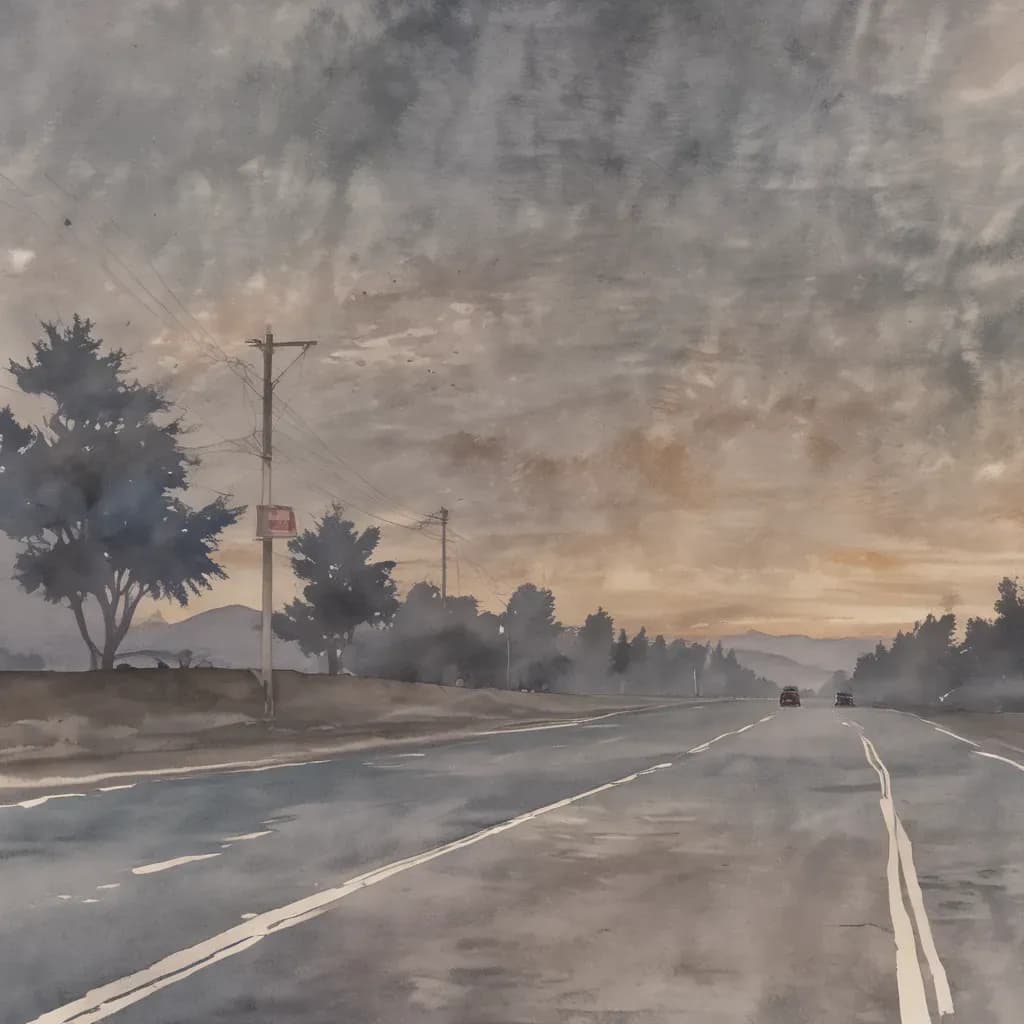
The closing track of her 2020 debut EP of the same name, "minor" is deceptively simple. At its surface, it is a song about a teenager who wants to drive to someone she loves but cannot because she is underage and her mother is waiting at home. That is the whole plot. Yet something in that plain admission, the bald acknowledgment of powerlessness, makes the song feel much larger than its premise suggests.
The Double Meaning at the Heart of the Song
The word "minor" does two things simultaneously throughout the song, and both meanings are essential.
In its most literal sense, it refers to her legal status: a person under the age of eighteen, subject to parental authority, unable to act on adult impulses. She cannot drive all night. She cannot show up unannounced. The curfew is real. The geography between her and whoever she is longing for (the song references Glendale, California, a grounding touch of LA specificity) is real, and the solution of simply going is not available to her.
But "minor" also carries its secondary meaning: small, lesser, not quite important enough to take seriously. The song contains the awareness that her feelings will be dismissed as teenage drama, that adults will nod patronizingly at the enormity of what she is experiencing and assure her it will pass. She gets ahead of that dismissal. By naming herself "minor," she preemptively acknowledges the way the world categorizes her, while the emotional reality of the song makes clear that the designation is wrong. Nothing about how she feels is minor.
Abrams has spoken about the song as the first piece of writing in which she felt she had found her own voice. She described writing it at seventeen as an immediate recognition: this was hers, not an imitation of someone else.[1] That quality of immediate self-recognition is audible in the song itself. It has the texture of something confessed rather than composed.
The EP's Thesis Statement
Released on July 14, 2020 (originally scheduled for June 16, 2020, Abrams delayed it out of respect for the Black Lives Matter movement at the height of its visibility following the murder of George Floyd),[2] the "minor" EP traces an arc across seven tracks covering the wreckage of first love, the complexity of friendship, and the tentative process of becoming a person. Abrams wrote most of the material after returning from Barnard College earlier than expected, having decided to leave school and pursue music full-time. The EP was produced with Blake Slatkin in a period she described as an intense creative outpouring: most of the record was completed in a single week.[3]
Placing "minor" as the final track was a deliberate structural choice. After six songs of romantic loss, emotional overflow, and complicated self-reckoning, the title track functions as a landing point. It is the simplest song on the record, stripped of the elaborate emotional architecture of tracks like "21" or "I Miss You, I'm Sorry." Its plainness is the point. The whole EP has been about the particular anguish of being young and feeling everything too much. "Minor" names that directly.
The phrase itself, Abrams has said, was something she overused in regular speech, making it the natural title for both song and EP, even though the word does not appear elsewhere across the seven tracks.[1] It is the unsaid thing that all the other songs were circling.
Adolescence as a State of Constraint
What makes "minor" unusual among breakup-adjacent songs is that it locates the source of pain not in the other person, not in the relationship's failure, but in an institutional condition: being legally young. Most songs about longing find their antagonist in a person. This one finds it in a concept. The person she wants to be with is absolved explicitly; she makes clear it is not their fault. The obstacle is neither human nor avoidable. It is simply how things are.
This is a more sophisticated emotional position than it might initially appear. Teenagers in songs are often portrayed as volatile or irrational, victims of their own feelings. Abrams' narrator is neither. She is clearheaded about the situation, frustrated but not furious, resigned but not passive. She knows exactly what she would do if she could. She just cannot. The maturity of that acceptance, of a seventeen-year-old writer finding language for constraint without melodrama, is what gives the song its unusual power.
Abrams grew up in Pacific Palisades, Los Angeles, the daughter of filmmaker J.J. Abrams and producer Katie McGrath.[4] She has been careful to keep her family's industry connections separate from her artistic identity, and the emotional architecture of her writing bears out that independence: these are songs rooted in specific adolescent experiences, not in the aesthetics of celebrity. The geographical reference in "minor" points to a real place, a real distance that felt uncrossable, and that specificity is part of what makes the song work.
Abrams has described her writing process as driven entirely by emotional honesty. She has said she is more afraid to release a song that lacks authenticity than to release one that overshares.[3] That ethic is most audible in "minor," a song whose power comes precisely from its refusal to dress up the situation or reach for metaphor. The mundane fact of a curfew is treated with the same seriousness as any formal constraint on human desire.
A Quiet Influence
In the months after the EP's release, something unexpected happened. Olivia Rodrigo, then a rising actress and singer preparing to release her debut single, listened to the "minor" EP while driving around her neighborhood. She has described being so moved by Abrams' vulnerability that she went home and wrote "Drivers License" the same night.[5]
The specificity of that story, Rodrigo looping the EP in her car and finding emotional permission in Abrams' directness, captures something important about how "minor" travels. The song is not a hit in the conventional sense. It never charted. It has no official music video. But it operates as a kind of underground text, circulating among listeners who recognize the specific feeling it describes. That feeling does not expire when you turn eighteen. Adults carry it too, in different forms, under different names. The curfew changes. The condition persists.
Alternative Readings
Some listeners have heard the song as being as much about creative ambition as romantic longing. The constraints of being underage apply not only to love but to career, to being taken seriously, to having your work assessed on its own terms rather than through the lens of your age. Given that Abrams was, at seventeen, already navigating a path toward a major-label signing, the tension between emotional readiness and institutional gatekeeping carries additional resonance.
There is also a reading in which "minor" is about the experience of emotional scale: the specific adolescent terror that your feelings are too big for your life to contain, that you need more room than you have been given. In that reading, the curfew is not just a curfew. It is a symbol for every system that has not yet let you arrive.
The Walls That Remain
"Minor" is a small song. It says so itself, insists on it. But small is not the same as slight, and Gracie Abrams knew that when she wrote it at seventeen in a moment she has described as the first time she heard her own voice clearly.[1] The song earns its place as the title track of her debut EP because it names, with unfussy directness, the condition the whole collection was trying to describe: the experience of feeling adult-sized things inside a life that has not yet caught up.
Critics praised the EP's "cutting, confessional lyrics" and the emotional authenticity Abrams achieved, with one reviewer describing her narrative instincts as something that "would make artists many years her senior envious."[6] That reception says something about what the song does: it finds the universal inside the specific without losing either. Abrams does not pretend the curfew stands in for something larger. She just describes the curfew accurately, and the something larger takes care of itself.
The curfew lifts. The feeling does not disappear. It just finds new walls.
References
- Coup de Main: Gracie Abrams on her debut Minor EP — Interview in which Abrams discusses writing 'minor' at seventeen, calling it the first song where she recognized her own voice
- Minor (EP) - Wikipedia — Wikipedia article covering the EP's release details, delay due to BLM movement, tracklist, and reception
- Women in Pop: Interview - Gracie Abrams releases debut EP Minor — Interview where Abrams discusses her commitment to honesty in songwriting and the recording process with Blake Slatkin
- Gracie Abrams - Wikipedia — Biographical article covering Abrams' upbringing in Pacific Palisades, her family background, and early career
- Meet the Inspiration Behind Drivers License: Gracie Abrams — Article documenting Olivia Rodrigo's account of listening to the minor EP and writing Drivers License the same night
- NME Review: Gracie Abrams - minor EP — Critical review praising Abrams' confessional writing and noting the EP's emotional honesty