My Winter
The Ache That Won't Quit
There is a particular kind of longing that persists even when everything appears fine. You have someone present, warm, and real in front of you, and still your mind drifts somewhere else. "My Winter" by Jack Harlow is a song about that specific failure, and what makes it remarkable is how unflinchingly honest it is. The narrator does not explain himself away, reach for excuses, or complicate the situation with narrative. He simply names the problem, repeats it until it settles like a bruise, and then keeps doing the very thing he knows is wrong.
The song is the fourth track on Monica, Harlow's most vulnerable and musically ambitious album, and many critics identified it as the record's emotional centerpiece. It earns that position not through spectacle but through the quiet devastation of being completely lucid about your own worst tendencies.
Born in Louisville, Made in New York
Released March 13, 2026 on Harlow's 28th birthday, "My Winter" arrived at a pivotal juncture in his career.[1] The album was recorded at Electric Lady Studios in New York City, the legendary Greenwich Village facility where Jimi Hendrix built his creative home and where D'Angelo tracked Voodoo. That choice of location was not incidental. Harlow had relocated from Louisville and spent two years making music he ultimately scrapped entirely before committing to the direction Monica represents.[1]
After the commercial rap success of That's What They All Say (2020) and Come Home the Kids Miss You (2022), and the introspective pivot of Jackman (2023), Harlow abandoned rapping altogether. He collaborated with jazz pianist Robert Glasper and gospel keyboardist Cory Henry, stepped into a world of jazz-flecked neo-soul, and described the whole exercise as wanting something "a little more egoless" and "a little less self-indulgent."[2] He told interviewers he had reached a point where he was genuinely dreading studio sessions and needed to ask himself what would still excite him.[2]
Monica is named after his mother, and the music carries that kind of tenderness throughout: soft instrumentation, unhurried tempos, songs that feel like they were written at 2 a.m. in an apartment you moved into alone. "My Winter" is the record's most fully realized expression of that atmosphere.
The Seasonal Metaphor and Where It Goes
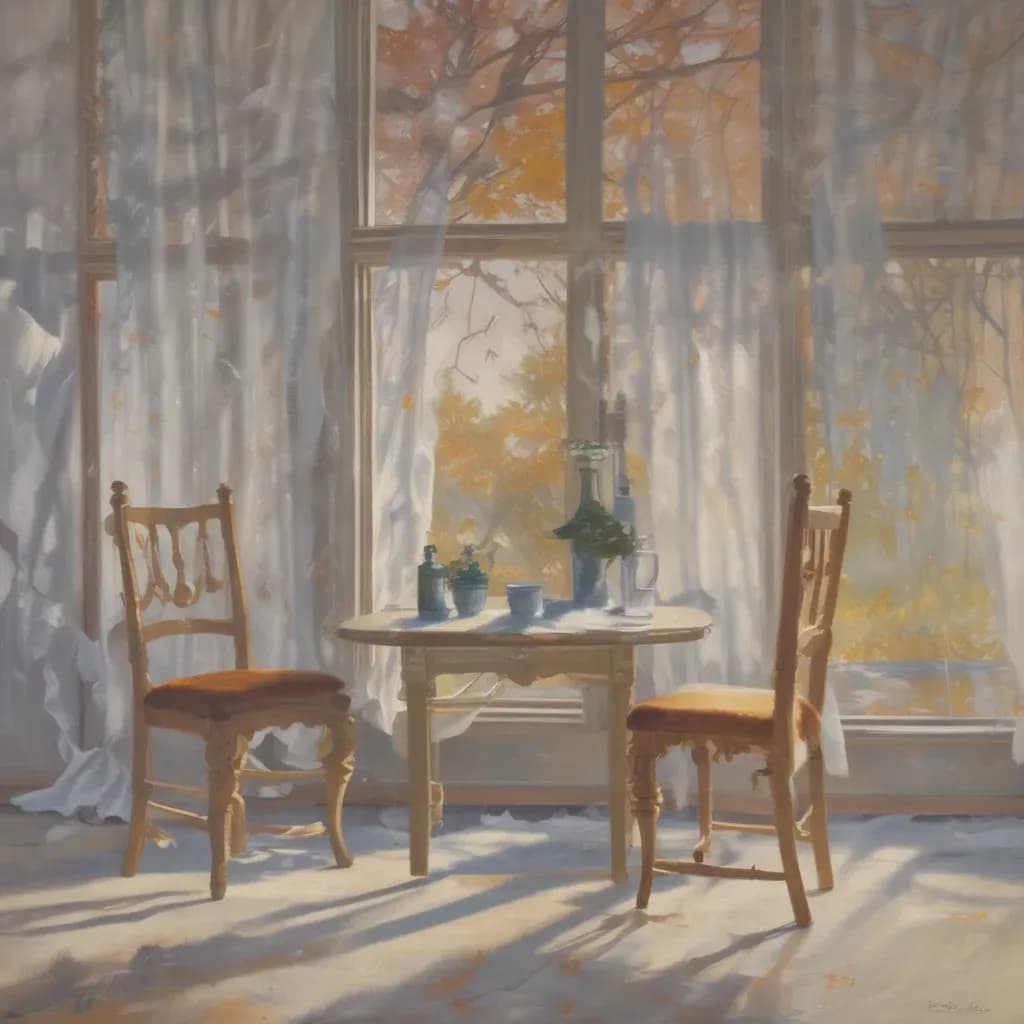
The song's central conceit is elegantly simple. The narrator addresses two women using seasons as their defining qualities: one is his winter, one is his summer. But the metaphor goes somewhere more uncomfortable than mere contrast. Whenever winter arrives, he finds himself longing for summer. Whenever summer is present, he aches for winter. He is physically with one woman and mentally absent, his thoughts already with the other.
This is not a song about being unable to choose between two people in the abstract. It is about what happens after the choice has already been made, when you are with someone and it still is not enough. The seasonal framework removes any possibility of a satisfying resolution. There is no third season waiting to fix things. The cycle is, in the word the song returns to again and again, a curse.
What makes Cory Henry's organ playing so crucial to the song is exactly what critic Jon Negroni identified in his review: the warmth of the arrangement prevents the narrator from coming across as simply pathetic.[3] The production holds the narrator's weakness inside something that sounds almost like grace. You are not watching someone be cruel. You are watching someone be human, which is sometimes worse.
Ravyn Lenae's backing vocals function in a similar way. Their ethereal quality, somewhere between an echo and a separate conscience, gives the song a ghostly texture, as if the absent woman is present even in the current woman's space. The arrangement does the moral work that the narrator refuses to do.
Self-Knowledge Without Self-Correction
What separates "My Winter" from a thousand other songs about romantic ambivalence is its refusal to let the narrator off the hook. He is not confused. He understands the situation with complete clarity. And yet understanding changes nothing. This is the psychological territory that makes the song feel emotionally true: the gap between knowing better and doing better.
The mantra-like repetition of the acknowledgment that the situation is a curse is not self-pity. It reads more like a diagnosis. The narrator has identified the problem precisely and then, having identified it, continues to live inside it. There is a certain honesty in that, not moral honesty but psychological honesty. He is not performing remorse. He is simply reporting.
Neon Music described this as the album's most revealing moment, noting how the narrator characterizes the situation as a curse rather than romanticizing it, which gives the song a greater emotional honesty than many of the surrounding tracks.[4] And Stereogum's assessment of the album overall captures something applicable here: Harlow makes music without ego, but you cannot say he is without soul.[5]
The ego-driven move would have been to frame the love triangle as proof of desirability, a situation that confirms how much both women want to be with him. Instead, the song frames the whole arrangement as burden. The narrator is not boasting. He sounds tired.
The Cultural Friction Around the Album
It would be dishonest to discuss "My Winter" and Monica without acknowledging the controversy that surrounded the album's release. In a widely reported New York Times Popcast interview, Harlow described making the record as choosing to "get Blacker" at a time when other white artists were pivoting toward country or pop-punk.[6] The comment provoked significant backlash. Critics and listeners questioned whether a white artist should frame his investment in Black musical traditions that way, and whether the framing itself reflected a misunderstanding of what it means to genuinely work within those traditions.
Okayplayer identified this as the album's central tension: the record reflects an identity crisis, and the controversy around its promotion deepened rather than resolved that crisis.[7] For many listeners, the backlash became the lens through which everything on Monica was heard. The Hammond B-3 organ, the Electric Lady Studios setting, the Soulquarians-era aesthetic: all of it suddenly carried additional weight.[1]
But a song about emotional inadequacy ultimately speaks for itself. The external controversy and the internal content of "My Winter" rhyme uncomfortably. Both are about someone who sees the situation clearly and whose self-awareness does not automatically translate into better behavior.
Why It Resonates
The Soulquarians comparison that critics kept reaching for when describing Monica is not incidental to understanding what "My Winter" accomplishes.[8] The neo-soul tradition, the one D'Angelo, Erykah Badu, and J Dilla helped define, was always interested in romantic feeling as something raw and unresolved. Songs in that tradition were not about clean narrative arcs. They were about the complicated middle, the ongoing situation that resists tidy endings.
"My Winter" fits that tradition better than almost anything else on the album because it refuses resolution. Unlike the album's title track, which explores longing from a distance, "My Winter" is about proximity. It is about what happens when longing persists even when the object of that longing is right beside you. The seasonal metaphor captures something essential about cyclical desire: choosing does not help because choosing only makes you start longing for the other choice.
Whether you have experienced this precise situation or not, most people recognize the emotional architecture. The particular comfort of a person you have left. The way something familiar can feel like a relief from something present. The season that seems perfect once it has passed.
A Warm Confession
"My Winter" succeeds because it is honest about a form of weakness that most love songs dress up as passion or destiny. Harlow does not glamorize the situation. He names it. He repeats it. He wraps it in some of the most beautiful production on the album, and then he leaves it unresolved, because it is unresolved.
Cory Henry's organ does not judge the narrator. Ravyn Lenae's vocals do not absolve him. The music simply holds the whole thing together, making space for a confession that is uncomfortable to make and uncomfortably easy to recognize.
Rolling Stone noted that when Monica works, it is the most compelling music Harlow has made.[8] "My Winter" is where it works most completely. The curse is still active by the time the song ends. The seasons keep turning. And somehow that feels exactly right.
References
- Monica (album) - Wikipedia — Album context, tracklist, release date, Electric Lady Studios recording, and Soulquarians comparisons
- Jack Harlow Talks Singing on New Album 'Monica' - Power 106.9 — Harlow interview on creative process, desire to be egoless and less self-indulgent, and artistic motivations for Monica
- Album Review: Monica - InBetweenDrafts — Detailed track-by-track analysis; identifies 'My Winter' as the album's emotional center and notes Cory Henry's organ making the narrator's weakness feel warm rather than pathetic
- Jack Harlow Monica Review - Neon Music — Calls 'My Winter' the album's most revealing moment; narrator lying beside one person while thinking of another, characterizing it as a curse rather than romanticizing it
- Jack Harlow 'Monica' Album Review - Stereogum — Stereogum calls it Harlow's best album and an identity crisis; describes 'My Winter' as playing like a lullaby for dying situationships
- Jack Harlow Explains Why He 'Got Blacker' On New Album 'Monica' - HotNewHipHop — Reports on controversial New York Times Popcast interview where Harlow described making Monica as getting 'Blacker'
- Five Takeaways From Jack Harlow's 'Monica' - Okayplayer — Examines Monica as a reflection of artistic identity crisis and Harlow's second abrupt sonic shift in four years
- Jack Harlow's 'Monica' Review - Rolling Stone — Rolling Stone review acknowledging Monica as one of Harlow's most coherent projects