Nightingale Lane
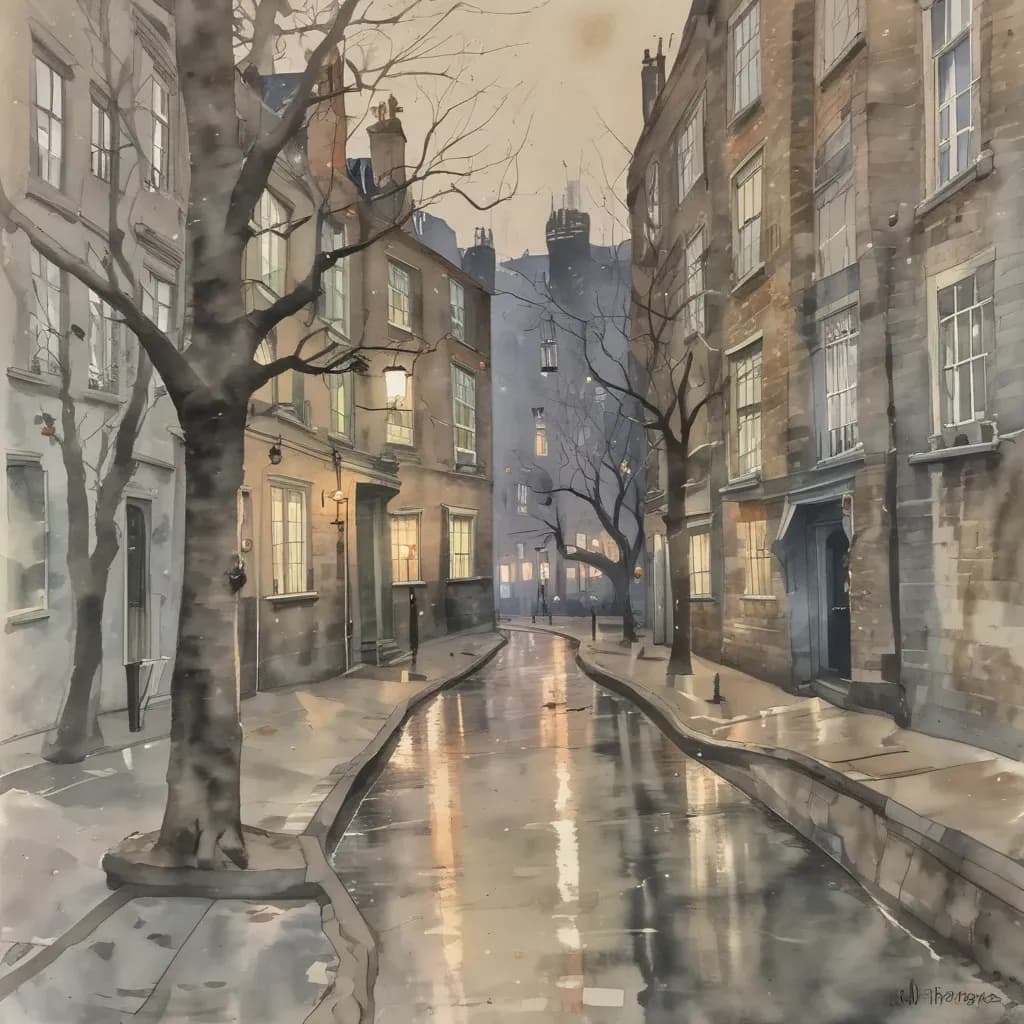
There is a particular cruelty to grief attached to geography. A street, a corner, a building you cannot avoid -- these become sites of involuntary memory, places where the past ambushes you before you can prepare a defense. RAYE knows this territory intimately. On "Nightingale Lane," the second single from her 2026 album "This Music May Contain Hope," she transforms a real road in Clapham South, London into one of pop music's most achingly rendered emotional landmarks.
RAYE has described it simply as a song about the greatest heartbreak she has ever known[1]. That plain statement barely prepares you for what the song delivers: five minutes of orchestral sweep, piano intimacy, and a vocal performance of shattering emotional precision. It is a ballad built for reckoning, not for comfort -- and yet, somehow, it ends in something close to peace.
Triumph Preceding Confession
"Nightingale Lane" arrived on February 27, 2026[2] -- seven years to the day after RAYE places the heartbreak at its center. That precision is not coincidental. RAYE has said she is painfully reminded of the lost relationship every time she drives near the street[1], and releasing the song on its anniversary feels like a deliberate act of transformation: converting a wound with a date attached into a piece of art that belongs to the world.
The timing places the song within one of the most remarkable career arcs in British pop history. Rachel Agatha Keen, born in 1997 in Tooting, south London, spent years writing and co-writing for other artists while being stifled at Polydor Records, where the label repeatedly delayed her debut album in favor of more commercially formulaic material. Her public disclosure of this situation in 2021 drew immediate solidarity from peers including Charli XCX and MNEK[3]. After parting ways with Polydor, she founded her own label, Human Re Sources, and released "My 21st Century Blues" in 2023 to critical acclaim.
That album won her six BRIT Awards in a single night in 2024[3], a record, including British Album of the Year and British Artist of the Year. "Nightingale Lane" comes from the follow-up, "This Music May Contain Hope," her second studio album, structured across four seasonal movements[4]. The song sits in the album's winter section, and its placement feels precise: winter as the season of stillness, of looking back over bare ground, of waiting for something to grow.
A Street That Holds You Still
The central conceit of the song is straightforward and devastating: driving near Nightingale Lane and the adjacent Old Park Avenue becomes an act of involuntary remembrance. The narrator cannot pass without being arrested by memory, held at a red light while the past floods in[1]. It is a phenomenon anyone who has loved deeply and lost will recognize immediately: the geography of a relationship does not dissolve when the relationship ends. The city rewrites itself around your former happiness, marking certain corners with invisible warnings.
What distinguishes RAYE's treatment of this territory is its honesty. The song does not romanticize the lost relationship into perfection. The narrator acknowledges that the two people involved were not quite right for each other, that something was fundamentally misaligned between them[1]. This refusal to retrofit the past with a revisionist glow is rare in heartbreak songs, and it gives the piece an unusual moral weight. What RAYE mourns is not the myth of a perfect love but the reality of a specific feeling: knowing herself fully loved, and being fully capable of loving back.
This is a grief not about a person, exactly, but about a version of oneself -- the self that existed inside that relationship's warmth, that believed in that particular intensity of feeling. The loss is less "I miss him" and more "I miss knowing that I could feel that way." It is a subtler and ultimately more devastating frame.
The Armor and the Opening
A recurring image in the song concerns the psychological protection that accumulates around a wounded heart over time. The narrator describes something like a layer of steel -- an emotional fortification built to prevent further harm[1]. This is a compelling paradox at the core of the song's meaning: the very defenses that allow survival also prevent the kind of connection that once made life vivid. The armor works. And the armor costs everything.
RAYE has spoken about a devastating breakup that took her three to four years to emotionally process, a period in which she had to learn how to feel again. "Nightingale Lane" sounds like the song that could only be written once that processing was complete -- once she could look directly at the wound without flinching, and find something worth saying that goes beyond pain.
The song's architecture mirrors this emotional journey. It opens in intimacy, piano-led and close, before expanding into orchestral grandeur -- the kind of swelling, big-band arrangement that transforms a private confession into something cinematic and collective[5]. Co-written and co-produced by RAYE and Tom Richards, with additional composition by Chris Hill[4], the production earns its scale. It does not impose grandeur on small feelings. It meets feelings that were already enormous and gives them room.
Hope as a Verb
The album's title, "This Music May Contain Hope," is both an announcement and a disclaimer. It does not promise hope. It acknowledges the possibility of hope as something present in the material, available to those who need it, but not guaranteed and not forced.
"Nightingale Lane" dramatizes this distinction. The song does not arrive at a triumphant declaration that everything will be fine. Instead, it depicts hope as an act -- a practiced, deliberate orientation toward the future that must be chosen in ordinary moments: while sitting at a red light, while remembering what was lost, while driving past a street that still holds the ghost of a feeling. RAYE has described the album as medicine she made for herself and shared with the world, a soft place for those who need it[4]. "Nightingale Lane" is the album's most concentrated dose of that medicine.
This framing carries weight in the broader cultural moment of 2026, a period in which many people are navigating grief, transition, and the challenge of building emotional resilience without numbing out entirely. RAYE's willingness to inhabit that specific tension -- to stand inside grief and still orient toward the future, not by bypassing the pain but by walking through it -- gives the song a resonance well beyond the personal story that inspired it.
The BRIT Awards and the Ballad's Cultural Arrival
The day after the song's release, RAYE performed "Nightingale Lane" at the 2026 BRIT Awards, bringing a full orchestra to the ceremony[6]. The performance generated considerable social conversation, particularly around a climactic vocal moment that drew significant attention from critics and viewers. It was the kind of BRIT Awards moment that gets replayed -- a reminder that pop music, when handled with sufficient emotional courage, can stop a room.
Following the performance, the song surged in UK chart position. Billboard's weekly fan-voted poll named it the favorite new music of the week[7]. Rated R&B praised it as a soulful ballad in which RAYE revisits heartbreak with uncommon depth[8]. DIY Magazine called it a soaring heartbreak ballad[5]. The consensus seemed to be that in a catalog already filled with emotionally ambitious work, RAYE had delivered something quietly extraordinary.
The Nightingale Reinterpreted
The choice of title invites a particular reading. In the Western literary and musical tradition, the nightingale is associated with love and longing, with music as the language of the heart, and with a sweetness inseparable from sorrow. The jazz standard "A Nightingale Sang in Berkeley Square" treats the bird as a symbol of love's magic, its song announcing the enchantment of the city when two people fall in love.
RAYE's nightingale is not on Berkeley Square but on a lane in south London -- earthier, less glamorous, more lived-in. And rather than singing of enchantment, it sings of consequence. The nightingale in RAYE's song is memory itself: beautiful, unavoidable, capable of stopping time with a single note.
One reading of the song is intensely personal: this is RAYE's specific Clapham street, her specific February morning in 2019, her specific heartbreak. Another reading widens the frame: Nightingale Lane is every street where love ended, every geography that holds the permanent impression of something irreplaceable. RAYE's gift is for writing from deep particularity into wide universality. The more precisely she names her own experience, the more she makes room for ours.
A Wound with a Date, a Song Without an Expiry
Seven years separated the heartbreak from the song. In those seven years, RAYE fought publicly for her freedom from a major label, built an independent empire, won six BRIT Awards, toured arenas, and collaborated with Hans Zimmer and Al Green. She also, perhaps most importantly, let herself feel her way through the worst of what happened to her. "Nightingale Lane" is the artifact of that processing.
It is not a song of resolution, exactly. The narrator does not reach the end having healed completely or moved on. She reaches the end having chosen, deliberately and imperfectly, to remain open -- to maintain the belief that this quality of love and loss, this intensity of feeling, is worth risking again. That is the hope the album's title promises, and that is what "Nightingale Lane" delivers: not the absence of pain, but evidence of what pain leaves behind when it has finally been felt all the way through.
References
- RAYE 'Nightingale Lane' Lyrics Meaning — Capital FM breakdown of the song's meaning, themes, and RAYE's personal statements about the heartbreak
- RAYE Releases New Single 'Nightingale Lane' — Rolling Stone coverage of the single release and its anniversary context
- RAYE - Wikipedia — Biographical background, career history, Polydor dispute, BRIT Awards record
- This Music May Contain Hope - Wikipedia — Album structure, tracklist, collaborators, and RAYE's creative intentions
- RAYE - 'Nightingale Lane' Review — DIY Magazine review describing the song as a soaring heartbreak ballad with big-band orchestration
- Watch RAYE Perform 'Nightingale Lane' at the BRIT Awards 2026 — NME coverage of the BRIT Awards 2026 orchestral performance
- RAYE's 'Nightingale Lane' Named Favorite New Music — Billboard fan poll naming the song favorite new music of the week
- RAYE - 'Nightingale Lane' — Rated R&B review of the single as a soulful heartbreak ballad