NO HANDS
The Wheel and the Void
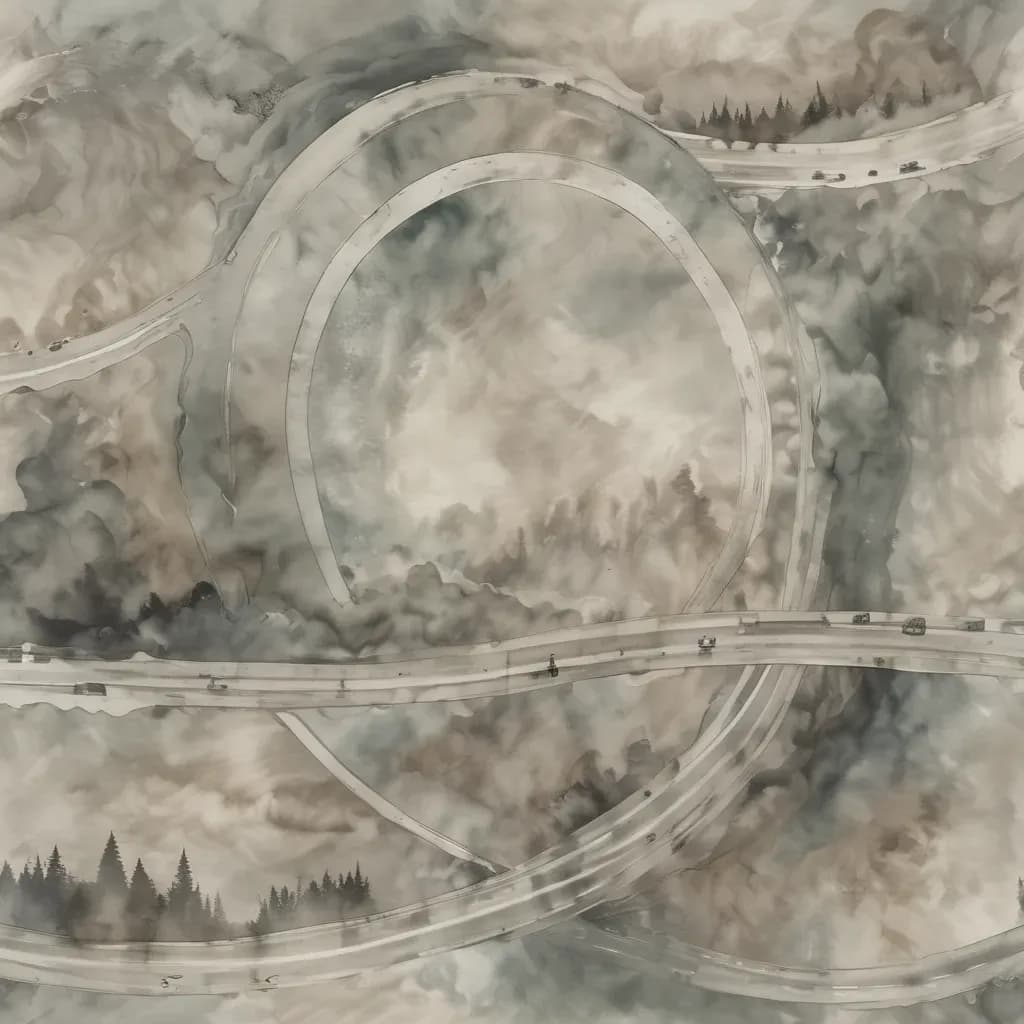
There is something uniquely contemporary about the image of someone lifting their hands from the controls while the vehicle keeps moving. Not a crash, not a skid -- just the quiet withdrawal of guidance while forward momentum continues unchecked. In "NO HANDS," Kim Gordon seizes on exactly this: the spectacle of power without grip, velocity without accountability. The song is the third track on her third solo album, Play Me, released on March 13, 2026, and it arrives already at speed.
Gordon has always been a diagnostician. Even in her Sonic Youth years, she didn't so much express emotion as name conditions -- the way a clinician notes a fever without panic. "NO HANDS" is that diagnostic instinct at its most compressed. It describes, in terms simultaneously abstract and precise, a culture that has decided the controls are optional.[1]
Power Without Grip
Play Me arrived at a particular moment in American life. Gordon has been explicit that the news was the primary creative influence on the album.[2] The record was assembled quickly. Gordon and producer Justin Raisen shared a commitment to brevity -- to songs that say what they need to say and then stop -- an approach Gordon described as "more focused, and maybe more confident."[3] The effect, across the album and acutely on "NO HANDS," is of someone delivering a crisis bulletin without editorializing.
The song's central preoccupation is with abdicated responsibility. It invites the listener to observe a figure who occupies a position of control but treats that control as optional, even amusing. Gordon frames this without outrage, with something closer to forensic neutrality. She notes what is happening. She observes the recklessness. The listener is left to reckon with what that recklessness means.
This was, by early 2026, not an abstract condition. The political climate Gordon was writing into had produced a series of figures in high institutional positions who behaved with a remarkable disregard for the functions they nominally oversaw. The song names none of them. It doesn't need to. The image of lifted hands on a fast-moving vehicle is available to any consciousness that has been paying attention.
Gordon has described herself as "more of an interventionist than a musician."[3] That framing is useful here. She isn't protesting in any recognizable sense. She is naming. And the image she chooses -- hands lifted while the vehicle accelerates -- is one of the most effective pieces of political shorthand she has written. It conveys both the thing being done and the attitude behind the doing: a breezy indifference to consequence that is, somehow, its own kind of power move.
Sound Built for a Crisis
The sound of "NO HANDS" is as important as its subject. Justin Raisen, who has worked with Gordon since her 2019 debut No Home Record and served as the architect of The Collective's Grammy-nominated production, constructs the track over a crushed trap beat with booming sub-bass and compressed percussion.[4] The production is heavy and forward-leaning -- it sonically enacts the experience of being in a vehicle that is going too fast.
This is an unlikely fusion. Gordon's lineage runs through no-wave and noise rock, through the New York downtown scene of the early 1980s, through feedback and atonality and the performance of discomfort. Raisen's production language comes from somewhere else: from contemporary hip-hop's architectural ambitions, from the 808 and the sub-bass and the carefully tuned aggression of the trap idiom. The combination on "NO HANDS" has been described as existing at the intersection of "barbiturate no-wave and speedy clamor-pop,"[4] a phrase that captures the paradox of something that feels simultaneously numbed and urgent.
Gordon's vocal delivery sits in the tradition of her earlier work: not sung exactly, more recited, with an affectlessness that reads, in context, as deliberate performance. She doesn't sound frightened. She doesn't sound angry. She sounds like someone watching through glass. The production rages; she observes. This tension between delivery and the sonic landscape underneath is where the song's meaning actually lives.
NME called the album "a left turn" that "has no place being this jarring yet pleasurable from any 'rock' artist, let alone at 72,"[5] a remark that captures both the surprise and the internal logic of what Gordon is doing. She has always treated genre as a set of materials rather than a container. "NO HANDS" is no exception.
Placed Within the Record
Track three on Play Me, "NO HANDS" sits within a record that functions as a sustained, oblique critique of the present. Adjacent tracks address Mars colonization fantasies, Silicon Valley's Cybertruck culture, and the algorithmic flattening of music by streaming platforms. The closing track, "BYEBYE25!", deploys a list of words reportedly targeted for removal from federal agency communications, turning the song into a quiet act of archival resistance.[6]
"NO HANDS" is the album's most vehicle-specific statement, but it shares its neighbors' preoccupation with who holds power and what they are doing with it. Where other tracks on the record engage more directly with technology's specific forms of accumulation, this song keeps its focus on something more elemental: the moment when the person at the controls simply stops controlling. The album's title track, "Play Me," functions as a kind of mission statement for these themes, wrestling with the experience of being acted upon, of being a passive receiver of forces larger than yourself. "NO HANDS" is its complement. Where "Play Me" looks at the acted-upon, "NO HANDS" looks at the actor -- and finds someone who has stopped acting.
Other Readings
The driving metaphor admits of at least two other readings that coexist productively with the political.
The first is personal. Gordon's life between the dissolution of Sonic Youth in 2011 and the release of her solo catalog has been partly characterized by a reckoning with a relationship in which decisions were made for her or around her without full partnership. The image of someone who will not take the wheel while expecting to be driven resonates beyond politics. It describes a particular kind of intimacy failure: the abdication of agency in a partnership, the performance of detachment as a power move.[1] Gordon's memoir Girl in a Band (2015) explored this terrain directly, and her solo work has continued to process the dissolution of her marriage as both personal event and cultural text. "NO HANDS" doesn't invoke this context explicitly. It doesn't need to.
The second is technological. Play Me is obsessed with Silicon Valley's particular species of hubris -- its colonization of daily life, its production of dependency alongside promises of autonomy. "NO HANDS" resonates with the discourse around autonomous vehicles, literally cars with no one steering, which became a major site of cultural anxiety in the 2020s. The Teslas, Waymos, and promises of full self-driving that populated the period offered exactly this image: a vehicle moving without human hands, framed as progress.[7] Gordon, whose album is skeptical of technological triumphalism across its twelve tracks, may well be reading that promise against itself.
An Observation, Not a Verdict
One of the qualities that distinguishes "NO HANDS" from more conventional political music is what it withholds. Gordon offers no corrective. She doesn't model the behavior she'd prefer. She doesn't construct an aspirational counter-image. She describes a situation and lets it stand. The song ends -- quickly, as Play Me's tracks tend to[3] -- without resolution. The vehicle is still moving. The hands are still off the wheel.
The album received widespread critical acclaim, named Album of the Week by Stereogum[8] and earning a Metacritic score of 81 from twenty critics.[9] Victoria Segal, writing in Mojo, noted that Gordon "still sounds like an artist whose nerve endings are uninsulated."[9] That quality is precisely what "NO HANDS" communicates: not the processed outrage of the political news cycle, but the raw, unmediated experience of watching something happen that should not be happening, and finding that the normal structures of alarm have stopped working.
At 72, in the middle of what Glide Magazine called her "fearless late-career run,"[10] Gordon is doing something that younger artists rarely attempt: making formally adventurous, politically engaged music that refuses to aestheticize its subject matter, that declines to make crisis beautiful. "NO HANDS" is a small song, under three minutes, built on a trap beat and delivered in near-monotone. It may be one of the most unsettling things she has written.
References
- Kim Gordon - Wikipedia — Biographical context including Sonic Youth, memoir Girl in a Band, and solo career
- Kim Gordon: Play Me Interview - Rolling Stone — Gordon on the news as primary influence and late-career perspective
- Rapping with Kim Gordon - Bandcamp Daily — Gordon on song brevity, her interventionist philosophy, and the Raisen collaboration
- Album Review: Kim Gordon, Play Me - New Noise Magazine — Review describing the no-wave/trap fusion and the song's sonic territory
- Kim Gordon, Play Me - NME Album Review — Review calling the album a left turn that is jarring yet pleasurable
- Play Me (Kim Gordon album) - Wikipedia — Album tracklist, production credits, and critical reception summary
- Kim Gordon: Play Me Interview - DIY Magazine — Interview on tech culture themes, autonomous vehicles, and music as freedom
- Album of the Week: Kim Gordon, Play Me - Stereogum — Album of the Week designation with analysis of Gordon's sonic evolution
- Play Me - Metacritic — Aggregate critical score of 81 and collection of reviews including Victoria Segal in Mojo
- Kim Gordon's Fearless Late-Career Run Continues - Glide Magazine — Review praising Gordon's continued artistic adventurousness at 72