No Surprises
A Lullaby for the Quietly Drowning
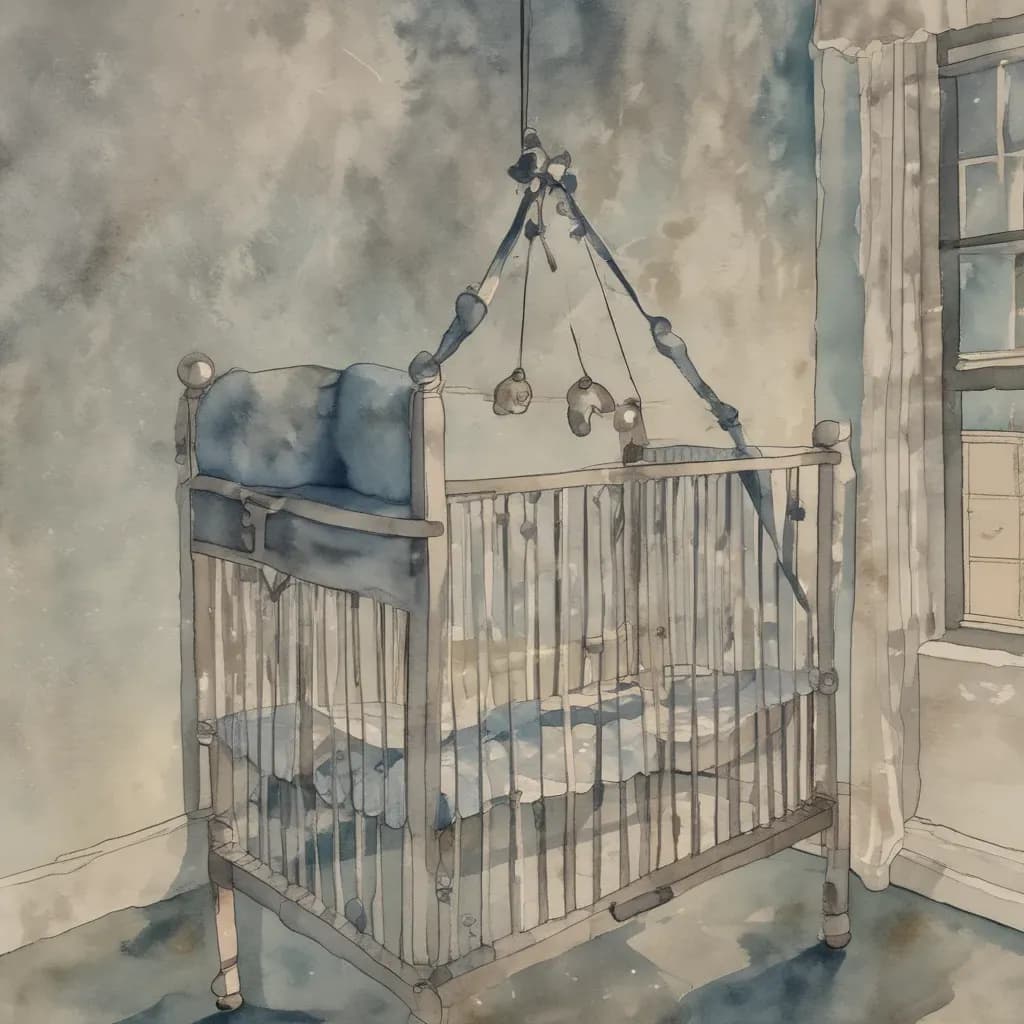
There is something unsettling about a song that sounds like it could play over a baby's crib but speaks of a life collapsing inward. Radiohead's "No Surprises," from their 1997 masterpiece OK Computer, achieves exactly that contradiction. It is a song of tremendous gentleness wrapped around a core of suffocating despair, a track that Thom Yorke himself once described as a "fucked-up nursery rhyme."[1] Its melody could soothe you to sleep. Its meaning might keep you up all night.
Read the full lyrics on Genius
Origins: A Song That Came Early
"No Surprises" predates most of OK Computer. Yorke first played it to his bandmates in a dressing room in Oslo on August 3, 1995, under the working title "No Surprises, Please."[1] According to his tour diary, bassist Colin Greenwood "went nuts" upon hearing it. The song would become the very first track recorded for the album,[2] though guitarist Ed O'Brien later admitted to Melody Maker that it "didn't exactly set the tone" for what would follow. The band recorded sixteen different versions before ultimately returning to the first take, a testament to their restless perfectionism and, as O'Brien put it, the fact that they "get bored very easily."[2]
By the time OK Computer was released in June 1997, Radiohead had spent years touring relentlessly behind The Bends and grappling with the alienation of sudden fame. The album was recorded largely at St Catherine's Court, a 15th-century manor house in Bath,[3] and its songs reflected a growing anxiety about technology, consumer culture, and the erosion of human connection. "No Surprises" was released as the fourth and final single from the album in January 1998.[1]
The Sound of Sedation
Musically, the song is almost perversely beautiful. A chiming glockenspiel opens the track with a melody reminiscent of a music box, and an acoustic guitar arpeggio carries the verses with a warmth that feels borrowed from a different, kinder record.[2] O'Brien told Guitar World that the guitar sound "was supposed to harken back to Pet Sounds," and Yorke confirmed he was aiming for a Beach Boys feel.[4] The arrangement is sparse and deliberate, with none of the layered electronic anxiety that characterizes much of the album.
Yorke wanted the performance to feel sedated. He told Q magazine that he wanted the band "to sound like we'd all taken Mogadon," a benzodiazepine sleeping pill.[4] They tried playing it as slowly as possible, but it was never slow enough, so they took an earlier version and digitally slowed it down.[4] The result is a track that moves at the pace of someone half-asleep, or perhaps half-alive. "If you play it right, it is fucking dark," Yorke said. "It only sounds good if it's really fragile."[4]
This tension between sonic beauty and lyrical darkness was entirely intentional. Colin Greenwood explained the album's sequencing philosophy to Melody Maker: "Scare the living daylights out of 'em, then soothe their brow: that's the Radiohead way."[1] The song follows "Climbing Up the Walls," one of the most harrowing tracks on the record, and its lullaby quality is designed to comfort the listener while slipping something far more troubling underneath.
A Heart Full of Landfill: Buried Emotions and Suburban Suffocation
The song opens with an image of emotional overload, a heart compared to a garbage dump, overstuffed and toxic. Yorke told interviewers that this stemmed from what he called his "unhealthy obsession" with plastic waste: "All this stuff is getting buried, the debris of our lives. It doesn't rot, it just stays there. That's how we deal, that's how I deal with stuff, I bury it."[5] The metaphor operates on both ecological and psychological levels. Just as landfills conceal waste beneath a surface that looks like ordinary ground, the song's narrator buries emotional damage beneath a veneer of normalcy.
What follows is a catalog of quiet suffering: work that erodes the spirit, wounds that refuse to heal, a government that fails to speak for its people. The narrator describes the conditions of a life that is technically functional but spiritually dead. These are not dramatic calamities. They are the slow, grinding indignities of modern existence, the kind of pain that never rises to the level of crisis and therefore never gets addressed.
The song's central request, repeated with increasing weight, is for silence and stillness. The narrator asks for a life without alarms, without unpleasant revelations. On the surface, this sounds like a reasonable wish for peace. But in context, it reads as something closer to emotional surrender: a plea to feel nothing at all, because feeling has become unbearable. Yorke described the song's subject as "someone who's trying hard to keep it together but can't."[5]
The Pretty House: Domesticity as Prison
In the song's later passages, the imagery shifts to an idealized domestic scene. There is a lovely house, a garden, everything in its right place (to borrow a phrase Yorke would revisit three years later). This is the promise that consumer society extends: work hard, endure, and you will be rewarded with comfort and beauty.
But the song frames this domestic ideal not as a reward but as an anesthetic. The pretty house is what you get in exchange for the job that slowly kills you, the bruises that won't heal, the government that doesn't hear you. It is comfort as compensation, not fulfillment. The narrator seems to recognize this bargain and accept it anyway, because the alternative, continuing to feel the full weight of disappointment, is worse.
This reading places "No Surprises" squarely in a tradition of British social critique that stretches from George Orwell's essays on English domesticity through Ray Davies' observations of suburban routine in The Kinks' catalog. Radiohead's contribution to this lineage is the recognition that the trap is not merely external. The narrator is not simply oppressed by society; he has internalized its values to the point where numbness feels like the best available option.
Is It About Suicide?
Many listeners have interpreted the song as a depiction of suicidal ideation, and it is not hard to see why. The desire for silence, the exhaustion, the sense that the narrator has given up on demanding anything from life: these can all be read as the internal monologue of someone contemplating an exit. The music video, which depicts Yorke's face inside a helmet that slowly fills with water until he is fully submerged and motionless, reinforces this reading powerfully.[6]
Yorke, however, has pushed back on this interpretation, stating that the song "is not about suicide."[5] This does not necessarily invalidate the reading, since songs take on lives beyond their creators' intentions. But it does suggest that Yorke saw the narrator's condition as something more ongoing than terminal. The person in this song is not planning to die. They are planning to endure, which, in the song's moral framework, may be even more devastating. To choose numbness over feeling, routine over meaning, quiet over protest: this is a kind of living death that requires no dramatic act, only the slow accumulation of days.
The Video: Drowning in Plain Sight
Director Grant Gee conceived the video after listening to the song while studying an image of astronaut Dave Bowman from 2001: A Space Odyssey.[7] He wondered if he could make an entire video from a single close-up of a man in a helmet, drawing also on childhood memories of underwater escape acts.[7] The concept fixated on the image of work as slow murder: the helmet fills with water in real time while Yorke sings, creating what Gee called the feeling of "murderous seconds."[6]
The shoot was grueling. Although Yorke had demonstrated he could hold his breath for over a minute under calm conditions, the stress of filming made it nearly impossible.[7] Gee later described the day as "a horror show" and "repeated torture."[7] Yorke's own comment on the concept was characteristically dark: "I like the idea of my face leering out, some guy drowning himself in the corner of one of these terrible disco bars where they have MTV playing."[6] The image of someone drowning while surrounded by people watching screens captures something essential about the song's themes: suffering that is visible but unacknowledged, pain that happens in public spaces where no one is really looking.
Why It Still Resonates
Nearly three decades after its release, "No Surprises" has only grown more relevant. The conditions it describes, soul-crushing work, environmental degradation, political disillusionment, emotional repression dressed up as stability, have not improved. If anything, the song's portrait of someone choosing comfortable numbness over painful engagement has become a defining posture of the early 21st century.
What makes the song endure is not just its thematic prescience but its emotional honesty. It does not condemn the narrator for choosing quiet desperation. It does not offer solutions or hope. It simply sits with the feeling of being overwhelmed and deciding, with a kind of exhausted grace, to stop fighting. The melody holds you gently while the words describe a life that has stopped meaning anything, and there is a strange comfort in that contradiction. Sometimes the most compassionate thing a song can do is say: yes, this is exactly as bad as you think it is, and you are not the only one who feels it.
Within the architecture of OK Computer, "No Surprises" serves as the record's emotional resolution, not because it resolves anything, but because it names the cost of everything the album has been describing. After songs about car crashes and corporate anxiety and paranoid disconnection, here is the bill: a person who has stopped expecting anything. The album's title track asked us to trust the machine. "No Surprises" shows us what happens when we do.
References
- No Surprises - Wikipedia — Comprehensive overview of the song's history, recording details, release timeline, and critical reception, with citations to primary interviews
- Radiohead's 'OK Computer': The Story Behind Every Song - Ultimate Classic Rock — Track-by-track guide featuring Ed O'Brien's 'nursery rhyme' description and details about No Surprises being the first song recorded for the album
- Radiohead's 'OK Computer': An Oral History - Rolling Stone — Band members and collaborators recount the album's creation at St Catherine's Court and the broader context of the OK Computer sessions
- The Elegant Simplicity of Radiohead's Second Biggest Song - MusicRadar — In-depth analysis of the song's recording process, including the Mogadon quote, the deliberate slowing of the track, and the Pet Sounds influence
- The Meaning Behind 'No Surprises' by Radiohead - American Songwriter — Yorke's quotes about the landfill metaphor, the song being about someone trying to keep it together, and his statement that it is not about suicide
- Thom Yorke on the Making of Radiohead's No Surprises Video - Louder Sound — Detailed account of the music video production featuring Yorke's 'disco bars' quote and Grant Gee's concept of 'murderous seconds'
- The Disturbing Making of Radiohead's 'No Surprises' Video - Far Out Magazine — Grant Gee's inspiration from 2001: A Space Odyssey, childhood memories of escape acts, and his description of the shoot as 'a horror show'