Nothing Left
There is a particular kind of grief with no clean name. It is not the shock of sudden loss or the sharp pain of betrayal. It is the slow realization, arrived at across months or years, that the warmth between two people has quietly gone out. Bruno Mars has spent his career cataloguing love in all its magnificent and desperate forms, but on "Nothing Left," the eighth track from his 2026 album "The Romantic," he reaches territory that few pop songs dare to inhabit: the heartbreak that has already happened, the wound that does not bleed but simply aches.
A Decade Away, Then This
"Nothing Left" arrived on February 27, 2026, as part of "The Romantic," Bruno Mars's first solo album in nearly a decade and only his fourth overall.[1] The record came after a stretch of enormous professional success, a debut single ("I Just Might") that entered the Billboard Hot 100 at number one, and a record-breaking collaboration with Lady Gaga. But it also came after a significant personal loss: his thirteen-year relationship with model and actress Jessica Caban had quietly dissolved by late 2024, confirmed through subtle social media signals before any formal announcement.[2] Mars has not spoken publicly about any autobiographical connection between that loss and the album's content. But the emotional specificity of "Nothing Left" is difficult to assign entirely to craft.
Mars began writing "The Romantic" in 2023 alongside a trusted circle of collaborators: Philip Lawrence, Brody Brown, James Fauntleroy, and producer D'Mile (Dernst Emile II), who joined the project in 2024.[1] The album's nine tracks run just over thirty-one minutes, moving briskly through portraits of devotion, desire, and loss. "Nothing Left" sits near the album's close, placed eighth in a nine-song sequence, just before the final track "Dance With Me." It functions as the emotional reckoning that precedes any possibility of resolution.[1]
The Album That Surrounds It
"The Romantic" is built from Latin musical traditions rooted in Mars's Puerto Rican and Filipino heritage: bolero arrangements, mariachi horns, cha-cha rhythms, bossa nova inflections.[1] Most of its tracks reach toward warmth and celebration. "Nothing Left" stands apart from that landscape. Reviewers at Atwood Magazine identified it as one of two closing ballads that "summarize the album's emotional core with elegant simplicity," with one contributor calling it the record's most viscerally authentic moment and the song she connected with most deeply because of its earnest, vulnerable lyricism.[3]
The song was co-written with D'Mile, a partnership that has become one of the more fruitful creative relationships in contemporary R&B and soul. D'Mile, whose credits span work with H.E.R., Silk Sonic, and a wide range of pop and soul artists, brings a particular gift for harmonic restraint and emotional precision.[1] That restraint is exactly what "Nothing Left" requires. Its subject is not spectacle but something quieter and harder to articulate.
What the Song Explores
The narrative of "Nothing Left" is deceptively simple. A narrator addresses a partner across an emotional gulf that has grown so wide that the small declarations of love they used to exchange have lost their meaning. A phrase that once sparked recognition and warmth now lands without effect. The gestures of intimacy continue. The connection they point toward has vanished.[4]
This is the song's central territory: not absence, but presence without connection. The narrator inhabits a shared space where love has become invisible, where the routines of domestic life continue even as their emotional content has drained away. The other person has not left. They are right there. And that proximity, somehow, makes the distance worse.[3] Critics at Atwood Magazine singled out the lyrical moment where the narrator describes feeling alone inside a home they share as particularly devastating, a precision of feeling that lifts the track above standard heartbreak fare.[3]
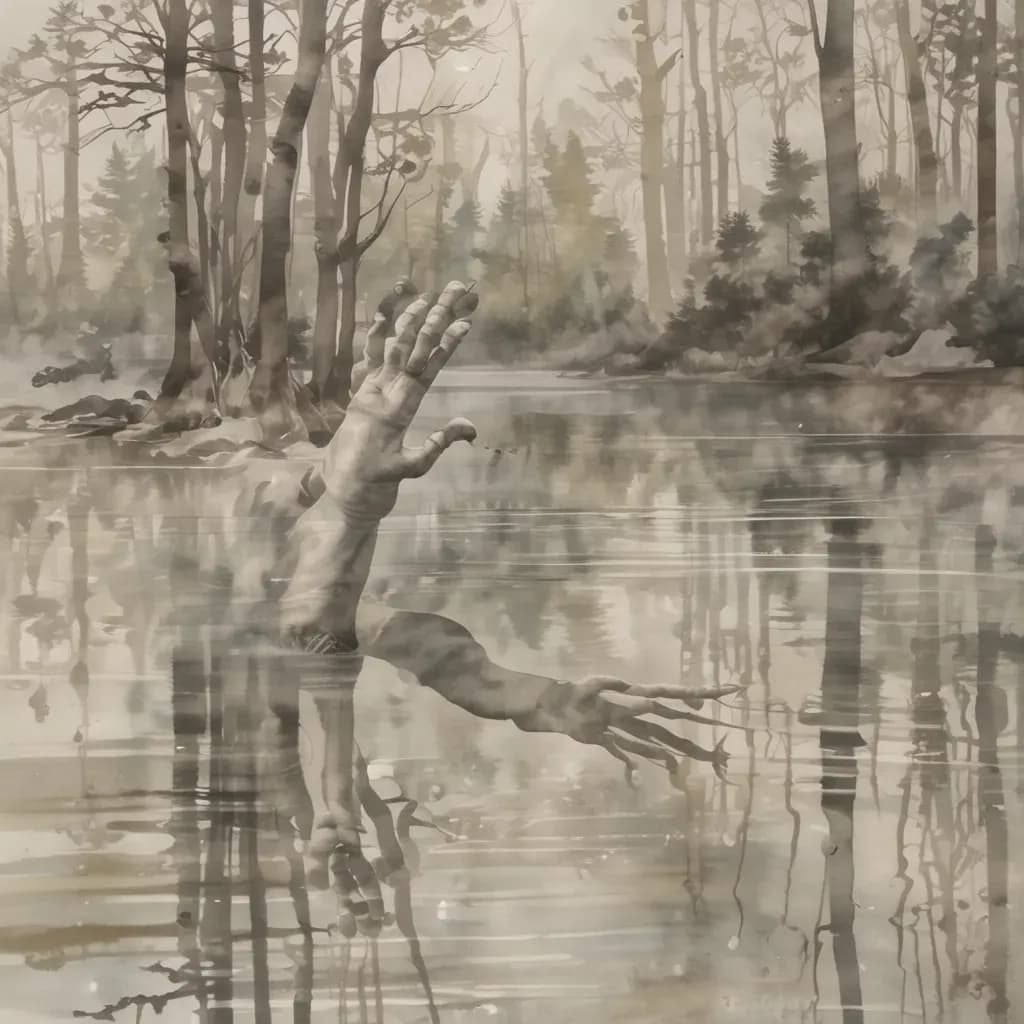
There is also a dimension of self-questioning in the song that distinguishes it from Mars's earlier heartbreak anthems. Where "When I Was Your Man" grieves a lost love with the clarity of hindsight, "Nothing Left" is set in the murky present tense, where the narrator is still reaching toward someone, still hoping that some gesture or phrase might reignite what was there. The impulse described is almost physical: an extended arm encountering nothing to hold.[4]
The song also grapples with the consumable nature of passion: the recognition that fire, however real it was, is something that gets used up. The narrator does not pretend the fire was never there. He acknowledges it, names its absence, and faces the question of whether anything can reignite it. The plea embedded in this section carries genuine ambiguity: it might be a demand for change, it might be a quiet ultimatum, it might be the first step toward acceptance that no change will come.
By the song's end, something shifts. Where the verses and chorus document a unilateral reach into emptiness, the outro suggests that rescue, if it comes at all, requires both people extending toward each other at the same time. Neither can do it alone. This structural movement carries enormous weight: it transforms the song from a lament into something closer to a genuine question, one the music declines to answer.
Sound and Production
The production choices on "Nothing Left" reinforce its emotional content at every turn. An organ provides the harmonic foundation, its warmth evoking both sincerity and solemnity, placing the song in a tradition that runs from gospel through classic soul ballads. Then a distorted, almost manic electric guitar enters, a sound that multiple reviewers compared to Lenny Kravitz, introducing a note of desperation and barely contained feeling that the song's more controlled passages might not otherwise convey.[5]
Soul in Stereo noted the Lenny Kravitz comparison approvingly, observing that it showed Mars making subtle but real adjustments to his sonic palette.[5] The track's overall profile sits closer to the raw, piano-driven vulnerability of "When I Was Your Man" (2013) and the anguished directness of "Grenade" (2010) than to the funk and Latin groove that characterize much of "The Romantic." It is not a throwback or a pastiche. It is an emotional register that Mars has earned through years of practice and, it appears, genuine experience. The song does not rush. It expands to fill whatever space the listener brings to it.
Why It Resonates
Songs about the slow death of love are rarer than songs about its sudden end. Popular music tends to favor legible emotional moments: the dramatic goodbye, the tearful reconciliation, the confrontation that clears the air. "Nothing Left" refuses those conveniences. It locates itself in the gray space where two people are still together in form but have already parted in substance, where the problem cannot be fixed by a single decisive act because the problem is a kind of weather, something that moved in gradually and has not yet declared itself fully.
That experience is widespread and underrepresented. Most people who have been in long relationships know the particular dread of looking across the table at someone familiar and feeling the distance between you. "Nothing Left" does not dramatize or exaggerate that feeling. It describes it with a directness that listeners have found genuinely moving. The Atwood Magazine roundtable cited it as the album's standout precisely because it does not perform emotion but inhabits it.[3]
There is also a biographical shadow over the song, one that listeners bring whether Mars invited them to or not. The end of his thirteen-year relationship with Jessica Caban, a private dissolution that surfaced through public signals in late 2024, colors the entire album and this track most of all.[2] The hypercritic.org analysis of "The Romantic" notes that tracks like "Nothing Left" speak with "emotional specificity" rather than retreating to romantic abstraction, suggesting a grounding in lived experience rather than constructed sentiment.[6] Whether or not the song is autobiographical in its particulars, it carries the weight of something that has actually been felt.
More Than One Reading
One reading of "Nothing Left" positions it as a breakup ballad, a final accounting delivered from inside a relationship already over. Another is more open: the song might be understood as a plea from inside a relationship that could still be saved, an attempt to name the problem clearly enough that something might shift. The outro's turn toward mutual effort supports this second reading. The narrator does not surrender. He describes a condition, names the deficit, and then asks for the other person to reach back.
This ambiguity is one of the song's greatest strengths. The hypercritic.org analysis of the album notes that "Nothing Left" is among the tracks where Mars speaks with "emotional specificity" rather than vague romantic declaration, and that specificity is precisely what keeps the song's meaning open.[6] The song does not tell the listener whether the relationship can be saved. It only tells us what it feels like to be suspended in that uncertainty, to love someone and not know if what you are doing constitutes holding on or simply refusing to let go.
A third reading is more internal: that the song is less about a specific partner and more about the narrator's own diminishment, his recognition that something in him has also gone quiet. He reaches not only toward the other person but toward a version of himself capable of love that still burns. The final plea may be addressed as much inward as outward.
The Cost of Honesty
"Nothing Left" is the kind of song that arrives at the right moment in an artist's life, or not at all. Bruno Mars has spent his career making listeners feel the best and worst of love with theatrical precision. Here, the theater is stripped away. What remains is a man reaching across a silence he has helped to create, in a room that still contains the person he loves, wondering if anything survives to hold on to.
It is not his most polished song. The distorted guitar is almost uncomfortably raw. The organ leans toward something churchlike and solemn. The arrangement does not flatter or comfort. But that is the point. On an album that can sometimes feel sealed off in its own craftsmanship, "Nothing Left" is where the surface cracks and something true comes through. Critics have debated whether "The Romantic" represents a genuine evolution or a master revisiting familiar ground.[3] "Nothing Left" makes that debate feel beside the point. Whatever the album is or is not, this track exists as evidence that Bruno Mars can still find the nerve to be genuinely vulnerable. That is not nothing. It is, in fact, quite a lot.
References
- The Romantic (album) - Wikipedia — Album background, personnel, track listing, and critical reception
- Bruno Mars and Jessica Caban Split After 13 Years - Yahoo Entertainment — Coverage of the end of Mars's long-term relationship, providing biographical context for the album's themes
- Roundtable: A Review of Bruno Mars' 'The Romantic' - Atwood Magazine — Multi-contributor review with detailed track-by-track analysis and discussion of Nothing Left as the album's most vulnerable moment
- Bruno Mars - Nothing Left: Lyrics and Meaning - UTA5 Lyrics — Song meaning analysis covering the central themes of emotional withdrawal and reaching toward absence
- Album Review: Bruno Mars, The Romantic - Soul in Stereo — Four-star review noting the Lenny Kravitz-influenced guitar and production details of Nothing Left
- Bruno Mars Returns with The Romantic: The Meaning Behind His Most Intimate Album - Hypercritic — Analysis of the album's emotional content and Nothing Left's place as a closing ballad