Nowhere
There is a particular kind of numbness that arrives not as relief but as failure. You feel the warmth of another person reaching toward you, and somewhere between their gesture and your perception, the signal goes quiet. "Nowhere" by Snail Mail occupies this precise emotional territory: the space between wanting to be present and being unable to get there, between knowing you are loved and being incapable of receiving it.
A Different Kind of Fear
When Lindsey Jordan released Valentine in 2021, she had just come through one of the harder stretches of her life. A 45-day stay at a rehabilitation facility in Arizona in late 2020 was followed by vocal cord surgery the following year, an operation that removed polyps she had unknowingly carried since before Snail Mail began. The recovery required complete vocal silence for a month and months of speech therapy. The voice that emerged was transformed: cleaner, more controlled, and capable of a new falsetto that her earlier recordings never accessed.[1]
Around the same time, Jordan relocated from New York City to North Carolina, trading the city's relentlessness for a quieter environment where her thoughts had room to settle. The thoughts that came were not primarily about heartbreak. They were about something larger and harder to name: mortality, impermanence, the terror of losing what you love. She has described watching Charlie Kaufman's film Synecdoche, New York as triggering a severe OCD-adjacent anxiety spiral about dying that fundamentally changed her understanding of what the third record needed to address.[2]
Ricochet, released March 2026, is the album that came from that reckoning. For the first time, Jordan composed music before lyrics, a structural inversion of her usual process that required a different kind of self-listening. She told NME that the record represents "trying actively to keep myself human and unjaded," a project she describes not as a default state but as conscious, daily work.[3] Where her earlier albums fixated on romantic pain with forensic precision, Ricochet asks what you do with yourself once the love story isn't the only story anymore.
Seeing Twice as Many Stars
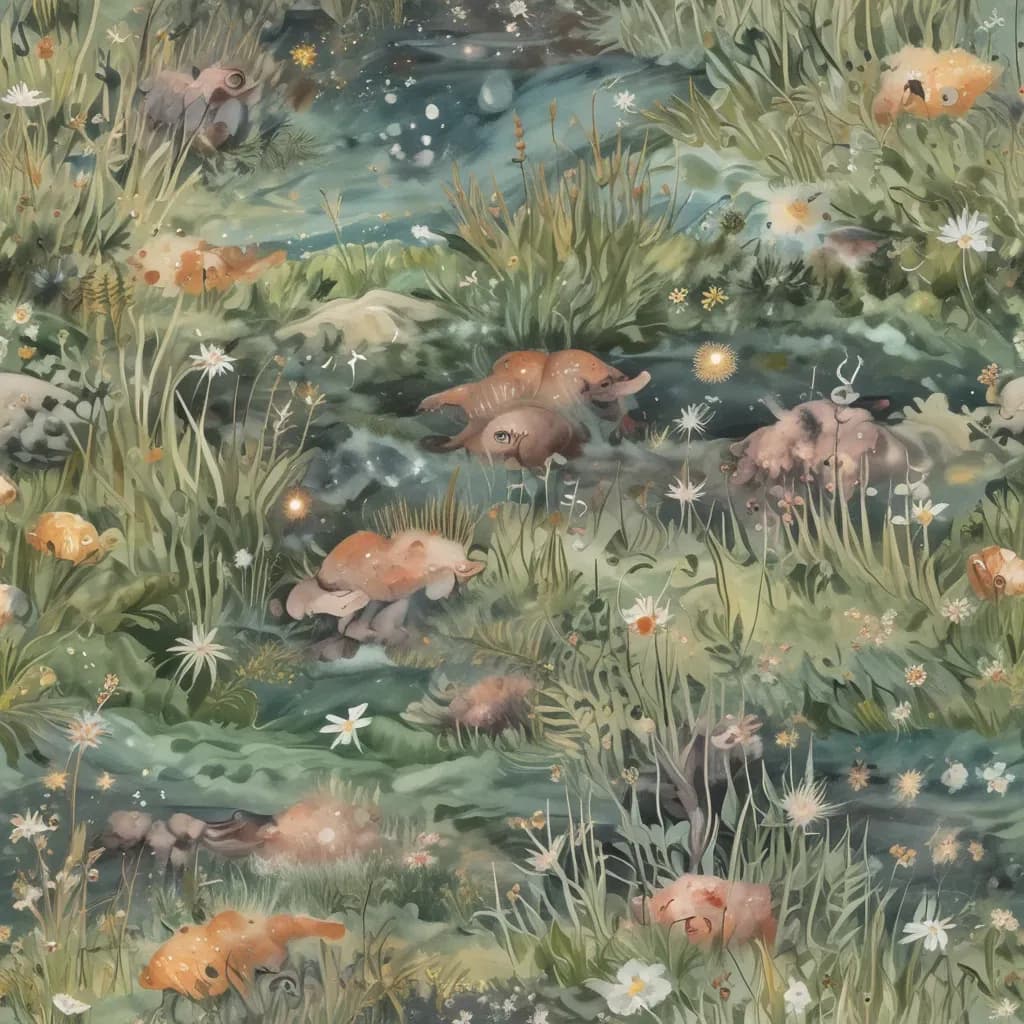
The imaginative anchor of "Nowhere" is Laura Gilpin's 1977 poem "The Two-Headed Calf," a compressed and devastating piece about a young animal born with two heads. Its unusual anatomy allows it to see twice as many stars on the last night of its brief life. The poem holds mortality and wonder in the same image: the creature's condition is both its difference and its gift, a double perception available precisely because its time is so short.[3]
Jordan does something emotionally complex with this reference. The narrator does not claim the calf's heightened perception as her own. Instead, she imagines being something like that creature: an animal seeking a warm and sheltered place, unburdened by the demands of self-consciousness. The longing is not to see twice as many stars but to simply exist more simply. There is a quality of wishing the self were smaller, less demanding, easier to comfort.
This is escapism, but not the fantasy variety. It is the kind that arrives when the emotional machinery of a human life becomes temporarily too much to operate. The narrator wants to go somewhere with no coordinates, not physically away but internally quiet. The word "nowhere" in the title is not a destination. It is a description of where she already finds herself.
The Anatomy of Dissociation
The emotional center of "Nowhere" is a moment that many listeners have lived but rarely seen articulated this precisely: being in the presence of someone who is offering genuine care, warmth reaching toward you like something tangible, and finding that it does not land. Not because the care is false. Because something in you has gone quiet. And then comes the harder admission: she wanted to feel it. The desire was there. The capacity was not.[3]
This gap between wanting to feel and being unable to is the precise anatomy of dissociation as a survival mechanism. It is not indifference. It is something closer to the opposite: caring so much, or having been overwhelmed for so long, that the system protecting you from further damage has sealed out the good along with everything else. "Nowhere" refuses to romanticize this state even as it makes that state feel intimately familiar.
Jordan has described the numbing impulse in the song as a kind of comforting guilty pleasure, which is a more honest framing than dissociation usually receives.[3] The song does not treat emotional shutdown as something that happens to the narrator entirely against her will. There is a part of her that leans into it. The nothingness is uncomfortable. It is also, in some way she is not proud of, a relief.
Sound and Texture
Musically, "Nowhere" is among the more sonically expansive tracks on Ricochet. Jordan's post-surgery voice moves through registers her earlier recordings could not reach, carrying the weight of vulnerability without the rough edge that once served as a kind of protective armor.[1] The shoegazey production wraps the dissociation in something beautiful, complete with a twinkling guitar motif and layered vocal harmonies that drift through the arrangement like smoke. The sound is lush and present even as the lyrical narrator has gone somewhere else entirely.
Critics observed that Ricochet as a whole represents a "supremely catchy, band-driven, '90s power-pop-inspired overhaul" of Jordan's sound.[4] Within that context, "Nowhere" stands slightly apart: it is less propulsive than the more guitar-forward tracks on the record, more interested in texture than momentum. It occupies the album's emotional interior, connecting the outward existential questions of tracks like "Hell" and the title track to something more private and quietly devastating.
Why the Song Stays
"Nowhere" resonates because it refuses to solve the problem it describes. Dissociation, the desire to retreat into animal simplicity, the failure of presence: these are not things a song can fix, and Jordan does not pretend otherwise. The track creates a space where that state can be recognized and held without shame. For listeners who have felt unable to receive love they knew was being offered, the song works as a form of recognition: you are not the only one who has been nowhere while standing right there.
It is worth considering "Nowhere" alongside the album's title track (also on this site), which similarly circles the gap between what we want our inner lives to deliver and what they actually do. Both songs return to a version of the same question: what does it mean to be present in your own life when the self keeps slipping away? The ricochet in both cases comes from within.
Jordan has said that Ricochet is "the most me" she has ever been on a record.[3] "Nowhere" may be the clearest demonstration of what she means. It examines not just romantic longing or existential fear but the specific and private failure of presence: the moment when someone's warmth is all around you and you are, for reasons you cannot fully explain, gone. That is not a feeling that resolves. But it is one that, having been named this precisely, feels a little less isolating.
References
- On Ricochet, Snail Mail lost her voice and found her footing — FADER profile covering vocal cord surgery, rehabilitation, and the physical and emotional transformation that shaped Ricochet
- Snail Mail: 'I feel scared of the greater universe, of losing the things I love' — Line of Best Fit interview covering existential anxiety, the Synecdoche New York trigger, and the emotional landscape of Ricochet
- Snail Mail on Ricochet: 'A lot of the new album is trying actively to keep myself human and unjaded' — NME interview covering the Two-Headed Calf reference, Jordan's quotes about staying human and unjaded, and her description of Ricochet as her most personal record
- Premature Evaluation: Snail Mail's Ricochet — Stereogum critical assessment describing the album's 90s power-pop sonic overhaul and Jordan's transformed vocal range
- Snail Mail (musician) — Wikipedia overview of Lindsey Jordan's biography, career arc, and discography