Paint By Numbers
The Numbered Canvas
There is something quietly radical about an artist at the peak of their fame choosing to interrogate that fame with nothing but an acoustic guitar and an honest question. "Paint By Numbers" is that kind of song: unhurried, unadorned, and unafraid to ask whether the person being celebrated is the same person doing the work.
It is the eleventh track on Kiss All the Time. Disco, Occasionally., a record that spent most of its running time pulsing with disco-inflected joy. "Paint By Numbers" arrives near the end like a held breath finally released: two and a half minutes of acoustic guitar and unguarded reflection that feel almost shockingly intimate given what surrounds them.
The Silence Before
By 2023, Harry Styles had arrived at something like the summit of the pop world. His third album, Harry's House, won the Grammy Award for Album of the Year, and the touring cycle that followed consumed more than two years of his life[1]. When it was over, he chose to disappear.
The hiatus took him through Berlin, Italy, and Spain. He trained for and completed multiple marathons, running under a pseudonym to preserve the anonymity that fame had otherwise made nearly impossible[2]. He entered therapy more seriously. He stepped away from the machine.
During that period, the world did not spare him. In October 2024, his former One Direction bandmate Liam Payne died at the age of 31[3]. The loss was not just personal. It was a reckoning with the specific weight of having grown up famous, of having an adolescence documented and an adulthood scrutinized by millions of people who felt, sincerely and with great investment, that they knew you.
"Paint By Numbers" was written against this backdrop: a man returning to music after grief and solitude, trying to articulate something true about what that experience had been like.
A Song That Almost Started Everything
In his conversation with Apple Music's Zane Lowe, Styles revealed that he originally intended "Paint By Numbers" to be the album's opening track[4]. The idea was that the first thing he said upon returning from his long absence would be a direct, discomfiting admission about the nature of fame: that recognition is something applied from outside, that it does not belong to the person it attaches to.
He changed his mind. The track was moved to nearly the end of the running order, where it sits as a kind of counterweight to the album's otherwise euphoric momentum. But keeping it on the record at all, Styles said, felt like the braver choice. He described the song as one written for himself rather than for an audience, a private working-through of something that he then decided, after considerable hesitation, to share[4].
That tension, between the intensely private impulse behind the song and the enormously public context in which it was released, is part of what makes it so compelling. Styles told Lowe that what makes someone an artist is "letting them watch you be an ordinary person" rather than projecting something mystical or untouchable[4]. "Paint By Numbers" is that principle in practice.
What the Metaphor Carries
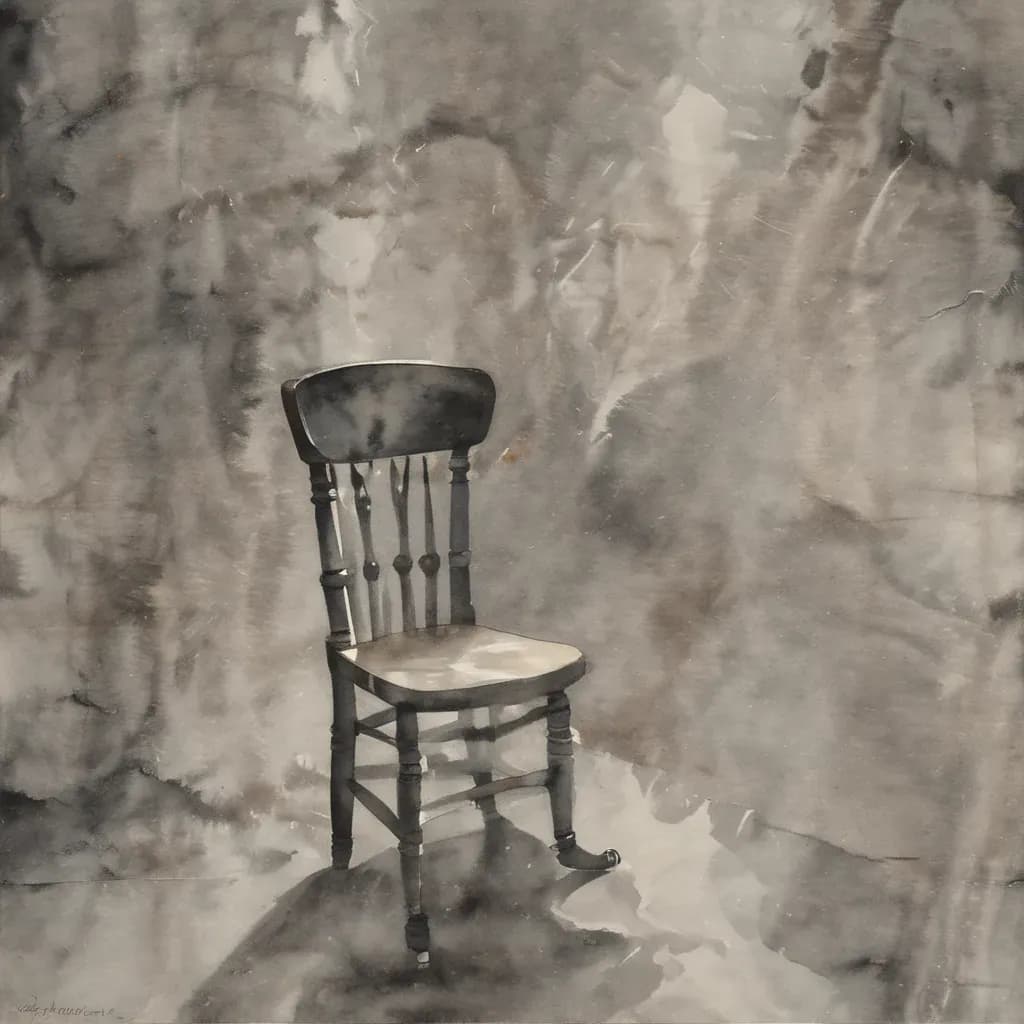
The title is doing a lot of work. Paint by numbers is an activity built on predetermined structure: numbered regions, assigned colors, prescribed results. The image of creativity is present, but the act of creation is largely removed. Someone else decided what the picture would look like before you picked up the brush.
Styles applies this to the experience of celebrity with precision. Fame, he suggests, is a template handed to the famous person by the public. Every interview, every relationship, every outfit fills in a pre-numbered section. The famous person performs the instructions and the audience sees what they expected to see. Whether the person inside the template is the same as the person the template describes is, in this framing, almost beside the point[5].
The song opens with something that reads as paradox: gratitude for being noticed, immediately decoupled from any sense of personal agency in the noticing. The gift of visibility is real, Styles seems to acknowledge, and it also has nothing to do with him. Those two things are simultaneously true, and the friction between them is where the song lives.
The metaphor has a hopeful underside, too. Paint bleeds. No matter how carefully a person follows the numbered instructions, the colors run outside the lines. Authentic selfhood cannot be perfectly contained within someone else's design. The leak, the overflow, the refusal to stay within the sections, is not a failure of the painter. It is the nature of paint.
The Specific Wounds
Beneath the song's philosophical layer are specific, identifiable undercurrents that listeners have spent considerable time mapping[6].
One passage alludes to a significant age gap in a past relationship, referencing a specific age in a way that feels pointed rather than incidental. Many listeners have connected this to Styles' relationship with director Olivia Wilde, who was nine years his senior[6][2]. Their relationship, which lasted from late 2020 into 2022, was among the most tabloid-saturated of Styles' post-One Direction years. The song does not name anyone. But the gesture toward a specific, remembered moment in a specific kind of relationship gives it a texture of lived experience rather than generalized longing.
The song also addresses the emotional weight of disappointing a devoted and largely young fanbase, describing the feeling of carrying the expectations of people whose emotional investment in the artist exceeds anything the artist can realistically reciprocate[5]. This is not a complaint. It is an acknowledgment of an impossible position.
The bridge has generated the most emotionally charged listener responses. Styles introduces imagery associated with water, play, and childhood physicality that many fans have interpreted as a direct reference to Liam Payne[6][1]. Water gun fights were a recurring, well-documented piece of playfulness during One Direction's stage performances. If the reading is correct, this passage transforms the song's meditation on fame into something more specific: a eulogy wrapped inside a philosophical argument, a private goodbye inserted into a public record[3].
Styles has not confirmed the Payne reading. He has said only that the song is "meant just for me" and that including it on the album was the most vulnerable decision he made during the recording process[4]. That careful non-confirmation is itself meaningful. It leaves the interpretation open to those who need it while protecting whatever private truth underlies it.
The Quiet Interruption
Most of Kiss All the Time. Disco, Occasionally. operates at the level of the body: music for dancing, for summer, for the kind of uncomplicated pleasure that Styles had been absorbing in Berlin's club scene and channeling through an LCD Soundsystem-influenced production palette[1]. Critics have praised the album's sonic cohesion, noting that it is Styles' most focused project to date[7].
Rolling Stone awarded the album four out of five stars, calling it "delightfully strange, often lovely, and consistently fascinating"[7]. Pitchfork was more skeptical, awarding a 5.6 and suggesting that Styles was more often channeling his influences than revealing himself[8]. That critique, whatever its merit when applied to the album as a whole, dissolves entirely in the presence of "Paint By Numbers." This is the track where the ventriloquism stops.
Its acoustic arrangement creates a pocket of stillness in a record otherwise dominated by electronic production. Positioned second to last, it works as a deliberate structural interruption: stop dancing, sit down, listen to the person rather than the performer. The contrast is not accidental.
Why It Lingers
"Paint By Numbers" has connected with listeners who have no particular stake in Harry Styles' personal life, for reasons that are not hard to understand.
The central question of whether you are living inside someone else's template is not a celebrity problem. It applies to anyone who has ever felt the gap between their private self and the self they are expected to perform: at work, in a family, online, in a relationship. Social media has sharpened this gap to a near-universal edge. Most people now maintain some version of a curated public presence, calibrated to an imagined audience. The process of deciding what to perform and what to protect, and whether those decisions accumulate into something honest or something managed, is one of the defining anxieties of contemporary life.
Styles describes this from the most extreme end of the experience. But the experience itself is recognizable far beyond it.
There is also a simpler reason the song resonates. It is modest in its resolution. Rather than arriving at triumph or collapse, it settles toward self-compassion and the modest ambition of living within one's actual means rather than within the script. That kind of quiet conclusion, in a pop record built for arenas, is rare enough to feel like a gift.
The Larger Picture
Kiss All the Time. Disco, Occasionally. debuted at number one on the Billboard 200 with 430,000 first-week units[9][10], making it Styles' fourth consecutive chart-topping album. It also topped charts in the UK, Australia, Germany, France, and Canada. The commercial confirmation arrived quickly: his long absence had, if anything, increased rather than diminished his hold on the culture[9].
The album's dance tracks will age into their era with some grace and some limitation. They are beautiful artifacts of a specific sonic moment, a 2026 answer to questions posed by LCD Soundsystem and the Berlin nightlife Styles spent years absorbing.
"Paint By Numbers" may prove harder to date. Its preoccupation with identity, grief, and the strangeness of being known by people who do not know you belongs to every era in which those experiences exist. A person can listen to it in the context of celebrity, or in the context of any life that has ever been partially shaped by external expectation, and find something that holds.
That is the thing about paint by numbers as a metaphor. The numbered sections are always someone else's design. But the hands holding the brush are yours.
References
- Not On Stage - Inside Harry Styles' Most Cohesive Album Yet — Deep dive into the album's themes, track-by-track analysis, and Liam Payne connection
- Capital FM - Harry Styles explains 'vulnerable' meaning behind 'Paint By Numbers' — Styles' marathon running during hiatus and analysis of Olivia Wilde references in the lyrics
- NME - Harry Styles says Liam Payne's death made him re-evaluate life — Styles' reflections on Payne's death and its impact on his perspective
- TODAY - Harry Styles Explains the Lyrics to 'Paint By Numbers' — Styles' interview with Zane Lowe about the song's meaning and its original placement on the album
- Dazed Digital - The most revealing lyrics on Harry Styles' new album — Analysis of the album's most personal lyrics, including Paint By Numbers
- Yahoo Entertainment - Fan theories about Olivia Wilde and Liam Payne — Fan interpretations connecting lyrics to Styles' relationships and bandmate
- Rolling Stone - Album Review — Critical assessment of the album's artistic ambitions
- Pitchfork - Kiss All the Time. Disco, Occasionally. Album Review — Pitchfork's critical review, score 5.6/10, noting influence-channeling over personal revelation
- Variety - Fourth consecutive No. 1 debut — Chart performance and commercial reception data
- NPR - Harry Styles' new album is a massive chart success — Chart data and commercial context
- Variety - Album Review — Critical review of the album's musical and thematic direction