Picture This
A Song That Lives Inside the Frame
Somewhere in 2015, as Instagram was cementing itself as the dominant visual language of a generation, a London trio called Kero Kero Bonito released a song about taking pictures. It sounds like a children's book set to video game music. It is also, in its own cheerful way, one of the sharpest pop statements of its era.
The song opens with a panpipe figure that sounds like it was lifted from a Nintendo soundtrack, and then the main hook arrives at full force.[1] Everything about the production is engineered to feel like the musical equivalent of hitting post. That juxtaposition, the lightness of the form against the weight of the behavior it describes, is where "Picture This" does its quiet, persistent work.
Origins: A Band Built From Two Worlds
Kero Kero Bonito formed in London in 2011 when Bromley-born producers Gus Lobban and Jamie Bulled recruited vocalist Sarah Midori Perry through MixB, an online community board for Japanese expatriates living in the UK.[2] Perry had no professional singing background at the time. She had played alto saxophone in a brass band, pursued visual art, and written fiction, but music as a performer was new territory. She joined simply because she wanted to try it.
Perry grew up in Otaru, Japan until she was thirteen, when her family relocated to Britain.[2] That dual cultural formation gave the band its defining tension and its defining advantage: J-pop structure meeting UK indie production sensibility, bilingual lyrics that could carry multiple registers simultaneously. Perry has described the bilingual approach as giving her "twice as much material" when writing.[3] "Picture This" is sung primarily in English, but the conceptual territory it occupies, the self-presentation logic of the Instagram era, crosses cultural borders without friction.
"Picture This" was released as the debut single from what would become Bonito Generation in March 2015, more than a year before the album's October 2016 arrival.[4] The long lead time turned the song into a kind of extended announcement: here is the sound, here is the subject matter, here is the question the album will keep asking.
The Album That Gave It a Home
Bonito Generation, released on Double Denim Records in October 2016, is an album of compressed, gleaming pop that covers the small anxieties and minor victories of millennial early adulthood: graduation, city living, job-seeking, social media, belonging.[4] Its twelve tracks run to just over 36 minutes, dense with hooks, and almost every one of them was either a single or could have been.
The production process was described by Lobban as analogous to solving a tiling puzzle: every element had to lock into place before the whole could work.[5] Bulled noted that the band had expanded their harmonic language significantly between their 2014 debut EP and the Bonito Generation sessions, pointing specifically to "Picture This" as an example of that new complexity.[6] The song sounds simple. It is not.
Critical reception was strongly positive. Metacritic gathered a score of 81, and Clash Magazine awarded the album a 9/10.[7] DIY Magazine described the band as having "perfected the quick fix formula, throwing a dozen giant would-be singles" across the record.[8]
What the Song Is Actually Doing
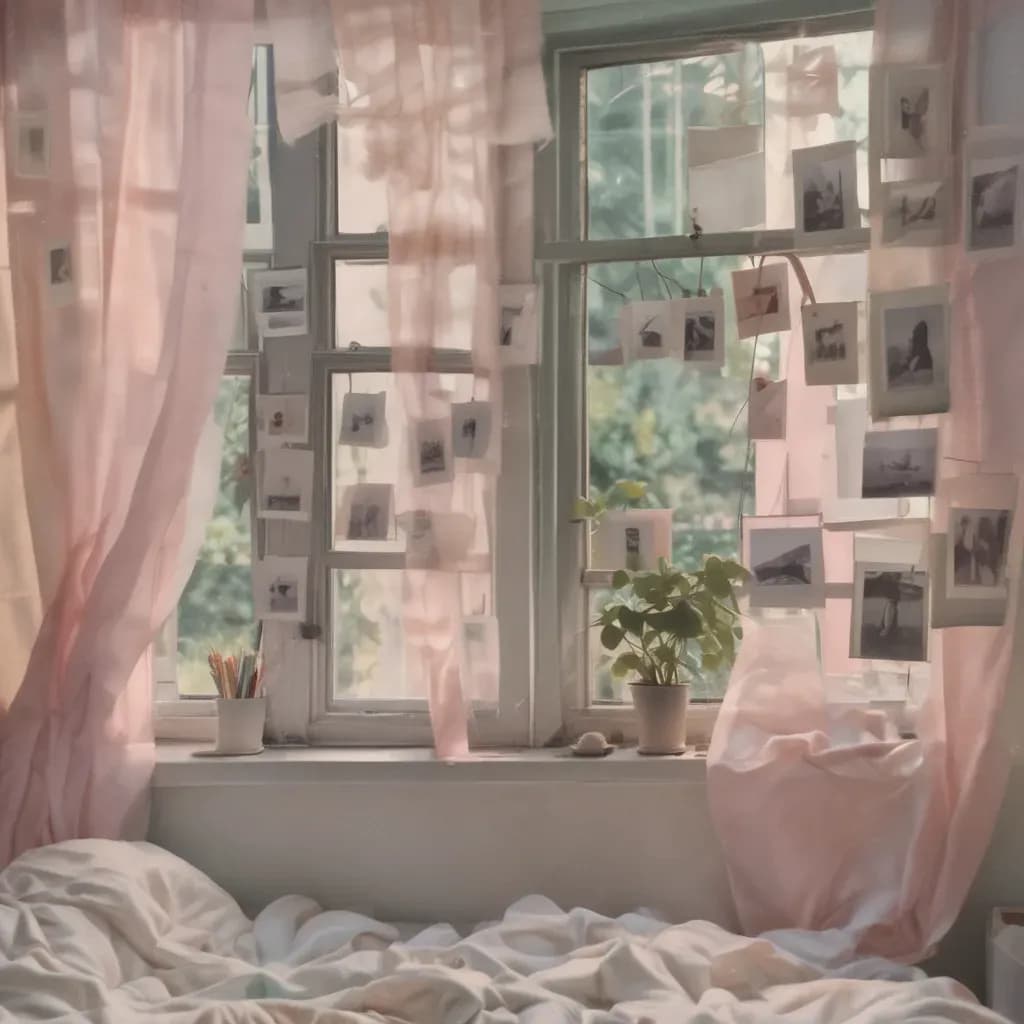
The subject of "Picture This" is photography as identity work. Its narrator describes the compulsion to capture moments and present them to an audience: showing everyone you know what you have done, what you have seen, who you are becoming. The logic is explicitly that of social media: the image is not just a record but an argument, a declaration of self.
What makes the song interesting is the register it chooses. The delivery is sincere and warm, not satirical. The narrator is not described as confused or troubled. She believes in what she is doing. The pictures mean something to her. They are how she makes sense of her experience and connects with other people.
Clash Magazine read the song as a commentary on how the constant need to document everything prevents people from living in the moment.[7] That interpretation is available in the text, but it only accounts for half of what the song does. The genius of "Picture This" is that it presents the behavior completely from the inside. It does not position itself outside the frame, diagnosing or judging. It inhabits the mindset with full commitment, and trusts the listener to feel whatever they are going to feel about it.
The production reinforces this double reading. The candy-colored maximalism of the sound mirrors the candy-colored maximalism of Instagram aesthetics: filtered brightness, uniform cheerfulness, the visual equivalent of a perfectly composed grid. The song sounds like what it is describing. To listen to it is, in a small way, to experience the same seduction it documents.
Radical Positivity as a Political Stance
To understand what "Picture This" is doing, it helps to understand what Kero Kero Bonito were arguing against, not in the song, but in the broader culture around it.
The band has consistently described their early work as operating under a philosophy of what they called radical positivity: a deliberate commitment to making genuinely upbeat music at a time when indie credibility was presumed to require melancholy or ironic distance.[5] Lobban noted that the music industry frequently dismissed positive-sounding work as unserious.[5] The band's response was to treat cheerfulness as a creative and cultural choice, not a commercial concession.
This framing matters for "Picture This" because it explains why the song resists the easy satirical reading. A band invested in radical positivity is not going to write a song that secretly mocks Instagram culture. They are going to write a song that takes the Instagram generation seriously, on its own terms, and finds in that seriousness something genuinely worth singing about.
The band also described their generational identity in political terms, noting in a 2016 interview that their generation felt outside conventional UK politics and was making art from that vantage point.[9] "Picture This" fits that frame: it is not a song about Brexit or austerity, but it is a song about the specific texture of life as a young person in that era, and it takes that texture seriously.
A Cultural Snapshot That Still Develops
"Picture This" appeared at a specific moment of cultural consolidation. Instagram had been live for five years when the album came out. The selfie had been Oxford Dictionaries' word of the year in 2013. The visual logic of the feed, the curated highlight reel, the performance of living, had become the primary way that many people narrated their own experience to others.
The song arrived early enough to feel like observation rather than commentary, before the broader cultural backlash to social media had fully formed. That timing is part of what makes it interesting to revisit. It captures the moment before widespread disillusionment, when the logic of image-as-identity still felt new and self-evident rather than exhausted.
DIY noted that the song "speaks to who we are and what we've become" in the digital age while remaining entirely accessible as a pop object.[1] That combination is unusual. Most songs that try to say something true about social media either abandon the pop energy to make room for the point, or abandon the point in favor of the hook. "Picture This" refuses to choose.
Alternative Readings
One reading of "Picture This" is simply celebratory: a song about the genuine joy of documenting your life and sharing it with people you care about. The narrator is not performing detachment. She means it. Under this reading, the song is not asking a question at all. It is just describing something good.
The other reading is that the song is a gentle portrait of a loop: the pursuit of the perfect image, of showing everyone what you have done, creates a gap between the moment as it is lived and the moment as it is presented. The song describes this loop with full immersion rather than critical distance. It does not break the loop or condemn it. It simply makes the loop visible.
Both of these readings coexist in the song without conflict. That is ultimately what gives it longevity. Songs that deliver clean moral verdicts tend to date. Songs that hold ambiguous experiences up to the light, without deciding what to do about them, tend to stay.
The Small Question Inside the Hook
"Picture This" landed as a song that looked like a novelty and turned out to be something more durable. Its position as the lead single from Bonito Generation established the album's tonal range: maximalist, genuinely cheerful, attentive to the textures of contemporary life, and quietly alert to the ironies inside the things we celebrate.
It is still being discovered by new listeners years after its release because the experience it describes has not become less common. If anything, it has become more common. The logic it maps, capture, filter, share, repeat, has only deepened its grip on how many people relate to their own lives and to each other.
Kero Kero Bonito would later move toward rawer, more overtly emotional territory with their 2018 album Time 'n' Place, trading the bubblegum palette for shoegaze and noise pop. That shift made sense on its own terms, but it also makes "Picture This" easier to see in retrospect: as the fullest and most concise expression of what the early band was for. A chirpy, video-game-flavored question, nestled inside one of the stickiest hooks of its era, about what it means to live inside the frame rather than outside it.
References
- Kero Kero Bonito - Picture This (single review) - DIY Magazine — Single review noting the panpipe intro, hook, and J-pop energy
- Kero Kero Bonito - Wikipedia — Band biography, formation, and discography overview
- Kero Kero Bonito Is Making Music For Its Generation - NYLON — Sarah Perry on bilingual songwriting as having twice as much material to draw from
- Bonito Generation - Wikipedia — Album history, track listing, singles, and reception
- Kero Kero Bonito's Radical Positivity Pop - Stereogum — In-depth 2016 interview on the band's philosophy of radical positivity and Bonito Generation production
- Kero Kero Bonito interview - BeatRoute — Jamie Bulled on adding harmonic complexity in Bonito Generation, citing 'Picture This' as an example
- Kero Kero Bonito - Bonito Generation (album review) - Clash Magazine — 9/10 review reading 'Picture This' as commentary on documentation and lived experience
- Kero Kero Bonito - Bonito Generation (album review) - DIY Magazine — Review praising the album's quick-fix formula and density of would-be singles
- My Generation: Kero Kero Bonito interview - DIY Magazine — 2016 interview on generational themes and Sarah Perry's bilingual identity