Prague
Distance as Protection
There is something counterintuitive about writing a love song where the lover's most prized quality is their distance. Most romantic expression works to close gaps, to collapse geography, to get the beloved closer. But "Prague," the third track on Jack Harlow's 2026 album Monica, turns this logic inside out. The narrator is drawn, magnetically and helplessly, to someone on the other side of an ocean. And yet he admits, with a candor that borders on relief, that the miles between them are doing him a kind of favor. If she were any closer, the song implies, he might not survive the feeling.
This is the emotional territory "Prague" occupies: not the longing of someone separated from what they love, but the strange comfort of someone who knows, in some quiet corner of their chest, that the distance is actually the only thing keeping them intact. It is a song about desire that understands itself, and that self-understanding is more unsettling than any declaration of passion would be.
Arriving at Monica
Monica arrived on March 13, 2026, Jack Harlow's 28th birthday, as one of the more surprising genre pivots a commercially successful rapper had attempted in recent memory.[1] Harlow, who had built his reputation on accessible, melodically driven hip-hop, spent the better part of two years recording material he ultimately scrapped entirely, relocated from Louisville to New York City, and eventually walked into Electric Lady Studios in Greenwich Village to start over.[2] What emerged was nine tracks of jazz-flecked neo-soul and muted R&B, produced almost entirely by Norwegian musician Aksel Arvid, recorded in rooms that had previously hosted Jimi Hendrix and the Soulquarians.[1]
In interviews around the album, Harlow described reaching a breaking point where he was dreading studio sessions and had to ask himself, with genuine seriousness, what would actually excite him as an artist.[3] He cited D'Angelo and Erykah Badu as north stars, described wanting to make something "egoless" and "pleasant," and spoke about the intimacy of soul music as something he had always been drawn to but had never permitted himself to inhabit.[3] Chicago neo-soul singer Ravyn Lenae agreed to contribute backing vocals to several tracks, including "Prague," lending the record a grounding in the genre Harlow was reaching toward.
"Prague" sits near the center of this new orientation. It is the album's most atmospheric moment: built around late-night strings, distant horns, and violin, with Lenae's voice hovering in the background like a half-remembered dream. Where Harlow's earlier work announced itself loudly, this song is content to whisper.
The Geography of Longing
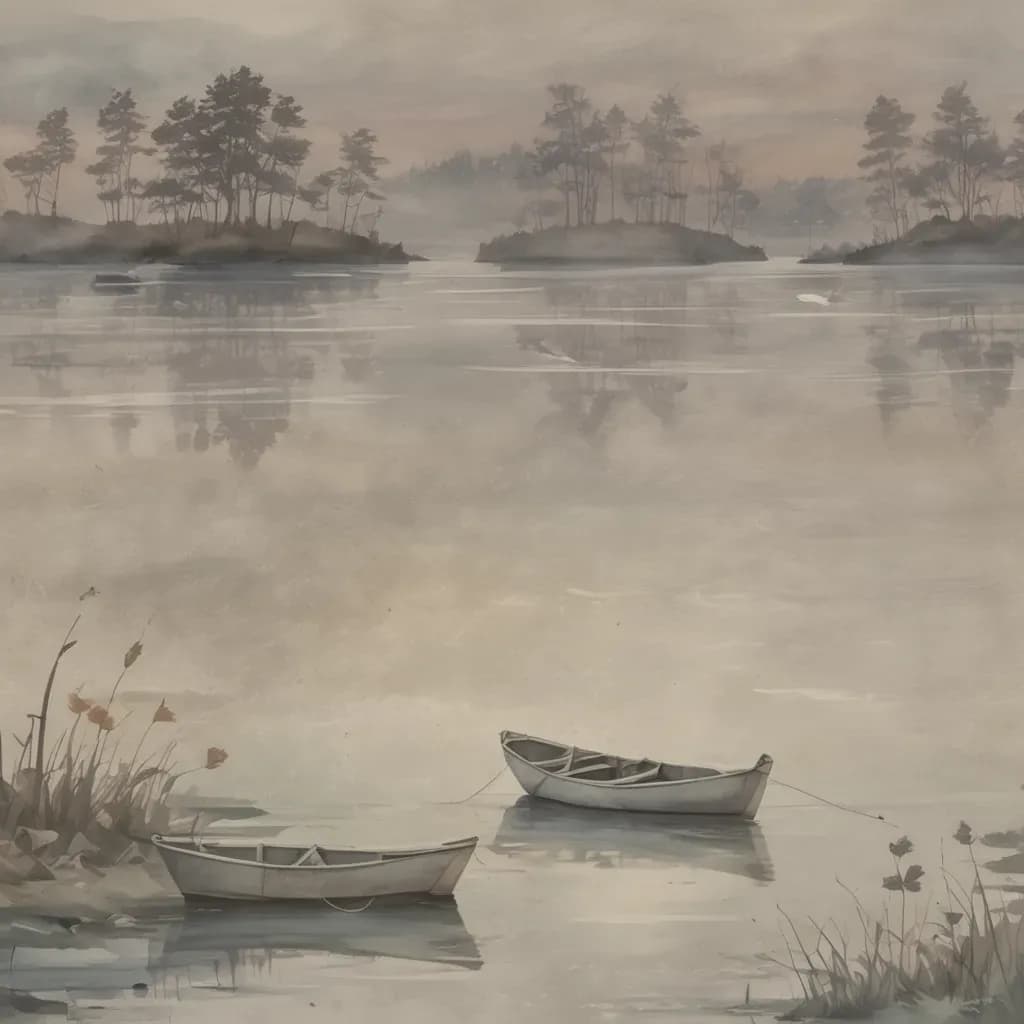
The title establishes the song's central metaphor immediately. Prague, the Czech capital, is not merely a setting but a symbol of deliberate, almost protective distance. The narrator is fixated on someone who lives far enough away that the feeling stays manageable. There is a particular quality to longing that intensifies with distance: the imagination fills in what direct experience would complicate. "Prague" is deeply fluent in this psychology.
What separates this from a standard love song is the narrator's relationship to the distance itself. Rather than railing against it or wishing it away, he has made a kind of peace with it. The ocean between them is not an obstacle so much as a buffer zone. He can feel everything he feels without having to act on it, without the emotional stakes of actual proximity. The distance, paradoxically, is what makes the feeling possible.
The song also explores the way that unavailability sharpens desire. The narrator is candid about the dynamic in which someone's resistance becomes, paradoxically, what makes the feeling stronger. This is not a novel emotion, but Harlow approaches it with specificity rather than cliche. The narrator is not angry at the resistance; he understands it, possibly even respects it. The song is not about conquest. It is about the feeling itself, which exists independently of whether it is reciprocated.
Admitting Incompleteness
Among the most striking moments on the song is its frankness about the narrator's own limitations. He acknowledges, with unusual directness, that he is still growing. He may be younger than the person he is pining for; he is not yet who he needs to be. This kind of candor is rare in love songs, which tend to position the narrator as a desirable, finished product rather than a work in progress.[4]
This admission carries particular weight given who is making it. Harlow's public persona had long been built around confident self-presentation, the easy assurance of a young man who expected things to work out in his favor. To hear him, on a song that reaches across an ocean, say that he might not be worthy of what he wants is to hear a very different register. It is the assurance it takes to describe your own incompleteness out loud, to name your inadequacies as part of an offering rather than hiding them.
This connects to a broader project across Monica: Harlow repositioning himself as emotionally subordinate rather than dominant. The women on this record are independent; they are not waiting around. He is the one who wants, who leans in, who is willing to be left wanting. "Prague" is perhaps the clearest expression of this posture, because the geographic distance literalizes it. He cannot even be physically present. All he can do is feel.
The Sonic Architecture of Yearning
None of these emotional textures would land the same way without the production. Aksel Arvid's arrangement is deliberately cinematic, designed to mirror the song's geography.[1] Strings suggest both European romance and rainy solitude. Distant horns evoke longing in transit. The restraint of the mix mirrors the narrator's careful management of his own feeling: everything held at a slight remove, everything felt through glass.
Ravyn Lenae's contribution is indispensable. She does not rescue the track or carry it; she is a texture, an atmospheric presence, not a lead.[5] Her voice adds a quality of yearning that the production alone could not achieve. The song needs that outside voice, that second consciousness hovering at the edges of the narrator's fixation. It suggests the possibility of being heard even across impossible distances.
A White Rapper in a Black Genre
"Prague" does not exist in isolation. It arrived as part of an album that provoked one of the more contentious debates in pop music criticism in early 2026: whether a white rapper from Louisville had any business making neo-soul. The controversy accelerated when Harlow, in a widely shared interview, explained his genre pivot by saying he had "got Blacker," meaning he had turned toward Black musical traditions rather than white-coded alternatives like country or indie rock.[6] The comment generated significant backlash, with critics arguing that Harlow had framed Blackness as an aesthetic a white artist could simply move toward through stylistic choice.
This debate was not about "Prague" specifically, but it shaped how the song was heard. For some listeners, the vulnerability and self-awareness on display were proof that Harlow was engaging seriously with the emotional depth of the tradition he was borrowing from. For others, the same polish and competence was evidence of the problem: a white artist successfully inhabiting and marketing an aesthetic developed through generations of Black artistic labor.
The critical reception reflected this split. NME acknowledged the sonic pivot as real but found the album struggling to leave a lasting impact.[7] Stereogum came out strongly in defense of the album, calling it Harlow's best record and arguing that skepticism about his sincerity was its own form of prejudgment.[8] Rolling Stone landed somewhere in the middle, calling the project polished and occasionally moving.[9] Shatter the Standards praised the cinematic quality of tracks like "Prague," noting that the album's best moments achieved something genuinely transporting.[5]
What the City Really Means
One question the song leaves productively open is whether Prague is literal or figurative. The city is named specifically, not generically, which suggests autobiography. Harlow's move to New York, his immersion in cosmopolitan creative spaces, his exposure to an international world he had not previously inhabited: all of this makes it plausible that a specific person in a specific European city sparked this song.
But the song may also be using Prague as a stand-in for any distant, slightly unattainable thing. The city becomes a shorthand for emotional inaccessibility: someone who exists in another world, another rhythm of life, a place you can name but cannot easily visit. In this reading, the specificity of Prague is a poetic choice rather than a confessional one. It makes the feeling precise without making it provable.
A third interpretation focuses less on the romantic situation and more on the narrator's own emotional architecture. In this reading, Prague is not really about the person in that city at all. It is Harlow working through his own psychological patterns: the way he approaches desire at a safe remove, the way distance allows him to feel fully without having to risk fully. The song, in this reading, is more self-portrait than love letter. The city is a projection screen.
A Song That Earns Its Restraint
"Prague" is probably not the flashiest song on Monica, nor the most immediately memorable. It does not declare itself. It settles into its mood and stays there, comfortable with understatement in a way that Harlow's earlier work rarely was.
But that quality of restraint is precisely what makes it work. In the context of an album concerned with emotional authenticity and the courage of vulnerability, "Prague" earns its place by doing what Harlow said he wanted all of Monica to do: make the listener feel something genuine rather than something performed. The strings are real. The longing is legible. The self-awareness lands without irony.
Whether the city in the title is real, symbolic, or some mixture of both, the feeling it captures is entirely recognizable. There is no one who has not, at some point, loved something partly because it remained just out of reach. "Prague" puts that experience into sound, and does it without a single wasted note. Whatever one makes of the larger argument about Harlow's place in the genre, this song makes a case for his sincerity that is hard to argue with. Some feelings do not care where you are from.
References
- Monica (album) - Wikipedia — Album context: tracklist, release date, production credits, Electric Lady Studios recording, critical reception overview
- Jack Harlow Taps Into Electric Lady Studios History on Monica - Complex — Context on the recording of Monica at Electric Lady Studios and Harlow's scrapped earlier project
- Jack Harlow Talks Singing on New Album 'Monica' - Power 106.9 — Harlow discussing dreading studio sessions before the creative reset and his pivot toward D'Angelo and Erykah Badu as north stars
- Monica Album Review - InBetweenDrafts — Track-level analysis identifying Prague's self-aware admission of immaturity as the album's most vulnerable lyrical moment
- Album Review: Monica by Jack Harlow - Shatter the Standards — Praised the cinematic quality of Prague and Ravyn Lenae's understated vocal contribution
- Jack Harlow Explains Why He 'Got Blacker' On New Album 'Monica' - HotNewHipHop — Coverage of Harlow's controversial comments about his pivot toward Black music traditions and the resulting backlash
- Jack Harlow 'Monica' Review - NME — Acknowledged the sonic pivot as real but found the album struggling to leave a lasting impact
- Monica Is Jack Harlow's Identity Crisis. It's Also His Best Album - Stereogum — Positive review calling Monica Harlow's best album and defending it against critical skepticism about his sincerity
- Jack Harlow's 'Monica' Review - Rolling Stone — Described the album as polished and occasionally moving, landing in the middle of the critical divide