Reverie
The word "reverie" describes a specific kind of mental retreat: a pleasant absorption in one's own thoughts, a daydream that feels almost more real than the world around you. It suggests softness, safety, the pleasure of existing inside your own imagination rather than confronting the difficult facts of ordinary life. For Lindsey Jordan, who has spent her career as Snail Mail writing songs that confront rather than retreat, choosing this word as the title of the final track on her third album Ricochet is both unexpected and precisely right.
To understand why that particular kind of escape matters here, you need the full arc of what preceded it: five years, a transformed voice, a new city, and an album that spent most of its running time staring directly at the things that frighten her most.
The Long Road to Contentment
Jordan's career as Snail Mail began when she was fifteen, playing guitar in the basements of Ellicott City, Maryland. By eighteen, she had signed with Matador Records and released the debut Lush, a record of teenage heartbreak so precisely observed that critics immediately placed her alongside Liz Phair and Waxahatchee as one of indie rock's most distinctive new voices.[1] Valentine followed in 2021, preceded by a period of personal crisis that included a stay in a rehabilitation facility.[1]
Then, in late 2021, Jordan underwent surgery to remove vocal cord polyps she had carried since before Snail Mail began. The growths had contributed to the slightly rough, distinctive quality of her voice. Recovery required a month of complete vocal silence followed by months of speech therapy.[2] The result was a transformed instrument: cleaner, more controlled, and capable of a new and striking falsetto range that simply had not existed before. Jordan described the improvement as roughly three hundred percent.[2]
Around the same time, she left New York City for Greensboro, North Carolina, seeking quieter surroundings and lower costs. She entered a long-term relationship with Etta Friedman of the band Momma, who also photographed the album's cover art (a spiral shell, chosen for its suggestion of life's cyclical nature).[3] These changes accumulated into something more fundamental than mere biography: a genuine shift in creative orientation, away from the romantic anguish that had defined her earlier writing and toward questions that were harder to name and harder to write about.
An Album of Existential Dread, Resolved
Ricochet is structured, intentionally or not, as a journey through anxiety toward something like acceptance. Inspired in part by Charlie Kaufman's 2008 film Synecdoche, New York, Jordan found herself grappling with thoughts about mortality and impermanence in ways she had previously avoided.[2] The album's earlier tracks wade through dissociation, existential panic, and the terror of losing what you love. The title track crackles with restless string-driven tension, its imagery evoking the chaotic, uncontrollable trajectories that life takes regardless of your intentions. Across these songs, Jordan keeps looking at frightening things directly: fame's corrosive quality, the body's vulnerability, the way time moves without asking permission.
"Reverie" arrives at the end of this journey as something like an answer. As the album's eleventh and final track, its tone is a marked departure from everything that precedes it. Where the rest of the record wrestles with difficult material, the closer is described by critics as "simple and uplifting," one of only two genuine love songs on the album.[4] Together with the earlier track "Light on Our Feet," it offers the record's two moments of real warmth. Everything else is in the dark.
The Architecture of the Song
"Reverie" works through a relatively spare arrangement, its emotional impact drawn from directness rather than complexity. Jordan's transformed voice, now capable of a clean falsetto, suits this kind of song particularly well. The vulnerability that would once have come from roughness is replaced by an openness of tone that carries the same emotional weight in a different register. Cleaner does not mean less honest; it means the honesty has nowhere to hide.
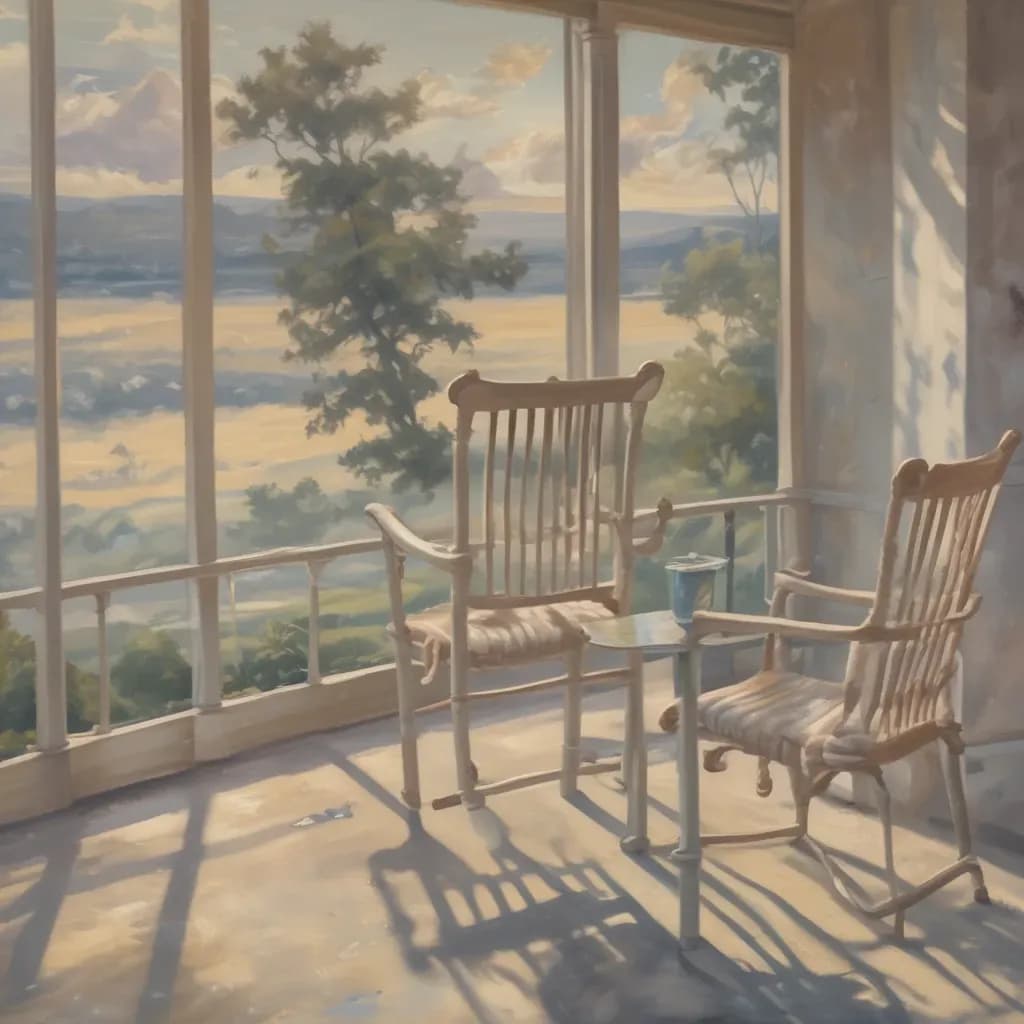
Thematically, the song builds around the image of a shared imaginative space: a private world constructed with and for someone the narrator loves. The specific image critics have noted is that of a castle in the clouds, a fantasy of safety and elevation above the world's immediate concerns.[4] This is daydream as architecture: the mind building somewhere to live inside, above the mortality and anxieties that define the album's earlier territory. The language of fairy tale meets the language of gratitude.
Jordan has spoken about the album's thematic core in terms of fear: the fear of losing the people you love, of watching the world continue indifferently around your private grief, of being unable to hold on to what matters most.[3] "Reverie" is where she imagines what it might feel like to have found somewhere safe to hold those things. It asserts that the present moment with someone you love is not a distraction from the important questions, but one possible answer to them.
The Radical Act of Writing Happy
For an artist defined by her ability to articulate suffering with unusual precision, writing a genuinely happy song is a particular kind of challenge. Jordan has acknowledged this directly: the pull toward melancholy represents not just an aesthetic preference but a comfort zone, a mode of writing she is genuinely skilled at.[3] Allowing contentment into the work requires a different kind of courage, the willingness to be witnessed in happiness rather than pain. Pain has dignity in the indie rock tradition. Happiness can feel naive.
The critical consensus around Ricochet broadly recognizes this shift. DIY Magazine praised the album's newfound openness and appreciation for ordinary life,[5] while music is to blame noted that "Reverie" represents "a side to Snail Mail that we perhaps didn't see as much of before."[4] These observations point toward something real: the song earns its warmth precisely because it comes at the end of an album that has done serious work in darker territory. The contentment is not naive. It is arrived at.
Jordan has also spoken about moving away from the Catholic guilt that shaped her earlier thinking: she was raised Catholic but no longer holds those beliefs, and Ricochet reflects ongoing work to dismantle the shame structures that guilt instilled.[3] "Reverie," in this context, is not just a love song. It is also a record of someone giving herself permission to find life worth living, to say that out loud without immediately undercutting it.
Room for Another Reading
Not every listener hears "Reverie" as pure contentment. At least one critical reading suggests that the song, despite its surface warmth, also carries an undertow addressing the more corrosive aspects of fame and financial success.[6] Under this interpretation, the castle-in-the-clouds imagery is not entirely free of irony. The constructed paradise could point toward the way wealth and celebrity become an isolating fantasy rather than a genuine refuge from the world's difficulties.
This reading is not incompatible with the more dominant one. Jordan has made no secret of her complicated relationship with visibility and with being labeled and categorized by an industry that wanted her to remain the "sad girl rock" figure her early work defined. A song that simultaneously celebrates intimate happiness and registers skepticism about the false comforts fame offers would be entirely in character. The two readings can coexist: joy and a clear-eyed awareness of what joy costs, held together.
The Closer as Statement
Ending an album is a compositional choice that communicates something about what the whole record has been for. "Reverie" closes Ricochet not with resolution in the conventional sense, but with orientation. After ten tracks of looking squarely at frightening things, the album's final gesture is not defiance or transcendence but the quieter act of noticing something good and letting it be good.
The word "reverie" carries productive ambiguity: a daydream, a pleasant mental drift, can be a form of escape from reality or a form of genuine engagement with what matters most. Jordan seems to be reaching for the latter. The imagined space the song inhabits is not a denial of the fears the album has catalogued. It is built from the materials of genuine connection, genuine love, genuine presence. The castle in the clouds is not a retreat from the world. It is what the world can contain, for a moment, when you are not alone in it.
For listeners who have followed Jordan from the raw teenage emotion of Lush through the wracked complexity of Valentine and into the more expansive concerns of Ricochet, "Reverie" functions as a kind of earned statement. It is not the work of someone who has escaped difficulty, but of someone who has found, in the middle of a life that still contains all its difficulty, something worth staying for. As closers go, it is both quiet and decisive: the album ends not in exhaustion or triumph, but in the small warmth of an imagined afternoon shared with someone you love.
References
- Snail Mail (musician) - Wikipedia — Biographical overview covering career milestones, Lush, Valentine, and rehabilitation
- On Ricochet, Snail Mail lost her voice and found her footing — Major FADER profile covering vocal surgery, relocation, existential themes, and the making of Ricochet
- Snail Mail's Shame Monster (The Line of Best Fit interview) — In-depth interview covering Jordan's Catholic upbringing, fear of loss, relationship, and creative approach on Ricochet
- Snail Mail's Ricochet Embraces Growth — Album review noting Reverie as simple and uplifting, a new side of Snail Mail
- Snail Mail - Ricochet review — DIY Magazine 4/5 review praising the album's newfound contentment and 90s-influenced sonic palette
- Snail Mail - Ricochet (The Skinny review) — The Skinny 3/5 review noting blunt lyricism and a reading of the album's relationship to fame