Robbery
There is a moment on "Robbery," about two-thirds of the way through, when the fantasy drops all pretense. What started as swaggering innuendo and cocktail-hour posturing arrives at its logical conclusion: the song's narrator has not been seducing you. He has been casing the joint. The heist was always the point.
It is a song built on misdirection, and that misdirection is exactly the joke. In a career full of unexpected pivots, A$AP Rocky's most audacious choice on Don't Be Dumb might be a number that plays out like a dinner-theater crime caper set to a Thelonious Monk sample.
Eight Years in the Making
To understand "Robbery," you need to understand what kind of person made it. Rocky's fourth studio album arrived on January 16, 2026, nearly eight years after Testing.[1] Those years were not quiet. They were defined by two criminal trials, three children, international headlines, and the kind of lived experience that either breaks an artist or gives them something genuine to say.
The more consequential of those trials followed a November 2021 Hollywood altercation with former A$AP Mob associate A$AP Relli, who accused Rocky of shooting at him. Rocky turned down a plea deal that would have involved jail time and opted to stand trial. On February 18, 2025, after roughly three hours of deliberation, a jury acquitted him on all counts. Rihanna was present in the courtroom for the verdict.[2][3]
Meanwhile, Rocky had become a father three times over. He and Rihanna welcomed sons RZA (2022) and Riot (2023), then a daughter in September 2025.[4] Rocky told interviewers that fatherhood had fundamentally rewired his creative instincts: he wanted to make something lasting, something that reflected who he had become rather than who the internet expected him to remain.[5] On the New York Times Popcast, he reflected on how those overlapping experiences -- two trials, three kids, one of the most famous relationships in pop culture -- all converged into this album.[6]
What emerged from that crucible was not a confessional album or a statement of survival. Rocky being Rocky, it was something far stranger: a genre-hopping, Tim Burton-designed, alter-ego-populated carnival that critics found thrilling, maddening, and impossible to ignore.[7] "Robbery" sits at track 13 of 19, deep in the album's second half, as if Rocky needed to build the whole elaborate stage before arriving at this particular scene.
The Architecture of a Heist
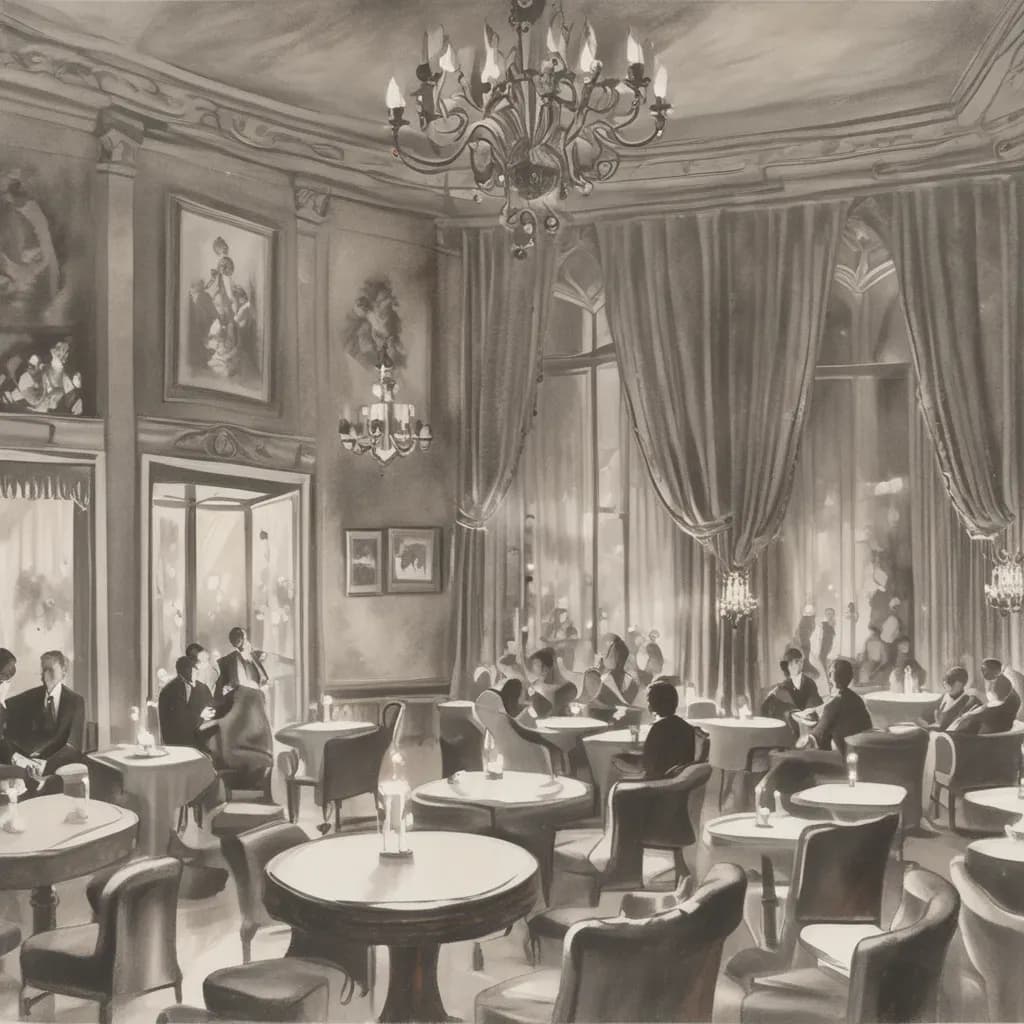
Produced by Loukeman,[1] "Robbery" draws its sonic architecture from a sample of Thelonious Monk's recording of "Caravan," originally a composition by Duke Ellington and Juan Tizol. The choice is deliberate and loaded. Monk's idiosyncratic approach to jazz standards -- his hammer-strike piano voicings and rhythmic displacements -- gives the song a character unlike anything else on Don't Be Dumb. It evokes after-hours Manhattan in the bebop era: cigarette smoke, expensive whiskey, people in good clothes doing questionable things.
Stereogum captured the effect precisely, describing how Rocky and his collaborator "turn rap into costume-party hepcat patter" over the Monk sample.[8] The Needle Drop called it "a really cool, theatrical lounge jazz number" built on "hand drums, upright bass, cocktail hour pianos, and whispery rapped vocals."[9] Nothing about it sounds designed to fit algorithmically into playlists. It sounds like something you would hear at two in the morning in a venue that has been closed for decades.
This is intentional. Rocky has spoken throughout his career about his relationship to vintage aesthetics, to the idea that Harlem is not just a place but a time compressed into a sensibility.[5] The jazz sample is not mere flavor. It is costume and setting simultaneously. It turns the song into a scene: you are in a specific room, and something is about to happen.
What Gets Stolen
The song operates on at least two frequencies at once. On the surface, it presents a romance with the grammar of crime: admiration coded as reconnaissance, seduction framed as acquisition. The desired person is not wooed but targeted. The relationship is not offered but taken. Rocky plays this persona with obvious relish, deploying the vocabulary of heist cinema with enough wink to signal that he knows exactly what he is doing.
But the song's narrative arc does not stop at metaphor. By the end, the scenario has become literal. The robbery has occurred. Someone is on the floor. The act of stealing, which began as romantic fantasy, has been completed. This collapse of metaphor into literalism is where the song earns its edge. Most love-as-crime songs stay safely on the figurative side. "Robbery" walks through the door.
There is also a reading of the song through the lens of Rocky's own biography. Coming off a trial in which someone accused him of a violent crime, on an album released the year after his acquittal,[2] a song structured entirely around committing a robbery is either an act of triumphant reclamation or a dark joke at his own expense. Possibly both. Rocky has rarely been the kind of artist who wants you to settle on a single interpretation.
Doechii and the Bonnie and Clyde Dynamic
The song features Doechii, whose verse arrives as a pointed counterweight to Rocky's.[1] Where Rocky's performance is cool and premeditated, Doechii brings something sharper and more overtly physical. The Needle Drop praised her contribution as "really seductive and smart," calling it one of the album's highlights.[9] Together, they operate as two halves of a classic criminal partnership: the architect and the improviser, the planner and the chaos agent.
The Bonnie and Clyde parallel is not subtle, but it does not need to be. Part of the song's pleasure is in its theatricality, its willingness to play a scene rather than convey a feeling. Doechii, coming off a Grammy Award win for Best Rap Album,[10] brings a confidence that matches Rocky's, which is no small feat. Their interplay has the feel of two performers who understand they are in a sketch, and have decided to commit fully.
Her appearance on the track generated some controversy, with segments of the listening public dismissing her contribution. Critics at HotNewHipHop attributed much of this backlash to pre-existing resentment toward Doechii following her Grammy win, noting it was difficult to separate genuine artistic critique from reflexive hostility.[10] Whatever its source, the criticism did not hold up on repeated listens. Her verse is the moment the song's premise snaps into focus.
The Experiment and Why It Works
Stereogum noted that "a full album of this would be unbearable, but one song of it is a good time."[8] That is a backhanded compliment containing genuine praise. Part of what makes "Robbery" land is its singularity. It exists nowhere else on Don't Be Dumb. It does not try to extend its logic to adjacent tracks. It commits to its bit and exits cleanly.
This restraint is meaningful for Rocky specifically. His career has sometimes suffered from a tendency to pile every interesting idea into a single release, creating albums that sprawl beyond their own best impulses. On an album already straining under considerable ambition,[7] "Robbery" works because it is contained. It is a great short story on an album full of novels that could have used editing.
The song also represents Rocky operating in a mode that no contemporary rapper has meaningfully claimed: the theatrical jazz-rap vignette. He framed Don't Be Dumb as what "2011 Rocky would be making in 2026."[6] The surprise is that, fifteen years into his career and on the other side of genuine hardship, he still has the instinct to find neglected sonic territory and plant a flag.
Where It Lands
"Robbery" is not the most emotionally resonant track on Don't Be Dumb. That distinction belongs to the title track and its companion piece ("Don't Be Dumb / Trip Baby"), which grapple with identity, love, and transformation in ways that feel autobiographically raw. "Robbery" occupies different territory. It is where the album goes to have fun, to put on a costume, to play a villain in a way that only makes sense in the context of someone who has spent years being accused of being one.
The song lands differently depending on when you encounter it. Heard as background music, it is a charming oddity: a hip-hop song that sounds like it was recorded in a speakeasy. Heard closely, it reveals precision and intentionality that reward attention -- the careful collapse of metaphor into action, the chemistry between two assured performers, the specific choice of a Monk arrangement that gives the whole scene its period-drama weight.
There is a very short list of artists who could have made this song. Rocky belongs on it. "Robbery" is a reminder that at his best, he is not primarily a rapper pursuing critical legitimacy. He is a director casting himself in the most interesting movie he can imagine. This time, the genre happened to be heist.
References
- Don't Be Dumb - Wikipedia — Album credits including Loukeman as producer, Thelonious Monk Caravan sample, chart performance
- A$AP Rocky Found Not Guilty in Firearm Assault Trial (Variety) — Coverage of the February 18, 2025 acquittal verdict
- A$AP Rocky Found Not Guilty in Hollywood Firearm Trial (NPR) — NPR report on the not guilty verdict including courtroom details
- A$AP Rocky on Fatherhood, Rihanna, and Don't Be Dumb (W Magazine) — Interview covering fatherhood's effect on Rocky's creative instincts
- A$AP Rocky Billboard Cover Story — Cover interview on fatherhood, Rihanna, creative reinvention
- A$AP Rocky Interview: How Rihanna, Three Kids, Two Trials Led to Don't Be Dumb (NYT Popcast) — Rocky on the album's genesis and his 2011-Rocky-in-2026 framing
- A$AP Rocky - Don't Be Dumb Album Review (Rolling Stone) — Major publication review noting album ambition and occasional sprawl
- Premature Evaluation: A$AP Rocky - Don't Be Dumb (Stereogum) — Critical review with detailed track-by-track analysis including Robbery
- A$AP Rocky - Don't Be Dumb Album Review (The Needle Drop) — Track analysis describing Robbery as a theatrical lounge jazz number with praise for Doechii's verse
- Doechii's Appearance on A$AP Rocky's Robbery Gets Poor Reception (HotNewHipHop) — Analysis of backlash to Doechii verse, attributing criticism to post-Grammy hostility
- A$AP Rocky Releases Jazz-Infused Robbery with Doechii (WiLD 94.1) — Coverage of the Robbery visualizer and jazz-forward sound